
Vita Mahjong Ad Strategy in 2026: The Metronome — a 467-Day Creative and 14 Assets Delivering at Exactly the Same Rate
A creative-level teardown of Vita Studio's US user acquisition for Vita Mahjong. Fifteen creatives account for 10.5 billion impressions, all fifteen still running, and one first seen 2025-05-09 has been live 467 days — the oldest asset in this fleet, fifth-oldest across the series. Fourteen of the fifteen deliver between 967 and 1,117 impressions per placement, a consistency band no other advertiser we have measured comes close to.
Vita Studio's Vita Mahjong is running the most mechanically consistent ad fleet we have measured. Fifteen creatives account for 10,548,638,193 impressions in the US. All fifteen were still live on 2026-08-19. One of them, first observed on 2025-05-09, has been running for 467 consecutive days — the oldest asset in this fleet, though four other fleets in this series run older still (Township 910d, Whiteout Survival 698d, Last War 507d, Block Blast! 501d).
But the number that makes this fleet genuinely strange is not the age. It is this: fourteen of the fifteen creatives deliver between 967 and 1,117 impressions per placement. A 1.15x spread across assets that differ by 90x in total volume, by 390 days in age, and by ten times in video length.
That is not a coincidence. That is a metronome.
Executive summary (TL;DR)
- Nothing ever gets switched off. 15 of 15 creatives were live on the pull date. Average age 263 days; twelve of fifteen have been running longer than 180 days.
- A 467-day creative, still going. Creative #8, first seen 2025-05-09, remains in rotation. Three more assets have passed 399 days. This beats Gossip Harbor's 398-day champion by 69 days — though it is no longer the series record: Township runs a 910-day creative and Whiteout Survival a 698-day one, both still live.
- The delivery rate is eerily uniform. Excluding one outlier, impressions-per-placement across the fleet ranges only from 967 to 1,117, averaging ~1,057. For comparison, Gossip Harbor's equivalent range is 1,612–3,569.
- One asset breaks the pattern completely. Creative #11 runs at 37 impressions per placement — 28x below the fleet floor — despite recording the third-highest placement count in the account. It is the only creative doing something structurally different.
- Concentration is top-heavy but the tail is alive. The top two creatives take 74.1%, yet the bottom thirteen are all still running and all still accumulating.
- Impressions here are a 30-day window, not a lifetime total. Every creative predates the window, so all fifteen share the same denominator — which means "impressions per day" adds nothing to "impressions", and an earlier claim that the newest asset was out-accelerating the leader has been withdrawn.
All figures are AdMapix third-party estimates for the United States, pulled 2026-08-19. Methodology at the end.
Where Vita Mahjong sits on the US charts
On the US download rankings, Vita Mahjong records 1,256,369 downloads at -25.41% period-over-period, published by Vita Studio (iOS app ID 6468921495, developer ID 1353666760). The title also appears in Traditional Chinese as Vita 麻將 under the same app ID.
As with several titles in this series, the ad fleet is holding a position on a declining download curve rather than chasing growth. What separates Vita Studio is how it holds: not by protecting one winner, and not by flooding the auction with new assets, but by running everything it has ever made, indefinitely, at a fixed rate.
 Vita Mahjong's top creative: 4,529,362,167 impressions across 4,214,749 placements, 46 seconds, first seen 2026-01-12 and still running after 219 days.
The fleet at a glance: 15 creatives, all live
| # | Impressions | Placements | First seen | Days live | Duration | Impr/placement |
|---|---|---|---|---|---|---|
| 1 | 4,529,362,167 | 4,214,749 | 2026-01-12 | 219 | 46s | 1,075 |
| 2 | 3,286,998,556 | 3,130,333 | 2026-04-15 | 126 | 44s | 1,050 |
| 3 | 1,218,698,379 | 1,183,794 | 2025-05-29 | 447 | playable | 1,029 |
| 4 | 382,639,508 | 346,430 | 2025-11-26 | 266 | 47s | 1,105 |
| 5 | 253,181,647 | 240,568 | 2025-06-16 | 429 | 59s | 1,052 |
| 6 | 149,375,572 | 153,639 | 2026-03-20 | 152 | playable | 972 |
| 7 | 136,518,140 | 124,561 | 2026-06-03 | 77 | 50s | 1,096 |
| 8 | 123,963,929 | 111,580 | 2025-05-09 | 467 | 59s | 1,111 |
| 9 | 98,311,291 | 92,325 | 2026-02-13 | 187 | 53s | 1,065 |
| 10 | 77,864,031 | 72,824 | 2026-02-13 | 187 | 48s | 1,069 |
| 11 | 77,553,778 | 2,079,572 | 2025-07-16 | 399 | 29s | 37 |
| 12 | 58,112,245 | 57,391 | 2025-12-24 | 238 | 6s | 1,013 |
| 13 | 54,417,077 | 48,697 | 2026-01-23 | 208 | 60s | 1,117 |
| 14 | 52,786,132 | 54,581 | 2026-02-13 | 187 | 51s | 967 |
| 15 | 48,855,741 | 45,313 | 2025-08-26 | 358 | 60s | 1,078 |
| Total | 10,548,638,193 | 11,956,357 | — | 263 avg | — | — |
Read the last column top to bottom, skipping row 11. Every single value falls between 967 and 1,117.
Creative #1 has delivered 4.53 billion impressions. Creative #14 has delivered 52.8 million — 86 times less. Creative #8 is 467 days old; creative #7 is 77 days old. Creative #12 is six seconds long; creative #13 is sixty. None of that changes the rate at which they convert placements into impressions.
What a 1,057 impressions-per-placement constant actually means
This metric is the ratio between recorded impressions and recorded creative appearances. It is a rough proxy for how densely each asset is being served within the placements it reaches.
Across the fourteen normal creatives it averages 1,057 with a spread of only ±7%. Set that against the other advertisers in this series:
| Advertiser | Impr/placement range | Spread |
|---|---|---|
| Vita Mahjong | 967 – 1,117 | 1.15x |
| Gossip Harbor | 1,612 – 3,569 | 2.21x |
| Block Out! (Grand Games) | 1,291 – 5,357 | 4.15x |
Block Out!'s range is measured across its 30-instance pull; the other rows are 15-entry samples.
A tight band like Vita Mahjong's tells you the fleet is not being differentiated at the placement level. Every asset is being fed into the same kind of inventory, at the same density, regardless of how well it performs. The auction is deciding how many placements each creative gets — creative #1 gets 4.2 million, creative #14 gets 54,581 — but it is not deciding how hard to push any individual one.
That is a meaningfully different operating model from Gossip Harbor, where the lead asset was clearly being spread wide and thin (1,612) while newer assets were being tested dense and narrow (3,569). Vita Studio appears to run a single global setting and let volume do the sorting.
 Creative #2 — 44 seconds, 3,286,998,556 impressions in the 30-day window, 126 days live. The fleet's second-largest asset, at 72.6% of creative #1's delivery.
Creative #11: the one that breaks the machine
One asset does not belong. Creative #11 recorded 2,079,572 placements — the third-highest count in the entire fleet, ahead of every asset except the top two — but delivered only 77,553,778 impressions. That works out to 37 impressions per placement, against a fleet norm of 1,057.
It is also distinctive in three other ways:
- It is 29 seconds, where the fleet clusters at 44–60 seconds.
- It has
demoadCntof 3, the highest in the fleet. - It is one of only two creatives with no playable attached.
Everything about it says "different inventory." An asset that appears two million times but generates 37 impressions per appearance is being served into placement types that behave nothing like the rest of the account — small-format, low-yield surfaces where a creative is counted as present but barely seen.
Why this matters for competitive analysis: if you ranked this fleet by placement count instead of impressions, creative #11 would appear to be Vita Studio's third-biggest bet. It is not. It is the fleet's least efficient asset by a factor of 28, and it has been running that way for 399 days. Placement count on its own is a trap.
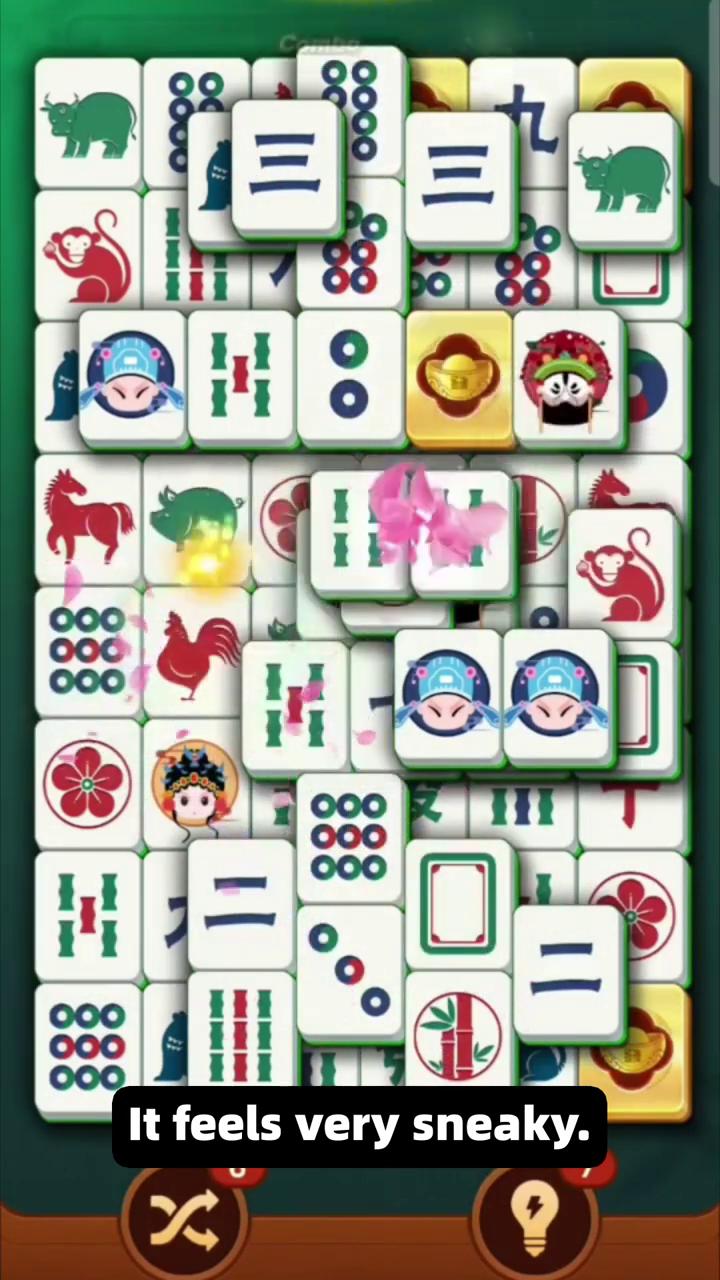 Creative #11 — 29 seconds, 2,079,572 placements but only 77,553,778 impressions. At 37 impressions per placement it is the sole structural outlier in the fleet, and it has run that way for 399 days.
The 467-day creative
Creative #8 was first observed on 2025-05-09 and was still recording placements on 2026-08-19 — 467 days. It is a 59-second video with a playable attachment, and it has delivered 123,963,929 impressions across 111,580 placements.
It ranks eighth of fifteen by volume and carries 1.2% of the fleet. It is simply never turned off.
That is the point. Vita Studio's oldest asset is not a protected champion in the way Gossip Harbor's 398-day leader is — that one carries 70.1% of its fleet. Creative #8 carries 1.2% of this one. It survives not because it is valuable but because nothing here gets retired.
Four creatives in this fleet have passed 358 days:
| Creative | First seen | Days live | Impressions | Share of fleet |
|---|---|---|---|---|
| #8 | 2025-05-09 | 467 | 123,963,929 | 1.2% |
| #3 | 2025-05-29 | 447 | 1,218,698,379 | 11.6% |
| #5 | 2025-06-16 | 429 | 253,181,647 | 2.4% |
| #11 | 2025-07-16 | 399 | 77,553,778 | 0.7% |
| #15 | 2025-08-26 | 358 | 48,855,741 | 0.5% |
Together those five veterans deliver 16.4% of fleet impressions. They are not the engine. They are the sediment — assets that were launched, never performed spectacularly, and were also never cleaned up.
 Creative #8 — the oldest active asset in this fleet, and fifth-oldest across the series behind Township (910d), Whiteout Survival (698d), Last War (507d) and Block Blast! (501d). 59 seconds, first seen 2025-05-09, still running after 467 days, carrying just 1.2% of fleet impressions.
Where the volume actually comes from
Despite fifteen live assets, the money is in two files.
| Rank | Impressions | Share | Cumulative |
|---|---|---|---|
| #1 | 4,529,362,167 | 42.9% | 42.9% |
| #2 | 3,286,998,556 | 31.2% | 74.1% |
| #3 | 1,218,698,379 | 11.6% | 85.7% |
| #4–#15 | 1,513,579,091 | 14.3% | 100% |
The top two — both mid-length videos, 46s and 44s, both launched in 2026 — carry three-quarters of everything. The twelve creatives ranked #4 and below deliver 14.3% combined, less than creative #3 alone.
The interesting part is the timing of the top two. Creative #1 launched 2026-01-12; creative #2 launched 2026-04-15. Both are recent. Meanwhile, the five oldest assets — every creative first seen in 2025 — together account for 16.4%.
Vita Studio's 2026 output is doing the work. Its 2025 output is still running but contributes almost nothing. That is a fleet that grows by accretion rather than replacement.
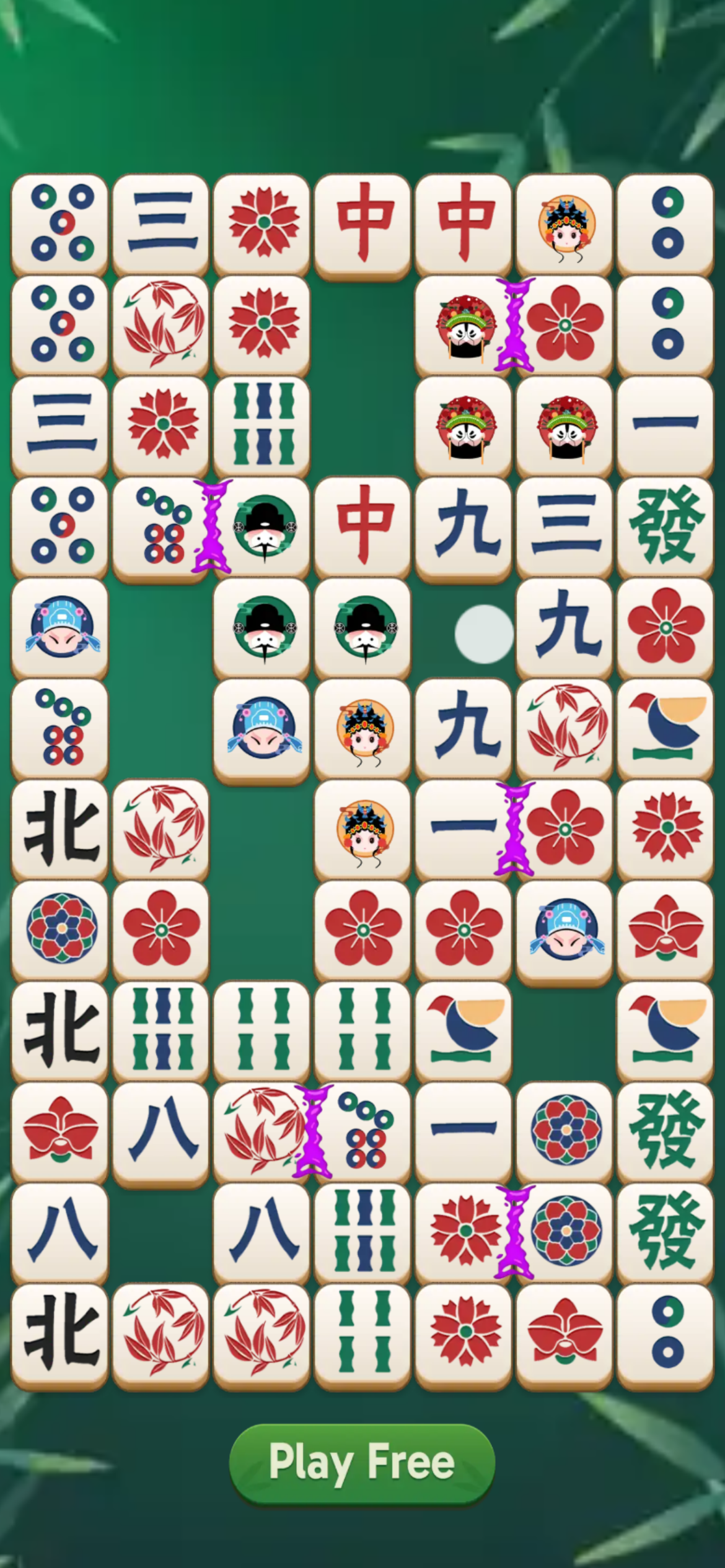 Creative #3 — a playable unit, 1,218,698,379 impressions, 447 days live. The only pre-2026 asset that carries meaningful volume, at 11.6% of the fleet.
Duration: a wide spread that does not matter
Vita Mahjong's duration mix is unusually broad — and unusually irrelevant.
| Duration band | Creatives | Impressions | Share |
|---|---|---|---|
| 44–60s | 11 | 9,044,898,219 | 85.7% |
| Playable (no video duration) | 2 | 1,368,073,951 | 13.0% |
| 29s | 1 | 77,553,778 | 0.7% |
| 6s | 1 | 58,112,245 | 0.6% |
Within the 44–60 second band, Vita Studio has shipped creatives at 44, 46, 47, 48, 50, 51, 53, 59, 59, 60 and 60 seconds. That is eleven assets spanning sixteen seconds with no two the same length — the opposite of Block Out!'s rigid 59-second lock.
But the spread produces no visible pattern. The best performer is 46 seconds; the second best is 44; the eighth best is 59; the thirteenth is 60. Duration explains essentially nothing about outcome inside this band.
The genuine outlier is creative #12 at six seconds, which still delivers at 1,013 impressions per placement — squarely inside the fleet's normal band. Even a six-second cut and a sixty-second cut convert placements at the same rate here.
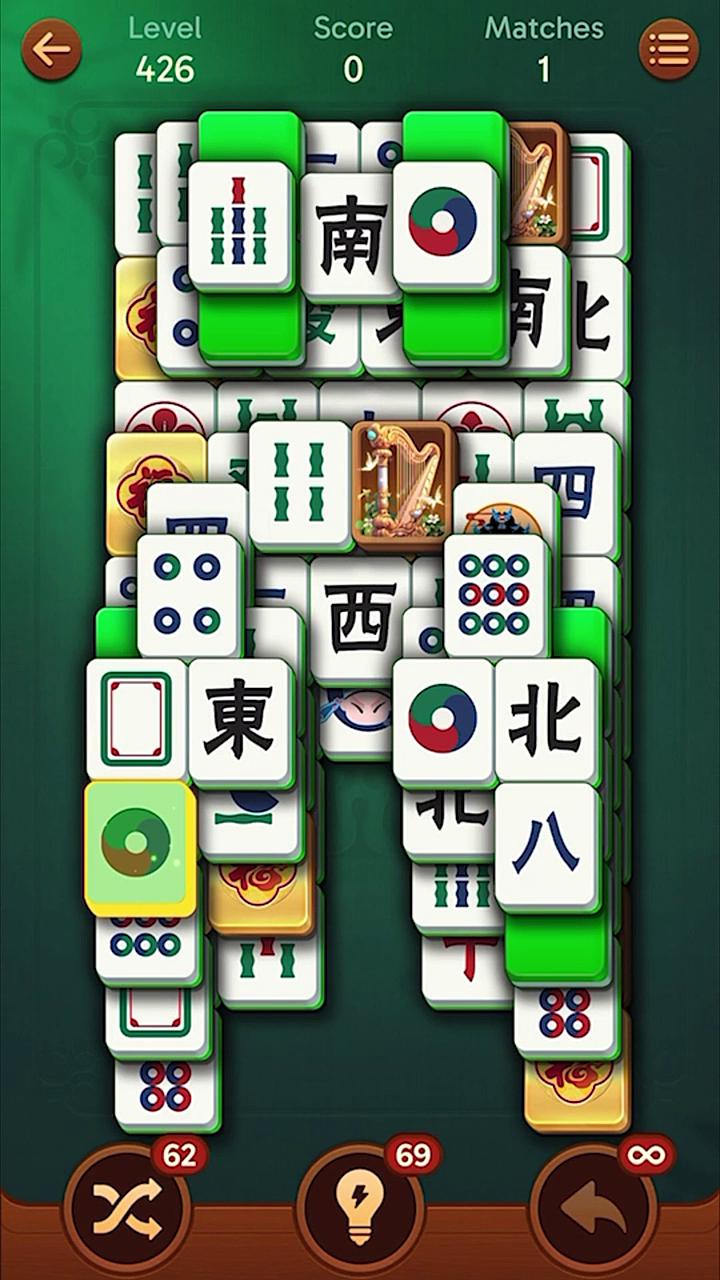 Creative #12 — six seconds, the shortest asset in the fleet. 58,112,245 impressions at 1,013 per placement, indistinguishable in delivery rate from the 60-second creatives.
The build order: two breakouts, 93 days apart
Sorted by first-seen date, the fleet splits cleanly into a slow 2025 and a decisive 2026.
| First seen | Creative | Duration | Impressions | Gap |
|---|---|---|---|---|
| 2025-05-09 | #8 | 59s | 123,963,929 | — |
| 2025-05-29 | #3 | playable | 1,218,698,379 | +20d |
| 2025-06-16 | #5 | 59s | 253,181,647 | +18d |
| 2025-07-16 | #11 | 29s | 77,553,778 | +30d |
| 2025-08-26 | #15 | 60s | 48,855,741 | +41d |
| 2025-11-26 | #4 | 47s | 382,639,508 | +92d |
| 2025-12-24 | #12 | 6s | 58,112,245 | +28d |
| 2026-01-12 | #1 | 46s | 4,529,362,167 | +19d |
| 2026-01-23 | #13 | 60s | 54,417,077 | +11d |
| 2026-02-13 | #9 | 53s | 98,311,291 | +21d |
| 2026-02-13 | #10 | 48s | 77,864,031 | same day |
| 2026-02-13 | #14 | 51s | 52,786,132 | same day |
| 2026-03-20 | #6 | playable | 149,375,572 | +35d |
| 2026-04-15 | #2 | 44s | 3,286,998,556 | +26d |
| 2026-06-03 | #7 | 50s | 136,518,140 | +49d |
The seven creatives launched in 2025 deliver 2,163,005,227 impressions — 20.5% of the fleet. The eight launched in 2026 deliver 79.5%. Vita Studio spent eight months producing assets that, collectively, are worth less than half of what a single January creative went on to produce.
The two breakouts arrived 2026-01-12 and 2026-04-15 — 93 days apart. Nothing before or since comes within an order of magnitude of either.
And the fleet has gone quiet. The most recent creative, #7, was first seen 2026-06-03 — 77 days before this pull. For a publisher that added eight assets in the first five months of 2026, going eleven weeks without a new one is a visible change in cadence.
The 2026-02-13 experiment: three creatives, five seconds apart
On a single day, Vita Studio launched three creatives at 53, 48 and 51 seconds.
| Creative | Duration | Impressions | Placements | Impr/placement |
|---|---|---|---|---|
| #9 | 53s | 98,311,291 | 92,325 | 1,065 |
| #10 | 48s | 77,864,031 | 72,824 | 1,069 |
| #14 | 51s | 52,786,132 | 54,581 | 967 |
Three assets, launched together, differing by at most five seconds of runtime. Six months later all three are still running, and the spread between best and worst is 1.86x on impressions — while their delivery rates sit within 10% of each other.
This is as close to a controlled duration experiment as public creative data gets, and the result is close to null. A five-second difference in a fifty-second ad produced no meaningful separation. Meanwhile creative #1, launched a month earlier at 46 seconds, out-delivered all three combined by 20x.
The takeaway is not that duration never matters. It is that within this genre and this band, the thing that made creative #1 a 4.5-billion-impression asset was not its length — and any production process spending cycles on 48-versus-53 second variants is optimising a dimension the data says is flat.
 Creative #9 — 53 seconds, 98,311,291 impressions. One of three assets launched on 2026-02-13 at 53s, 48s and 51s respectively.
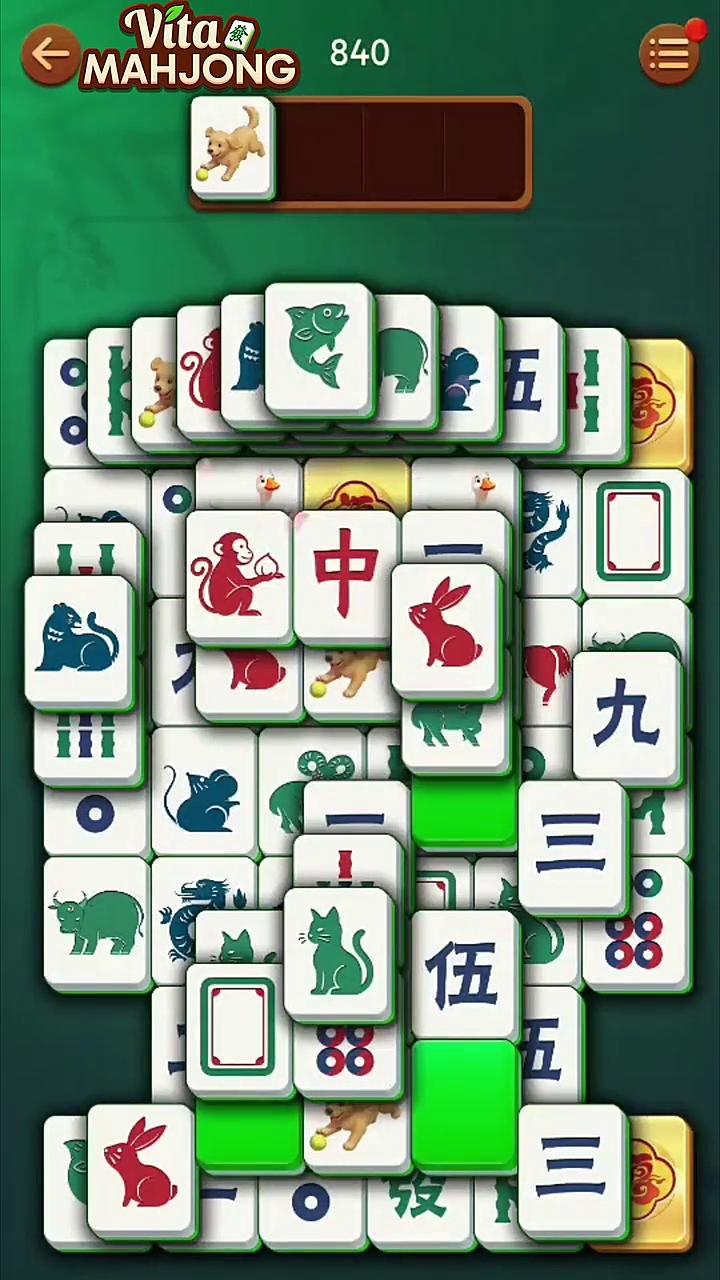 Creative #10 — 48 seconds, 77,864,031 impressions, 1,069 per placement. Five seconds shorter than #9 and statistically indistinguishable in delivery.
Why there is no "intensity" table here
An earlier version of this teardown contained one, and it was wrong. The correction is worth stating because the mistake is easy to make with this dataset and it points in a consistent direction.
The impression field is a rolling 30-day window, not lifetime accumulation. Verified by parameter sweep: the default response equals start_date=2026-07-20&end_date=2026-08-19, and widening the range raises the figure. So creative #1's 4,529,362,167 is what it delivered in the last thirty days, not since 2026-01-12.
Every creative in this fleet was first seen before 2026-07-20, the window's start date. That means all fifteen were exposed to exactly the same 30.6-day window. Dividing each one's impressions by "days live" therefore divides a constant numerator basis by fifteen different denominators, and the result is not a rate — it is the impression column distorted by age.
The earlier version reported that creative #2 was accumulating 26% faster than creative #1 and would overtake it within roughly 230 days. Both claims were artifacts of that division. Recomputed on the shared window, creative #1 leads creative #2 by 38% — the same 38% the impressions column already showed (4,529,362,167 against 3,286,998,556).
That is why this article publishes no per-day column. For a fleet where every asset predates the measurement window, "impressions per day" is the impressions column divided by a constant and carries no information the impressions column does not. The correct read of Vita Mahjong is the plain one: creative #1 is the account's largest asset by a wide margin, and creative #8, at 467 days, contributes 1.2% — it is old sediment, not a hidden performer.
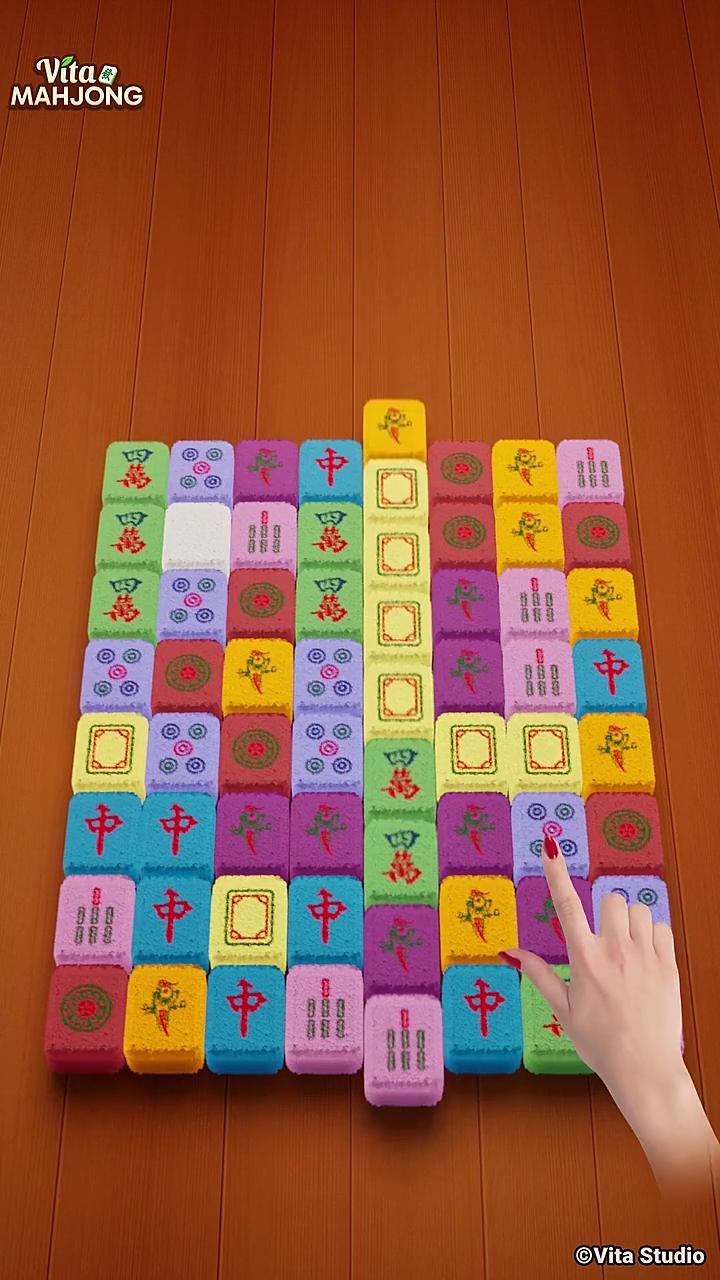 Creative #7 — 50 seconds, 136,518,140 impressions, 77 days live. The newest asset in the fleet and the only one launched in the last three months.
Playables: attached to almost everything, leading almost nothing
Twelve of fifteen creatives carry a playable attachment, drawn from eight distinct playable files. Three carry none, including #11 — the structural outlier discussed above.
But the attachment rate hides the actual role. Only two creatives are playable-first units with no video duration recorded at all:
| Creative | First seen | Days live | Impressions | Share |
|---|---|---|---|---|
| #3 | 2025-05-29 | 447 | 1,218,698,379 | 11.6% |
| #6 | 2026-03-20 | 152 | 149,375,572 | 1.4% |
| Combined | — | — | 1,368,073,951 | 13.0% |
So Vita Studio attaches a playable to nearly every video it ships, but lets pure interactive units carry only 13% of volume — and 89% of that comes from one asset launched in May 2025.
Set against the other publishers measured this month, that lands squarely in the middle:
| Publisher | Playable attachment | Pure-playable share of impressions |
|---|---|---|
| Block Out! (Grand Games) | 15 / 15 | 31.7% |
| Vita Mahjong (Vita Studio) | 12 / 15 | 13.0% |
| Gossip Harbor (Microfun) | 5 / 15 | 0% |
All three rows are the top-15-entry sample pulled 2026-08-19. Attachment counts delivery rows carrying a playable fingerprint, not distinct playable files — Vita Mahjong's twelve rows resolve to eight files.
Grand Games treats the playable as the product. Microfun treats it as a placement requirement. Vita Studio does something in between: it attaches one everywhere so that no inventory is closed off, but it does not build its creative strategy around interaction.
For a mahjong title that is a defensible read. The game's appeal is familiarity rather than novelty of mechanic — a player already knows what mahjong is, so a video showing polished board state does the persuading, and the playable exists to satisfy interactive placements rather than to teach anything.
 Creative #6 — the fleet's second pure-playable unit. 149,375,572 impressions, 152 days live, 972 impressions per placement — the lowest normal rate in the fleet and still within 8% of the median.
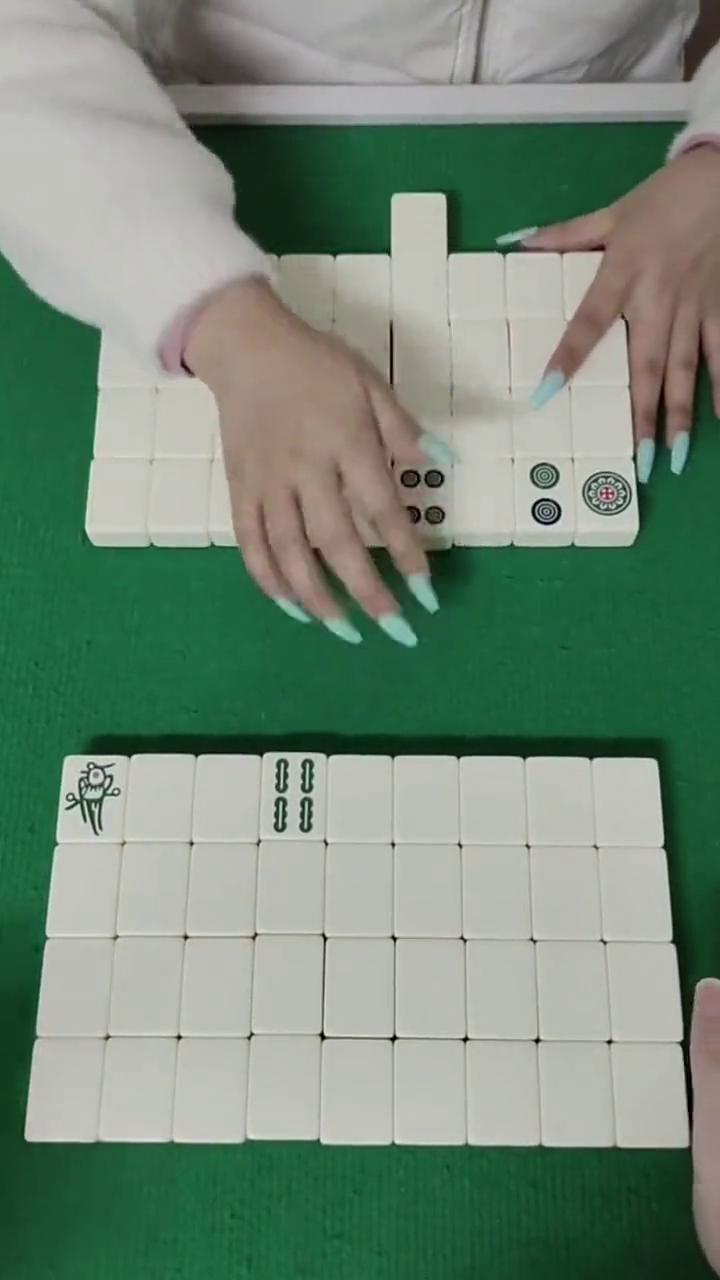 Creative #5 — 59 seconds, 253,181,647 impressions, 429 days live. One of five assets first seen in 2025 that are all still running.
The three postures, side by side
Placing Vita Mahjong beside the other US teardowns pulled this month completes a spectrum.
| Advertiser | Creatives live | Avg age (days) | Oldest asset | Top-2 share | Posture |
|---|---|---|---|---|---|
| Block Out! (Grand Games) | 15 / 15 | 74.9 | 147d | 61.1% | Production line — ships every 10 days |
| Gossip Harbor (Microfun) | 15 / 15 | 214 | 398d | 80.2% | Vault — one asset defended for 398 days |
| Vita Mahjong (Vita Studio) | 15 / 15 | 263 | 467d | 74.1% | Metronome — accretes, never retires, uniform rate |
All three keep everything running. What separates them is the rate of addition and the treatment of the winner.
Grand Games adds an asset every ten days and lets the newest one take over. Microfun added three winners in fourteen months and protects the first one. Vita Studio adds slowly, protects nothing in particular, and runs every asset it has ever launched at an identical delivery rate until the auction stops calling for it.
Vita Studio's model has the lowest production cost of the three. It also has the least control: with no differentiation between assets at the placement level, the only lever left is which creative to add next.
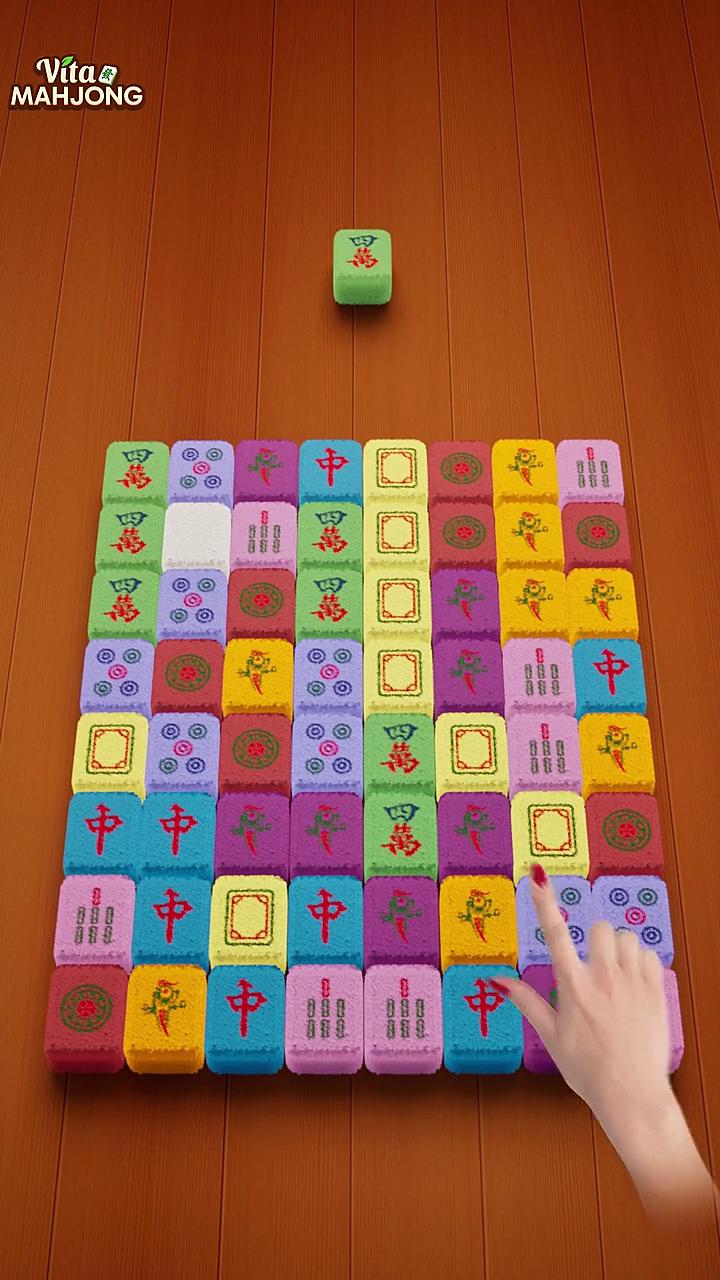 Creative #4 — 47 seconds, 382,639,508 impressions, 266 days live. Representative of the mid-fleet: old, still running, delivering at 1,105 per placement.
What transfers to your UA program
If you run media buying: check whether your own fleet has a uniform impressions-per-placement rate. If it does, you are almost certainly running one global setting across assets of very different quality. Vita Studio gets away with it because volume sorting does most of the work — but it means a strong new creative gets no more push than a 467-day-old asset nobody has looked at.
If you run competitive intelligence: never rank a competitor's fleet by placement count. Creative #11 here has the third-highest placement count and the worst efficiency in the account by 28x. Impressions per placement is what separates a broadly-served asset from a barely-seen one.
If you run creative production: the duration finding is a genuine cost saving. Across eleven assets spanning 44 to 60 seconds, length explains nothing about outcome — and a six-second cut delivers at the same per-placement rate as a sixty-second one. If your team is spending real money on the difference between a 45 and a 55 second edit in this genre, this dataset says that spend is not buying anything.
If you are competing with Vita Studio: the exploitable weakness is the retirement policy. Five assets first seen in 2025 are still running and collectively deliver 16.4% of impressions. That is inventory being occupied by creative that has not been re-evaluated in over a year.
The quiet period, and what it might mean
Two facts sit uncomfortably together. Downloads are at -25.41% period-over-period. And the last new creative entered the fleet on 2026-06-03, seventy-seven days before this pull.
In the first five months of 2026 Vita Studio shipped eight creatives — roughly one every nineteen days. Then it stopped. There are three readings, and the data does not settle between them.
Reading one: the fleet is sufficient. Creative #1 alone supplies 42.9% of a 30-day window measured after the pause began, so the existing assets are still filling the auction. If your fleet still clears demand, adding another one competes with it rather than adding to it. On this reading the pause is discipline.
Reading two: production has moved elsewhere. Vita Studio may be building for a different geo, a different title, or a seasonal push not yet in market. Nothing in US data would show that.
Reading three: the pause is the problem. A -25.41% download curve with no creative response is what a de-prioritised title looks like. The five 2025-era assets still running — collectively 16.4% of impressions, none re-evaluated in over a year — are consistent with an account nobody is actively managing.
The way to tell them apart is to watch a single number: whether creative #2's daily rate holds. If it keeps climbing through the autumn with no new assets added, reading one is right and this is a well-judged pause. If it flattens and nothing replaces it, reading three is right.
That is the check we would run, and it costs one query a month.
A falsifiable prediction
Prediction: creative #8 (the 467-day asset) will still be live on 2026-11-01, and creative #1 will still be the fleet's largest asset by 30-day impressions.
An earlier version of this article also predicted that creative #2 would overtake creative #1. That prediction has been withdrawn — it rested on dividing 30-day impressions by lifetime days, and on a common denominator #1 leads by 38% rather than trailing.
The basis: in fifteen months of observable behaviour, Vita Studio has not retired a single creative — a 467-day asset surviving another 74 days is the conservative call.
The interesting failure mode would be #8 disappearing, because it would be the first retirement this publisher has made. We will re-pull and report either way.
How to reproduce this teardown
- Pull the fleet with placement counts, not just impressions. The entire finding in this article — the uniform delivery rate, and the one asset that breaks it — is invisible if you only look at impressions.
- Compute impressions per placement per creative, then look at the spread rather than the average. A tight spread means undifferentiated buying; a wide spread means the advertiser is actively pushing some assets harder than others.
- Flag anything more than 5x off the fleet median. That is where the structurally different asset lives, and it usually indicates a different placement type or channel.
- Establish what window the impression field covers before computing any rate. If every asset predates the window, per-day figures are the impression column divided by a constant and must not be re-ranked; if some assets entered mid-window, only those need an age denominator, and even then "ramping" cannot be separated from "only half-exposed".
- Check last-observed dates on every asset to distinguish "still running" from "ran once." Here all fifteen were live, which is itself the finding.
Methodology and data notes
- Source: AdMapix creative search and ranking APIs, queried 2026-08-19, country filter
US, sorted by impressions descending. - Sample: top 15 creatives by impressions for
Vita Mahjong(iOS app ID6468921495, developer ID1353666760, Vita Studio). The title also appears as Vita 麻將 under the same app ID; both resolve to the same product. - "Days live" is the span between first-observed and last-observed timestamps. All fifteen creatives showed a last-observed date equal to the pull date and are treated as live.
- "Placements" (
showCnt) counts recorded creative appearances, not unique users or unique publishers. Impressions-per-placement is a distribution-shape indicator, not a frequency metric — the absolute value is only meaningful when compared across creatives measured the same way. - Impressions are third-party estimates, not publisher-reported figures and not spend. They support relative comparison; they are not absolute delivery counts and should not be converted to dollar figures.
- Download figures are US-region estimates for the current ranking period.
- Store information is available on the App Store listing. Comparative figures for Gossip Harbor and Block Out! come from teardowns pulled on the same date, 2026-08-19.
- Rows are ad instances; we checked whether they are distinct assets. Each API row is a delivery record with its own impressions, placements and dates. Checking
videoFpandplayHtmlFpfingerprints on this fleet: the 15 rows resolve to 13 unique videos plus 2 rows carrying no video at all (the pure-playable units, #3 and #6) — no two rows share a video file, so every "15 creatives" statement in this article stands. The playables are more concentrated: 13 rows carry a playable but they resolve to 8 unique playable files, with three shared across multiple rows. Statements about playable attachment are per-row; statements about how many playables Vita Studio built should use the figure 8. - Coverage is limited to creatives observable through third-party ad monitoring.
- The impressions-per-placement uniformity described here is a property of this measured sample, not a proven account setting. An alternative explanation is that the monitored placement mix itself is homogeneous for this title, which would produce the same signature without any deliberate configuration. Creative #11's 37-per-placement outlier argues against that reading, since it sits in the same sample.
Frequently Asked Questions
How many ads is Vita Mahjong running in the US? Fifteen measurable creatives as of 2026-08-19, totalling 10,548,638,193 impressions — and all fifteen were still live on that date. The fleet averages 263 days of age, with twelve of fifteen running longer than 180 days.
What is Vita Mahjong's best-performing ad creative? A 46-second video first seen 2026-01-12, carrying 4,529,362,167 impressions across 4,214,749 placements — 42.9% of the fleet. The 44-second creative launched 2026-04-15 is second at 3,286,998,556. An earlier version of this article claimed the second asset was accumulating faster and would overtake the leader; that rested on dividing a 30-day impression window by lifetime days, and has been withdrawn.
What is the oldest ad creative Vita Mahjong is still running? A 59-second video first observed 2025-05-09, still in rotation after 467 days — the oldest asset in this fleet, though four other fleets in the series run older ones (Township 910 days, Whiteout Survival 698, Last War 507, Block Blast! 501). It carries only 1.2% of fleet impressions, surviving because Vita Studio does not appear to retire assets rather than because it performs.
Why do all of Vita Mahjong's creatives deliver at the same rate? Fourteen of fifteen creatives fall between 967 and 1,117 impressions per placement, a 1.15x spread. This indicates undifferentiated placement-level buying: every asset is fed into the same inventory at the same density, and the auction sorts them by how many placements each receives rather than how hard each is pushed.
Which Vita Mahjong creative is the exception? Creative #11, a 29-second video first seen 2025-07-16. It recorded 2,079,572 placements — third-highest in the fleet — but only 77,553,778 impressions, giving 37 impressions per placement, 28x below the fleet floor. It is also one of only two creatives with no playable attached.
Has Vita Mahjong slowed down its creative production? Yes, visibly. Eight creatives entered the fleet between January and June 2026 — roughly one every nineteen days — and then nothing for the seventy-seven days to 2026-08-19. That pause coincides with a -25.41% download change. Whether it reflects discipline or de-prioritisation is not resolvable from creative data alone. The check that would separate them is whether total 30-day fleet impressions hold, fall or rise on a re-pull — not a per-asset daily rate, which for this fleet is the impression column divided by a constant.
Does ad length matter for Vita Mahjong? Not within its main band. Eleven creatives span 44 to 60 seconds with no two the same length, and duration shows no relationship to outcome — the best performer is 46 seconds, the second best 44, the eighth 59. Even a six-second creative delivers at 1,013 impressions per placement, inside the normal range.
Which US mahjong title runs the more aggressive ad strategy? On raw scale, Vita Mahjong — its fifteen creatives total 10.5 billion impressions. But the two titles are structurally opposite rather than simply bigger and smaller. Vita Mahjong runs a video-led fleet with a 1.15x delivery-rate spread, 263-day average age and 13.0% of impressions from pure playables, against a -25.41% download curve. Mahjong Blast, measured the same day, is 92.7% playable-led with a 128.5-day average age and an 18.65x spread — on a +13.77% curve. Comparing them on impressions alone is misleading, because playable and video impression counts are not equivalent units.
Want to see whether your own fleet is running on one global setting? Per-creative impressions, placement counts, first-seen and last-seen dates, duration and playable attachment are all live in AdMapix, filterable by country, publisher and app ID. Create a free account to run this teardown on any title in your category, or see plans for full historical access.
Data source: AdMapix third-party ad intelligence estimates, United States, retrieved 2026-08-19. Impression and download figures are modelled estimates for comparative analysis and are not publisher-reported. Figures change as new creatives enter rotation.
Compare related game-ad strategies
Compare this study with the game-specific research below. Keep the country, date window, and creative format consistent, then compare opening hooks, gameplay sequences, and end cards. Estimated impressions from different samples are not a product-performance ranking.
- Solitaire Associations Journey ad strategy and creative analysis
- Jewel Coloring ad strategy and creative analysis
- Arrows Puzzle Escape ad strategy and creative analysis
Related Reading
- Ad strategy teardowns (series index) — every teardown in the series, in publication order
- Mobile game ads guide: formats, examples and research — the format matrix, research workflow and KPI guardrails every teardown in this series applies
- Pixel Flow! — one playable took 2.3B impressions in 30 days
- Mahjong Blast — 92.7% playable, 87.3% shipped inside a 16-day sprint
- Royal Smash! — 10.4B impressions built from zero in 47 days
Turn these observations into your next creative study
Open the creative library and select samples for your market, network and research question.
Related Articles
Roblox Ad Strategy in 2026: Creatives Launched in Three Days Carry 61% of Current US Delivery
A creative-level teardown of Roblox Corporation's US user acquisition, measured across the 30-day window ending 2026-08-19. Creatives first observed between 2026-07-02 and 2026-07-04 carry 930,645,210 of the window's 1,514,986,345 impressions — 61.4% — six weeks after launch. Roblox's iOS and Android creatives deliver at rates that differ by a factor of 105.
Grand Games UA Playbook 2026: 13.7 Billion Impressions Built From Four Videos — Inside a Permutation Machine
A publisher-level teardown of Grand Games A.Ş. across Block Out! and Magic Sort! in the US. Sixty measured ad instances carry 13.7 billion impressions, but Block Out!'s entire 12.2-billion fleet resolves to just four distinct videos and eighteen playable end cards — one 59-second video appears in thirteen instances with thirteen different playables. The breakout that took it from 613 million to 8.1 billion was not a new video: it was a new playable attached to a video already 63 days old.
Township Ad Strategy in 2026: Two Fleets in One Account — 5% of Placements Deliver 71% of Impressions, and One Creative Has Run for 910 Days
A creative-level teardown of Playrix's US user acquisition for Township. Its 30 measured creatives split into two populations that never overlap: seven deliver 1,120 to 1,410 impressions per placement, the other twenty-three deliver 25 to 33. The seven take 5.1% of placements and produce 71.4% of impressions. The same split appears across Gardenscapes and Homescapes, and Township's oldest active creative was first seen on 2024-02-21 — 910 days before this pull.