
Jewel Coloring Ad Strategy 2026: One 54-Second Video, Four End Cards, and a Fleet Built in 57 Days
A creative-level teardown of Ta Ta Game Technology's US user acquisition for Jewel Coloring. Fifteen ad entries account for 615,015,856 impressions — but they resolve to only twelve distinct assets: seven video masters and five playable masters, recombined. One 54-second video runs under four different end cards and carries 28.1% of the fleet on its own. Every video master was made inside a 17-day window, and none has been made since.
Ta Ta Game Technology's Jewel Coloring built its entire measurable US ad fleet inside a 57-day window — first entry first seen 2026-03-19, last entry first seen 2026-05-15 — and has added nothing in the 96 days since. Fourteen of the fifteen entries were still live on 2026-08-19. US downloads are up 5.48%.
The fleet totals 615,015,856 impressions across 463,015 placements. But counting entries overstates what is actually there. The fifteen entries resolve to seven video masters and five playable masters — twelve distinct assets, recombined.
And one of those twelve does the work of four. A single 54-second video appears under four separate entries, each paired with a different playable end card, together carrying 172,730,436 impressions — 28.1% of the fleet. Ta Ta did not find a format and ship it four times. It found one file and re-deployed it four times.
Of the three titles we tore down on this date, Jewel Coloring is the only one whose downloads are growing, and it is the one that has made the least new material.
Executive summary (TL;DR)
- Fifteen entries, twelve assets. Fingerprint checks on
videoFpandplayHtmlFpreturn seven distinct video masters and five distinct playable masters. Counting entries overstates Ta Ta's output by 25%. - One video, four end cards, 28.1%. The 54-second master
9ef73dbc…runs under entries #3, #4, #6 and #8, paired with four different playables. It delivers 172,730,436 impressions at 1,789.9 per placement — the densest video in the fleet. - The whole fleet was born in 57 days. Every entry was first seen between 2026-03-19 and 2026-05-15. Twelve entries launched inside a single 17-day window between 2026-04-01 and 2026-04-17.
- No new video master in 124 days. All seven video masters were created between 2026-04-01 and 2026-04-17. Everything shipped after that date is a re-deployment of the 54-second file Ta Ta already had.
- The top two are genuinely two. Entries #1 and #2 carry different playable fingerprints, so they are two real assets — 177,856,468 and 176,953,416 impressions, launched three days apart, differing by 0.5%.
- Three entries are three-quarters of the account. The top three carry 73.8% of cumulative impressions and 75.1% of current daily output.
- Six one-off video masters produced almost nothing. Videos at 28, 42, 45, 49, 51 and 52 seconds — one instance each — deliver 7.3% combined.
- Every playable does double duty. All five playable masters run both as standalone units and as end cards behind videos. There is no playable in this fleet that exists only as an attachment.
- 78% of this fleet is not on iOS. Ten of the fifteen entries resolve to the Android package, under a different AdMapix company ID than the iOS build. An iOS-only view of this advertiser sees 22.2% of it.
- One entry stopped. Entry #14 was last observed 2026-08-18, one day before the pull — the only record in the fleet not live on the pull date.
All figures are AdMapix third-party estimates for the United States, pulled 2026-08-19. Methodology and identity resolution at the end.
Which Jewel Coloring this is
Jewel Coloring is a descriptive phrase before it is a product name, and the category is full of near-duplicates. A product search returns at least four:
| Product | Unified product ID | Publisher | Lifetime creatives | Lifetime impressions |
|---|---|---|---|---|
| Jewel Coloring | 6759081967 | Ta Ta Game Technology Limited | 3,358 | 9,343,780,794 |
| Jewel Coloring puzzle | color.jewel.coloring.diamond.sort.puzzle | STELLASOFT GAMES | 59 | 20,665,311 |
| Jewel Trip, Jewel Coloring | jewel.color.match.pixel.puzzle.sort | Lite Tools Games | 88 | 8,598,727 |
| Diamond Sort: Jewel Coloring | com.shanyuan.pd.hwaz | GOODS PUZZLE | 3 | 49,876 |
Everything in this teardown is locked to the first row: unified product 6759081967, publisher Ta Ta Game Technology Limited, AdMapix company ID 12817602. The unified product record lists three constituent product IDs:
color.number.paint.pixle.art.sort.jigsaw (Android) · 6759081967 (iOS) · com.fairygem.correct.sort.puzzle.game
That first package name is worth reading closely — color.number.paint.pixle.art.sort.jigsaw describes the product far better than the store title does. This is a paint-by-number / pixel-art coloring game with sorting mechanics, marketed under a jewel skin.
Store listings: App Store and Google Play.
Where Jewel Coloring sits on the US chart
| Metric | Value |
|---|---|
| US download rank | 106 |
| Downloads (current period) | 768,849 |
| Period-over-period change | +5.48% |
| Publisher | Ta Ta Game Technology Limited |
| iOS app ID | 6759081967 |
| AdMapix company ID | 12817602 |
Placed against the other teardowns pulled the same day, the pattern is inverted from what you would expect:
| Title | Rank | Downloads | Change | Newest creative | Days since |
|---|---|---|---|---|---|
| Vita Mahjong | 54 | 1,256,369 | -25.41% | 2026-06-03 | 77 |
| Arrows – Puzzle Escape | 81 | 946,669 | -34.65% | 2026-06-16 | 64 |
| Jewel Coloring | 106 | 768,849 | +5.48% | 2026-05-15 | 96 |
| Mahjong Blast | 148 | 616,774 | +13.77% | 2026-07-04 | 46 |
Jewel Coloring has gone the longest without adding a new ad entry of any title in this group — and on a video-master basis the gap is 124 days, not 96. It is also one of only two in the group that are growing. That is the central puzzle of this account.
 Entry #1 — a playable unit first seen 2026-04-04, still running after 137 days. 177,856,468 impressions across 143,511 placements at 1,239.3 per placement in the 30 days to 2026-08-19. It is the largest entry in the fleet by a margin of 0.5%.
The fleet at a glance: fifteen entries, fourteen live
| # | Impressions | Share | Placements | Impr/placement | First seen | Days live | Format |
|---|---|---|---|---|---|---|---|
| 1 | 177,856,468 | 28.9% | 143,511 | 1,239.3 | 2026-04-04 | 137 | playable |
| 2 | 176,953,416 | 28.8% | 146,231 | 1,210.1 | 2026-04-01 | 140 | playable |
| 3 | 99,253,920 | 16.1% | 54,676 | 1,815.3 | 2026-05-15 | 96 | 54s |
| 4 | 43,550,257 | 7.1% | 25,975 | 1,676.6 | 2026-04-04 | 137 | 54s |
| 5 | 31,631,499 | 5.1% | 37,413 | 845.5 | 2026-03-19 | 153 | playable |
| 6 | 21,675,681 | 3.5% | 11,632 | 1,863.5 | 2026-04-11 | 130 | 54s |
| 7 | 16,669,953 | 2.7% | 12,825 | 1,299.8 | 2026-04-08 | 133 | 42s |
| 8 | 8,250,578 | 1.3% | 4,222 | 1,954.2 | 2026-05-15 | 96 | 54s |
| 9 | 7,891,267 | 1.3% | 4,881 | 1,616.7 | 2026-04-04 | 137 | 51s |
| 10 | 7,234,046 | 1.2% | 4,859 | 1,488.8 | 2026-04-03 | 138 | playable |
| 11 | 6,098,137 | 1.0% | 3,776 | 1,615.0 | 2026-04-01 | 140 | 52s |
| 12 | 4,980,000 | 0.8% | 2,780 | 1,791.4 | 2026-04-01 | 140 | 49s |
| 13 | 4,735,395 | 0.8% | 2,560 | 1,849.8 | 2026-04-17 | 124 | 28s |
| 14 | 4,302,292 | 0.7% | 2,903 | 1,482.0 | 2026-04-07 | 134 | 45s |
| 15 | 3,932,947 | 0.6% | 4,771 | 824.3 | 2026-04-10 | 131 | playable |
| Total | 615,015,856 | 100% | 463,015 | 1,328.3 | — | 131.1 avg | — |
Entry #14 is the exception on liveness: its last observed timestamp is 2026-08-18, one day before the pull. Every other entry recorded activity on 2026-08-19.
Read the 1,328.3 blended figure with care. This fleet spans two store entries, and they deliver at very different densities — the Android package at 1,248.1 and the iOS build at 1,715.2. The blended number is a correct weighted average of the fifteen entries, but it is not a property of "Jewel Coloring" so much as a mix of two differently-bought product records. The split is broken out in full further down.
The impressions-per-placement column has a 2.37x spread here — 824.3 at the floor, 1,954.2 at the ceiling. That is a materially wider band than Arrows – Puzzle Escape's 1.16x, and it means Ta Ta's entries are not all being fed into the same kind of inventory. Something in this account differentiates.
What differentiates turns out to be format, and we come to it below.
What one row means here
Before the counts below are trusted, one definition has to be nailed down, because getting it wrong produces confidently false conclusions — and an earlier version of this article got it wrong.
Each row returned by creative search is an ad entry: a distinct delivery record with its own impression count, placement count and date range. It is not automatically a distinct piece of production. Multiple entries routinely share the same underlying video file, differing only in which playable end card is attached.
Checking asset fingerprints (videoFp and playHtmlFp) across the fifteen entries returns:
| Count | |
|---|---|
| Ad entries | 15 |
| Distinct video masters | 7 |
| Distinct playable masters | 5 |
| Entries containing a video | 10 |
| Entries containing a playable | 12 |
| Entries that are pure playable (no video) | 5 |
| Total distinct assets | 12 |
The reuse is entirely on the video side. The five pure-playable entries carry five different playHtmlFp values — that layer is one-to-one. The video layer is not:
| Video master | Duration | Entries | Impressions | Share |
|---|---|---|---|---|
9ef73dbc… | 54s | #3, #4, #6, #8 | 172,730,436 | 28.1% |
7bd636a0… | 42s | #7 | 16,669,953 | 2.7% |
ef391cdd… | 51s | #9 | 7,891,267 | 1.3% |
fdfb4311… | 52s | #11 | 6,098,137 | 1.0% |
396d8255… | 49s | #12 | 4,980,000 | 0.8% |
8f6f281b… | 28s | #13 | 4,735,395 | 0.8% |
1605d78f… | 45s | #14 | 4,302,292 | 0.7% |
One master accounts for four of the ten video entries and 79.4% of all video impressions. The other six are one-instance-each.
This changes counts, not volumes. Impressions are reported per entry and are not double-counted, so every impression, placement and density figure elsewhere in this article stands unchanged. What it changes is any statement about how much Ta Ta made. Where that distinction alters a conclusion below, it is flagged in place.
The 57-day build and the 96-day freeze
Sorted by first-seen date, the fleet has almost no history. It is a single construction event.
| First seen | Creative | Format | Impressions | Gap |
|---|---|---|---|---|
| 2026-03-19 | #5 | playable | 31,631,499 | — |
| 2026-04-01 | #2 | playable | 176,953,416 | +13d |
| 2026-04-01 | #11 | 52s | 6,098,137 | same day |
| 2026-04-01 | #12 | 49s | 4,980,000 | same day |
| 2026-04-03 | #10 | playable | 7,234,046 | +2d |
| 2026-04-04 | #1 | playable | 177,856,468 | +1d |
| 2026-04-04 | #4 | 54s | 43,550,257 | same day |
| 2026-04-04 | #9 | 51s | 7,891,267 | same day |
| 2026-04-07 | #14 | 45s | 4,302,292 | +3d |
| 2026-04-08 | #7 | 42s | 16,669,953 | +1d |
| 2026-04-10 | #15 | playable | 3,932,947 | +2d |
| 2026-04-11 | #6 | 54s | 21,675,681 | +1d |
| 2026-04-17 | #13 | 28s | 4,735,395 | +6d |
| 2026-05-15 | #3 | 54s | 99,253,920 | +28d |
| 2026-05-15 | #8 | 54s | 8,250,578 | same day |
| 2026-08-19 | (pull date) | — | — | +96d |
Twelve entries appeared between 2026-04-01 and 2026-04-17 — twelve delivery records in seventeen days, six of them on 2026-04-01 and 2026-04-04 alone. Then a 28-day pause, two more on 2026-05-15, and silence.
On a master basis the burst is even tighter: all seven video masters and all five playable masters were first seen inside that same window plus the single 2026-03-19 playable. After 2026-04-17, Ta Ta created nothing new — it only re-paired what it had.
By cohort:
| Cohort | Entries | Impressions | Share of fleet |
|---|---|---|---|
| March | 1 | 31,631,499 | 5.1% |
| April | 12 | 475,879,859 | 77.4% |
| May | 2 | 107,504,498 | 17.5% |
Two entries from May carry 17.5% of the fleet's 30-day impressions; twelve entries from April carry 77.4%. On a per-entry basis the May pair averages 53.8 million against April's 39.7 million — the later, smaller cohort is the denser one.
A metric that used to sit here has been removed. An earlier version compared each cohort's share of impressions against its share of "daily output," and reported the May cohort over-indexing by 1.34x. That comparison was invalid: the impression field is a rolling 30-day value and all fifteen entries predate the window, so a per-day rate divides every entry by the same constant and the two shares are arithmetically identical. See the methodology note.
This is still a fleet that peaked on its last shipment and then stopped shipping, and the per-entry average above carries that without needing a rate. The two entries launched 2026-05-15 are the fastest-accumulating records Ta Ta has after the two lead playables — but both are the same 54-second master behind two different end cards, so the last genuinely new production event in this account was 2026-04-17.
 Entry #2 — a playable first seen 2026-04-01, 140 days live, 176,953,416 impressions at 1,210.1 per placement. Within 0.5% of entry #1 on impressions and 2.4% on density. This playable master is attached to five entries in the fleet (#2, #3, #11, #12 and #13).
The twins
Entry #1 and entry #2 are the two largest assets in the account, and they are almost the same asset by every measurable dimension.
| Entry #1 | Entry #2 | Difference | |
|---|---|---|---|
| Format | playable | playable | — |
| First seen | 2026-04-04 | 2026-04-01 | 3 days |
| Days live | 137 | 140 | 2.2% |
| Impressions | 177,856,468 | 176,953,416 | 0.5% |
| Placements | 143,511 | 146,231 | 1.9% |
| Impr/placement | 1,239.3 | 1,210.1 | 2.4% |
| Days live | 137 | 140 | 2.2% |
| Share of fleet | 28.9% | 28.8% | — |
Two interactive units, launched three days apart, converging to within half a percent of each other after four and a half months of independent delivery. Together they are 57.7% of the account.
There are two ways to read this, and they have very different implications.
Read one: they are variants of one concept. Same playable mechanic, different art or copy, both accepted by the same inventory pool and both bid into it identically. If that is the case, the convergence is unremarkable — it is what two versions of the same thing should do — and Ta Ta effectively has one winning creative, not two.
Read two: the ceiling is the inventory, not the creative. Both assets have saturated the available supply of a particular placement type, and neither can grow further because the pool is finite. On this read the two assets are not converging on each other; they are both pressed against the same wall.
The playable attachment data slightly favours the first read. Entry #1's playable URL is shared with entry #4; entry #2's is shared with entries #3, #11, #12 and #13. These are not two isolated units — they are two hubs in a small set of reused interactive assets. Ta Ta appears to be making a handful of playables and pairing them with many video wrappers.
The 54-second file, re-deployed four times
The single most important asset in this fleet is one 54-second video master, fingerprint 9ef73dbc…. It appears under four separate ad entries, and — this is the part that matters — each entry pairs it with a different playable end card.
| Entry | First seen | Playable end card | Impressions | Placements | Impr/placement |
|---|---|---|---|---|---|
| #4 | 2026-04-04 | 4f8c648c… | 43,550,257 | 25,975 | 1,676.6 |
| #6 | 2026-04-11 | 93c35d51… | 21,675,681 | 11,632 | 1,863.5 |
| #3 | 2026-05-15 | c87be21e… | 99,253,920 | 54,676 | 1,815.3 |
| #8 | 2026-05-15 | 0787ff25… | 8,250,578 | 4,222 | 1,954.2 |
| Master total | — | 4 distinct | 172,730,436 | 96,505 | 1,789.9 |
This is not four creatives at one duration. It is one creative, wrapped four ways.
The spread across the four is what makes the structure legible. Same video, same runtime, same product — and the outcomes range from 8,250,578 to 99,253,920 impressions, a 12x difference. The only variable that changes between them is the end card and the launch date. Density stays inside a narrow 1,676.6–1,954.2 band, so the auction treats all four almost identically per placement; what differs is how many placements each combination won.
The reusable read: Ta Ta is not testing videos. It is testing pairings. Having found one video that works, it holds the video constant and swaps the interactive layer behind it — the cheapest possible form of iteration, since a new end card costs a fraction of a new video shoot.
Now set that master against every other video in the fleet — each of which appears exactly once.
| Duration | Creatives | Impressions | Share | Impr/placement |
|---|---|---|---|---|
| 54s (1 master, 4 entries) | 4 | 172,730,436 | 28.1% | 1,789.9 |
| 42s | 1 | 16,669,953 | 2.7% | 1,299.8 |
| 51s | 1 | 7,891,267 | 1.3% | 1,616.7 |
| 52s | 1 | 6,098,137 | 1.0% | 1,615.0 |
| 49s | 1 | 4,980,000 | 0.8% | 1,791.4 |
| 28s | 1 | 4,735,395 | 0.8% | 1,849.8 |
| 45s | 1 | 4,302,292 | 0.7% | 1,482.0 |
| All one-off masters | 6 | 44,677,044 | 7.3% | 1,502.9 |
Six video masters, one entry each, produced 7.3% of the fleet between them. One video master, four entries, produced 28.1%.
The chronology makes this look like a decision rather than a coincidence. In the April sprint Ta Ta shipped seven distinct video masters at 42, 45, 49, 51, 52, 54 and 28 seconds — a genuine scatter across a range. The 54-second master came out well ahead of the rest on its first outing (#4, 43.5 million). A week later Ta Ta re-ran the same file behind a new end card (#6). Then it paused for four weeks and came back on 2026-05-15 with two more entries of that same file (#3 and #8), one of which became the third-largest entry in the account.
Ta Ta has not created a new video master since 2026-04-17 — 124 days before this pull. The scatter phase lasted seventeen days and ended. Everything since is redeployment of one file.
That is a materially different claim from "it kept making 54-second videos," and a cheaper strategy than that phrasing would imply. The production cost of entries #6, #3 and #8 was three end cards, not three videos.
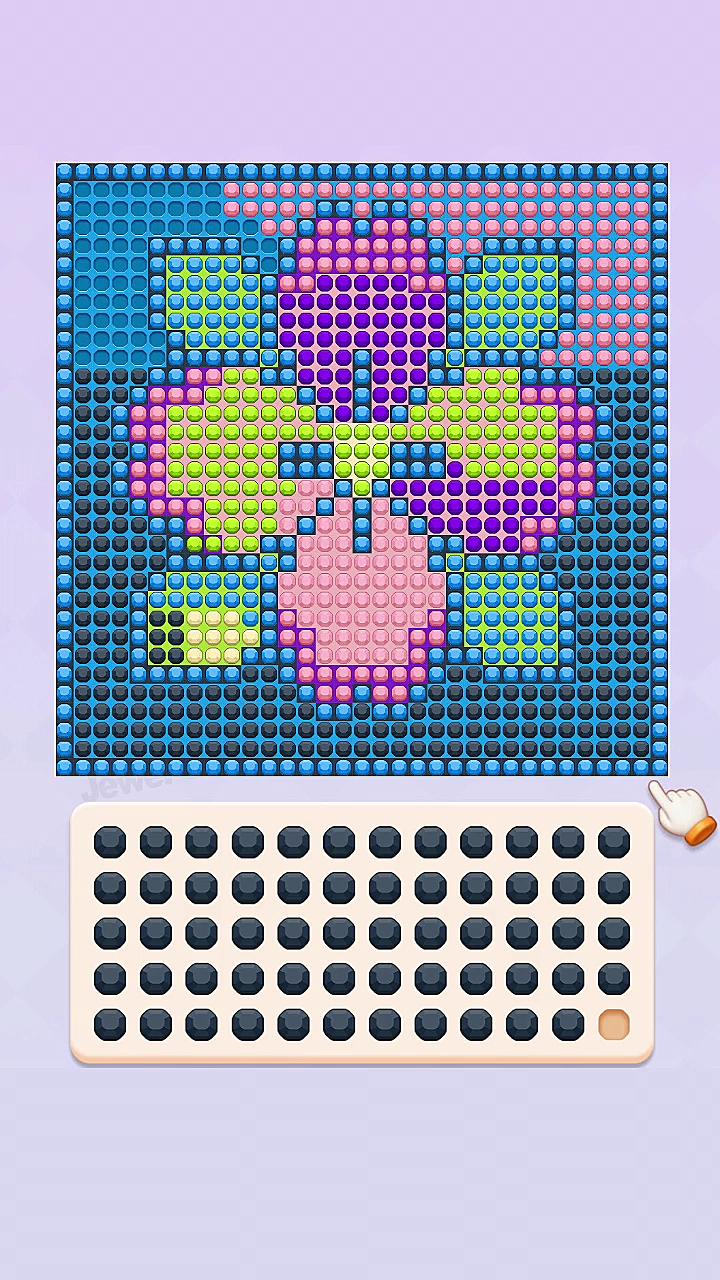 The 54-second video master
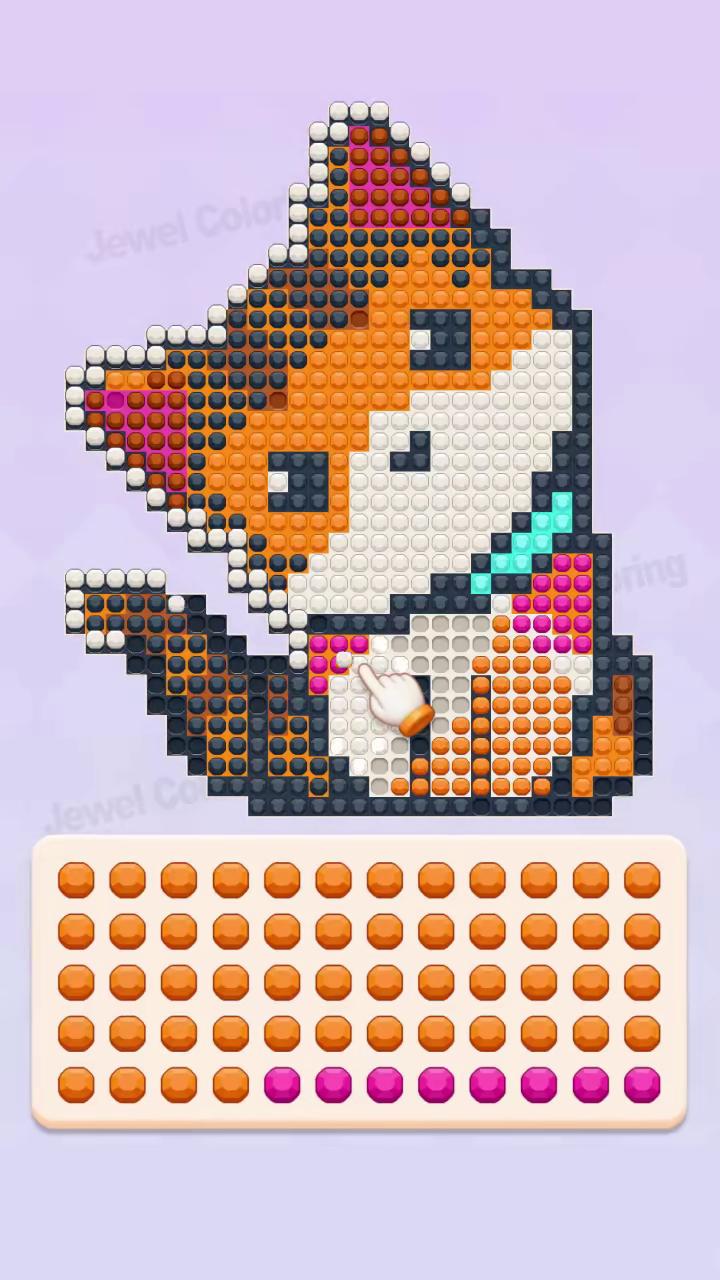
 9ef73dbc…, the single most valuable asset in the fleet. It runs under four entries (#3, #4, #6 and #8) behind four different end cards, together delivering 172,730,436 impressions at 1,789.9 per placement. Entry #3, first seen 2026-05-15, is the largest at 99,253,920.
 Entry #7 — the 42-second master
 7bd636a0…, first seen 2026-04-08, 16,669,953 impressions at 1,299.8 per placement. The largest of the six masters that were never re-deployed, and still only 2.7% of the fleet.
Playables carry the volume; video carries the density
The split between interactive and video units in this account is unusually clean, and it points in two directions at once.
| Family | Entries | Masters | Impressions | Share | Placements | Impr/placement |
|---|---|---|---|---|---|---|
| Pure playable | 5 | 5 | 397,608,376 | 64.7% | 336,785 | 1,180.6 |
| Video | 10 | 7 | 217,407,480 | 35.3% | 126,230 | 1,722.3 |
Five playable masters deliver nearly twice the impressions of ten video entries — which are themselves only seven masters. But video delivers at 1.46x the density.
That is the same directional finding we measured in Arrows – Puzzle Escape, where playables ran at 116.2 impressions per placement against short video's 130.1 — but the gap here is much larger. In Arrows, format explained a 1.12x difference in density. In Jewel Coloring it explains 1.46x.
The mechanism is the same in both accounts. Interactive units qualify for a broader supply of inventory, so they accumulate placements fast; each of those placements is on average a thinner impression. Video runs in a narrower, denser set of surfaces.
The strategic consequence is worth stating plainly: if you judge a playable by impressions per placement you will conclude it is underperforming, and you will be measuring the wrong thing. Entry #15 is the lowest-density asset in this fleet at 824.3 — and it is a playable. Entry #8 is the highest at 1,954.2 — and it is a 54-second video that delivers a twelfth as many total impressions.
 Entry #5 — the oldest asset in the fleet, first seen 2026-03-19 and running 153 days. 31,631,499 impressions at 845.5 per placement, the second-lowest density in the account. This playable is also attached to entry #8.
 The playable attached to entries #6 and #15. Ta Ta reuses a small set of interactive units across multiple creative records rather than building a bespoke playable per video.
The one creative that stopped
Fourteen of fifteen entries recorded activity on the pull date. Entry #14 did not.
| Entry #14 | |
|---|---|
| Format | 45s video |
| Product ID | 6759081967 (iOS) |
| First seen | 2026-04-07 |
| Last seen | 2026-08-18 |
| Days live | 133 |
| Impressions | 4,302,292 |
| Placements | 2,903 |
| Impr/placement | 1,482.0 |
It stopped one day before the pull, after 133 days, having delivered 0.7% of the fleet. It is the only creative in the account with a 45-second runtime.
This is a small event, but it is the only retirement signal in the fleet, and its shape is informative: the master Ta Ta let go is a 45-second video that was never re-deployed behind a second end card, the smallest of its cohort by a wide margin, and it went out quietly after four months of low-volume delivery. That is consistent with routine housekeeping rather than a strategic change — and it is the first of the seven video masters to be fully retired.
For anyone tracking this account, this is the number to re-check first. If entry #14 is the beginning of a wind-down, more assets will follow it off the list over the coming weeks. If it was housekeeping, the remaining fourteen will still be there.
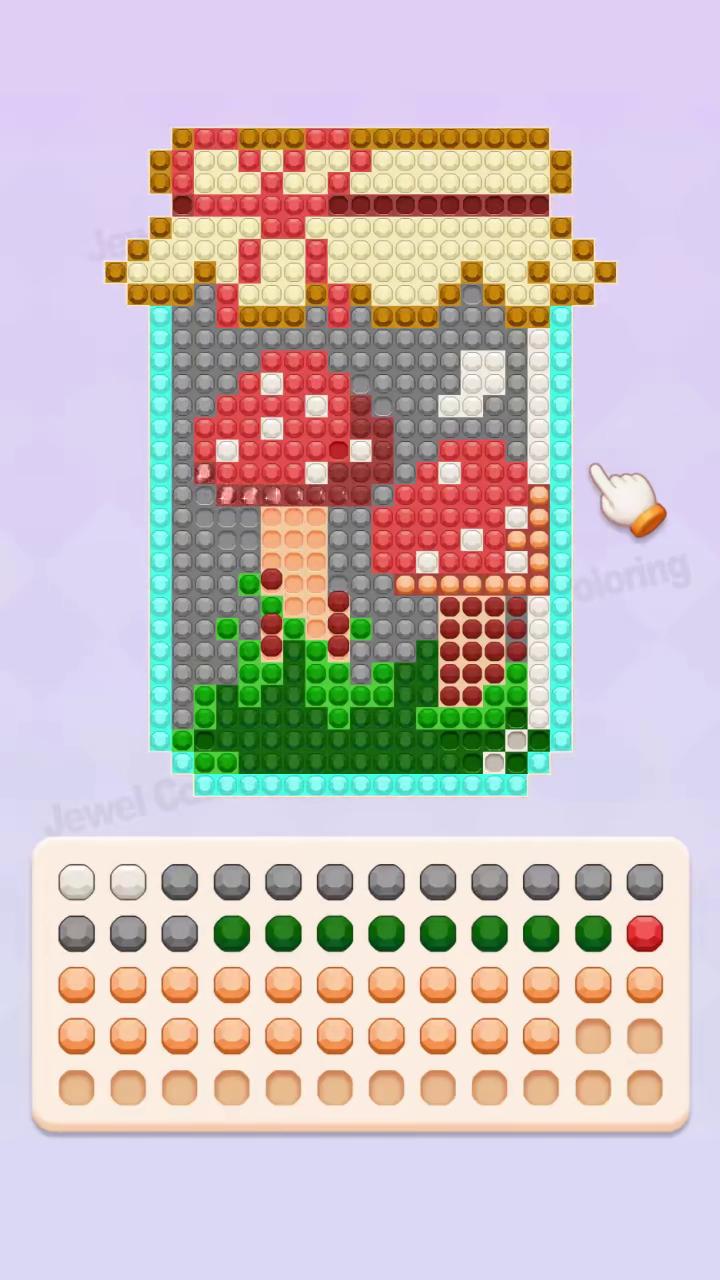 Entry #14 — 45 seconds, first seen 2026-04-07, last seen 2026-08-18. The only creative in the fleet that stopped before the pull date, and the only one at a 45-second runtime.
Cross-platform: 78% of this fleet is not on iOS
This is the largest platform split in the batch, and it changes the shape of the account substantially depending on which ID you track.
| Product ID | Company ID | Publisher string | Creatives | Impressions | Share | Impr/placement |
|---|---|---|---|---|---|---|
| color.number.paint.pixle.art.sort.jigsaw | 491323619 | TaTa Game Technology Limited | 10 | 478,647,846 | 77.8% | 1,248.1 |
| 6759081967 | 12817602 | Ta Ta Game Technology Limited | 5 | 136,368,010 | 22.2% | 1,715.2 |
Note the publisher strings. One is "TaTa Game Technology Limited"; the other is "Ta Ta Game Technology Limited" — a single space apart. They sit under two different AdMapix company IDs. Any competitive tracker that matches on developer name string will treat these as two companies. Any tracker that matches on the iOS app ID will see 22.2% of the fleet and miss the two largest creatives entirely, since both of the twins run on the Android package.
The density difference between the two platform sets is also real: the iOS creatives deliver at 1,715.2 impressions per placement against Android's 1,248.1, a 1.37x gap. But that is mostly a format artefact — four of the five iOS creatives are videos, while five of the ten Android creatives are playables.
The rule this account teaches: resolve to the unified product first, then split by platform deliberately if you want to. Never let the split happen to you by accident because you tracked one store ID.
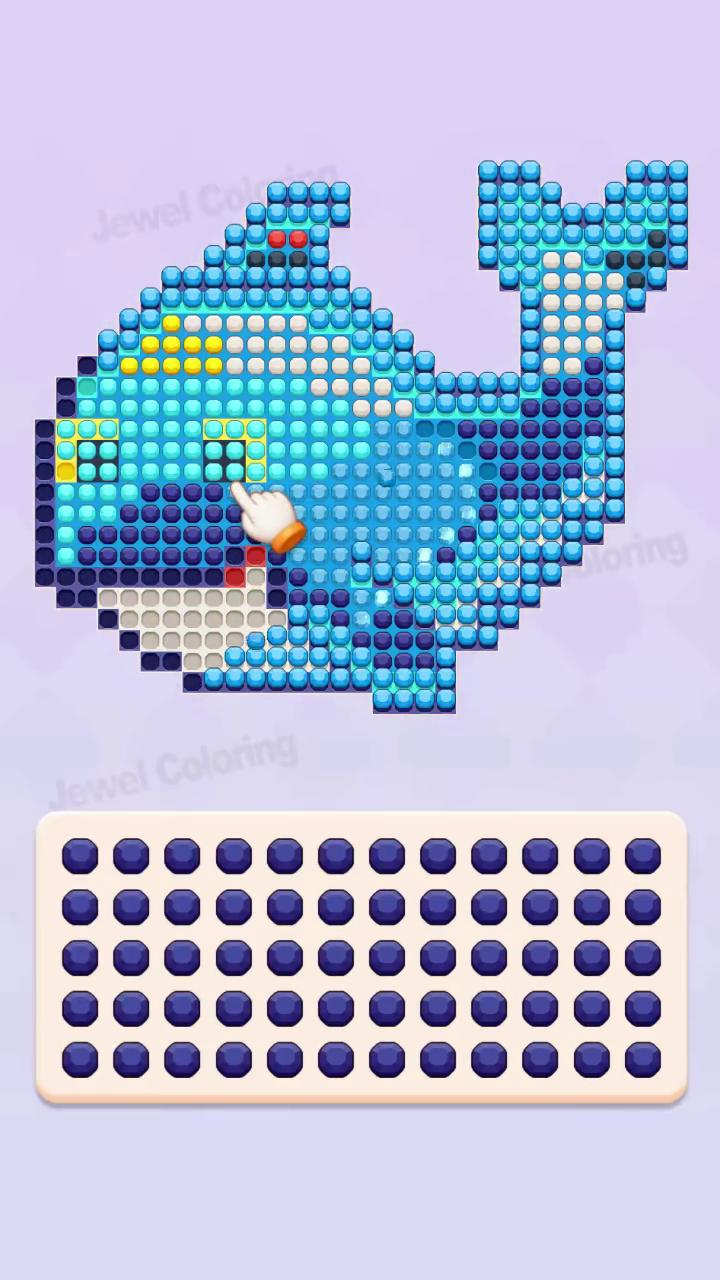 Entry #9 — 51 seconds, first seen 2026-04-04, 7,891,267 impressions at 1,616.7 per placement. One of the five iOS-package creatives, and one of the six one-off durations from the April sprint.
Same-genre benchmark: coloring fleets side by side
Coloring and paint-by-number is a crowded category with a wide range of operating scales. Comparing US fleets pulled the same day, on the same top-10 basis:
| Fleet | Assets | Impressions | Impr/placement | Top-1 share | Avg age | Live |
|---|---|---|---|---|---|---|
| Jewel Coloring (top 10) | 10 | 590,967,085 | 1,324.4 | 30.1% | 129.7 | 10/10 |
| Satisfying Coloring | 10 | 11,504,727 | 497.4 | 35.1% | 275 | 10/10 |
| Idol Draw: Coloring Master | 10 | 5,598,782 | 974.5 | 27.8% | 147 | 10/10 |
On a like-for-like top-10 basis, Jewel Coloring's US fleet is 51x the impression volume of Satisfying Coloring's and 106x Idol Draw's. It is also the youngest of the three, at 129.7 days average age against 275 for Satisfying Coloring.
Two of the coloring competitors we sampled could not be included in this table because their top-10 pulls spanned multiple distinct products — Coloring Match returned creatives for three different apps from three different publishers, and Diamond Painting ASMR Coloring returned three product records across two company IDs. Both are shown at the product level below instead, which is the honest way to compare them.
Impressions per creative across the category
Lifetime impressions divided by lifetime creative count separates publishers that win with a small tuned library from publishers that win with volume.
| Product | Publisher | Lifetime creatives | Lifetime impressions | Impressions per creative |
|---|---|---|---|---|
| Jewel Coloring | Ta Ta Game Technology | 3,358 | 9,343,780,794 | 2,782,543 |
| Satisfying Coloring | Muhammad Danish | 3,979 | 10,552,501,093 | 2,652,049 |
| Coloring Match | Supersonic Studios | 1,675 | 3,428,235,584 | 2,046,708 |
| Paint by Number Coloring Games | Oakever Games | 37,691 | 64,478,630,793 | 1,710,717 |
| Color Page ASMR | SayGames | 4,448 | 3,910,520,519 | 879,164 |
Jewel Coloring ranks first of five on this measure. And it does so from the second-smallest library in the group: 3,358 lifetime creatives against Oakever's 37,691.
That contrast is the clearest quantitative statement of Ta Ta's strategy available. Oakever's Paint by Number has produced 11.2x as many creatives and only 6.9x as many impressions. Ta Ta makes far fewer things and gets more out of each one.
For a category-wide frame, here is how the coloring publishers sit against the puzzle and mahjong titles measured on the same date:
| Product | Publisher | Lifetime creatives | Impressions per creative |
|---|---|---|---|
| Magic Sort! | Grand Games | 4,866 | 35,507,268 |
| Arrows – Puzzle Escape | Lessmore GmbH | 21,519 | 13,869,914 |
| Pixel Flow! | Loom Games | 16,562 | 12,882,460 |
| Vita Mahjong | Vita Studio | 137,819 | 8,553,411 |
| Meowdoku! | Oakever Games | 26,545 | 4,200,933 |
| Jewel Coloring | Ta Ta Game Technology | 3,358 | 2,782,543 |
| Paint by Number Coloring Games | Oakever Games | 37,691 | 1,710,717 |
| Mahjong Blast | Nebula Studio | 41,370 | 1,212,198 |
Coloring as a category sits an order of magnitude below puzzle on per-creative intensity. Jewel Coloring leads its own genre and sits sixth of eight overall — which is a reminder that "impressions per creative" is a genre-relative measure, not an absolute one. The inventory available to a colouring game is not the inventory available to a match-three.
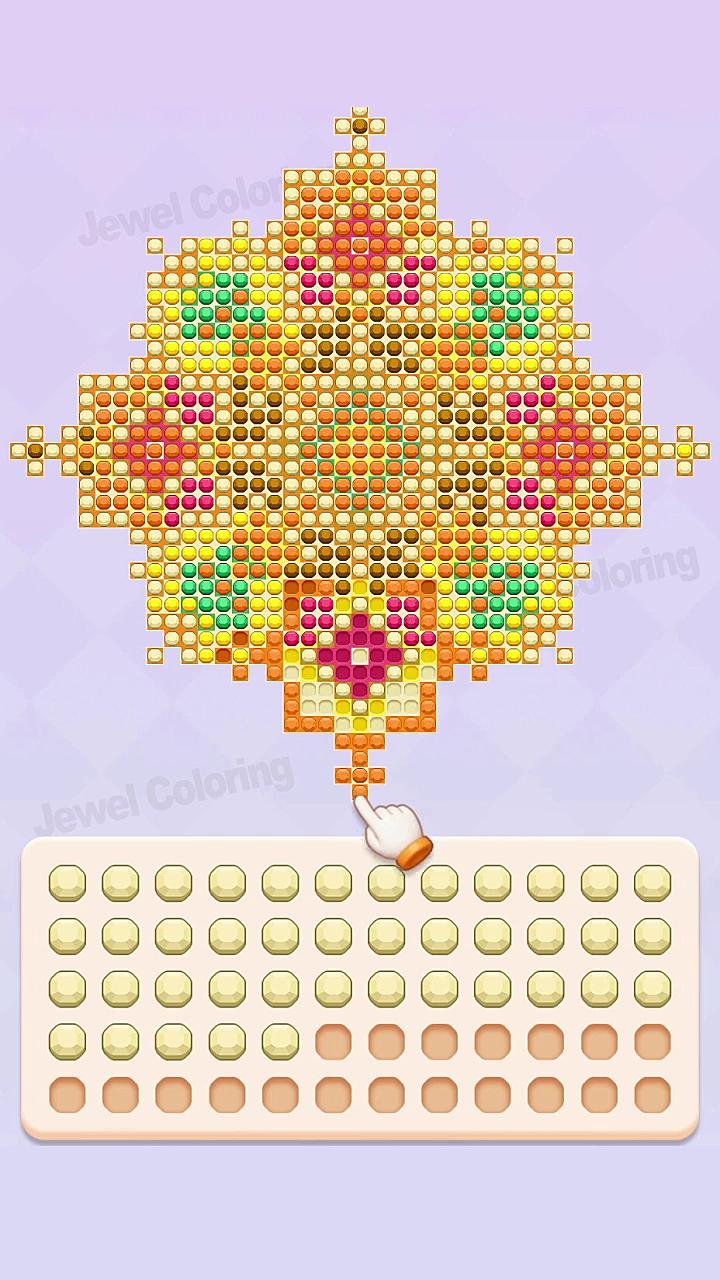 Entry #11 — 52 seconds, first seen 2026-04-01 on the opening day of the April sprint. 6,098,137 impressions at 1,615.0 per placement.
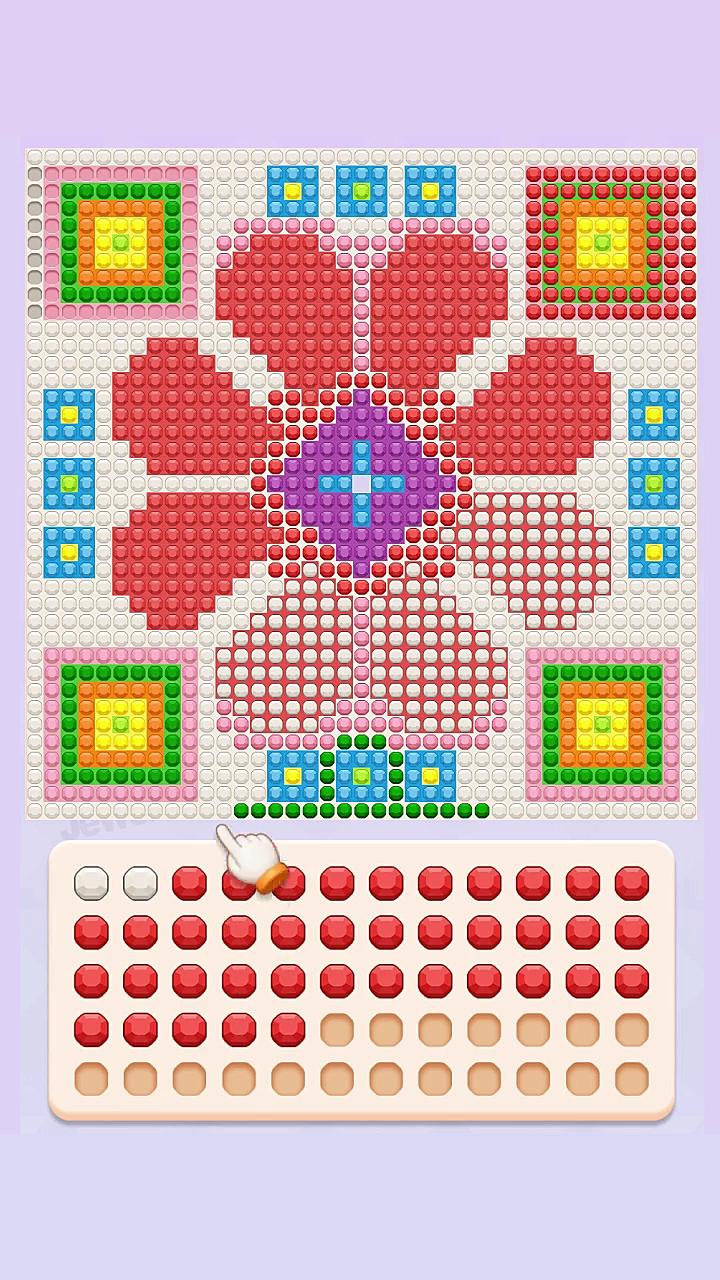 Entry #12 — 49 seconds, first seen 2026-04-01 alongside the 52-second cut and a playable. Three assets launched the same day, spanning three formats. 4,980,000 impressions at 1,791.4 per placement.
What a frozen fleet tells you
Ninety-six days without a new creative, and downloads up 5.48%. Three explanations fit.
One: the fleet is sufficient and the pause is deliberate. Entry #3, launched 2026-05-15, is the third-largest entry in the account despite being the joint-newest, and it is still delivering inside the current 30-day window. If your most recent shipment is still performing, adding a fourth major asset competes with it for the same inventory rather than expanding total delivery. On this reading Ta Ta found its file, re-paired it twice more, and is letting the result run.
Two: the growth is not coming from advertising. A +5.48% download change on a title with a 615-million-impression fleet could be driven by organic discovery, store featuring, or seasonality, with the ad fleet simply holding a floor. The fleet's own behaviour is neutral on this: it neither expanded to chase the growth nor contracted to abandon it.
Three: the team has moved on. Ta Ta's unified product record lists three product IDs and 3,358 lifetime creatives — a small operation by category standards. A studio of that size shipping twelve creatives in seventeen days and then nothing for three months could simply be working on something else. Nothing in US creative data would reveal that.
The discriminating observation is entry #3's 30-day impression total on successive pulls. If it holds through the autumn with no new entries added, reading one is correct and the pause is judgement. If it falls and nothing replaces it, readings two or three become much more likely. Because the impression field is itself a 30-day window, comparing the same window month over month is the clean way to see that — no per-day arithmetic required.
What transfers to your UA program
If you run creative production: the reusable finding is not "54 seconds works" — it is what Ta Ta stopped spending money on. It shipped seven video masters in seventeen days, read the result, and then never shot another video. Everything after 2026-04-17 is the winning file re-paired with a new end card. Six masters that were never re-run produced 7.3% combined; the one master that was re-run four times produced 28.1%. Most teams run the scatter phase and then keep producing new videos because variety feels like diligence. The cheaper move, visible here, is to hold the video constant and iterate only the layer that costs least.
If you run media buying: do not evaluate playables and videos on the same density metric. In this fleet playables deliver 1,180.6 impressions per placement and videos deliver 1,722.3, a 1.46x gap that is a property of the inventory each format qualifies for, not of the creative quality. Judged on density alone you would kill the two assets that are 57.7% of the account.
If you run competitive intelligence: check the platform split before you report a number. Both of this account's largest creatives run on the Android package under a company ID that differs from the iOS build's, and the two publisher name strings differ by one space. An iOS-only view of Jewel Coloring reports 136 million impressions. The real figure across the top fifteen is 615 million.
If you are competing with Ta Ta in coloring: the exploitable structure is the freeze. Fourteen live assets, none newer than 96 days, and two of them carrying 57.7% of delivery. A competitor shipping fresh creative into this category right now is bidding against a fleet that has not been refreshed in over three months.
A falsifiable prediction
Prediction: Ta Ta will add at least one new measurable US entry for Jewel Coloring before 2026-11-01, and when it does, it will reuse an existing video master or be a pure playable rather than a newly shot video. Separately, entry #3 will pass 170,000,000 cumulative impressions by 2026-11-15.
The basis: a 96-day entry gap is already long for a fleet whose entire history is a 57-day construction burst, and the only retirement signal so far (entry #14) suggests active housekeeping rather than abandonment. On format, Ta Ta has not created a new video master in 124 days while continuing to add entries as recently as 2026-05-15 — a publisher that has stopped shooting but not stopped deploying will reach for what it already owns. On volume, entry #3 recorded 99,253,920 impressions in the 30 days to 2026-08-19 and was the fleet's third-largest entry; holding roughly that level across the next three 30-day windows would clear 170 million cumulative with room to spare.
The informative failure would be a genuinely new video master — a fingerprint not seen in this pull — which would mean the 124-day production halt was a scheduling gap rather than a strategy. We will re-pull and report either way.
How to reproduce this teardown
- Resolve the unified product before counting. Four distinct games share close variants of this name, and the target product spans three product IDs across two platforms and two company IDs.
- Sort by first-seen date, not just by impressions. The 57-day build and the 96-day freeze — the defining features of this account — are completely invisible in an impressions-ranked view.
- Deduplicate by
videoFpbefore counting anything. Grouping by duration alone would have told you Ta Ta made four 54-second videos. It made one, and ran it four times. The two questions — "what did they make?" and "what did they deploy?" — have different answers, and only the fingerprint separates them. - Compute impressions per placement separately for playables and videos. Mixing them produces a fleet average that describes neither.
- Check every last-observed date individually. Fourteen of fifteen live and one that stopped yesterday is a different account from fifteen of fifteen live, and the difference does not appear in any total.
- Check whether your entries predate the measurement window before computing any per-day rate. If they all do, impressions-per-day is impressions divided by a shared constant, and any share built on it is identical to the impression share. Compare cohorts on impressions per entry instead — Jewel Coloring's two May entries average 53.8 million each against April's 39.7 million, which says the same thing without inventing a rate.
Methodology and data notes
- Source: AdMapix creative search, unified product search and download ranking APIs, all queried 2026-08-19, country filter
US, creatives sorted by impressions descending. - Sample: the top 15 US creatives by impressions for unified product Jewel Coloring,
6759081967, publisher Ta Ta Game Technology Limited, AdMapix company ID12817602. Ten resolve to Android packagecolor.number.paint.pixle.art.sort.jigsaw(company491323619, publisher string "TaTa Game Technology Limited"); five resolve to iOS app ID6759081967(company12817602, publisher string "Ta Ta Game Technology Limited"). The unified product record lists three constituent product IDs, so this is a top-of-fleet view rather than a complete inventory. - Identity resolution: at least three unrelated products carry close name variants — Jewel Coloring puzzle (STELLASOFT GAMES), Jewel Trip, Jewel Coloring (Lite Tools Games) and Diamond Sort: Jewel Coloring (GOODS PUZZLE). None of their data appears in this article. Every figure was checked against product ID and company ID, not app name.
- "Days live" is the span between first-observed and last-observed timestamps, measured to the pull date. Fourteen creatives recorded a last-observed timestamp of 2026-08-19 and are treated as live. Entry #14 recorded 2026-08-18 and is treated as stopped.
- "Placements" (
showCnt) counts recorded creative appearances, not unique users and not unique publishers. Impressions per placement is a distribution-shape indicator, not a frequency metric. - "Format" is derived from recorded video duration. Entries with no duration and a recorded playable URL are classified as pure playable units.
- Measurement window. The
impressionfield is a rolling 30-day value, not a lifetime total. Verified directly: a default query returns figures identical to a query bounded bystart_date2026-07-20 /end_date2026-08-19, and shifting the start by one day changes every figure. All impression, placement and density figures here describe the 30 days ending 2026-08-19. - Correction: a removed metric. An earlier version of this article carried an impressions-per-day column and a cohort comparison reporting the May cohort over-indexing on "daily output" by 1.34x. Both have been removed. All fifteen entries were first seen before 2026-07-20, so each has identical exposure inside the 30-day window; dividing by days-since-first-seen mixed a 30-day numerator with denominators of 96 to 153 days, and dividing by the window length instead makes any per-day share arithmetically identical to the impression share. No conclusion in the current version depends on a per-day rate.
- Entry versus asset. Each row returned by creative search is an ad entry, not necessarily a distinct piece of production. Deduplicating this sample by
videoFpandplayHtmlFpreturns seven distinct video masters and five distinct playable masters — twelve assets across fifteen entries. One 54-second video master accounts for four entries. All five playable masters appear both standalone and as end cards. Impressions are reported per entry and are not double-counted, so all volume, placement and density figures in this article are unaffected; only counts of Ta Ta's output are. An earlier version of this article described the four 54-second entries as four separate creatives, which was wrong and has been corrected throughout. - Lifetime creative counts and lifetime impressions in the benchmark tables come from unified product records and are global, all-time figures — not US-only, not period-limited. They are used only for cross-product comparison of production intensity and are never mixed with the US period figures elsewhere in this article.
- Competitor fleet comparisons are restricted to pulls that resolved cleanly to a single product. Coloring Match and Diamond Painting ASMR Coloring were excluded from the US fleet table because their top-10 pulls spanned multiple distinct products; they appear only in the product-level table.
- Impressions are third-party modelled estimates, not publisher-reported figures and not spend. They support relative comparison and should not be converted to dollar values.
- Download figures are US-region estimates for the current ranking period. Jewel Coloring appeared at position 106.
- Store listings: App Store and Google Play.
- Coverage is limited to creatives observable through third-party ad monitoring.
Frequently Asked Questions
How many ads is Jewel Coloring running in the US? Fifteen measurable ad entries as of 2026-08-19, totalling 615,015,856 impressions across 463,015 placements, of which fourteen were still live on the pull date. Those fifteen entries resolve to only twelve distinct assets — seven video masters and five playable masters — because one 54-second video runs under four entries. Every entry was first seen inside a 57-day window between 2026-03-19 and 2026-05-15.
What is Jewel Coloring's best-performing ad creative? A playable unit first seen 2026-04-04, carrying 177,856,468 impressions across 143,511 placements — 28.9% of the fleet. It is effectively tied with a second playable first seen 2026-04-01 at 176,953,416 impressions; the two differ by 0.5% and together account for 57.7% of all fleet impressions.
Why has Jewel Coloring not launched a new ad in 96 days? The most recent entries appeared on 2026-05-15 and are still delivering — one of them is the third-largest entry in the account by 30-day impressions. When your newest shipment is still performing, adding another major asset competes with it for the same inventory rather than expanding delivery, so a pause can be a deliberate choice. The alternative readings, which the creative data cannot rule out, are that growth is coming from a non-advertising source or that the team has shifted to another title.
What ad length does Jewel Coloring use? Fifty-four seconds — but that is one video file, not a house format. A single 54-second master runs under four separate ad entries and delivers 1,789.9 impressions per placement, the densest video in the fleet, carrying 28.1% of impressions. Six other video masters run at 28, 42, 45, 49, 51 and 52 seconds, one entry each, and produce just 7.3% combined. Ta Ta has not created a new video master since 2026-04-17.
Does Jewel Coloring use playable ads? Yes, and they carry most of the volume. Five playable masters account for 64.7% of fleet impressions against the video side's 35.3%. Every one of those five also does double duty as an end card behind a video, so there is no attachment-only playable in this fleet. Playables deliver at 1,180.6 impressions per placement against video's 1,722.3 — a 1.46x density gap that reflects the broader, thinner inventory interactive formats qualify for, not weaker creative.
Is Jewel Coloring's ad fleet on iOS or Android?
Predominantly Android. Ten of the fifteen entries — including both of the two largest assets — resolve to the Android package color.number.paint.pixle.art.sort.jigsaw and account for 77.8% of measured impressions. The five iOS entries under app ID 6759081967 carry the remaining 22.2%. The two builds sit under different AdMapix company IDs with publisher name strings differing by a single space.
How does Jewel Coloring compare to other coloring games on ad efficiency? It leads the category on impressions per creative at 2,782,543, ahead of Satisfying Coloring (2,652,049), Coloring Match (2,046,708), Oakever's Paint by Number Coloring Games (1,710,717) and SayGames' Color Page ASMR (879,164). It achieves that from the second-smallest creative library in the group — 3,358 lifetime assets against Paint by Number's 37,691.
Want to see whether your own duration experiments ever actually converged? Per-creative impressions, placement counts, exact runtimes, first-seen and last-seen dates and playable attachment are all live in AdMapix, filterable by country, publisher and product ID — with unified product resolution across iOS and Android so a platform split never costs you three-quarters of a fleet. Create a free account to run this teardown on any title in your category, or see plans for full historical access.
Data source: AdMapix third-party ad intelligence estimates, United States, retrieved 2026-08-19. Impression and download figures are modelled estimates for comparative analysis and are not publisher-reported. Figures change as new creatives enter rotation.
Related Reading
- Ad strategy teardowns (series index) — every teardown in the series, in publication order
- Mobile game ads guide: formats, examples and research — the format matrix, research workflow and KPI guardrails every teardown in this series applies
- Arrows – Puzzle Escape — A creative-level teardown of Lessmore GmbH's US user acquisition for Arrows – Puzzle Escape duri…
- 82-0.com — Vaulty Studios' 82-0
- Royal Kingdom — Royal Kingdom's US Top 10 pairs long-form video with playable end cards
Turn these observations into your next creative study
Open the creative library and select samples for your market, network and research question.
Related Articles
Solitaire Associations Journey Ad Strategy 2026: Everything Delivers at 100 Impressions per Placement — Playables, Videos, iOS and Android Alike
Hitapps Games' US fleet for Solitaire Associations Journey runs 132,950,973 impressions across fifteen creatives in the 30 days to 2026-08-19, and 44 of 45 sampled creatives were still live on that date. The remarkable thing is the uniformity: pure playables deliver at 95.0 impressions per placement, videos at 99.9, iOS at 96.7, Android at 97.6. Format, platform and a 230-day age spread move the number by less than 6%. Downloads are down 17.41% anyway.
Block Craft 3D Ad Strategy 2026: 168 Videos, 96 Playables, 850 Combinations — and the Biggest Ad in the Name-Space Belongs to Somebody Else
A teardown of Wildlife Studios' Block Craft 3D: Building Games in the US. 850 measured ad instances carry 117 million impressions from only 168 distinct videos and 96 distinct playables — one video is paired with 67 different playable end cards. Meanwhile a different publisher with a near-identical app name runs the single largest creative in the category, 1.8x bigger than Wildlife's best.
MONOPOLY GO! Prediction Check: The Successor Fleet Arrived on Schedule — and the June 18 Cohort Refuses to Die
On August 7 we published a falsifiable prediction about MONOPOLY GO!'s creative rotation: the June 18 cohort would reset by early September, with a successor batch surfacing first. Checked against live AdMapix data, half landed early — three successor waves, then a 100-file August flood with new 59-94s durations — and half is breaking the model: the June 18 creatives are past the 60-67 day ceiling that killed every previous generation, and still running.