
Smash Fest! Ad Strategy in 2026: The Playable-Only Blitz Behind a Top-10 Chart Debut
Smash Fest!'s top 15 US ad creatives contain zero videos and zero static images — every single one is a playable. We reconstruct Flow Games' launch playbook from the AdMapix index: 1.37 billion model-estimated impressions, a seven-ad launch executed in 48 minutes, a two-wave creative reset that cleared the old generation in nine minutes flat, and a new cohort running 3x hotter than the retired hero.
Every one of Smash Fest!'s top 15 US ad creatives is a playable. Not most — all fifteen: zero videos, zero static images, adding up to 1.37 billion model-estimated impressions in the AdMapix index as of August 10, 2026. That makes Flow Games' hit the exact inverse of MONOPOLY GO!'s all-video machine we took apart last week — and on today's US download chart, where every other game is cooling, Smash Fest! is the only one still growing (+11.87%, rank #10).
The operational tempo is even more striking than the format bet. On July 23, Flow Games launched seven playables inside a 48-minute window. Eleven days later, on August 3 at 9 PM, it retired four veterans — including its 58-day, 260-million-impression hero — inside nine minutes. This teardown reads the whole launch campaign from the timestamps out: what a playable-only blitz looks like, what it costs in creative lifespan, and which parts a team without launch-week momentum can steal. To run these queries yourself, an AdMapix account is all you need.
TL;DR — Executive Summary
- 1.37 billion model-estimated impressions across Smash Fest!'s top 15 US creatives (AdMapix index, pulled 2026-08-10) — accumulated in barely two months, the game's entire chart-visible life.
- 100% playables. No video or static creative makes the top 15. MONOPOLY GO!'s top 15 is 100% video; Smash Fest! is the mirror image.
- The July 23 batch: seven playables launched between 22:38 and 23:26 — all seven still live 18 days later, already carrying a combined 723.9M impressions (~40M/day as a fleet).
- A two-wave generational reset: four old creatives retired across ~25 hours on July 29–30, then four more — the 58-day hero among them — cut on August 3 between 21:09 and 21:18. Nine minutes to clear 393.7M impressions' worth of proven ads.
- The new generation runs ~3x hotter than the old: the July 23 leader averages ~13.5M impressions/day versus the retired hero's ~4.5M/day.
- Median creative age at retirement: ~35 days — roughly half of Scopely's 60–67-day ceiling. Playable blitzes cycle faster.
Where Smash Fest! Sits on Today's Chart
The US download top 12, pulled the same morning as the creative data (AdMapix general top chart, all categories, daily window):
| # | App | Developer | Est. downloads | Growth |
|---|---|---|---|---|
| 1 | TikTok | Bytedance | 5,836,402 | -15.09% |
| 2 | ChatGPT | OpenAI | 4,404,821 | -24.82% |
| 3 | CapCut | Bytedance | 2,634,745 | -26.65% |
| 4 | WhatsApp Messenger | WhatsApp Inc. | 2,177,744 | -32.09% |
| 5 | YouTube | 2,177,034 | -36.73% | |
| 6 | Instagram, Inc. | 2,128,419 | -23.52% | |
| 7 | Netflix Game Controller | Netflix | 2,090,371 | -23.61% |
| 8 | Meowdoku! | Oakever Games | 2,044,794 | -24.98% |
| 9 | Depop | Depop Ltd | 1,846,335 | +8.41% |
| 10 | Smash Fest! | Flow Games | 1,733,083 | +11.87% |
| 11 | PineDrama | Bytedance | 1,718,147 | +67.91% |
| 12 | Roblox | Roblox Corporation | 1,654,875 | -22.27% |
Read the growth column: it's a red day. TikTok -15%, YouTube -37%, fellow launch-phase puzzle Meowdoku! -25%. Among games, Smash Fest! is the only riser — three days ago its growth printed +51.75% (as recorded in our MONOPOLY GO! teardown's chart snapshot), so the spike is maturing, but it hasn't rolled over. Launch spikes decay by default; this one is being actively defended. The defense mechanism is the subject of this article.
 Smash Fest! (Flow Games A.S., package com.flow.cannonball) — #10 on the US download chart and the only game still growing on it, 2026-08-10.
This teardown reads one launch-phase advertiser in isolation. For the market-wide baseline it sits against — monthly creative-production volume, vertical shares, and the country benchmarks shaping H2 budgets — see the State of Mobile Advertising H2 2026 report.
The Top 15 US Creatives: All Playables, 1.37 Billion Impressions
One query: creatives matching Smash Fest!, US market, sorted by model-estimated impressions, pulled 2026-08-10. Days live = first seen → last seen in the index.
| # | Format | First seen | Last seen | Days live | Est. impressions | Shows tracked | Status |
|---|---|---|---|---|---|---|---|
| 1 | Playable | 2026-06-06 | 2026-08-03 | 58 | 260,723,687 | 414,000 | Retired (Wave 2) |
| 2 | Playable | 2026-07-23 | 2026-08-10 | 18 | 242,668,839 | 465,410 | Live |
| 3 | Playable | 2026-07-23 | 2026-08-10 | 18 | 176,629,565 | 360,368 | Live |
| 4 | Playable | 2026-07-23 | 2026-08-10 | 18 | 154,216,779 | 310,050 | Live |
| 5 | Playable | 2026-06-26 | 2026-07-30 | 34 | 121,450,961 | 204,002 | Retired (Wave 1) |
| 6 | Playable | 2026-07-23 | 2026-08-10 | 18 | 98,254,490 | 190,828 | Live |
| 7 | Playable | 2026-06-25 | 2026-07-30 | 35 | 76,035,744 | 104,654 | Retired (Wave 1) |
| 8 | Playable | 2026-07-10 | 2026-08-03 | 24 | 71,623,224 | 126,413 | Retired (Wave 2) |
| 9 | Playable | 2026-07-03 | 2026-07-29 | 26 | 39,583,536 | 49,605 | Retired (Wave 1) |
| 10 | Playable | 2026-06-26 | 2026-08-03 | 38 | 30,895,953 | 43,127 | Retired (Wave 2) |
| 11 | Playable | 2026-06-27 | 2026-08-03 | 37 | 30,509,902 | 56,029 | Retired (Wave 2) |
| 12 | Playable | 2026-07-23 | 2026-08-10 | 18 | 25,525,120 | 49,560 | Live |
| 13 | Playable | 2026-07-23 | 2026-08-10 | 18 | 13,643,569 | 27,170 | Live |
| 14 | Playable | 2026-06-25 | 2026-07-30 | 35 | 13,096,336 | 17,159 | Retired (Wave 1) |
| 15 | Playable | 2026-07-23 | 2026-08-10 | 18 | 12,954,862 | 23,320 | Live |
Totals: 1,367,812,567 model-estimated impressions and 2,441,695 tracked show events across fifteen playables. The table divides itself into exactly three groups: an old generation launched between June 6 and July 10 (eight creatives, all now retired in two dated waves), the July 23 batch (seven creatives, all live), and nothing else. There are no stragglers, no solo experiments, no lingering veterans. For a game that has existed on the chart for mere weeks, that is remarkably clean fleet hygiene — and every date in the story is visible in public data.
Zero Video: What a Playable-Only Bet Means
Format mix is the loudest strategic signal an ad fleet broadcasts, and Smash Fest!'s is unambiguous. Compare the three games we now have full teardowns or pulls for:
| App | Top-15 format mix | Top creative | Interpretation |
|---|---|---|---|
| Smash Fest! | 15/15 playable | 260.7M impressions | Try-first acquisition |
| MONOPOLY GO! | 15/15 video | 1.85B impressions | Watch-first acquisition |
| Meowdoku! | Video-led (53–60s) | 151.3M impressions | Long-video persuasion |
A playable-only fleet implies three commitments. First, the mechanic is the pitch: a smash-everything cannonball loop that explains itself in five seconds of touch is worth more played than shown, so Flow Games spends its entire top-of-funnel on interaction. Second, higher-intent installs: a user who taps through a demo before hitting the store converts with fewer surprises — a structural answer to launch-phase retention pressure. Third, placement concentration: playables live overwhelmingly in rewarded and interstitial slots inside other games, which means Flow Games is buying its players almost entirely out of other games' sessions — a poaching strategy, not a broadcast strategy.
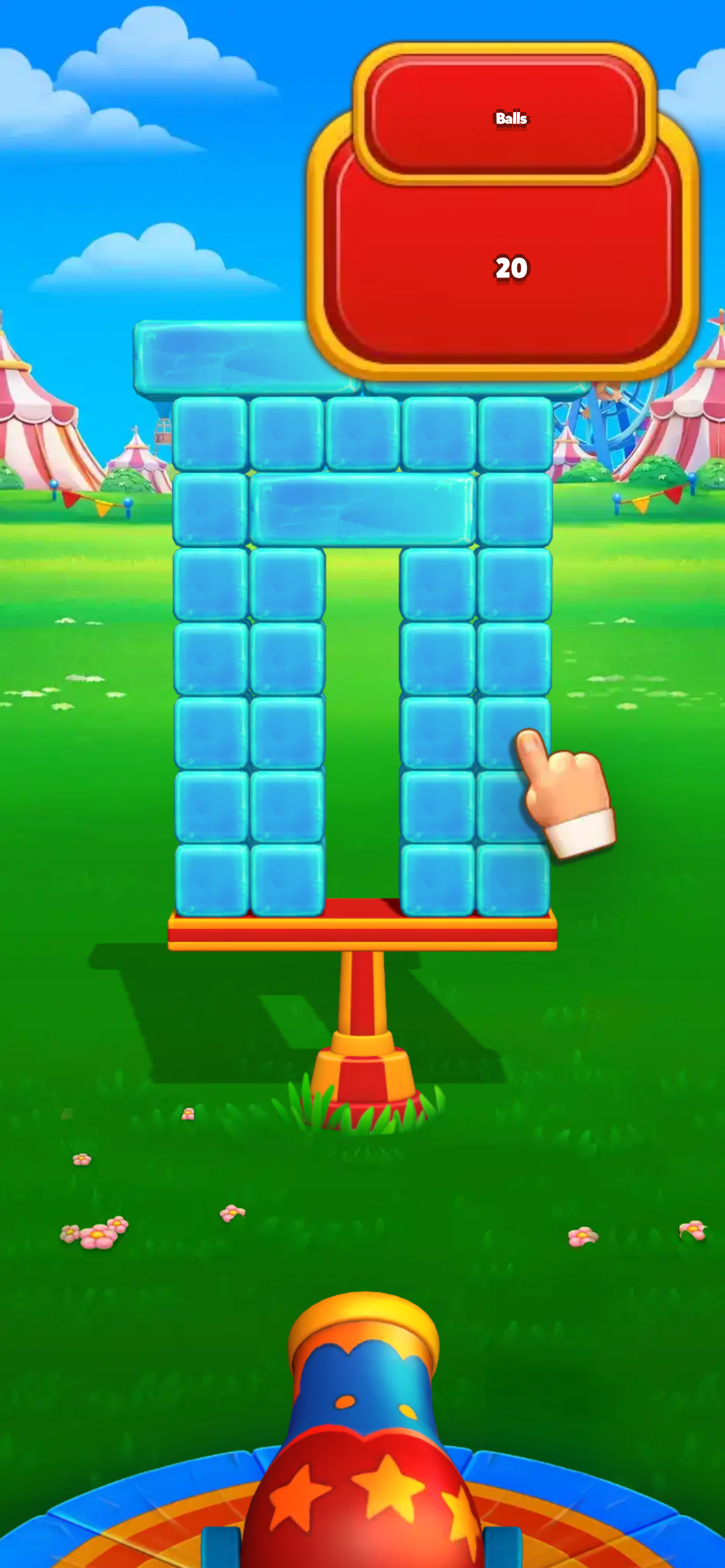 Creative #1 — the hero playable. 260.7M model-estimated impressions over 58 days (2026-06-06 → 2026-08-03), ~4.5M/day, retired at peak in the August 3 sweep.
The show-count column supports the placement reading. Smash Fest!'s fleet logged 2.44M tracked shows against 1.37B impressions — roughly 560 impressions per tracked show event, in a band of ~490–800 across all fifteen creatives. In our MONOPOLY GO! analysis the same ratio computed to ~8,400 for its video fleet. Different advertisers sit in different bands because the ratio fingerprints their placement mix; within one advertiser it stays consistent, which is what makes the impression rankings trustworthy in both cases.
Format doctrine does not have to be a publisher-level decision, though. Flow Games applies one answer to one title; Century Games sets the playable ratio separately for each of its three US titles, and the playable-versus-video verdict reverses between them. Smash Fest! shows what a doctrine looks like when a launch commits to it entirely; the Century Games portfolio shows what happens when a publisher declines to commit and lets each title answer on its own evidence.
The Hero: 58 Days, Then Retired at Full Speed
Creative #1 tells the whole lifecycle in one row. First seen June 6 — before the game had any chart presence — it ran 58 days and compounded 260.7 million impressions at ~4.5M/day. On August 3 at 21:18 it disappeared from the index, in the same nine-minute window as three other veterans, while seven younger playables kept running.
Two things make this ending notable. First, nothing in the data suggests decline — the creative was the fleet's all-time impression leader on the day it was cut. As with Scopely, lifespan here reads as a policy, not a performance verdict: the advertiser retired a winner on schedule. Second, the hero's throughput had already been eclipsed. The July 23 batch leader was averaging ~13.5M impressions/day — three times the hero's lifetime rate — meaning the old flagship wasn't killed to stop a loss; it was killed because its successor was already outrunning it. That is what a working creative pipeline looks like from the outside: the ceiling keeps moving up, and retirement chases the ceiling.
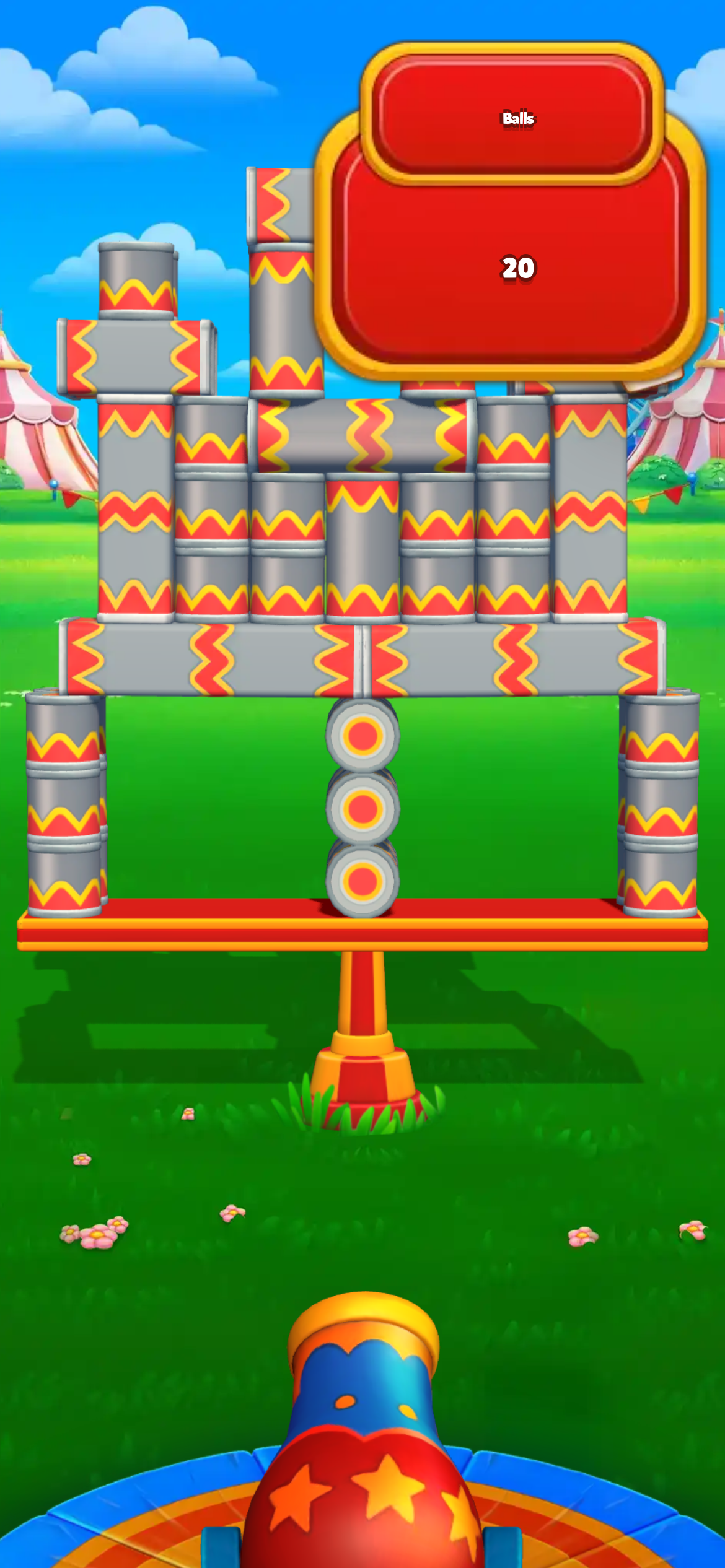 Creative #5 (June 26 cohort) — 121.5M impressions in 34 days, retired in the July 29–30 wave.
The Ramp: How the June Generation Was Assembled
Rewind to the campaign's first seven weeks and a second story appears in the launch timestamps — the operation professionalizing in public:
| Launch event | Date(s) | Creatives | Pattern |
|---|---|---|---|
| Solo hero | 06-06 05:34 | 1 | Single scout creative |
| First cluster | 06-25 → 06-27 (~67h) | 5 | Loose three-day batch |
| Solo test | 07-03 05:54 | 1 | Mid-cycle probe |
| Solo test | 07-10 05:22 | 1 | Mid-cycle probe |
| Tight batch | 07-23 22:38 → 23:26 (48 min) | 7 | Synchronized drop |
The evolution is unmistakable. The campaign opened with a single playable scouting the market for three weeks alone. The first expansion was a loose cluster — five creatives spread across three days in late June, launched at scattered hours (05:04, 10:36, 00:00, 18:00, 23:59), the signature of ads being uploaded as they came out of production. Two solo probes followed in early July. Then July 23: seven creatives inside 48 minutes, all timestamps packed into one late-evening session — production stockpiled in advance, launch executed as a single planned operation.
In seven weeks, Flow Games went from ship-when-ready to batch-and-synchronize. That progression matters more than any single number in this teardown, because it's the part that costs nothing to imitate: the same team, the same game, the same format — only the choreography changed, and the choreographed generation is the one running three times hotter. When people ask what "creative ops maturity" means concretely, this table is the answer: the calendar itself becomes evidence of a process being built.
It also sharpens the read on the two waves that followed. A team still uploading ads at random hours doesn't retire eight creatives in two synchronized sweeps. The reset discipline of late July arrived together with the launch discipline of July 23 — one system, installed mid-campaign, visible from the outside within days.
The July 23 Batch: Seven Playables in 48 Minutes
The launch timestamps of the current generation, straight from the index:
| Creative | Launched (2026-07-23) | Est. impressions by 08-10 | Est./day |
|---|---|---|---|
| #13 | 22:38 | 13,643,569 | ~0.8M |
| #3 | 22:58 | 176,629,565 | ~9.8M |
| #6 | 23:14 | 98,254,490 | ~5.5M |
| #2 | 23:17 | 242,668,839 | ~13.5M |
| #4 | 23:18 | 154,216,779 | ~8.6M |
| #15 | 23:24 | 12,954,862 | ~0.7M |
| #12 | 23:26 | 25,525,120 | ~1.4M |
Seven creatives, one 48-minute upload session, 723.9 million combined impressions in their first 18 days — the fleet as a whole is absorbing roughly 40M impressions per day. And the spread across the seven is the real information: two runaway winners (#2, #3), three solid mid-performers, two low-volume survivors. Flow Games shipped the batch wide and let the auction sort it — the same batch-test discipline we documented in Scopely's June 18 drop, executed in a different format and at triple the cadence.
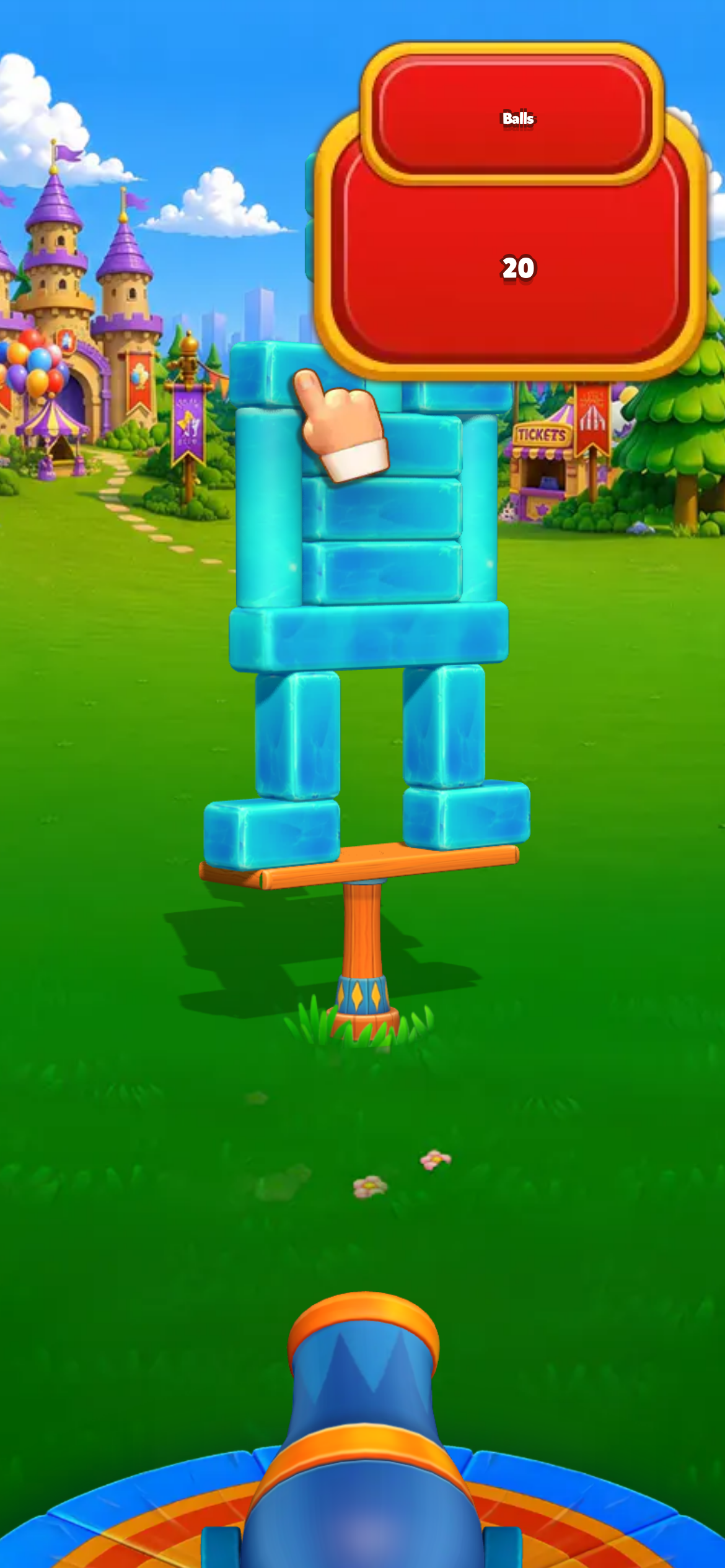 Creative #2 — the July 23 batch leader: 242.7M impressions in 18 days (~13.5M/day), already within 18M of the retired hero's lifetime total.
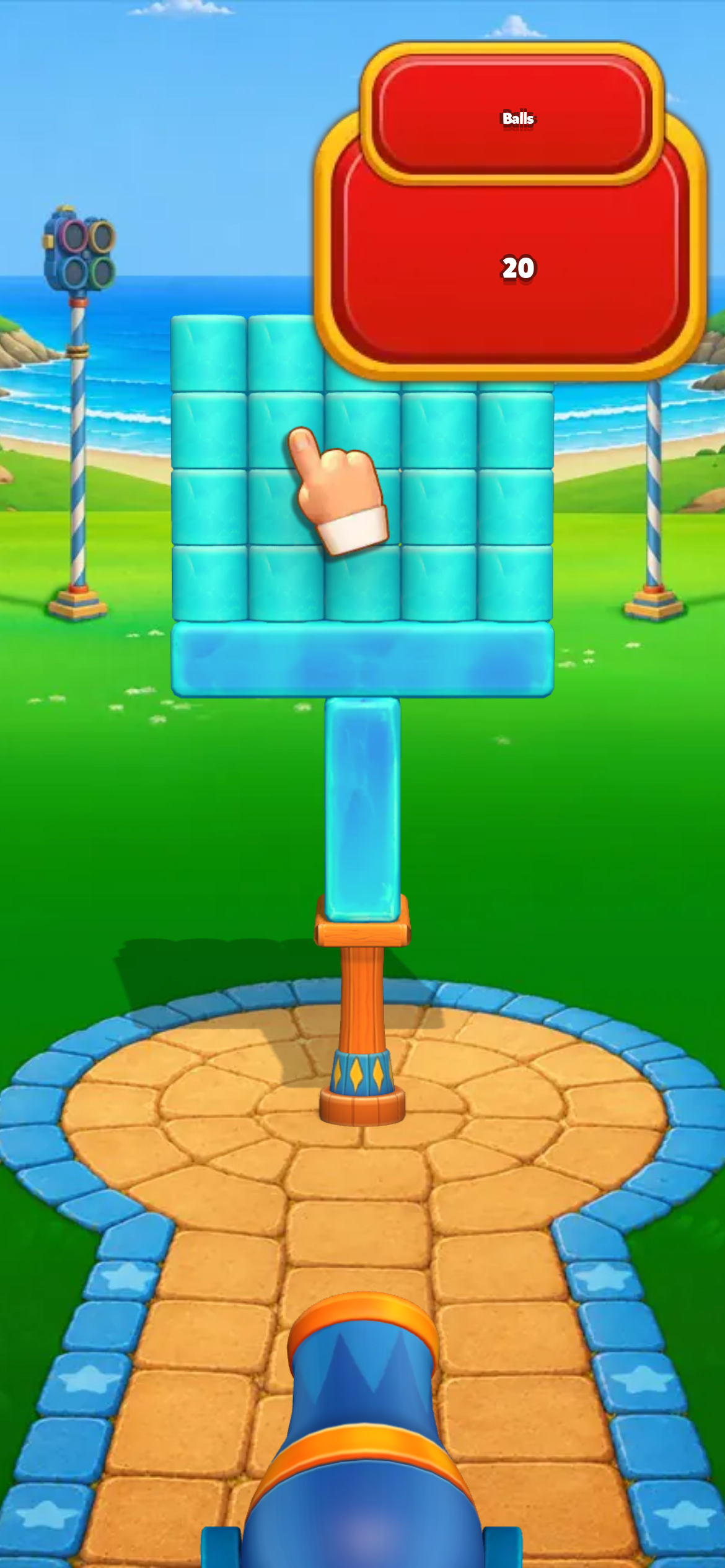 Creative #3 — second seat in the batch: 176.6M impressions in the same 18 days.
The batch's internal distribution is textbook auction economics: the top two seats absorbed 58% of the batch's impressions (419.3M of 723.9M), the top four absorbed 93%, and the bottom two survive on less than 4% combined. Yet Flow Games hasn't cut the laggards — eighteen days in, all seven remain live. In a fleet this disciplined, keeping 0.7M-per-day creatives running alongside 13.5M-per-day winners is a choice, and the plausible reading is coverage: low-volume creatives may hold placements or audiences the winners don't reach, and their cost of staying live is negligible. Blitz discipline applies to generations, not to individuals mid-generation.
Note what didn't happen either: the batch didn't replace the old generation on day one. For six days, twelve-plus playables ran side by side — new against old, measured on live traffic. Only after the batch had a week of production data did the retirements begin.
The Two-Wave Reset: Nine Minutes to Clear the Old Guard
The old generation exited in two dated, clustered sweeps:
| Wave | Window | Creatives retired | Combined impressions |
|---|---|---|---|
| Wave 1 | 07-29 22:58 → 07-30 23:50 (~25h) | #9, #14, #7, #5 | 250,166,577 |
| Wave 2 | 08-03 21:09 → 21:18 (9 minutes) | #10, #8, #11, #1 | 393,752,766 |
Wave 1 cleared the mid-tier veterans; Wave 2, four days later, took the remaining survivors — including the hero — in a single nine-minute operation. After 21:18 on August 3, the entire live fleet was July 23 stock. A complete generational handover, launch to full replacement, executed in eleven days.
If this pattern feels familiar, it should: our MONOPOLY GO! teardown caught Scopely doing the same synchronized-retirement move on July 29 (six creatives in 31 minutes). Two advertisers, opposite formats, identical operational signature. The difference is tempo — Scopely lets heroes run 60–67 days; Flow Games' retirees averaged ~35 days, half the cycle. Playable blitzes appear to burn creative faster, or launch-phase pressure demands fresher rotation, or both. Either way, the fatigue benchmark for a launch-phase playable fleet is now on the record: about five weeks.
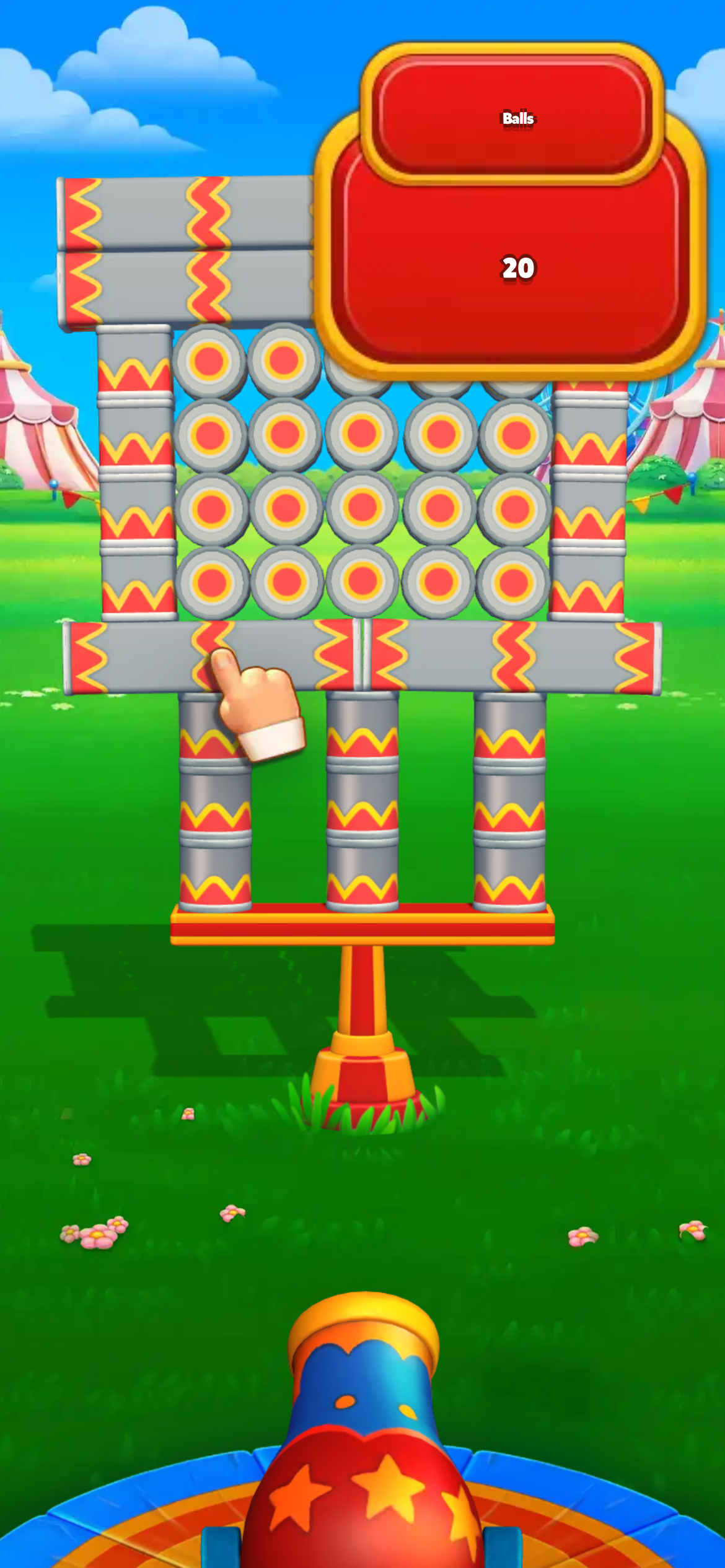 Creative #7 — 76M impressions in 35 days, retired in Wave 1. The ~35-day median age at retirement is half of Scopely's ceiling.
Lifecycle: What Five Weeks of Playable Service Looks Like
Ages at retirement across the eight retired creatives: 58, 38, 37, 35, 35, 34, 26, 24 days — median ~35. Ranked against throughput, the pattern is orderly: the longest-lived creative was also the biggest (the 58-day hero), mid-tier creatives served roughly five weeks, and the two shortest-lived (24 and 26 days) were also among the smallest earners. Unlike Scopely's fixed-age guillotine, Flow Games' retirement age loosely tracks performance rank — winners earn extra weeks, laggards exit early. A blitz this young can't afford pure calendar discipline; it prunes by contribution.
For the current generation, that implies a testable schedule: if the ~35-day median holds, the July 23 batch is due for its own reset around the last week of August, with a successor batch appearing in the index beforehand. Like the prediction we logged for Scopely (whose June 18 cohort should reset in late August under its own cadence), this is a falsifiable claim anyone can check against public data — and we will, in a follow-up.
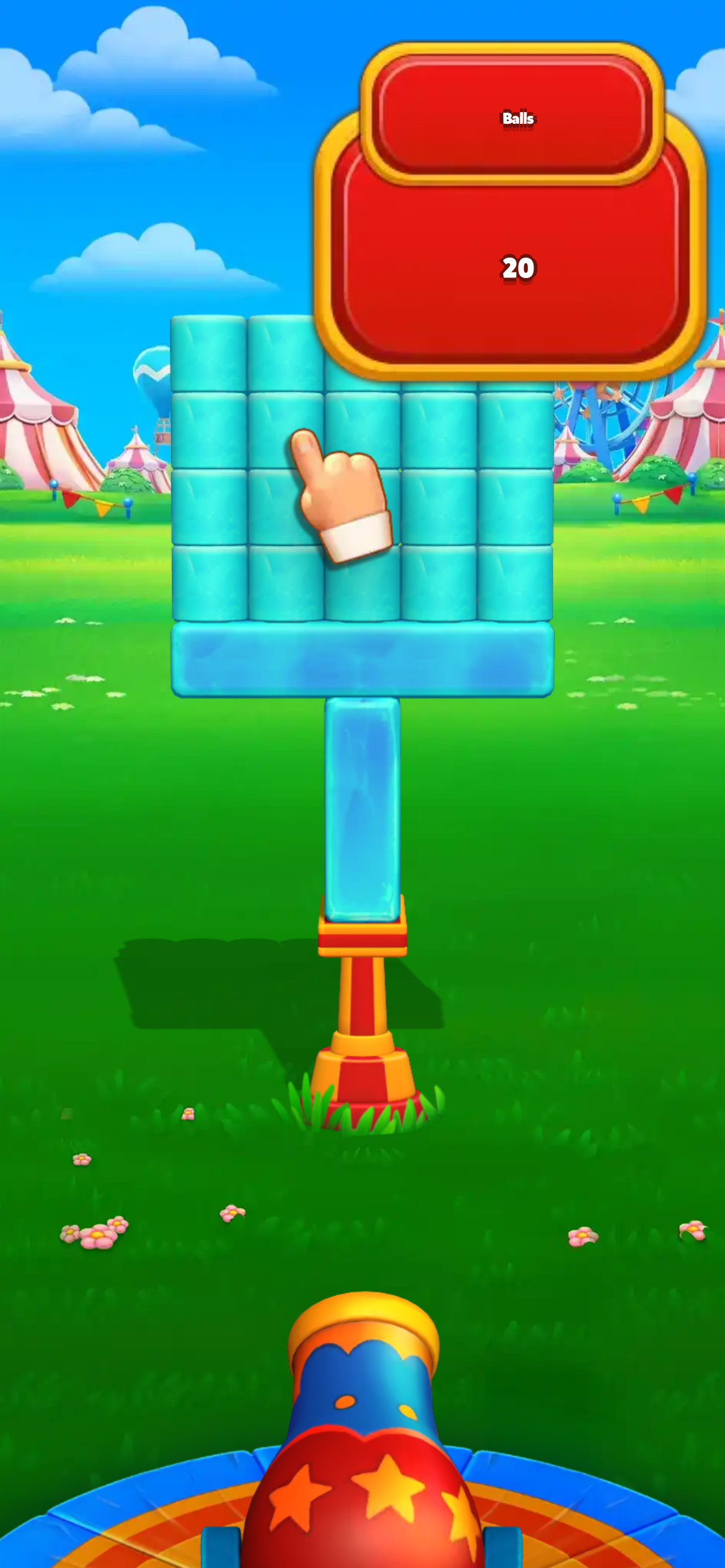 Creative #8 — launched July 10 solo between generations, retired 24 days later in Wave 2: the shortest service life in the top 15.
Escalation: The New Generation Runs 3x Hotter
Put the generations side by side and the campaign's trajectory is unmistakable:
| Generation | Best creative | Days | Est./day (best) | Fleet-wide est./day |
|---|---|---|---|---|
| June (retired) | 260.7M | 58 | ~4.5M | — (staggered launches) |
| July 23 (live) | 242.7M | 18 | ~13.5M | ~40M across 7 |
The July 23 leader will pass the old hero's lifetime total within days, at three times the daily rate. Fleet-wide, seven concurrent playables absorbing ~40M impressions/day is a scale the June generation never reached. Flow Games is not maintaining its launch — it is escalating into it, spending harder as the chart spike matures. Combined with today's +11.87% growth print on a day the rest of the chart bled, the read is coherent: the chart position isn't residual launch momentum; it's being purchased in real time, and the purchasing is intensifying.
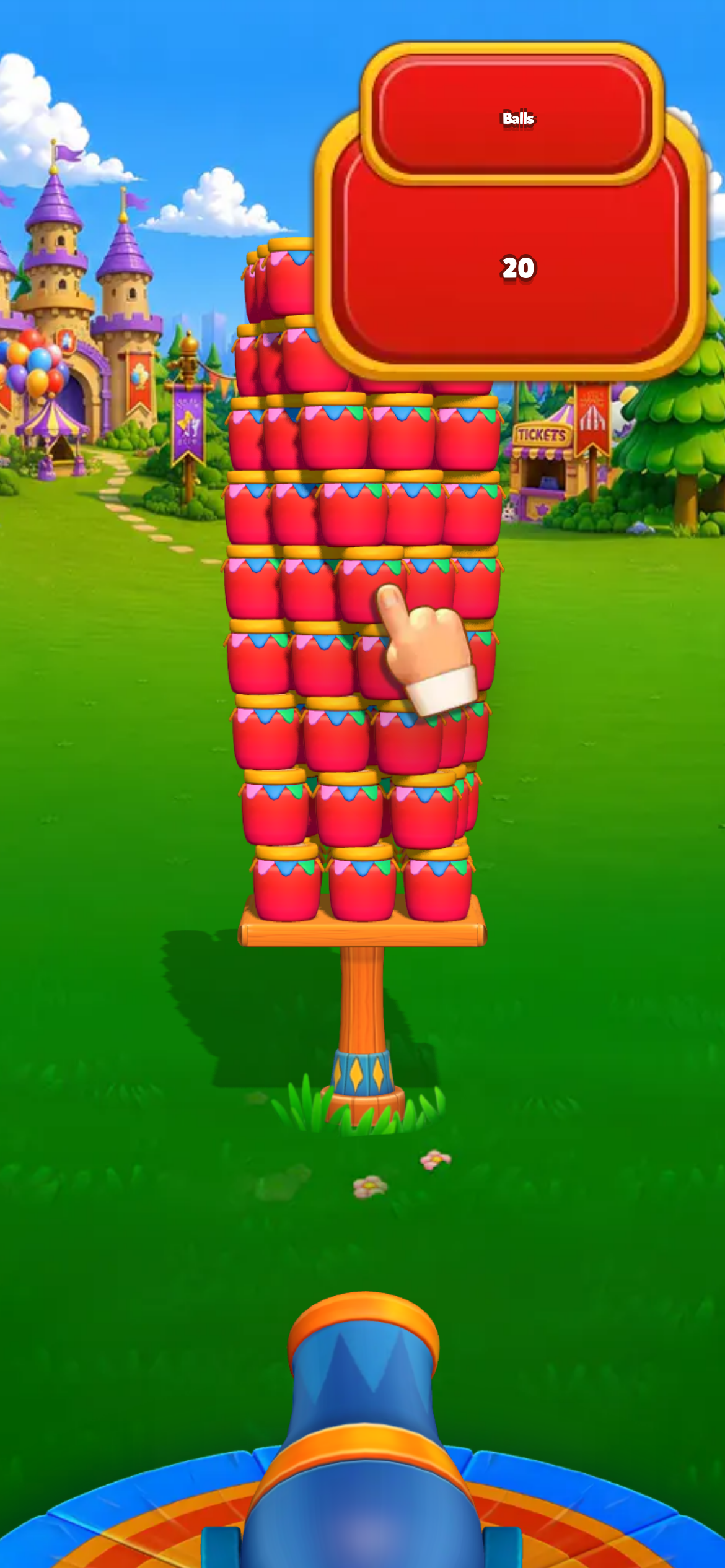 Creative #6 — 98.3M impressions in 18 days. Even the batch's fourth seat outpaces the retired generation's daily rates.
A Consistency Check: 490–800 Impressions per Tracked Show
As in every teardown we publish, before leaning on third-party estimates we test them against themselves. The index reports impressions and tracked show events independently; their ratio audits both:
| Creative | Est. impressions | Shows tracked | Impressions per show |
|---|---|---|---|
| #1 (hero) | 260,723,687 | 414,000 | ~630 |
| #2 (batch leader) | 242,668,839 | 465,410 | ~521 |
| #3 | 176,629,565 | 360,368 | ~490 |
| #7 | 76,035,744 | 104,654 | ~727 |
| #9 | 39,583,536 | 49,605 | ~798 |
| #13 | 13,643,569 | 27,170 | ~502 |
Across a 19x spread in creative size, the ratio stays inside 490–800 — every impression ranking in this article would reproduce identically if sorted by show counts instead. One second-order detail is worth flagging: the seven live July 23 creatives cluster tightly at 490–555, while the retired June generation spreads wider (567–798). If that compression is real rather than noise, the new generation's placement mix is more concentrated than the old one's — consistent with a team that has identified its best-performing slots and doubled down on them.
The cross-fleet comparison is the structural takeaway. Smash Fest!'s ~560 average sits an order of magnitude below the ~8,400 we measured for MONOPOLY GO!'s video fleet — and its 2.44M tracked shows against MONOPOLY GO!'s 853K, on roughly one-fifth the impressions, quantify the same trade from the other side. The playable fleet is shown far more often to far fewer people per show. Reach-per-placement is the price; a hands-on-screen interaction with every single placement is what it buys. Neither fleet is "bigger" in any simple sense — they're spending the same currency at different denominations.
Watching a Launch-Phase Competitor: Three Alerts Worth Setting
Launch campaigns move on a weekly clock, not a quarterly one — a monthly competitor review would have missed every event in this article. Three index conditions catch the whole story in real time:
- Batch-launch alert: four or more new creatives from one advertiser inside 24 hours. That's a generation shipping. Smash Fest! triggered it on June 25–27 (loosely) and July 23 (unmistakably). When a launch-phase competitor's batch lands, you have roughly a week before its winners are identified and scaled — the window in which your own counter-programming is cheapest.
- Synchronized-retirement alert: multiple creatives from one advertiser last seen inside the same hour. That's a reset, and it publishes the advertiser's internal fatigue verdict for free. Flow Games triggered it twice in six days; the nine-minute August 3 sweep would fit inside a coffee break, and inside it sat the fleet's all-time leader.
- Escalation check: compare the new generation's daily rate against the old one's. This is the single most predictive number for a launch. Second wave hotter than the first (Smash Fest!: 3x) means the developer is committing — expect the chart position to be defended for weeks. Second wave cooler means the launch is winding down and the chart slot will decay on schedule. Today's chart corroborates the escalation read: the only game growing on a red day is the one whose fleet just tripled its intensity.
Each of these is one saved search on the raw index — no dashboards, no vendor reports, just timestamps read with intent.
Smash Fest! vs MONOPOLY GO! vs Meowdoku!: Three Launch-Adjacent Playbooks
Fresh pulls for Smash Fest! and Meowdoku! (2026-08-10), MONOPOLY GO! figures as published in our August 7 teardown:
| App | Developer | Playbook | Top creative | Days live | Est./day | Format |
|---|---|---|---|---|---|---|
| Smash Fest! | Flow Games | Playable blitz | 260,723,687 | 58 (retired) | ~4.5M | Playable |
| — July 23 leader | 242,668,839 | 18 (live) | ~13.5M | Playable | ||
| MONOPOLY GO! | Scopely | Video blitz | 1,847,295,849 | 67 (retired) | ~27.6M | 28s video |
| Meowdoku! | Oakever Games | Long-video slow burn | 151,262,704 | 68 (live) | ~2.2M | 59s video |
Three games, three coherent and mutually exclusive systems. Scopely's video blitz buys mass reach at the highest per-creative intensity we've measured. Flow Games' playable blitz trades raw reach for intent, cycling creatives twice as fast at a sixth of the peak intensity. Oakever's slow burn runs 53–60-second videos for 68–81 days without a reset — its top three creatives are all still live, including one first seen May 21 — defending a chart spike with endurance rather than escalation. Notably, Meowdoku printed -24.98% on today's chart while Smash Fest! printed +11.87%: the blitz is currently outdefending the slow burn, though it is certainly outspending it too.
The practical use of this table isn't picking a winner — it's recognizing that format mix, creative lifespan, and reset cadence together identify an advertiser's entire operating model from five rows of public data. Any genre's leaders can be classified the same way in minutes.
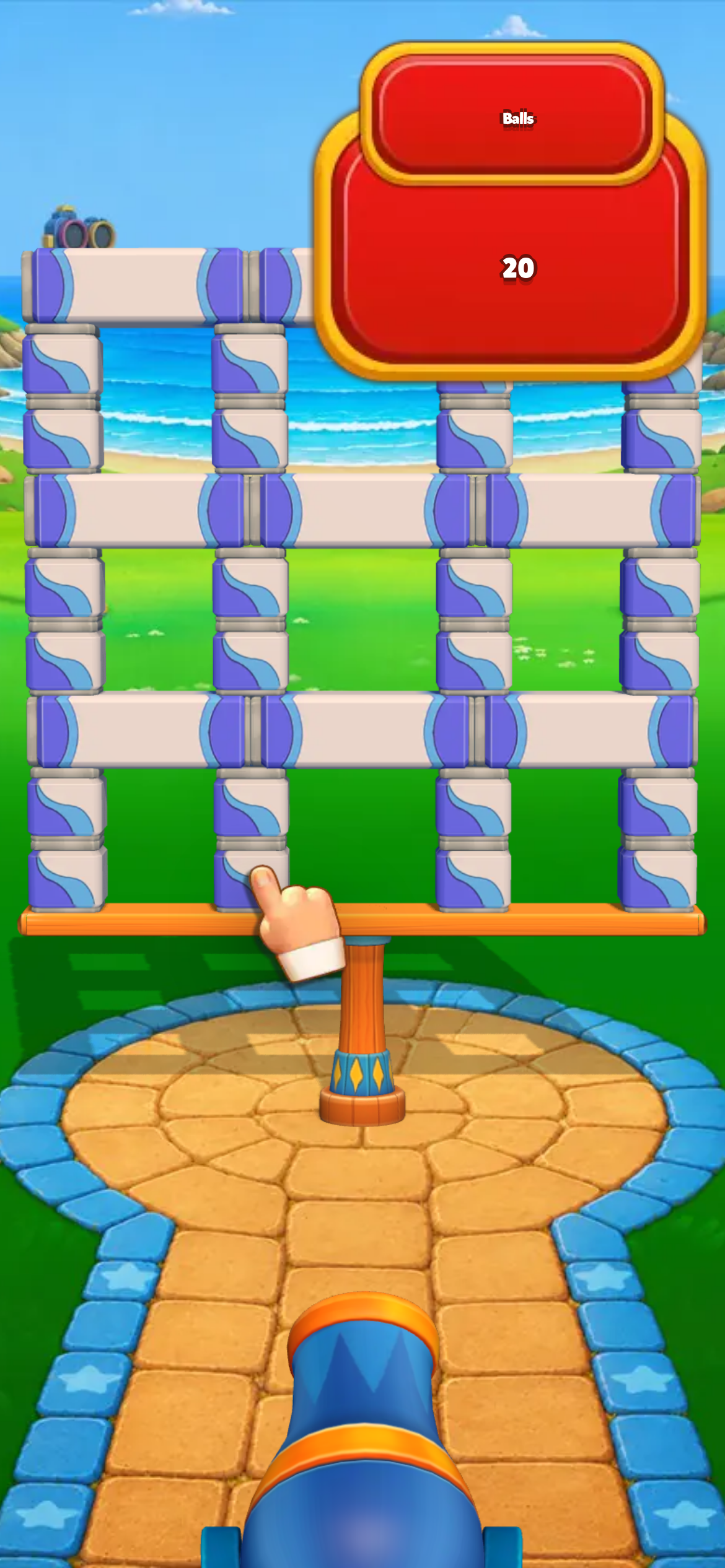 Creative #13 — the July 23 batch's low-volume survivor (13.6M impressions in 18 days). Batches ship wide; the auction decides the hierarchy.
Can You Copy This Playbook?
If you're launching a casual game: the copyable core is the sequence, not the spend. Ship playables in one batch, not one at a time — seven simultaneous variants gave Flow Games a full performance ranking within a week. Overlap generations for about six days before retiring anything. Retire in sweeps, not dribbles, so your fleet's data stays clean. And budget creative production for a ~35-day replacement cycle — a playable blitz eats roughly twice as much creative as a video fleet per calendar month.
If you run UA for an established title: the escalation curve is the benchmark worth stealing. Flow Games' second generation runs 3x hotter than its first; if your refresh batches aren't outrunning their predecessors, your pipeline is replacing creative without compounding it. Track your own generation-over-generation intensity the way this article tracks Flow's — the metric is computable from your own dashboards and from your competitors' public footprints alike.
If you're deciding between playable and video: the ~500–800 vs ~8,400 impressions-per-show fingerprint is the structural trade in one number — playables reach far fewer eyeballs per placement but interact with all of them. Smash Fest! and MONOPOLY GO! sit at the two poles, both winning. The format follows the mechanic: five-second-explainable loops earn playables; narrative or spectacle mechanics earn video. What the data rules out is the middle path of doing both half-heartedly — all three profiled advertisers commit near-totally to one lead format.
One budgeting note before you copy anything: count the creative production this playbook consumed. Fifteen distinct playables shipped in nine weeks is a sustained rate of roughly 1.7 new interactive creatives per week — and the July 23 batch implies three to four weeks of finished inventory stockpiled before launch night. A playable is a small game build, not an edit; teams pricing this strategy should budget engineering time, not just design time. The choreography is free to imitate; the pipeline feeding it is not.
What We Can't See — and What Would Change Our Read
An index shows placements, not invoices. Nothing here observes Flow Games' actual spend, CPI, day-7 retention, or revenue — the numbers that decide whether this blitz is heroic or ruinous. The escalation curve is consistent with a launch that's working (you don't triple down on a funnel that leaks), but it's equally consistent with a team spending to hold a chart position for visibility reasons — the index genuinely cannot distinguish confidence from stubbornness. We say so plainly because the difference matters to anyone benchmarking against this campaign.
What the read does offer is falsifiability, on two clocks:
- If the ~35-day cadence is real, the July 23 batch gets reset in the last week of August, preceded by a successor batch appearing in the index. No new batch by early September = the wind-down has begun, and the "defended spike" thesis dies with it.
- If the escalation is buying retention rather than masking churn, Smash Fest! holds a top-15 chart slot through August even as its growth percentage normalizes. A chart exit while the fleet stays hot would flip the diagnosis from "defense working" to "spending against gravity."
Either outcome will be visible in public data within four weeks, and we've scheduled the check. That's the standard this series holds itself to: every operating-model claim ships with the conditions under which we'd retract it.
Worth watching next: late August. Both clocks we've now set — Scopely's June 18 cohort (60-day cadence) and Flow Games' July 23 batch (35-day cadence) — come due within the same week. Two falsifiable predictions, one follow-up post.
Methodology & Data Notes
- Source: AdMapix creative index, queried 2026-08-10, US market filter, sorted by model-estimated impressions. Top 15 for Smash Fest!; top 3 refreshed for Meowdoku!. MONOPOLY GO! figures cite our August 7 teardown of the same index.
- Impressions are model estimates, not platform-reported figures; they reflect each creative's observation window in the index. Ratios and rankings are more robust than absolute values.
- Days live = first seen → last seen in the index; "Live" means observed on the final day of the window. Coverage outside tracked placements may lag or undercount.
- Show counts are index-tracked display events — a coverage proxy. The impressions-per-show ratio is placement-mix dependent; compare it within an advertiser, not across advertisers.
- Chart figures from the AdMapix general top chart (all categories, US, daily window), same-day pull.
- App identity per the index: Smash Fest!, developer Flow Games A.S. (Flow Games Bilisim Yazilim ve Pazarlama Anonim Sirketi on the chart), package com.flow.cannonball on Google Play. Background on the playable format: AppsFlyer's playable ads glossary.
- All figures are third-party estimates for research reference; they may differ from advertisers' internal data.
Frequently Asked Questions
What ad formats does Smash Fest! use? Playables, exclusively — all 15 of its top US creatives in the AdMapix index are playable ads, with zero videos and zero static images, totaling 1.37 billion model-estimated impressions as of August 10, 2026. No other advertiser we have profiled in this series commits to a single interactive format this completely; even playable-heavy fleets like Coin Master – Board Adventure's coexist with video elsewhere in their funnels.
How fast does Smash Fest! rotate its ad creatives? The retired generation's median age was ~35 days — about half of MONOPOLY GO!'s 60–67-day cycle. Flow Games launched seven replacements in a 48-minute window on July 23, then cleared the old generation in two synchronized waves (July 29–30 and a nine-minute sweep on August 3).
How many impressions do Smash Fest!'s ads get? The top 15 creatives total 1.37B model-estimated impressions. The retired hero earned 260.7M over 58 days (~4.5M/day); the current batch leader is running ~13.5M/day — roughly 3x hotter.
Why would a game use only playable ads? A self-explanatory mechanic converts better played than watched: playables pre-qualify installs (users try before the store), which supports launch-phase retention. The trade-off is reach — Smash Fest!'s fleet averages ~560 impressions per tracked show versus ~8,400 for MONOPOLY GO!'s video fleet.
Is Smash Fest!'s chart position organic or paid? The data points to actively purchased: on a day when every other charted game declined, Smash Fest! grew +11.87% while its live ad fleet absorbed ~40M impressions/day — and its second creative generation runs 3x hotter than its first. The spike is being defended and escalated, not coasted on.
How long do playable ads stay effective? It depends on intensity, not the format. At blitz intensity (4–13M impressions/day per creative), Smash Fest!'s playables were retired at a median of ~35 days. At maintenance intensity, playables last an order of magnitude longer — our August 7 teardown recorded Coin Master – Board Adventure playables live for 250–316 days at ~140K impressions/day. Burn rate sets the clock.
Who is Flow Games? Per the AdMapix index: Flow Games A.S. — listed on the download chart under its full legal name, Flow Games Bilisim Yazilim ve Pazarlama Anonim Sirketi (a Turkish anonim şirket) — publishing Smash Fest! under the package com.flow.cannonball. Within this dataset it operates one of the most disciplined playable-only fleets we've indexed.
Data: AdMapix creative index and top charts, US, pulled 2026-08-10. All figures are third-party model estimates for research reference only.
Classify any advertiser's playbook in minutes. Format mix, creative ages, reset timestamps — it's all sitting in the index. Create your AdMapix account and run the same teardown on your genre's leaders; pricing lists what each tier includes.
Related Reading
- Ad strategy teardowns (series index) — every teardown in the series, in publication order
- Mobile game ads guide: formats, examples and research — the format matrix, research workflow and KPI guardrails every teardown in this series applies
- Royal Match — the marathon play — a 305-day creative and zero resets
- Pixel Flow! — one playable took 2.3B impressions in 30 days
- Gossip Harbor — one 25-second video file carrying 70.5% of the account
Use this article in your next research task
- Set the scope. Choose one app or brand, one country and one date window. Case-study figures refer to the historical sample dates in the article; this editorial update did not collect a new underlying campaign dataset.
- Inspect attributable records. Continue the research in AdMapix. For a case study, verify the developer, store and app ID before opening its creatives. For a workflow guide, start in the creative library and set the relevant network and market manually. A missing result means no match in that query, not no advertising.
- Write one testable hypothesis. Open matching examples and record the source, observation date, opening hook, mechanic or offer, and CTA. Change one variable in your own creative brief, then evaluate it with your own results.
Check the research methodology and compare context with the ad lifespan benchmarks. Repetition, estimated impressions and download trends do not establish ROAS, profit or causation. Current index coverage and access depend on the query and plan.
Continue researching Smash Fest
Find matching apps, verify the developer and store, then inspect recent creatives.
Related Articles
MONOPOLY GO! Ad Strategy in 2026: Inside a 7-Billion-Impression Creative Machine
We pulled MONOPOLY GO!'s top 15 US ad creatives from the AdMapix index: 7.17 billion model-estimated impressions, a 22-second video sweet spot, a synchronized creative reset that retired six ads in 31 minutes, and a single-creative intensity roughly 2,000x higher than Royal Match. Full teardown with tables, real creative frames, and a competitor comparison.
Playable Ad Analysis for Mobile Games: A Practical Method
A practical method for playable ad analysis in mobile games: how to reverse-engineer a competitor's playable by the job it is built to do, decode its structure beat by beat, infer which concepts are likely working, turn observations into testable briefs, and stay honest about what a public playable proves (structure and intent) versus what it never can (spend, installs, retention, ROAS).
Best Mobile Game Ad Formats Across Platforms: A 2026 UA Playbook
A platform-by-platform guide to the best mobile game ad formats in 2026: which formats do the heavy lifting on Meta, Google, TikTok, AppLovin, and Unity; why the right format depends on platform, genre, and funnel stage; a format-selection framework; a creative-testing cadence; and the honest limits of what competitor ads can and cannot tell you about which format wins.