
Royal Match Ad Strategy in 2026: The Marathon Playbook — a 305-Day Creative, a Two-Year-Old Image, Zero Resets
Royal Match's top 15 US ad creatives are all still live — not one has ever been retired. We reconstruct Dream Games' marathon playbook from the AdMapix index: a 119-second video running 305 days, a static image whose asset dates to May 2024, the same proven video multiplexed across entries launched seven months apart, and per-creative intensity 175x below MONOPOLY GO!'s — sustained indefinitely.
Every single one of Royal Match's top 15 US ad creatives is still running. Not most of them — all fifteen, with zero retirements, in the AdMapix index as of August 10, 2026. The oldest has been live for 305 days. One static image traces to an asset first stored in the index in May 2024. And the whole fleet — the biggest casual-puzzle advertiser of its generation — accumulates just 24.5 million model-estimated impressions across its top 15, less than what MONOPOLY GO! runs through a single creative in one day.
That contrast is the entire article. We have now profiled the blitz twice — Scopely's video version and Flow Games' playable version, both defined by synchronized creative resets and 35–67-day lifespans. Royal Match is the opposite pole: a fleet where creatives don't die, assets outlive campaigns by years, and intensity is set low enough to run forever. This teardown reads Dream Games' marathon from public timestamps: what it looks like, what it costs, what it buys, and who should copy it. To run the queries yourself, an AdMapix account is all you need.
TL;DR — Executive Summary
- 15 of 15 top US creatives live, zero retirements observed (AdMapix index, pulled 2026-08-10). Scopely retired six creatives in 31 minutes; Flow Games cleared four in nine; Royal Match's fleet shows no reset event at all.
- The oldest creative has run 305 days (first seen 2025-10-09) — a 119-second video, still live, at ~2.8K est. impressions/day.
- A static image asset stored in the index since May 2024 anchors three separate creative entries, the largest live for 210 days — the oldest working asset in this series.
- Assets outlive campaigns: the #1 creative (8.5M impressions, 54 days) is a June 2026 entry of a video first indexed in August 2025; the same 29-second video runs as two entries aged 224 and 227 days.
- Total top-15: 24.5M est. impressions — 293x less than MONOPOLY GO!'s 7.17B, 56x less than Smash Fest!'s 1.37B. Peak per-creative intensity ~157K/day vs. Scopely's 27.6M/day: a 175x gap, held deliberately.
- Format diversity instead of monoculture: 29–30s videos, 59–60s videos, two 119-second epics, two statics, one playable-only entry — where the blitz advertisers commit to exactly one format.
The Fleet: Fifteen Creatives, All Alive
One query: creatives matching Royal Match, US market, sorted by model-estimated impressions, pulled 2026-08-10. Days live = first seen → last seen; every row was observed live today.
| # | Format | First seen | Days live | Est. impressions | Shows tracked | Est./day |
|---|---|---|---|---|---|---|
| 1 | 59s video | 2026-06-17 | 54 | 8,468,249 | 101,382 | ~157K |
| 2 | 29s video | 2025-12-30 | 224 | 2,745,639 | 29,417 | ~12.3K |
| 3 | Static image + playable | 2026-01-12 | 210 | 2,113,473 | 31,368 | ~10.1K |
| 4 | 59s video | 2026-06-03 | 68 | 2,091,416 | 17,131 | ~30.8K |
| 5 | 29s video | 2025-12-27 | 227 | 1,601,224 | 15,331 | ~7.1K |
| 6 | Playable only | 2026-06-19 | 52 | 1,127,992 | 12,590 | ~21.7K |
| 7 | 60s video | 2026-06-21 | 50 | 961,931 | 11,279 | ~19.2K |
| 8 | 59s video | 2026-04-18 | 114 | 887,725 | 9,732 | ~7.8K |
| 9 | 119s video | 2025-10-09 | 305 | 867,360 | 11,010 | ~2.8K |
| 10 | 30s video | 2026-06-05 | 66 | 784,515 | 11,279 | ~11.9K |
| 11 | 60s video | 2026-07-22 | 19 | 776,363 | 10,676 | ~40.9K |
| 12 | Static image | 2026-06-15 | 56 | 764,596 | 12,882 | ~13.7K |
| 13 | 59s video | 2026-05-07 | 95 | 719,950 | 7,160 | ~7.6K |
| 14 | 119s video | 2025-12-06 | 247 | 711,488 | 11,351 | ~2.9K |
| 15 | 59s video | 2026-06-18 | 53 | 639,178 | 8,446 | ~12.1K |
Totals: 24,496,503 model-estimated impressions and 301,034 tracked shows across fifteen creatives — every one of them alive. Before interpreting anything, note what is absent from this table compared with the two blitz fleets we've profiled: no retirement dates, no synchronized end-times, no generational split into "old cohort dead, new cohort live." The table has one status, and it is running.
 Royal Match (Dream Games) — the marathon pole of the casual-games ad market: fifteen top creatives, fifteen still live, 2026-08-10.
Zero Resets: The Signature That Isn't There
In our two blitz teardowns, the defining discovery was the synchronized retirement sweep — Scopely cutting six creatives (4.47B impressions' worth) in 31 minutes on July 29; Flow Games clearing its old generation in two waves, the second just nine minutes long. Those sweeps are the fingerprint of a calendar-driven creative operation: generations launch together, prove themselves, and exit together.
Royal Match's index history contains no such event. Fifteen creatives spanning launch dates from October 2025 to July 2026, and not one has a final timestamp. The operational implication deserves spelling out: Dream Games does not appear to practice generational replacement at all. New creatives are added to the fleet — June alone contributed seven of the fifteen — but additions don't trigger retirements. The fleet grows and rebalances; it doesn't turn over.
It's worth dwelling on how strange this should look to anyone raised on blitz operations. Standard UA doctrine treats an un-retired old creative as negligence — stale frequency, wasted spend, brand erosion. Dream Games' fleet is a standing refutation: its four oldest creatives (224–305 days) still collectively deliver ~25K impressions daily, its two-year-old image still holds placements, and nothing in the fleet's trajectory suggests any of it is being carried sentimentally. The simplest consistent explanation is that at this frequency the "staleness" the doctrine fears never physically occurs — a user seeing a Royal Match creative a handful of times per year experiences every exposure as fresh, regardless of the asset's age. Fatigue is real; it's just a dose phenomenon, and this fleet never administers the dose.
There's a budget logic underneath. A reset only makes sense when creatives are burned hot enough to fatigue their audiences — Scopely's ~27.6M impressions/day per hero creative saturates whoever it's going to reach within weeks. At Royal Match's peak intensity of ~157K/day — 175 times lower — the same audience takes years to saturate. Fatigue is a function of frequency, and Dream Games has simply chosen a frequency at which fatigue barely exists. The blitz buys reach and pays in creative lifespan; the marathon buys lifespan and pays in reach. Neither is free; they're different loan structures on the same attention.
The 305-Day Creative: A Two-Minute Video That Refuses to Die
Row #9 is the fleet's elder: a 119-second video, first seen October 9, 2025, live for 305 consecutive days, accumulating 867K impressions at a serene ~2.8K/day. Its sibling at row #14 — another 119-second cut — has run 247 days. Together they violate two beliefs most UA teams hold simultaneously: that two-minute ads can't sustain delivery, and that no creative survives ten months.
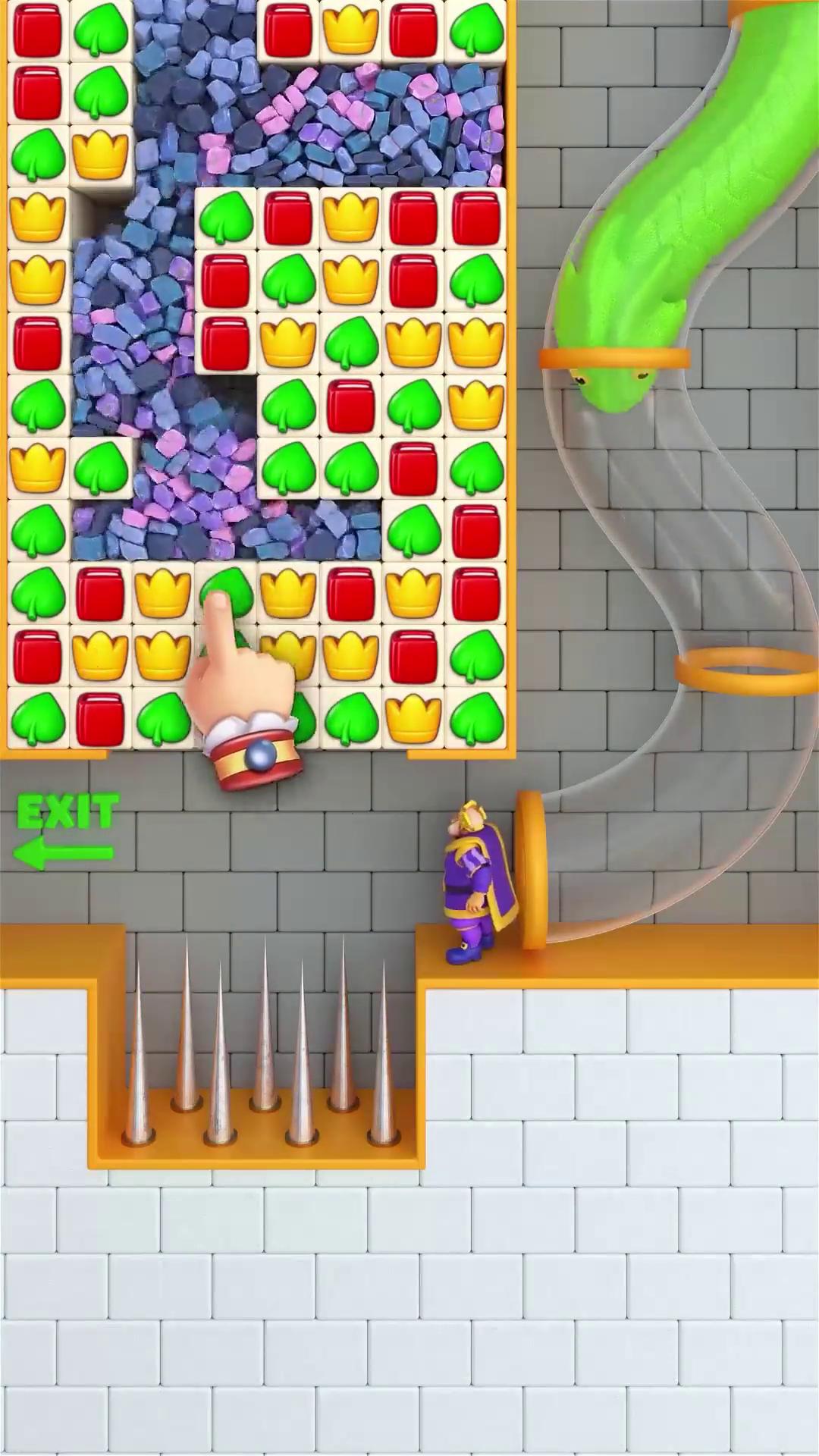 Creative #9 — 119 seconds long, first seen 2025-10-09, live for 305 days. The oldest running creative we have profiled in this series.
The economics only work at marathon intensity. At 2.8K impressions/day, a 119-second video occupies placements where long-form is welcome (rewarded slots, feed autoplay with sound off) without ever burning through its audience. Scopely tested exactly one 60-second cut in its top 15, earned 415M impressions with it in 43 days, and still retired the format without a successor — long-form can't survive blitz frequency. It thrives at drip frequency. The lesson generalizes: maximum sustainable ad length is a function of daily intensity, not of attention spans in the abstract.
Note also this creative's attachments: the index records four playable demo units on entry #9 — the heaviest interactive loadout in the fleet, wrapped around its longest video. Dream Games' long-form isn't a passive brand spot; it's a watch-then-try funnel packed into one placement.
The Two-Year-Old Image
Row #3 is a static image entry live for 210 days — respectable on its own. The remarkable part is in the asset metadata: the underlying image file has been stored in the index since May 2024, and it anchors not one but three entries in today's top 15 (rows #3 and #12 outright, plus an attachment on #9). An image that predates most of its competitors' entire creative fleets is still pulling 10.1K impressions/day in its main placement, twenty-seven months after the index first saw it.
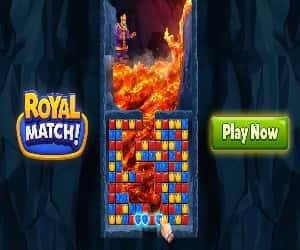 The image asset first indexed in May 2024 — still anchoring three live creative entries in August 2026, the oldest working asset in this series.
Every blitz teardown in this series found zero statics in the top 15 — both Scopely and Flow Games run format monocultures (all video, all playable respectively). Royal Match keeps statics in the rotation because at marathon frequency a proven static is nearly free reach: no production cost, placement-native in slots video can't enter, and evidently still converting after two years. The copy attached to the entry is the same line the fleet has run throughout: "King Robert needs your help to restore…" — one narrative, held for years, across every format.
Assets Are a Library, Entries Are Campaigns
The fleet's most instructive pattern hides in the content fingerprints. The same 29-second video runs as two separate entries — rows #2 and #5 — launched three days apart in late December 2025 and now aged 224 and 227 days respectively, with 4.3M combined impressions. And the fleet's #1 creative — 8.5M impressions at a fleet-leading 157K/day — is a June 17, 2026 entry of a video whose content fingerprint first appears in the index attached to an August 2025 entry. The video is a year old. The entry running it is 54 days old.
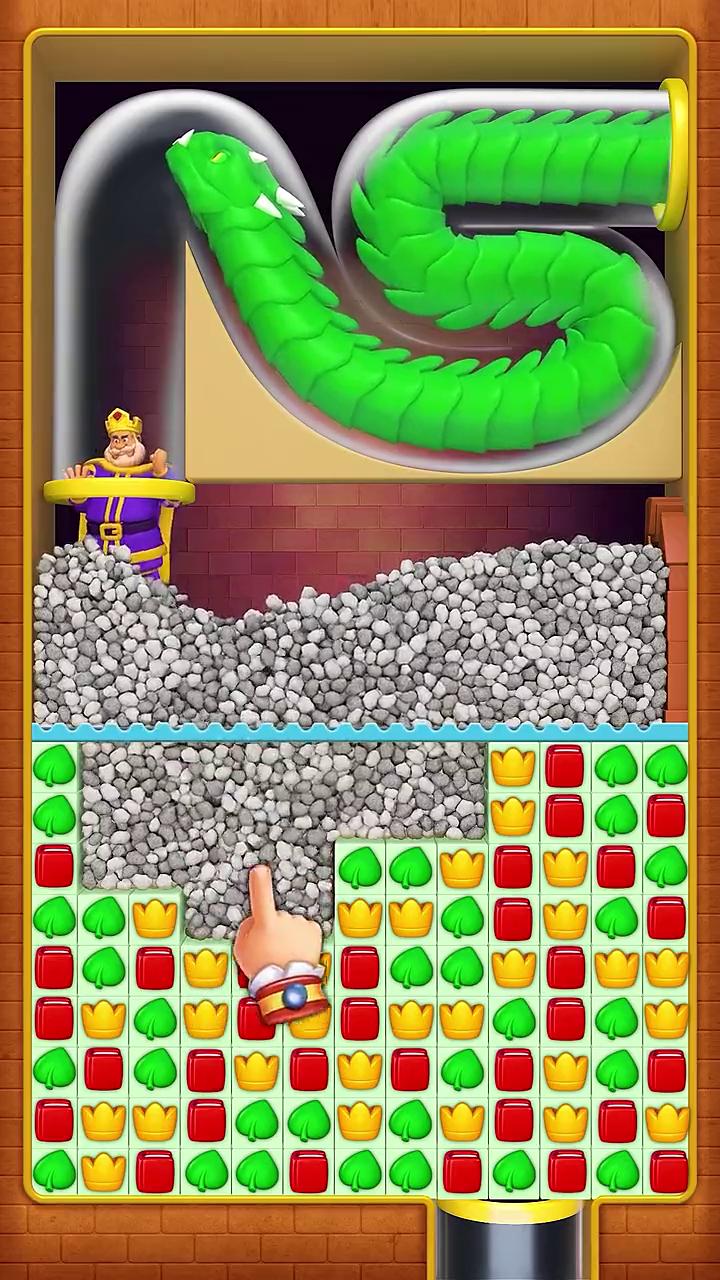 Creative #1 — the fleet's biggest earner (8.5M impressions, ~157K/day) is a June 2026 entry of a video first indexed in August 2025. Assets outlive campaigns.
The re-launch pattern also solves the marathon's hardest internal problem — how to scale a winner without violating the throttle. Dream Games couldn't simply crank the August 2025 entry's budget 10x without turning its placement into blitz-frequency delivery and starting the fatigue clock it has avoided for a year. Launching the same asset as a new entry instead opens fresh placements and fresh audience pools at standard frequency — more total reach, same per-user dose. It's horizontal scaling for attention, and it's only available to an operator whose assets are proven library items rather than expiring consumables.
This is a fundamentally different mental model from the blitz. Scopely and Flow Games treat creatives as consumables: produce, burn, retire, replace. Dream Games treats them as a library of proven assets that get re-deployed in new entries indefinitely — new placements, new campaign wrappers, same footage. The practical consequence for anyone auditing them: as we flagged in the MONOPOLY GO! teardown, always aggregate by content fingerprint. Counted by entries, Royal Match looks like it has fifteen creatives; counted by distinct assets, the number is meaningfully smaller — and the asset-level lifespans run past a year.
June's Quiet Expansion — Without a Single Retirement
The fleet isn't static, though. Look at first-seen dates by month: October 2025 (1), December 2025 (3), January 2026 (1), April (1), May (1), June (7), July (1). June 2026 was a genuine expansion push — seven new entries between June 3 and June 21, including the re-launched #1, the playable-only #6, and the 60-second #7. In a blitz fleet, a seven-creative influx would be a "generation" and would trigger the old guard's retirement within weeks. Here, six weeks later, everything the June push was supposedly competing with is still running.
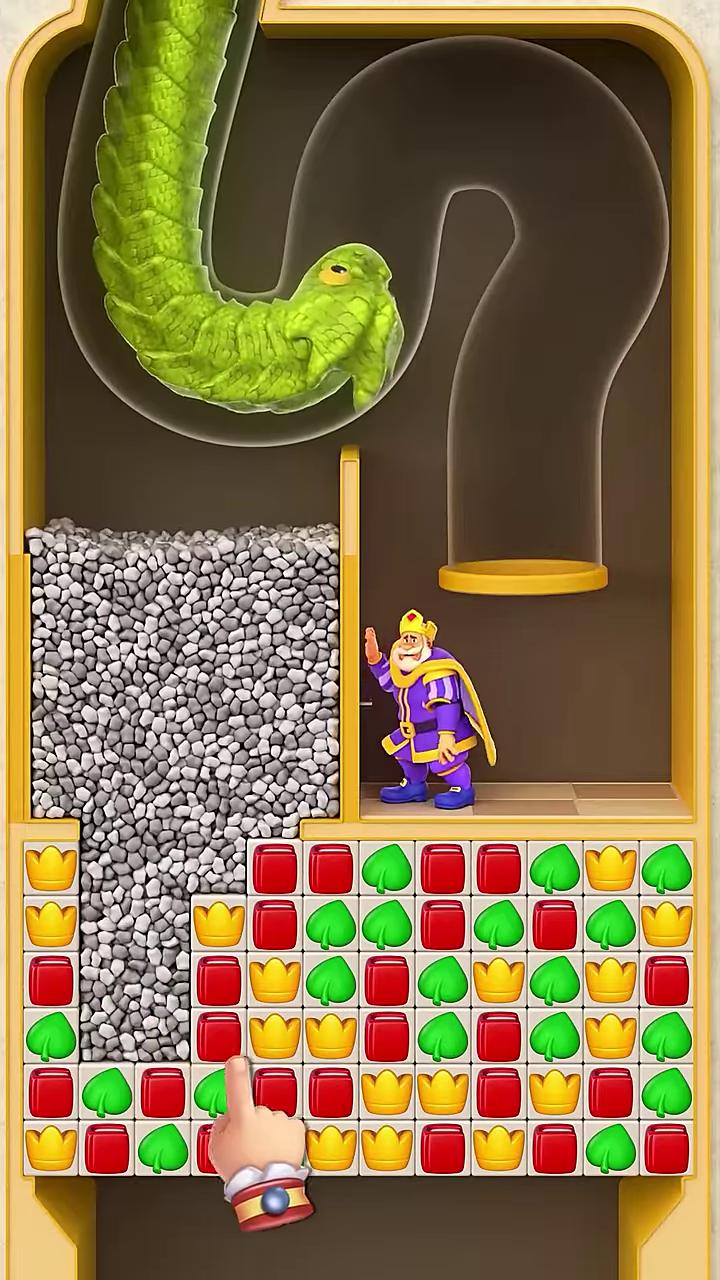 Creative #4 — part of the June expansion: 2.1M impressions in 68 days at ~30.8K/day, the fleet's second-hottest sustained rate.
The newest entry sharpens the point. Row #11 launched July 22 and is running at ~40.9K impressions/day — the fleet's second-highest per-day rate after #1. In a blitz, a new entry outrunning the veterans is the signal that triggers the sweep. Royal Match's response, on the evidence: nothing. New winners get budget; old creatives keep theirs. Additions compete for share of spend, not for survival.
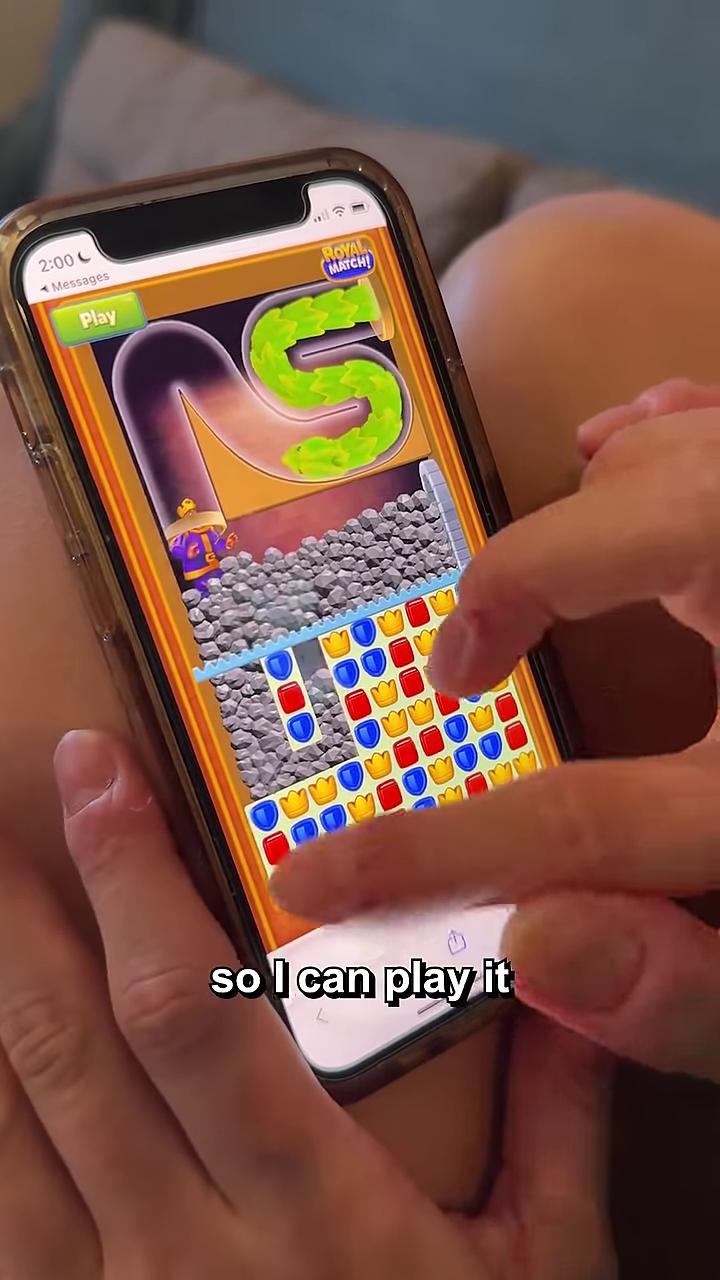 Creative #11 — the fleet's newest entry (July 22), already running ~40.9K est. impressions/day, second only to #1. No veteran was retired to make room.
Format Portfolio: The Anti-Monoculture
Where both blitz advertisers commit to exactly one format, Royal Match's top 15 spans five:
| Format | Entries | Combined impressions | Notable |
|---|---|---|---|
| 59–60s video | 6 | 13.9M | Includes #1 and the newest #11 |
| 29–30s video | 3 | 5.1M | Two entries share one asset |
| 119s video | 2 | 1.6M | 305 and 247 days live |
| Static image | 2 | 2.9M | Asset dated May 2024 |
| Playable-only | 1 | 1.1M | Plus playable attachments on 8 other entries |
The spread is not indecision — it's placement coverage. Long videos hold rewarded slots, short videos hold skippable ones, statics hold banner-adjacent inventory, playables hold interactive slots, and attachments put a try-now end-card on most of the video entries anyway (nine of fifteen entries carry at least one playable demo unit). A marathon fleet optimizes for presence everywhere at low pressure, which requires every format; a blitz optimizes for maximum pressure in the best placements, which rewards specializing in one. Format mix, it turns out, is downstream of the intensity decision — one more way the single number "impressions per day" writes the whole strategy.
The Per-Day Column: A Fleet With Its Own Internal Ladder
Re-sort the fleet by estimated impressions per day and a second structure appears inside the marathon:
| Tier | Creatives | Est./day range | Ages |
|---|---|---|---|
| Hot | #1, #11 | ~41K–157K | 54 and 19 days |
| Working | #4, #6, #7, #12, #15, #10, #2 | ~12K–31K | 50–224 days |
| Ember | #5, #8, #13, #3 | ~7.1K–10.1K | 95–227 days |
| Eternal | #9, #14 | ~2.8K–2.9K | 247–305 days |
The gradient is age-shaped: the newest entries run hottest, and every step down the intensity ladder corresponds to a step up in age. This is the same descent pattern we documented inside Meowdoku's drip fleet, stretched across a far longer timeline — creatives enter hot, prove themselves, then settle into progressively lower-frequency service instead of being retired. The 305-day veteran isn't an anomaly; it's the terminal stage of a pipeline every creative in this fleet is slowly moving through. Where a blitz fleet has a lifecycle of two states (scaling, then dead), the marathon has a continuum — and the continuum is why the fleet needs no retirement mechanism. Death is replaced by asymptote.
The two hot-tier entries also deserve their pairing: the 54-day #1 is a re-launched 2025 asset, and the 19-day #11 is the fleet's only genuinely new July creative. Between them they carry 38% of the fleet's total impressions — the marathon concentrates its actual spend on very few active pushes at a time, using the long tail as cheap standing coverage. Functionally, Dream Games runs a two-creative campaign on top of a thirteen-creative pension system, and both layers convert.
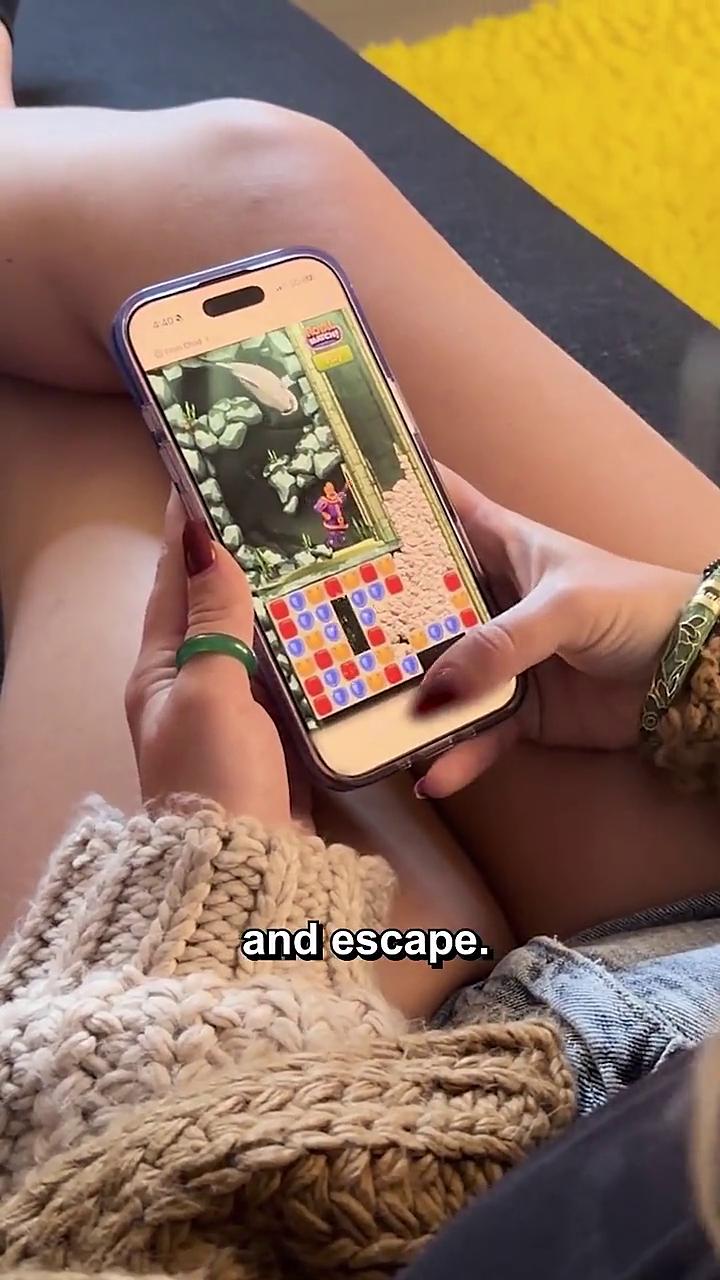 The 29-second video that runs as two entries (224 and 227 days old) — mid-ladder "working tier" service at ~7–12K/day each.
The Playable-Only Entry: A Quiet Format Experiment
Row #6 is easy to skim past and shouldn't be: launched June 19, it's the fleet's only entry with no video and no image at all — a standalone playable, the format that Smash Fest! built its entire launch on. At 1.1M impressions in 52 days (~21.7K/day) it sits comfortably in the fleet's working tier, and it arrived as part of the June expansion alongside conventional videos.
Read against the nine other entries carrying playable attachments, a direction becomes visible: interactivity has been spreading through this fleet — end-cards first, then a standalone unit. That's how a marathon tests a format: no batch of seven, no bet-the-quarter commitment, just one unit added to the portfolio and given months to prove itself at low pressure. If Dream Games' playable share keeps growing entry by entry, we'd read it as the marathon's slow-motion answer to what Flow Games and Moon Active's Board Adventure already demonstrated at higher throttle: try-first acquisition works in casual puzzle. The experiment's pace is the tell of the doctrine — everything this fleet does, it does gradually.
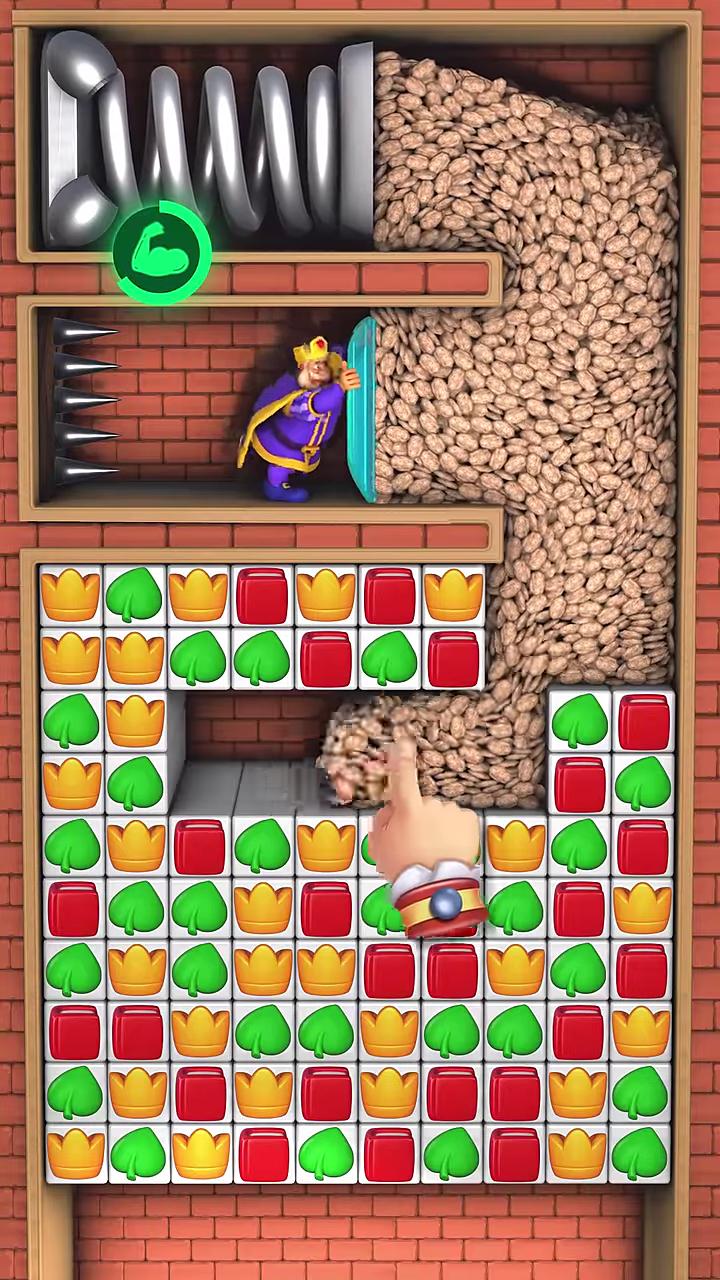 Creative #7 (60s, June 21) — the June expansion's long-format wing: 962K impressions in 50 days alongside the playable experiment.
A Consistency Check: The 67–122 Band
Series practice, applied as always before trusting any ranking — the index's two independent measures, ratioed:
| Creative | Est. impressions | Shows tracked | Impressions per show |
|---|---|---|---|
| #1 (59s) | 8,468,249 | 101,382 | ~84 |
| #2 (29s) | 2,745,639 | 29,417 | ~93 |
| #3 (static) | 2,113,473 | 31,368 | ~67 |
| #4 (59s) | 2,091,416 | 17,131 | ~122 |
| #9 (119s) | 867,360 | 11,010 | ~79 |
| #14 (119s) | 711,488 | 11,351 | ~63 |
Across formats as different as a static image and a two-minute video, the ratio holds inside a 63–122 band — the fleet is one coherent operation, and its rankings reproduce on either axis. Externally, the band is the fourth distinct placement fingerprint in four advertisers (~8,400 Scopely, ~560 Flow, ~90 here, with Meowdoku's SKU-split bands profiled separately) — and at ~90, Royal Match's placements deliver the fewest impressions per tracked show in the series among open-market advertisers. Low-frequency delivery shows up even here: the marathon's placements are shallow and wide, exactly as its intensity doctrine predicts.
Watching a Marathon: Three Alerts Worth Setting
Blitz advertisers telegraph their operations through events; a marathon telegraphs through drift. Three index conditions catch everything that matters about a fleet like this:
- First-ever sweep alert: two or more creatives from this advertiser ending within the same day. This fleet has never had one. Its first would be a doctrine change — the adoption of generational discipline, worth investigating the same week it happens, because marathons don't sweep without a reason (a repositioning, a new UA lead, a fatigue crisis at frequencies that shouldn't produce one).
- Escalation alert: any new entry sustaining above the fleet's hot tier (~157K/day) for more than a week. The marathon's version of a major push isn't a batch — it's one entry running unusually hot. Catching it early identifies the creative concept the advertiser believes in enough to break its own throttle discipline.
- Format-share drift: playable attachments and standalone units as a share of the fleet, quarter over quarter. Marathon experiments move at quarterly speed (one playable entry added in June; attachments spreading before that). The drift line, not any single launch, is where a marathon announces its next format bet.
Each is one saved query. None requires daily attention — which is fitting, because the advertiser being watched doesn't operate daily either. Match your surveillance cadence to your target's operational cadence: another way intensity writes everything.
The Intensity Ladder: Where the Marathon Sits
Series scoreboard to date, top creative each, all from AdMapix US pulls (MONOPOLY GO! and Smash Fest! figures as published in our August teardowns):
| App | Playbook | Top creative est./day | Top creative lifespan | Resets observed |
|---|---|---|---|---|
| MONOPOLY GO! (Scopely) | Video blitz | ~27.6M | 67 days (retired) | Yes — 6 ads / 31 min |
| Smash Fest! (Flow Games) | Playable blitz | ~13.5M | 58 days (retired) | Yes — two waves, 9 min |
| Royal Match (Dream Games) | Marathon | ~157K | 305 days (live) | None |
| Meowdoku! (Oakever) | Slow-burn drip | ~2.3M | 81 days (live) | None observed |
The column that matters is the pairing of intensity and lifespan: they are almost perfectly inverse. 27.6M/day lives 67 days; 157K/day lives 305 and counting. Across four advertisers and three formats, creative lifespan behaves like a budget you can spend fast or slow, not a property of the creative itself. That's the practical takeaway for anyone setting fatigue expectations: don't benchmark "how long should our ads last" against the genre average — benchmark against advertisers running your intensity.
One consistency note, as in every entry in this series: Royal Match's impressions-per-tracked-show ratio sits in a ~67–122 band across all fifteen creatives (center ~90) — internally stable, so the rankings are trustworthy, and yet another distinct placement fingerprint versus MONOPOLY GO!'s ~8,400, Smash Fest!'s ~560, and Meowdoku!'s SKU-split bands. Five advertisers, five bands; within-advertiser, always stable. The metric continues to hold up as both a data audit and a placement diagnostic.
What the Marathon Buys — and What It Costs
It buys compounding. A creative library where assets stay productive for one to two-plus years means production spend amortizes across a horizon a blitz can never touch. The May-2024 image has been earning placements for 27 months; whatever it cost, its cost-per-impression asymptotically approaches zero.
It buys optionality. Fifteen live creatives across five formats is a standing experiment — when a placement type or format wins share (as playables have been, per the attachments spreading through the fleet), budget flows there without a launch event.
It costs velocity. 24.5M total top-15 impressions is what Scopely's #1 creative absorbed every 21 hours. If Royal Match needed to spike US installs this quarter — for a season launch, a competitive response — this fleet, at this intensity, could not deliver it. The marathon assumes the product's growth engine is elsewhere (retention, brand, owned channels) and asks paid reach only to top it up perpetually.
It also buys resilience. A blitz fleet is operationally fragile in a specific way: at any moment, most of its impressions ride on two or three young creatives, and a policy change, a platform review, or a concept misfire takes out the whole engine at once. Royal Match's impressions spread across fifteen units, five formats, and three vintages of asset; no single failure — of a creative, a format, or a placement type — removes more than a modest slice. For a franchise planning in years, that portfolio robustness may matter more than any efficiency argument, and it comes free with the doctrine.
And it costs signal speed. A blitz learns which of seven creatives wins within a week, because everything runs hot. At drip intensity, ranking a new creative takes months. Note that Dream Games' one visibly hot entry — #1 at 157K/day — is a re-launched proven asset, not a fresh concept. The marathon de-risks slow learning by mostly re-deploying what it already knows works.
Can You Copy This Playbook?
If you're a small or mid studio: this is the playbook you can actually afford — and our earlier teardowns said so before this one proved it. The entry requirements are patience and a genuinely converting product, not a war chest. Practices to lift directly: keep proven assets in rotation indefinitely and re-launch them as new entries rather than retiring them with campaigns; hold one narrative across years (Royal Match has run the same King Robert line since at least 2024); spread formats to cover placements rather than concentrating; and treat additions as budget competition, not survival competition.
If you're a blitz advertiser: the marathon is your endgame benchmark. Scopely's own franchise will someday spend at maintenance intensity; the question this fleet answers is what disciplined maintenance looks like — single-digit-thousands-per-day creatives that never fatigue, anchored by a library, refreshed by addition. The transition metric to watch in your own data: when new generations stop outrunning old ones (the escalation check from our Smash Fest! teardown, inverted), it's time to stop sweeping and start accumulating.
If you're benchmarking fatigue: stop using calendar days. The series now spans 35-day playables and 305-day videos, and the difference is almost entirely intensity. Estimate your creative's cumulative-impressions ceiling from advertisers at your frequency, and spend it at whatever pace your growth math demands.
A 90-day adoption plan, if you're switching: the marathon can't be adopted by decree — it's a sequence. Days 1–30: freeze retirements entirely (the hardest step; every instinct says prune) and re-launch your two best-ever retired assets as new entries, exactly as Dream Games re-launched its August 2025 video into the June #1 slot. Days 30–60: cut per-creative daily budgets to the level your fleet's oldest surviving creative can sustain without CTR decay — that number, not your current spend, is your marathon throttle; expect it to be 10–100x below your blitz rate. Days 60–90: expand formats to fill placements you've been ignoring (a static, a long cut, a playable end-card on your best video), one unit each, no batches. What you should observe by day 90, if your product can support the doctrine at all: creative ages climbing past your old fatigue ceiling with flat performance, and total reach down sharply — the trade you signed up for. If instead performance decays at the lower frequency, your growth engine isn't strong enough to idle the paid layer, and the marathon isn't your playbook yet; that's a product finding, not an ads finding, and it's worth the 90 days to learn.
What would change our read: a first-ever synchronized retirement in this fleet — even a small one — would mean Dream Games is adopting generational discipline, and the marathon thesis would need revisiting. Conversely, if the July 22 entry keeps escalating past #1 without anything being retired, the "additions compete for budget, not survival" model is confirmed. Both are checkable in the index within weeks, and this series checks its own claims on schedule.
Methodology & Data Notes
- Source: AdMapix creative index, queried 2026-08-10, US market filter, sorted by model-estimated impressions; top 15 analyzed. Comparison figures for MONOPOLY GO!, Smash Fest!, and Meowdoku! from this series' August 2026 teardowns of the same index.
- Impressions are model estimates, not platform-reported figures; ratios and rankings are more robust than absolute values. Days live = first seen → last seen in the index; all fifteen were observed on the pull date. Coverage outside tracked placements may lag or undercount — a "zero resets" finding means none observed within index coverage.
- Asset dating uses index storage metadata (e.g., the static image's path dating to 2024-05); it bounds asset age from below.
- App identity per the index: Royal Match, developer Dream Games (iOS App Store ID 1482155847; Android package com.dreamgames.royalmatch on Google Play). Company background: Dream Games.
- All figures are third-party estimates for research reference; they may differ from the advertiser's internal data.
Frequently Asked Questions
How long does Royal Match run its ad creatives? Indefinitely, on current evidence: all top 15 US creatives are live as of August 10, 2026, with zero retirements observed — the oldest has run 305 days, and one static image asset has been in service since its index appearance in May 2024.
How does Royal Match's ad intensity compare with MONOPOLY GO!'s? Roughly 175x lower at the top: Royal Match's hottest creative runs ~157K model-estimated impressions/day versus ~27.6M/day for MONOPOLY GO!'s retired hero. Royal Match's entire top-15 lifetime total (24.5M) is less than one day of that single Scopely creative.
What ad formats does Royal Match use? Five in the top 15 alone: 29–30s videos, 59–60s videos, two 119-second videos, static images, and playables (one standalone entry plus demo attachments on nine others) — a deliberate anti-monoculture, in contrast to MONOPOLY GO!'s all-video and Smash Fest!'s all-playable fleets.
Why doesn't Royal Match retire old ads? Because at ~3K–157K impressions/day per creative, audience fatigue accumulates extremely slowly — the condition that forces blitz advertisers into 35–67-day retirements barely applies. Old creatives keep earning placements; new additions compete for budget share rather than replacing anyone.
Can a two-minute video ad actually sustain delivery? Royal Match runs two 119-second videos that have been live 247 and 305 days respectively. Long-form survives at drip intensity (~3K/day) in placements that welcome it; the same format failed to earn a successor at blitz intensity in Scopely's fleet. Sustainable ad length is a function of daily frequency, not attention spans.
Does Royal Match use playable ads? Increasingly: nine of its top 15 entries carry playable demo attachments, and June 2026 added the fleet's first standalone playable entry (1.1M impressions in 52 days). The adoption pattern is characteristically marathon — one low-pressure unit given months to prove itself, rather than a batch bet.
Is Royal Match's ad fleet actually growing or static? Growing by addition: June 2026 alone contributed seven of the top 15 entries, including the re-launched #1 and the playable experiment, and a July 22 entry is already the fleet's second-hottest. What never changes is the subtraction side — additions compete for budget share, and nothing gets retired to make room. In eight weeks of observation, the only direction any creative has moved is down the intensity ladder — never out of the fleet entirely.
Data: AdMapix creative index, US, pulled 2026-08-10. All figures are third-party model estimates for research reference only.
Blitz or marathon — classify any advertiser in five rows. Intensity, lifespan, resets: the index shows all three. Create your AdMapix account and read your competitors' operating model today; pricing lists what each tier includes.
Compare related game-ad strategies
Compare this study with the game-specific research below. Keep the country, date window, and creative format consistent, then compare opening hooks, gameplay sequences, and end cards. Estimated impressions from different samples are not a product-performance ranking.
Related Reading
- Ad strategy teardowns (series index) — every teardown in the series, in publication order
- Mobile game ads guide: formats, examples and research — the format matrix, research workflow and KPI guardrails every teardown in this series applies
- PineDrama — the flood — 4.5-minute ads and seven scripts per video
- Gossip Harbor — one 25-second video file carrying 70.5% of the account
- Magic Tiles 3 — two store listings running two completely different machines
Turn these observations into your next creative study
Open the creative library and select samples for your market, network and research question.
Related Articles
Ad Strategy Teardowns: Six Advertisers, Five Playbooks, One Public Index
The AdMapix teardown series reconstructs real advertisers' entire ad operations from public index data — creative lifespans, launch batches, synchronized resets, and the intensity decisions that write everything else. This hub collects every teardown, the full intensity ladder, and the live predictions board the series grades itself against.
Smash Fest! Ad Strategy in 2026: The Playable-Only Blitz Behind a Top-10 Chart Debut
Smash Fest!'s top 15 US ad creatives contain zero videos and zero static images — every single one is a playable. We reconstruct Flow Games' launch playbook from the AdMapix index: 1.37 billion model-estimated impressions, a seven-ad launch executed in 48 minutes, a two-wave creative reset that cleared the old generation in nine minutes flat, and a new cohort running 3x hotter than the retired hero.
MONOPOLY GO! Ad Strategy in 2026: Inside a 7-Billion-Impression Creative Machine
We pulled MONOPOLY GO!'s top 15 US ad creatives from the AdMapix index: 7.17 billion model-estimated impressions, a 22-second video sweet spot, a synchronized creative reset that retired six ads in 31 minutes, and a single-creative intensity roughly 2,000x higher than Royal Match. Full teardown with tables, real creative frames, and a competitor comparison.