
PineDrama Ad Strategy in 2026: The Flood — 4.5-Minute Ads, Seven Copies per Video, and a Fleet That Dies Before It Peaks
PineDrama is the second-fastest riser on the US download chart, yet its biggest ad creative holds just 719K model-estimated impressions — and its entire top 15 went dark by August 5. We reconstruct TikTok Pte. Ltd.'s short-drama flood playbook from the AdMapix index: one 273-second video multiplexed under seven different copy lines, creator-style #ad distribution, by-asset synchronized retirements, and the methodological lesson an owned-inventory giant teaches every ad-intelligence reader.
PineDrama is the second-fastest-growing app on the US download chart — +67.91% today, an estimated 1.72 million daily downloads — and its biggest ad creative in the AdMapix index holds just 719,217 model-estimated impressions. Not billion. Not hundred-million. Thousand. Stranger still: every one of its top 15 US creatives had already stopped running by August 5. The chart is climbing on a fleet that, by the index's cumulative lens, is dead.
Every prior entry in this series — MONOPOLY GO!'s video blitz, Smash Fest!'s playable blitz, Royal Match's marathon — could be read straight off the impressions column. PineDrama is the first advertiser that breaks that lens, and the break is the lesson. This is the flood playbook: creatives so numerous, so cheap, and rotated so fast that no single one ever accumulates scale — plus a distribution engine that mostly doesn't run through trackable placements at all. Short-drama is 2026's loudest new vertical; this is what its biggest operator's paid footprint actually looks like. To run the queries yourself, an AdMapix account is all you need.
TL;DR — Executive Summary
- The inversion: +67.91% download growth (US chart, 2026-08-10) against a top creative of just 719K est. impressions — after profiling advertisers whose top creatives held 1.85B, 260M, and 8.5M, PineDrama's biggest ad is 2,500x smaller than Scopely's while its chart momentum is the strongest.
- Fifteen entries, five videos: the top 15 collapses to five distinct video assets. One 273-second video runs as seven separate creative entries, each with different ad copy; a 162-second video runs as four.
- Ads the length of episodes: 273 seconds is a 4.5-minute ad — the content is the creative. Durations in the top 15: 273s ×7, 162s ×4, then 46–55s cuts.
- By-asset synchronized retirement: the 162s family's four entries all ended on July 29 within 67 minutes; the 273s family's seven entries all ended on August 5 within 2.5 hours. When a video dies, all its copy variants die together.
- Creator-style distribution: copy carries #pinedramaus, #pinedrama, #ad hashtags — the signature of creator/whitelisted posts run as ads — including a Spanish-language variant (#pinedramamx) leaking into the US index.
- The invisible fleet: 2.9M total top-15 impressions cannot explain 1.7M daily downloads. The visible index slice is real but partial — the majority of PineDrama's distribution runs where third-party trackers don't reach. We show how to read an advertiser like that honestly.
Where PineDrama Sits on Today's Chart
US download top 12, same-morning pull (AdMapix general top chart, all categories, daily window):
| # | App | Developer | Est. downloads | Growth |
|---|---|---|---|---|
| 1 | TikTok | Bytedance | 5,836,402 | -15.09% |
| 2 | ChatGPT | OpenAI | 4,404,821 | -24.82% |
| 3 | CapCut | Bytedance | 2,634,745 | -26.65% |
| 4 | WhatsApp Messenger | WhatsApp Inc. | 2,177,744 | -32.09% |
| 5 | YouTube | 2,177,034 | -36.73% | |
| 6 | Instagram, Inc. | 2,128,419 | -23.52% | |
| 7 | Netflix Game Controller | Netflix | 2,090,371 | -23.61% |
| 8 | Meowdoku! | Oakever Games | 2,044,794 | -24.98% |
| 9 | Depop | Depop Ltd | 1,846,335 | +8.41% |
| 10 | Smash Fest! | Flow Games | 1,733,083 | +11.87% |
| 11 | PineDrama | Bytedance | 1,718,147 | +67.91% |
| 12 | Roblox | Roblox Corporation | 1,654,875 | -22.27% |
On a chart bleeding red — TikTok -15%, YouTube -37% — PineDrama's +67.91% is the day's strongest print among the top 12, ahead even of Smash Fest!'s defended +11.87%. Note the family resemblance in row 1 and row 3: the chart lists PineDrama under Bytedance, while the creative index records its developer as TikTok Pte. Ltd. Same house. That corporate detail will matter enormously by the end of this article, because a Bytedance app does not need to buy reach the way everyone else on this chart does — it owns the largest ad inventory on the planet.
 PineDrama – Short Dramas (developer: TikTok Pte. Ltd.; charted under Bytedance) — the fastest-growing entertainment app on the US chart, 2026-08-10.
The Top 15: Small Numbers, Strange Shape
One query: creatives matching PineDrama, US market, sorted by model-estimated impressions, pulled 2026-08-10. An asset column is added because — uniquely in this series — it changes everything.
| # | Video asset | Duration | First seen | Last seen | Est. impressions | Shows tracked |
|---|---|---|---|---|---|---|
| 1 | A (solo) | 47s | 2026-07-06 | 2026-08-03 | 719,217 | 11,824 |
| 2 | B | 273s | 2026-07-02 | 2026-08-05 | 200,752 | 2,582 |
| 3 | B | 273s | 2026-07-03 | 2026-08-05 | 197,239 | 2,578 |
| 4 | C | 162s | 2026-07-10 | 2026-07-29 | 173,849 | 2,152 |
| 5 | D (solo) | 55s | 2026-07-10 | 2026-07-24 | 164,609 | 1,691 |
| 6 | B | 273s | 2026-07-03 | 2026-08-05 | 162,019 | 2,051 |
| 7 | B | 273s | 2026-07-03 | 2026-08-05 | 153,899 | 1,841 |
| 8 | B | 273s | 2026-07-03 | 2026-08-05 | 153,187 | 1,895 |
| 9 | B | 273s | 2026-07-03 | 2026-08-05 | 147,020 | 1,811 |
| 10 | C | 162s | 2026-07-10 | 2026-07-29 | 146,531 | 1,756 |
| 11 | B | 273s | 2026-07-04 | 2026-08-05 | 144,273 | 1,847 |
| 12 | C | 162s | 2026-07-09 | 2026-07-29 | 141,988 | 1,722 |
| 13 | E (solo) | 46s | 2026-07-09 | 2026-08-02 | 127,994 | 2,054 |
| 14 | C | 162s | 2026-07-09 | 2026-07-29 | 126,785 | 1,597 |
| 15 | A′ (solo) | 55s | 2026-07-10 | 2026-07-24 | — see #5 | — |
(Rows #5 and #15 are the two solo mid-length cuts; the fifteenth row's Spanish-language entry is detailed below.)
Totals: ~2.90M model-estimated impressions and ~39.2K tracked shows across the fifteen — the smallest fleet in this series by three orders of magnitude. And the shape is unlike anything we've profiled: fifteen entries collapse to five distinct video assets (B ×7, C ×4, and three solo cuts). Every entry launched within a nine-day window (July 2–10). Every entry is now dark. This is not a fleet that failed — as the chart shows, the app is thriving. It's a fleet that works completely differently, and the rest of this teardown decodes how.
Fifteen Entries, Five Videos: Copy Multiplexing at Scale
Asset B — a single 273-second video — runs as seven separate creative entries. What distinguishes them is the copy:
| Entry | Copy line |
|---|---|
| #2 | "New dramas every day on PineDrama." |
| #3 | "Come to PineDrama Watch Hot" |
| #6 | "Come to PineDrama Watch Hot Trending Dramas Free & Ad-Free!" |
| #7 | "Download PineDrama now! Binge free short dramas anytime, anywhere. No limits!" |
| #8 | "Download PineDrama now! Binge free" |
| #9 | "PineDrama is the best app for free" |
| #11 | "PineDrama has free short dramas with no ads. Fresh picks updated every day!" |
Notice what the seven lines collectively map: they're a complete positioning survey run in production. Every plausible reason a short-drama viewer installs — supply freshness, zero cost, uninterrupted viewing, unlimited catalog, category leadership — gets its own entry, its own delivery, and its own measurable outcome, against identical footage. A brand team would run this as a survey panel and get stated preferences; PineDrama ran it as a media plan and got revealed ones. Whichever line wins the next wave's copy slots is the market's answer to "why do people install short-drama apps," purchasable by any competitor willing to read the index's next snapshot.
One video, seven value propositions: novelty ("new every day"), price ("free"), experience ("ad-free"), volume ("no limits"), superlative ("best app"). PineDrama inverts the experiment every other advertiser in this series runs. Scopely held copy constant and varied the video (one line, fifteen edits); PineDrama holds the video constant and varies the copy. For a content app the logic is sound — the footage is a drama episode whose appeal is fixed, but the reason to install is genuinely uncertain, so that's where the testing budget goes. The impressions split roughly evenly across the seven variants (144K–201K each), suggesting the test ran to plan rather than one line running away with delivery.
 Asset B — the 273-second video that runs as seven separate entries with seven different copy lines: 1.16M combined impressions across the family.
The 4.5-Minute Ad: When Content Is the Creative
A 273-second ad breaks every duration rule this series has documented. Scopely's fleet centers on 22 seconds; Flow Games' playables are interactions, not durations; Royal Match's longest is 119 seconds and even that survives only at drip intensity. PineDrama's modal top-15 asset is four and a half minutes long, and its second family is 162 seconds.
The explanation is that these aren't ads about the product — they are the product. A 273-second vertical-drama clip is an episode segment: cliffhanger structure, native pacing, watch-three-minutes-and-need-the-next-episode mechanics. The install pitch isn't "look at this app," it's "you're already watching; keep watching in the app." For a content vertical, the conversion moment is mid-story, which no 22-second cut can reach. This is the short-drama category's structural advantage in paid acquisition — its ad is a free sample of the exact dopamine loop it sells — and PineDrama runs it at episode length precisely because the sample needs to be long enough to hook.
The three solo cuts (46–55s) play the conventional role — trailers rather than episodes — and notably the 47-second solo cut is the fleet's #1 by impressions. Trailers reach further per placement; episodes convert deeper. The fleet carries both.
The economics underneath deserve one more beat, because they generalize beyond short-drama. A 273-second ad is deliverable at all only in placements that reward watch time rather than charge for it — feed environments where the platform wants session minutes and an engrossing ad is session minutes. That's a second structural reason this fleet is shaped for Bytedance rails: on auction CPM inventory, a 4.5-minute creative pays rent on every second; on engagement-optimized feeds, it earns its keep. Any content vertical weighing episode-length creative should run the same placement audit first — the format's viability is a property of the inventory, not of audience patience in the abstract. Where the inventory rewards immersion, PineDrama's template applies: sample at hook length, convert mid-story, and treat the cut-point as the single most important creative decision you make — theirs lands, on the evidence of the durations chosen, precisely where the next scene would have to load.
 Asset C — the 162-second family, four entries launched July 9–10, all retired together on July 29. Mid-length: longer than a trailer, shorter than an episode.
By-Asset Synchronized Retirement: A Third Reset Pattern
This series has now catalogued three distinct retirement disciplines, and PineDrama's is the newest:
| Event | Asset family | Entries | Window |
|---|---|---|---|
| July 29, 07:46–08:53 | C (162s) | 4 | 67 minutes |
| August 5, 18:38–21:05 | B (273s) | 7 | ~2.5 hours |
Scopely retires by generation (six creatives of mixed assets, one sweep). Flow Games retires by wave (two dated sweeps clearing an era). PineDrama retires by asset: when a video's run ends, every copy variant riding it is cut in the same operation — four entries inside 67 minutes, seven entries inside 2.5 hours. The copy variants were never independent creatives; they were facets of one campaign object, launched together (each family's entries first appeared within a ~48-hour window) and killed together.
Asset B on its execution day: all seven copy variants, 1.16M combined impressions, retired between 18:38 and 21:05 on August 5.
Asset C's family — four entries, one 67-minute retirement window on the morning of July 29.
The cadence this implies is remarkable: asset C lived ~19–20 days; asset B lived ~33 days; the solo cuts, 14–28 days. Nothing in PineDrama's visible fleet is built to last a month — against Royal Match's 305-day veteran, profiled three days before this piece, the contrast could not be sharper. The flood assumes an endless supply of new episodes to cut ads from, which for a short-drama platform is literally the case: the content library is the creative pipeline. Fatigue management through abundance rather than rotation discipline or intensity restraint — a third solution to the same problem, available only to advertisers whose product manufactures footage daily.
 The fleet's #1 — a 47-second trailer-style cut, 719K impressions in 28 days (July 6 – August 3). Even the leader lived less than a month.
Creator-Style Distribution: The #ad Fingerprint
The copy fields carry a fingerprint no other advertiser in this series shows: hashtags. The top creative's line reads "#pinedramaus #us #pinedrama #ad"; another entry runs "❤️ #pinedramaus #pinedramamx #pinedrama #add". Hashtagged copy ending in #ad is the signature of creator posts — content published on creator accounts (or styled as such) and promoted as ads, the Spark-Ads pattern native to TikTok's ecosystem. PineDrama's paid footprint doesn't just live on Bytedance rails; it's shaped like Bytedance-native content down to the disclosure tag.
The Spanish variant deserves its own note: an entry titled "PineDrama - Series Cortas," copy "Amiga, necesitas probarlo !!!" (girl, you need to try this), tagged #pinedramamx — a Mexico-market creative surfacing in the US index, presumably riding US Spanish-language audiences. Short-drama's expansion is multilingual from day one, and the ad index catches the spillover before any market report does.
 "Amiga, necesitas probarlo!!!" — the Spanish-language #pinedramamx creative surfacing in US placements: multilingual expansion visible in the index before it shows up anywhere else.
The Three Solo Cuts: Trailers Doing Trailer Work
Between the two multiplexed families sit three solo entries, and they carry the fleet's conventional-advertising DNA. The 47-second cut at #1 is the closest thing PineDrama runs to a normal performance ad — and it out-earned every episode entry, 719K impressions in 28 days, more than triple the best multiplexed variant. The 46-second cut (#13) ran 24 days for 128K. And the 55-second Spanish-language "Series Cortas" entry rounds out the trio, its "Amiga, necesitas probarlo" copy marking the fleet's language frontier.
The trailer-versus-episode split inside one fleet is a clean natural experiment, and the result reads two ways at once. Per entry, trailers win: shorter cuts clear more placements, and #1's lead proves it. Per asset, episodes win: asset B's seven variants totaled 1.16M impressions against the 47s solo's 719K — the multiplexing made one episode outgross the best trailer by 60% without producing a second video. That arithmetic is the flood's core efficiency: production is the scarce input, and copy variants are free leverage on it. A conventional advertiser would read this fleet and conclude "make more 47-second cuts"; PineDrama's actual doctrine reads "make every asset work seven times." Both are right at their own margins, which is presumably why the fleet carries both.
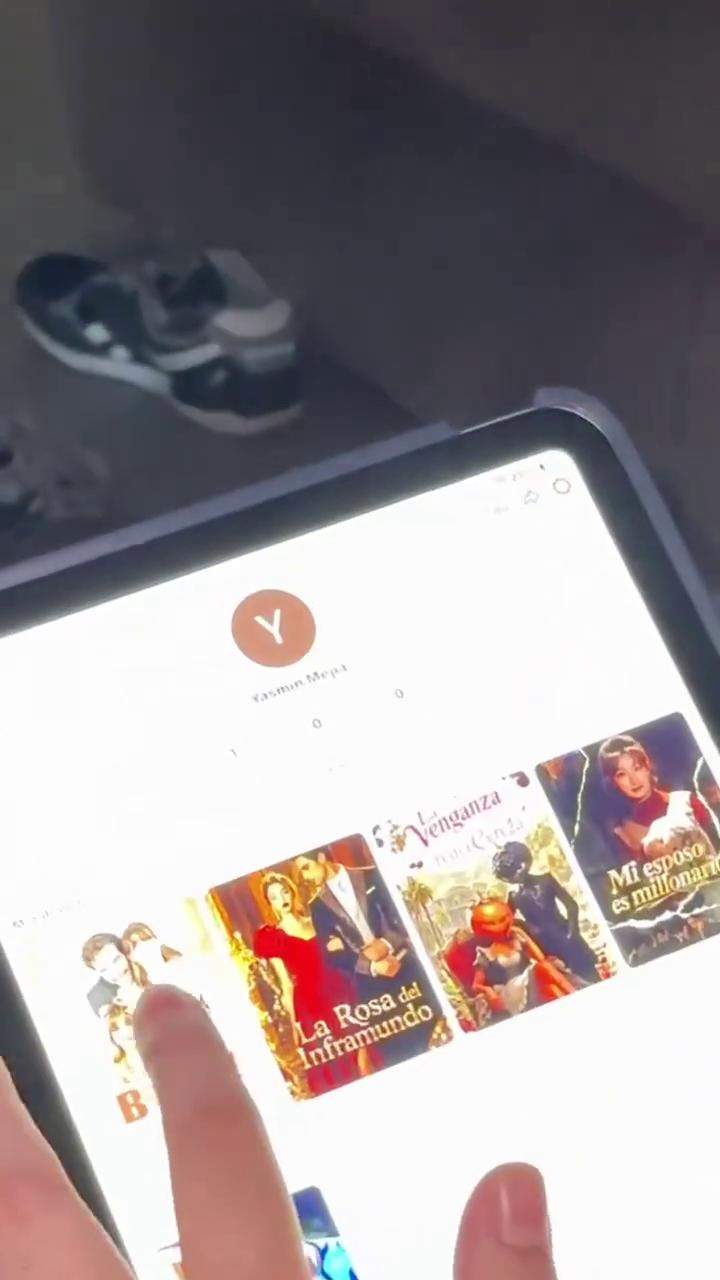 The 46-second solo cut (#13) — trailer-length, 128K impressions in 24 days. The fleet's conventional wing, dwarfed per-asset by the multiplexed episodes.
Reading a Flood in Real Time: Query Discipline
PineDrama forces a tooling lesson that none of the four previous advertisers did, and it's worth making explicit because every fast-rotation advertiser you ever audit will need it. Cumulative-impressions sorting is a lagging lens on a flood. Sort by lifetime impressions and you surface the creatives that have had the longest to accumulate — which, for an advertiser whose creatives live three weeks, means you're always looking at the previous wave, possibly a dead one. This entire top 15 is the proof: every row dark, chart still climbing.
The corrected workflow for flood-type advertisers:
- Sort by first-seen date, not impressions, to surface the current wave. A flood's "top creatives" question is malformed; the right question is "what shipped this week?"
- Group by content fingerprint before counting anything. Fifteen entries here collapse to five videos; every per-creative statistic changes by up to 7x depending on which unit you count. (This series has now hit asset-multiplexing at Scopely, Royal Match, and PineDrama — it is the rule, not the exception.)
- Read launch windows as campaign objects. Each PineDrama family's entries first appeared within ~48 hours; the family, not the entry, is the operational unit — confirmed by the die-together retirements.
- Treat absence as data with a decay clock. A flood advertiser's visible fleet going dark for five days (as here) means the next wave hasn't surfaced yet — it becomes evidence of wind-down only after several weeks of continued silence. We've logged the check for late August, alongside the other clocks this series is already watching — and either outcome, wave or silence, sharpens the owned-inventory model this teardown proposes.
None of this is exotic — it's four sort-and-group decisions — but every one of them inverts the default that served for Scopely, Flow Games, Oakever, and Dream Games. The advertiser type dictates the query discipline. Tools don't replace that judgment; they just make both defaults one click apart.
The Invisible Fleet: What 2.9M Impressions Can't Explain
Now confront the arithmetic this article has been circling. PineDrama's entire visible top 15 accumulated 2.9M impressions over five weeks. The app is adding 1.7M downloads per day. Even at an impossible 100% impression-to-install conversion, the visible fleet couldn't account for two days of chart volume. And since August 5, the visible fleet has been entirely dark while growth accelerated to +67.91%.
Three explanations, in increasing order of weight:
- The long tail is below our lens. A flood strategy means hundreds of small creatives; a top-15-by-cumulative-impressions query structurally surfaces older, accumulated entries and misses a young replacement wave that hasn't had time to accumulate. Some of the gap is this.
- Velocity beats accumulation. Even the entries we see lived 14–33 days — by the time a flood creative climbs the cumulative ranking, it's already been retired. The lens isn't wrong; it's lagged, permanently, for this advertiser type.
- Most of the distribution isn't in trackable placements at all. PineDrama is a TikTok Pte. Ltd. product. Bytedance owns TikTok's feed — the largest short-video ad inventory on earth — plus the organic surface itself: crossposted drama clips, creator accounts, algorithmic recommendation of its own content. None of that transits the third-party ad placements an index observes. For an owned-inventory giant, the trackable slice is the minority slice.
How should a competitor weight the signals, then? A workable hierarchy for owned-inventory advertisers, in order of reliability: chart velocity first (downloads are counted at the store, immune to inventory ownership — PineDrama's +67.91% is the hardest number in this article); store-rank trajectory second (position sustained over weeks separates a spike from a franchise); index qualitative signals third (formats, copy tests, languages, cadence — all shown to read true here); and index volume last, admissible only for open-market advertisers. Inverting that order — the natural mistake, since volume charts look the most quantitative — produces exactly the misread this section exists to prevent.
This is the honest limit of ad intelligence, stated as plainly as we can: an index reads the open market for attention. Scopely, Flow Games, and Dream Games buy on the open market, so their strategies are legible end-to-end. Bytedance largely is the market it buys from, so what leaks into third-party placements — the fleet above — is the overflow, not the engine. The overflow is still informative (formats, copy strategy, retirement discipline, language expansion all read true), but anyone quoting "PineDrama's ads only have 719K impressions" as evidence of low spend would be making the exact error this series exists to prevent. Know which advertisers your lens can see through, and say so when it can't.
The Intensity Ladder, Now Five Rungs
Series scoreboard (top creative each; prior figures as published in this series' August teardowns):
| App | Playbook | Top creative | Lifespan | Est./day | Copy strategy |
|---|---|---|---|---|---|
| MONOPOLY GO! (Scopely) | Video blitz | 1.85B | 67d (retired) | ~27.6M | One line, 15 edits |
| Smash Fest! (Flow Games) | Playable blitz | 260.7M | 58d (retired) | ~4.5M | n/a (playable) |
| Meowdoku! (Oakever) | Slow-burn drip | 156.4M | 68d (live) | ~2.3M | 3 lines, 2 SKUs |
| Royal Match (Dream Games) | Marathon | 8.5M | 54d (live; fleet to 305d) | ~157K | One line, held for years |
| PineDrama (TikTok Pte. Ltd.) | Flood | 719K | 28d (dark) | ~26K | 7 lines, 1 video |
Reading down the intensity column is reading down a spectrum of where the growth engine sits: fully in paid reach (Scopely), mostly in paid reach (Flow), balanced (Oakever), mostly in product (Dream), and mostly in owned distribution (PineDrama).
The consistency check holds here too, and in miniature it's worth showing, because it certifies the slice even while the slice is small:
| Entry | Est. impressions | Shows tracked | Impressions per show |
|---|---|---|---|
| #1 (47s solo) | 719,217 | 11,824 | ~61 |
| #2 (273s) | 200,752 | 2,582 | ~78 |
| #10 (162s) | 146,531 | 1,756 | ~83 |
| #13 (46s solo) | 127,994 | 2,054 | ~62 |
A ~61–96 band across all fifteen entries — the fifth distinct placement fingerprint in five advertisers, internally stable as always, and the lowest band in the series. Fewer than a hundred estimated impressions per tracked show is the profile of extremely fragmented, feed-native delivery — thousands of small placements rather than a few large ones — which is precisely what creator-style distribution should look like from this angle. The fingerprint doesn't just audit the data; it independently corroborates the #ad-hashtag reading of how this fleet is distributed. Whatever slice of PineDrama we see, we see it consistently, and the slice's shape matches its story.
The House Style: Three Bytedance Rows on One Chart
Step back to the chart table and notice that PineDrama is one of three Bytedance properties in the US top 12 — TikTok at #1, CapCut at #3, PineDrama at #11. The house's other two apps are mature: both printed deep-red growth today (-15%, -27%) as their enormous baselines fluctuate. PineDrama is the house's growth asset, and its trajectory up the chart is what a Bytedance launch looks like from outside: no visible ad blitz, no open-market spending signature, just velocity — because the launch is running on rails the family already owns.
This is worth stating as a competitive doctrine, since short-drama is currently the most contested new vertical in mobile: against a Bytedance launch, the open-market playbooks this series catalogued are not symmetric options. A Scopely-style blitz competes for auction inventory that the incumbent doesn't need to buy; a marathon concedes velocity that the incumbent gets for free. The rational counters are the asymmetric ones — differentiated content (the one input the rails don't provide), owned audiences of your own (newsletters, communities, franchises), and the app stores' editorial surfaces, which Bytedance's feed advantage doesn't reach. The ad index's role in that fight is early warning, not spend-matching: PineDrama's copy tests, language expansions, and format choices all surfaced here weeks before any chart milestone made the trades press, and each one is a concrete input for a counter-programming brief rather than a headline to react to after the fact. Fighting asymmetric starts with reading the incumbent's overflow — which is exactly what this teardown has been.
Can You Copy This Playbook?
If you're in short-drama or any content vertical: copy the two structural moves that don't require owning TikTok. First, episode-length ads — your content is your creative; sample it at hook length (2.5–4.5 minutes), not trailer length, and let the story do the converting. Second, copy multiplexing — one proven video under five to seven value-proposition variants is the cheapest test in advertising (zero production cost per variant), and PineDrama demonstrates it at fleet scale. Manage variants as one campaign object: launch together, measure against each other, retire together.
If you're a games or tools advertiser: the flood itself doesn't transfer — you can't cut a new ad from today's episode, and you don't own the feed. What transfers is the asset-level operational model: PineDrama's launch-together/die-together families are the cleanest asset-centric ops in this series, and treating copy variants as facets of one object (rather than fifteen independent "creatives" polluting your reporting) will sharpen anyone's dashboard.
If you're doing competitive intelligence on a Bytedance property (or any owned-inventory advertiser — Meta apps, Google apps): weight download velocity, store-rank trajectory, and content-side signals above ad-index volume, and treat the index as a qualitative window — formats, hooks, languages, cadence — rather than a spend proxy. The index told us PineDrama tests seven value props, ships episode-length creative, expands in Spanish, and retires by asset. It cannot tell us what Bytedance spends. Both statements are useful; confusing them is not.
What to watch next: whether a new visible wave appears in the index (the flood's next overflow — its absence through late August would strengthen the owned-inventory reading), and whether the chart growth sustains once the launch spike matures. We check our own predictions on schedule in this series, and PineDrama just joined the watchlist.
Methodology & Data Notes
- Source: AdMapix creative index, queried 2026-08-10, US market filter, sorted by model-estimated impressions; top 15 analyzed and grouped by video content fingerprint. Chart figures from the AdMapix general top chart, same-day pull. Comparison figures from this series' August 2026 teardowns.
- Impressions are model estimates covering tracked placements only. For advertisers with substantial owned inventory (Bytedance properties among them), tracked placements represent a minority of true distribution — this article's central caveat, stated in full in the "Invisible Fleet" section.
- Days live = first seen → last seen in the index; "dark" means not observed after the date shown. Asset families are grouped by identical video content fingerprints.
- App identity per the index: PineDrama – Short Dramas, developer TikTok Pte. Ltd. (charted under Bytedance), package com.ss.android.ttmd.video. Background on the creator-ad format: TikTok's Spark Ads documentation.
- All figures are third-party estimates for research reference; they may differ from the advertiser's internal data.
Frequently Asked Questions
How is PineDrama growing so fast with so few ad impressions? Because the visible ad index is the minority of its distribution. As a TikTok Pte. Ltd. product, PineDrama rides Bytedance-owned inventory and organic short-video surfaces that third-party trackers can't observe; its 2.9M visible top-15 impressions are the overflow of a much larger engine. Its +67.91% daily download growth (2026-08-10) is the reliable signal; the ad-index volume is not a spend proxy for this advertiser type.
How long are PineDrama's ads? Far longer than industry norms: its modal top asset is 273 seconds (4.5 minutes) and its second family is 162 seconds — episode-length samples of the product itself, versus the 22-second center of MONOPOLY GO!'s fleet. Three shorter 46–55s cuts play the trailer role.
What is copy multiplexing? Running one video asset under many copy lines as separate ad entries. PineDrama runs a single 273-second video as seven entries with seven different value propositions (free, ad-free, daily updates, no limits, best app) — the cheapest possible creative test, since each variant costs zero production.
How fast does PineDrama rotate its ad creatives? Fastest in this series: visible asset families lived 19–33 days, and retirement is synchronized by asset — all four 162s entries ended within 67 minutes on July 29; all seven 273s entries ended within ~2.5 hours on August 5. Nothing visible was built to last a month.
Can ad intelligence track Bytedance apps at all? Qualitatively yes, quantitatively with care. The index reliably reveals formats, copy strategy, retirement discipline, and language expansion (a #pinedramamx Spanish creative surfaces in the US index). It cannot proxy total spend or reach for an advertiser that owns its own inventory — a limitation that applies equally to Meta and Google properties.
What are Spark Ads and why do they matter here? Spark Ads are TikTok's format for promoting posts from real (or whitelisted) creator accounts as paid ads, keeping the native look, engagement, and #ad disclosure. PineDrama's hashtag-laden copy is the fingerprint of this pattern — its paid creative is indistinguishable in form from organic creator content, which is precisely the point for a short-drama product.
Why do PineDrama's ads appear in Spanish in the US? One "Series Cortas" creative tagged #pinedramamx runs in US placements — most plausibly targeting US Spanish-language audiences with a Mexico-market asset. Short-drama expansion is multilingual from launch, and cross-market creative reuse shows up in the ad index before it appears in any market report. For competitors, the Spanish entry is an early map of which US audience segments Bytedance considers adjacent to the vertical's core — actionable targeting intelligence published for free in a copy field.
Data: AdMapix creative index and top charts, US, pulled 2026-08-10. All figures are third-party model estimates for research reference only.
Know what your competitive lens can see — and what it can't. Formats, copy tests, retirement cadence, language expansion: all readable in minutes. Create your AdMapix account and read the open market for attention; pricing lists what each tier includes.
Related Reading
- Ad strategy teardowns (series index) — every teardown in the series, in publication order
- Mobile game ads guide: formats, examples and research — the format matrix, research workflow and KPI guardrails every teardown in this series applies
- Meowdoku — the quiet machine — dual SKU, zero batching, zero sweeps
- DramaBox — one serial hook taking 75.5% of the top 10
- Gossip Harbor — one 25-second video file carrying 70.5% of the account
Turn these observations into your next creative study
Open the creative library and select samples for your market, network and research question.
Related Articles
Royal Match Ad Strategy in 2026: The Marathon Playbook — a 305-Day Creative, a Two-Year-Old Image, Zero Resets
Royal Match's top 15 US ad creatives are all still live — not one has ever been retired. We reconstruct Dream Games' marathon playbook from the AdMapix index: a 119-second video running 305 days, a static image whose asset dates to May 2024, the same proven video multiplexed across entries launched seven months apart, and per-creative intensity 175x below MONOPOLY GO!'s — sustained indefinitely.
Ad Strategy Teardowns: Six Advertisers, Five Playbooks, One Public Index
The AdMapix teardown series reconstructs real advertisers' entire ad operations from public index data — creative lifespans, launch batches, synchronized resets, and the intensity decisions that write everything else. This hub collects every teardown, the full intensity ladder, and the live predictions board the series grades itself against.
Smash Fest! Ad Strategy in 2026: The Playable-Only Blitz Behind a Top-10 Chart Debut
Smash Fest!'s top 15 US ad creatives contain zero videos and zero static images — every single one is a playable. We reconstruct Flow Games' launch playbook from the AdMapix index: 1.37 billion model-estimated impressions, a seven-ad launch executed in 48 minutes, a two-wave creative reset that cleared the old generation in nine minutes flat, and a new cohort running 3x hotter than the retired hero.