
Meowdoku Ad Strategy in 2026: The Quiet Machine — Two SKUs, No Batches, No Sweeps, 637 Million Impressions
Meowdoku sits at #8 on the US download chart with the least dramatic ad operation in this series: no launch batches, no synchronized resets, no format experiments. Just a steady one-or-two-a-week drip of 27–60-second cat-sudoku videos across two separate store SKUs — 637 million model-estimated impressions, 13 of 15 top creatives still live, and a placement fingerprint that splits cleanly along SKU lines. Sometimes the playbook is that there is no playbook drama.
Every advertiser in this series so far has had an event — Scopely's 31-minute sweep, Flow Games' 48-minute launch, PineDrama's die-together asset families, even Royal Match's June expansion. Meowdoku, sitting at #8 on the US download chart with 637 million model-estimated impressions across its top 15 creatives, has none. No batch launches. No synchronized retirements. No format experiments. Oakever Games ships one or two cat-sudoku videos a week, lets them run for months, and has quietly out-charted almost every game in America.
The absence of drama is the finding. This teardown reads the quiet machine: a two-SKU operation whose iOS and Android fleets run different copy, different scale, and — measurably — different placement mixes; a duration center of 42 seconds that sits exactly between the blitz's 22 and the marathon's epics; and an intensity rung (~2.3M impressions/day at the top) that lands precisely halfway between Smash Fest!'s blitz and Royal Match's marathon. The middle path, executed without a single visible operational event. To run the queries yourself, an AdMapix account is all you need.
TL;DR — Executive Summary
- 637 million model-estimated impressions across Meowdoku's top 15 US creatives (AdMapix index, 2026-08-10) — all video, durations 27–60 seconds, median 42.
- Two SKUs, two fleets: iOS "Meowdoku!" (8 entries, 425.7M impressions) and Android "Meowdoku: Brain Puzzle Games" (7 entries, 211.2M) run separate copy strategies — and their impressions-per-show fingerprints split into two clean bands (~740–1,300 iOS vs ~320–430 Android).
- No batches, no sweeps: launches drip out one or two per week across eleven separate dates (May 21 – July 11); the only two retired creatives ended five days apart, individually. 13 of 15 are live.
- The veterans: three creatives from May 21–22 are still running at 80–81 days — the longest-lived launch-phase creatives in this series.
- Middle-rung intensity: the top creative runs ~2.3M impressions/day — 12x hotter than Royal Match's peak, 6x cooler than Smash Fest!'s batch leader. A deliberate half-throttle.
- The tension: Meowdoku out-ranks Smash Fest! (#8 vs #10) but is cooling faster (-24.98% today vs +11.87%). Quiet machine versus defended blitz — September's chart will pick a winner, and we'll check.
Where Meowdoku Sits on Today's Chart
US download top 12, same-morning pull (AdMapix general top chart, all categories, daily window):
| # | App | Developer | Est. downloads | Growth |
|---|---|---|---|---|
| 1 | TikTok | Bytedance | 5,836,402 | -15.09% |
| 2 | ChatGPT | OpenAI | 4,404,821 | -24.82% |
| 3 | CapCut | Bytedance | 2,634,745 | -26.65% |
| 4 | WhatsApp Messenger | WhatsApp Inc. | 2,177,744 | -32.09% |
| 5 | YouTube | 2,177,034 | -36.73% | |
| 6 | Instagram, Inc. | 2,128,419 | -23.52% | |
| 7 | Netflix Game Controller | Netflix | 2,090,371 | -23.61% |
| 8 | Meowdoku! | Oakever Games | 2,044,794 | -24.98% |
| 9 | Depop | Depop Ltd | 1,846,335 | +8.41% |
| 10 | Smash Fest! | Flow Games | 1,733,083 | +11.87% |
| 11 | PineDrama | Bytedance | 1,718,147 | +67.91% |
| 12 | Roblox | Roblox Corporation | 1,654,875 | -22.27% |
Meowdoku is the highest-charting game in America today — above Roblox, above Smash Fest! — and simultaneously the fastest-cooling entry in its cohort at -24.98%. Two rows down, Smash Fest! prints +11.87% behind a fleet we showed escalating to ~40M impressions/day. That's the live experiment this article sets up: the #8 quiet machine decaying gracefully versus the #10 blitz spending hard to close the gap. Both games launched into the chart within weeks of each other; their ad operations could not be more different; and the September chart will grade both papers in public.
 Meowdoku! (Oakever Games) — the highest-charting game on the US download chart, 2026-08-10, running the least dramatic ad operation in this series.
The Fleet: Fifteen Videos, Two SKUs, Thirteen Alive
One query: creatives matching Meowdoku, US market, sorted by model-estimated impressions, pulled 2026-08-10.
| # | SKU | Duration | First seen | Days live | Est. impressions | Shows tracked | Status |
|---|---|---|---|---|---|---|---|
| 1 | iOS | 59s | 2026-06-03 | 68 | 156,357,038 | 159,690 | Live |
| 2 | iOS | 53s | 2026-06-15 | 56 | 121,759,760 | 163,728 | Live |
| 3 | Android | 55s | 2026-05-21 | 81 | 96,485,433 | 287,244 | Live |
| 4 | iOS | 60s | 2026-07-11 | 30 | 63,108,003 | 64,679 | Live |
| 5 | Android | 53s | 2026-06-08 | 61 | 26,695,582 | 83,843 | Lapsed 08-08 |
| 6 | iOS | 37s | 2026-06-15 | 56 | 25,217,587 | 27,190 | Live |
| 7 | Android | 40s | 2026-06-10 | 61 | 22,019,487 | 50,838 | Live |
| 8 | Android | 34s | 2026-05-21 | 81 | 21,922,574 | 64,339 | Live |
| 9 | iOS | 27s | 2026-06-29 | 42 | 20,686,449 | 16,772 | Live |
| 10 | Android | 27s | 2026-05-22 | 80 | 16,786,673 | 52,850 | Live |
| 11 | iOS | 37s | 2026-06-20 | 51 | 15,329,244 | 14,236 | Live |
| 12 | Android | 38s | 2026-06-18 | 46 | 15,239,169 | 39,977 | Lapsed 08-03 |
| 13 | iOS | 42s | 2026-06-11 | 60 | 12,176,975 | 14,021 | Live |
| 14 | Android | 55s | 2026-06-09 | 62 | 12,116,553 | 28,656 | Live |
| 15 | iOS | 49s | 2026-06-11 | 60 | 11,048,195 | 8,507 | Live |
Totals: 636,948,722 model-estimated impressions and ~1.08M tracked shows. All fifteen are videos — no playables, no statics — every duration between 27 and 60 seconds, and thirteen of fifteen live. The two that lapsed did so on different days (August 3 and August 8), individually: no shared final timestamps, no sweep signature, nothing synchronized anywhere in the fleet's history. After three teardowns defined by their reset events, this fleet's event log is simply empty.
Creative #1: The Steadiest Big Earner in the Series
The fleet's leader deserves its own reading, because its defining trait is a statistical one: flatness. A 59-second iOS video first seen June 3, it has accumulated 156.4M impressions across 68 days at ~2.3M/day — and unlike every blitz hero this series has profiled, nothing about its history suggests a ramp, a peak, or a decay phase. It launched into the fleet's standard throttle and has simply held it for ten weeks.
Compare the leader biographies this series has collected. Scopely's hero compressed 1.85B impressions into 67 days and was executed at full speed. Flow Games' hero was overtaken by its own successor at three times the rate. PineDrama's leader was dead within a month. Royal Match's is a re-launched veteran. Meowdoku's #1 has no biography at all — it just runs, at the same speed, indefinitely, while newer siblings (#4, launched July 11) enter at the same ~2.1M/day and presumably inherit the same fate. A fleet whose biggest creative has no story is the deepest expression of the drip doctrine: the operation is designed so that nothing, including success, becomes an event.
The pre-chart timeline underlines it. The fleet's first creatives launched May 21 — weeks before Meowdoku had meaningful chart presence — and the operation's cadence then is indistinguishable from its cadence now, at #8 in America. Most advertisers' ad operations have a "before fame" and "after fame" era visible in the index; Meowdoku's launch, spike, and stardom all ran on one unchanged machine. Whatever propelled the chart ascent — the ads, the algorithm, the cats — the paid layer neither surged to create it nor surged to exploit it. That patience is rarer in this dataset than any spec choice.
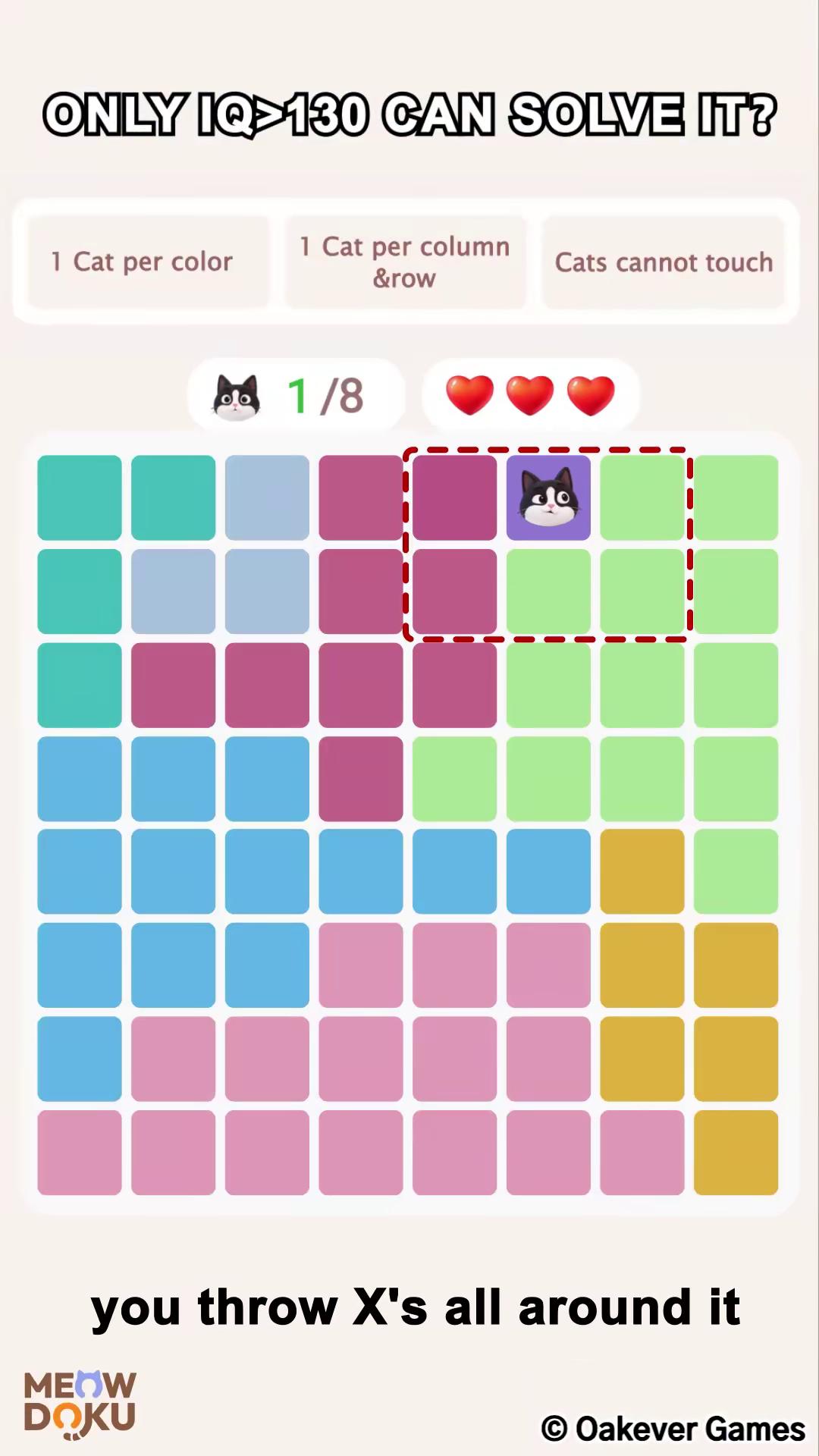 The series' steadiest leader — 68 days at an almost perfectly flat ~2.3M/day. No ramp, no decay, no story: the drip doctrine in one creative.
Two SKUs, Two Fleets
The SKU column above is not a formality — Oakever runs Meowdoku as two separately-listed products, and the index shows they're run as two distinct operations:
| iOS "Meowdoku!" | Android "Meowdoku: Brain Puzzle Games" | |
|---|---|---|
| Entries in top 15 | 8 | 7 |
| Combined impressions | 425.7M (67%) | 211.2M (33%) |
| Copy | One line across all 8: "Looking for a game that soothes the so…" | Three lines: empty, "Quick to learn. Impossible to put down! 😄", "Tap, deduce, place. Can you find every cat? 🐱" |
| Impressions per tracked show | ~740–1,300 | ~320–430 |
Two-to-one budget split toward iOS; a single locked copy line on iOS versus active copy testing on Android; and — the detail that elevates this from bookkeeping to intelligence — the impressions-per-show ratio splits into two clean, non-overlapping bands exactly along the SKU boundary. Every iOS entry sits between ~740 and ~1,300 impressions per tracked show; every Android entry between ~320 and ~430. In four prior teardowns this ratio was one band per advertiser (Scopely ~8,400, Smash Fest! ~560, Royal Match ~90, PineDrama ~75); Meowdoku is the first fleet where it splits internally, and it splits precisely where the placement mix should differ — different stores, different networks, different slot economics. The metric keeps earning its place: within one operation it's stable; across operations it fingerprints them, even when both belong to the same advertiser.
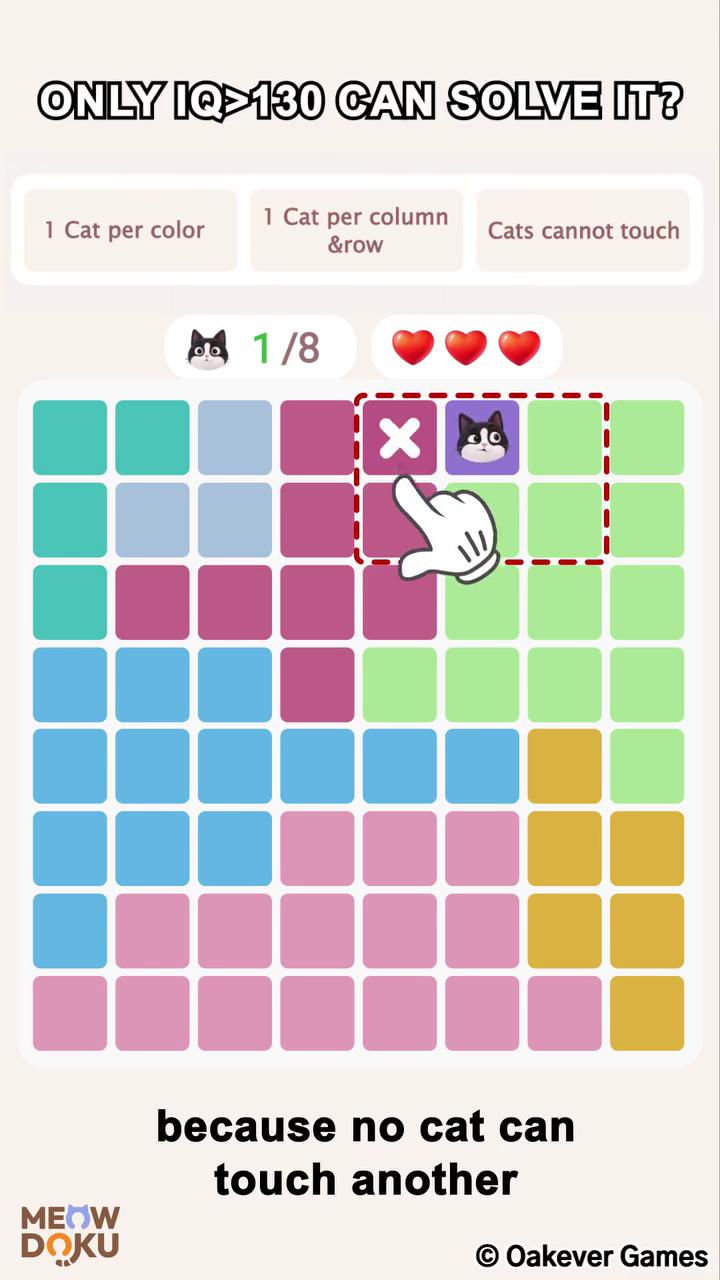 Creative #3 (Android) — 55 seconds, first seen May 21, live for 81 days: the joint-oldest running creative in the fleet, from the smaller but longer-serving Android operation.
The Drip Calendar: Eleven Launch Dates, No Batch Bigger Than Two
Line up the fifteen first-seen dates and the operational contrast with every blitz in this series is total: May 21 (two entries, launched nineteen hours apart), May 22, June 3, June 8, June 9, June 10, June 11 (two, three minutes apart), June 15 (two, twenty-three minutes apart), June 18, June 20, June 29, July 11. Eleven separate launch dates across eight weeks, and never more than a pair on any of them.
Compare the calendars this series has collected: Flow Games shipped seven playables in 48 minutes; Scopely dropped six videos in one evening; PineDrama launched a seven-entry copy family inside 48 hours. Oakever ships continuously — roughly 1.7 creatives per week, the same production rate we calculated for Flow Games' pipeline, but released as a steady stream instead of stockpiled into batches. The two tiny pairs (three and twenty-three minutes apart) are the only trace of batching in the entire dataset, and a pair is better read as one upload session than as an operational doctrine.
The steadiness extends to what the drip doesn't do under provocation. In the eight weeks this calendar covers, Meowdoku's competitive environment changed completely — Smash Fest! launched its seven-playable batch on July 23, escalated to ~40M fleet impressions per day, and began closing the chart gap from two slots below. Meowdoku's observable response: one new creative on July 11, none since, cadence unchanged. Either Oakever hasn't registered the threat, or — the reading its discipline elsewhere supports — it has decided that counter-escalation is the blitz's game and declines to play it. A drip that holds its rhythm while a rival triples intensity two chart positions away is making an affirmative bet: that its retention beats their reach. September's chart, as noted throughout, referees exactly that bet.
The trade is legible. Batching buys clean A/B reads — seven variants hitting the auction simultaneously rank themselves within days. Dripping buys continuity — there is never a generational cliff, never a day the fleet is all-new or all-old, and each new creative lands into a stable delivery environment where its early numbers aren't polluted by six siblings launching alongside it. The blitz optimizes for learning speed; the drip optimizes for signal cleanliness and zero downtime. A launch-phase game choosing the drip is implicitly claiming it doesn't need to learn fast — that it already knows what converts. Given the fleet's copy discipline (one line held across the entire iOS operation), that claim looks credible.
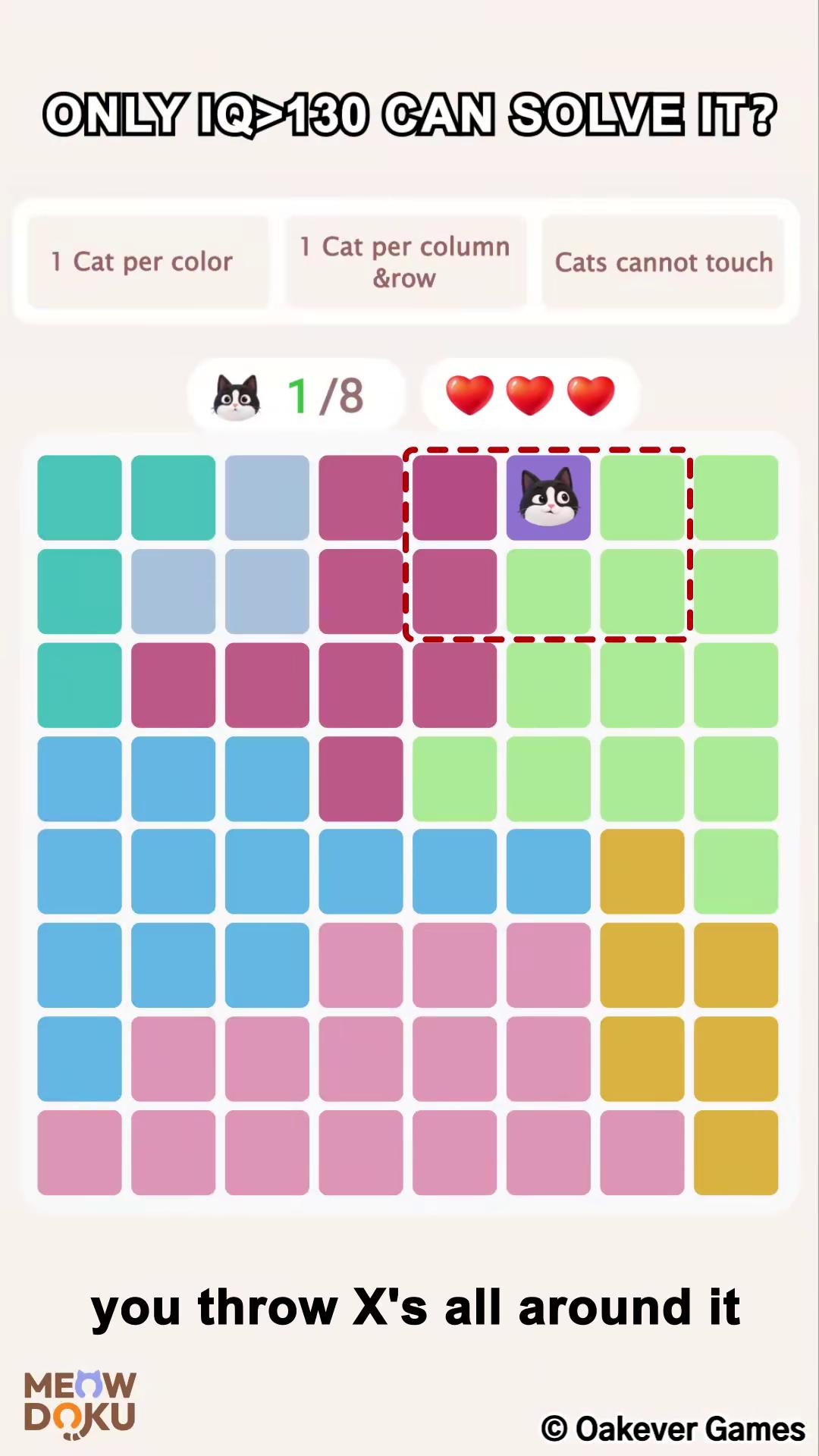 Creative #4 — the newest entry (July 11, 60 seconds), already at 63.1M impressions in 30 days (~2.1M/day). New drips land at full fleet-standard intensity.
The 81-Day Veterans
Rows #3, #8, and #10 launched on May 21–22 — before the game had meaningful chart presence — and all three are still live at 80–81 days. In this series only Royal Match's marathon fleet runs older creatives, and Royal Match is a four-year-old franchise at maintenance intensity. For a launch-phase game, 81-day creatives are unprecedented in our data: Smash Fest!'s launch fleet median was 35 days; Scopely's ceiling was 67.
The intensity math explains it, consistently with everything this series has measured. The 81-day veterans run at ~0.2–1.2M impressions/day — a fifth to a tenth of the fleet's leaders — having settled into what looks like permanent low-frequency service after their initial push. Meowdoku's fleet, in other words, contains its own miniature intensity ladder: young creatives run hot (~2.1–2.3M/day), veterans run cool and just… continue. That's the marathon mechanic operating inside a launch campaign, and it's why the fleet needs no sweeps: creatives don't fatigue out at this frequency, they just descend the ladder and keep working.
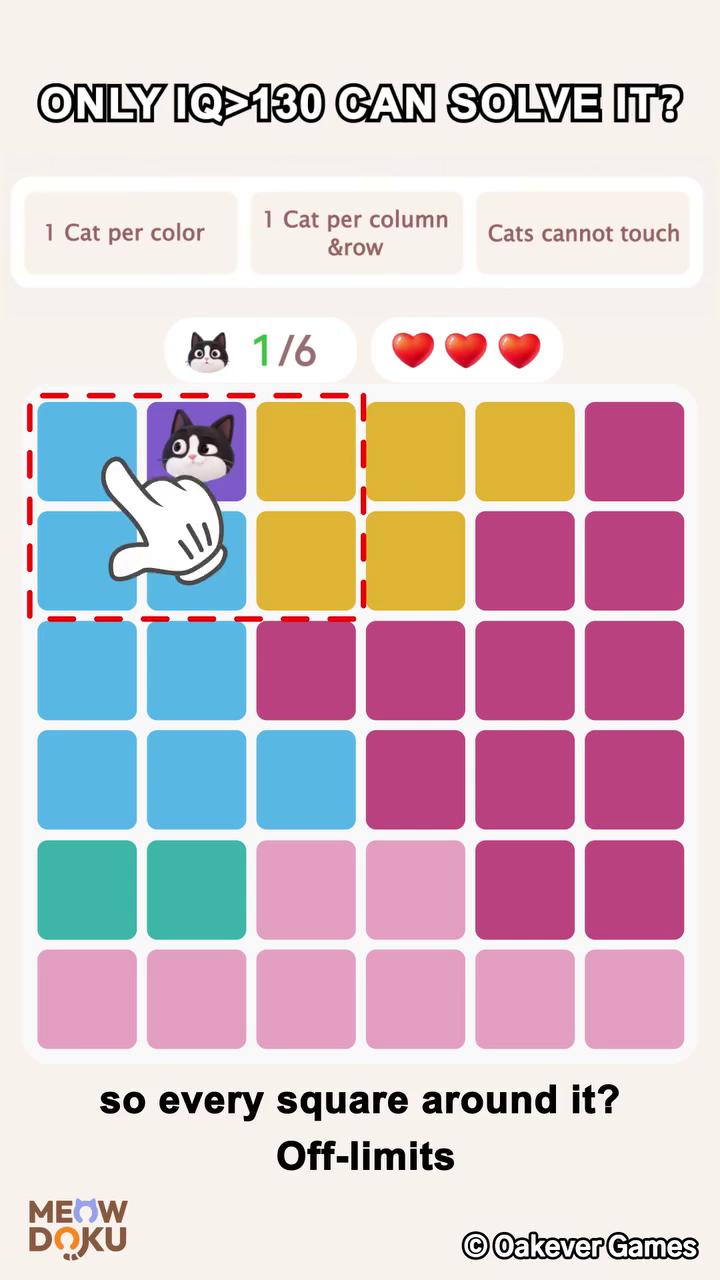 Creative #8 (Android, 34s) — first seen May 21, live for 81 days. Launch-phase creatives this old exist nowhere else in this series' data.
42 Seconds: The Cozy Duration
The fleet's duration distribution — 27 to 60 seconds, median 42 — occupies a band no other advertiser in this series centers on. Scopely's blitz centers on 22 seconds (two-thirds of its fleet in the 21–30s band); Royal Match spreads from 29 to 119; PineDrama jumps to episode length. Meowdoku sits deliberately in the forties, and the positioning explains the spec.
The copy line that anchors the entire iOS fleet — "Looking for a game that soothes the soul…" — is a cozy pitch, and cozy doesn't demo in ten seconds. The gameplay is sudoku-with-cats: the ad needs long enough to show the deduce-and-place loop resolving calmly, to let the pace itself communicate the product's promise of low stimulation. A jackpot rhythm compresses; a soothing rhythm needs room. Forty-two seconds is that room, while staying short enough for standard skippable inventory — a spec derived from positioning, exactly as MONOPOLY GO!'s 22 seconds derives from its slot-machine rhythm and PineDrama's 273 from its cliffhangers. Across this series, ad duration keeps decoding as positioning-made-measurable, and Meowdoku is the cleanest single-band example yet.
The band's internal spread does quiet work too. The fleet's short end (27s ×2) and long end (59–60s ×2) bracket a dense middle, and the assignments aren't random: the two 27-second cuts are both iOS entries running at the fleet's highest impressions-per-show ratios — bumper-style versions of the pitch for the deepest placements — while the 59–60-second cuts anchor the top of the impressions table, where the full soothing loop earns the most reach. Within one positioning, Oakever still versions by placement depth: the calm pitch has a short form for expensive slots and a long form for roomy ones, and the fleet's budget distribution (three of the top four are 53s+) says the long form is where the strategy actually lives. Even the quietest operation in this series turns out to be making two or three deliberate decisions per creative — they're just decisions of calibration rather than reinvention, which is perhaps the best one-line description of the whole machine.
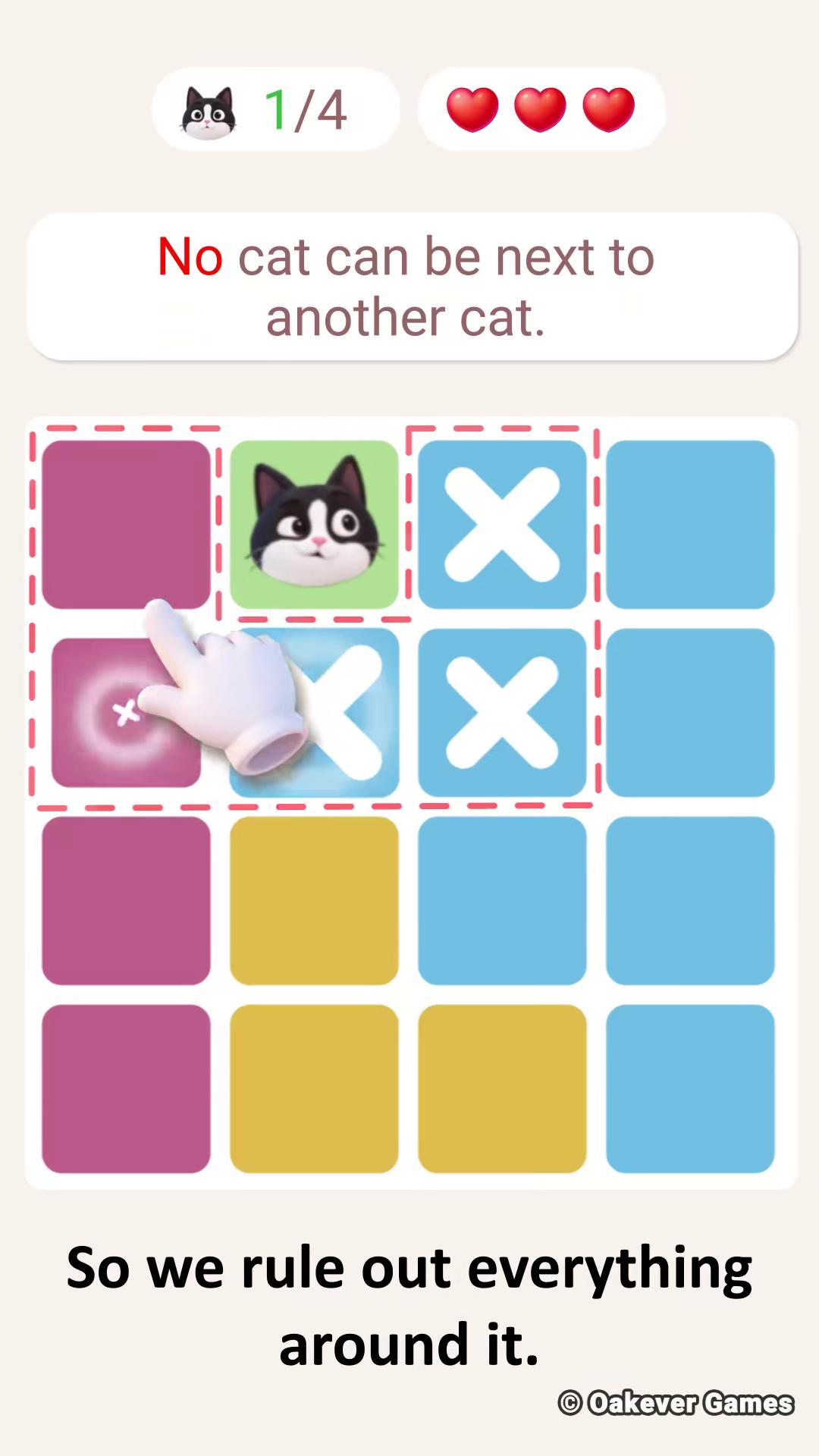 Creative #13 (42s) — the fleet's median duration in the flesh: enough runtime for a deduction loop to resolve at cozy pace.
The Campaign Files: One Document, Eight Videos
The index's campaign-document grouping exposes how the two SKUs organize their work, and the structures are as split as everything else. All eight iOS entries share a single campaign document — one copy line, one campaign object, eight different videos rotating inside it, launched across two months. The Android side splits into three documents: the empty-copy family (three entries, including both 81-day veterans), the "Quick to learn" family (three entries), and the "Tap, deduce, place" single.
Read operationally: iOS runs one long-lived campaign that consumes new videos, while Android runs several small campaigns that each own their videos. The iOS model is the more unusual one — most advertisers version campaigns as they version creative, but Oakever's iOS operation has kept one container running since at least June 3 (the oldest iOS entry) and feeds it a fresh video every week or two. Continuity again, at the campaign layer this time: no new-campaign learning phases, no budget resets, each new video inheriting the container's accumulated delivery history. It's the same anti-cliff instinct as the drip calendar, applied one level up the stack.
One asset-hygiene note, in what has become a series tradition: two Android entries (#3 and a mid-fleet sibling) share the same 55-second video fingerprint — the fleet's only multiplexed asset. Fifteen entries, fourteen distinct videos: near-total production freshness, in sharp contrast to Royal Match's library model and PineDrama's seven-copies-one-video model. Every advertiser in this series answers "how many videos is an entry worth" differently, and the answer consistently matches their production economics: Oakever, mid-throttle with a weekly pipeline, affords a new video per entry and buys clean per-video attribution with it.
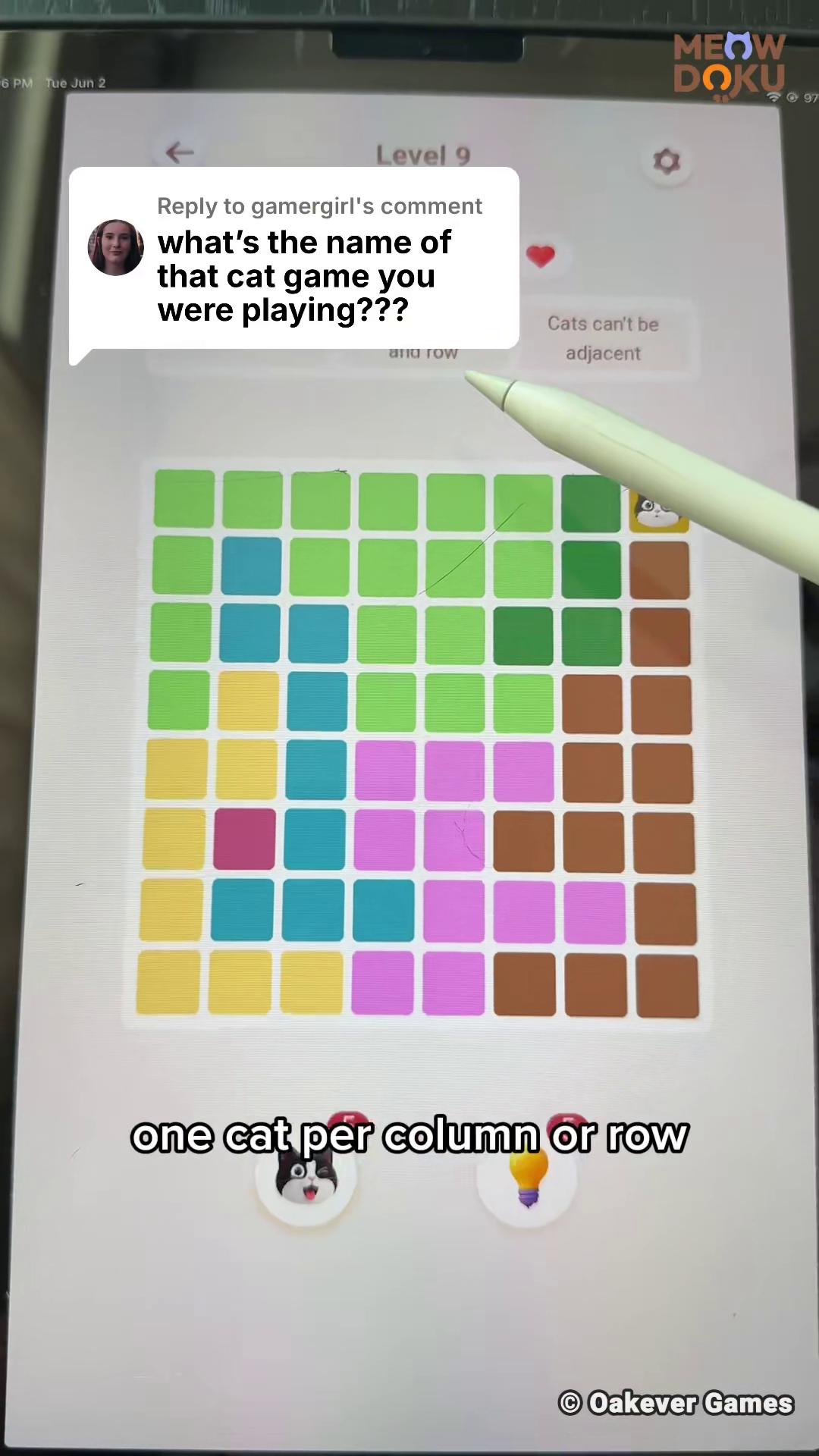 Creative #2 (iOS, 53s) — 121.8M impressions in 56 days, the second seat in a single iOS campaign document that has consumed eight videos since June.
The Show-Count Anomaly That Proves the Bands
One row in the fleet table rewards a second look. Android's #3 logged 287,244 tracked shows — nearly twice the count of iOS's #1 (159,690) — while earning barely 60% of its impressions (96.5M vs 156.4M). The Android veteran is shown far more often and reaches far less per showing, which is the two-band fingerprint stated as a single comparison: Android's placements are shallow and frequent, iOS's are deep and sparse.
This matters practically because show counts are the more visible number in many competitive tools, and ranking this fleet by shows would put the Android veteran on top — a 3x misread of actual reach. It's the same lesson our MONOPOLY GO! teardown drew about entry-versus-asset counting, now at the placement layer: know which unit your metric counts before you rank anything. Within either SKU's band, shows and impressions rank identically (the consistency property that makes the estimates trustworthy); across the bands, only impressions compare. Meowdoku is the advertiser that makes this rule visible, because it's the only one running both bands under one name.
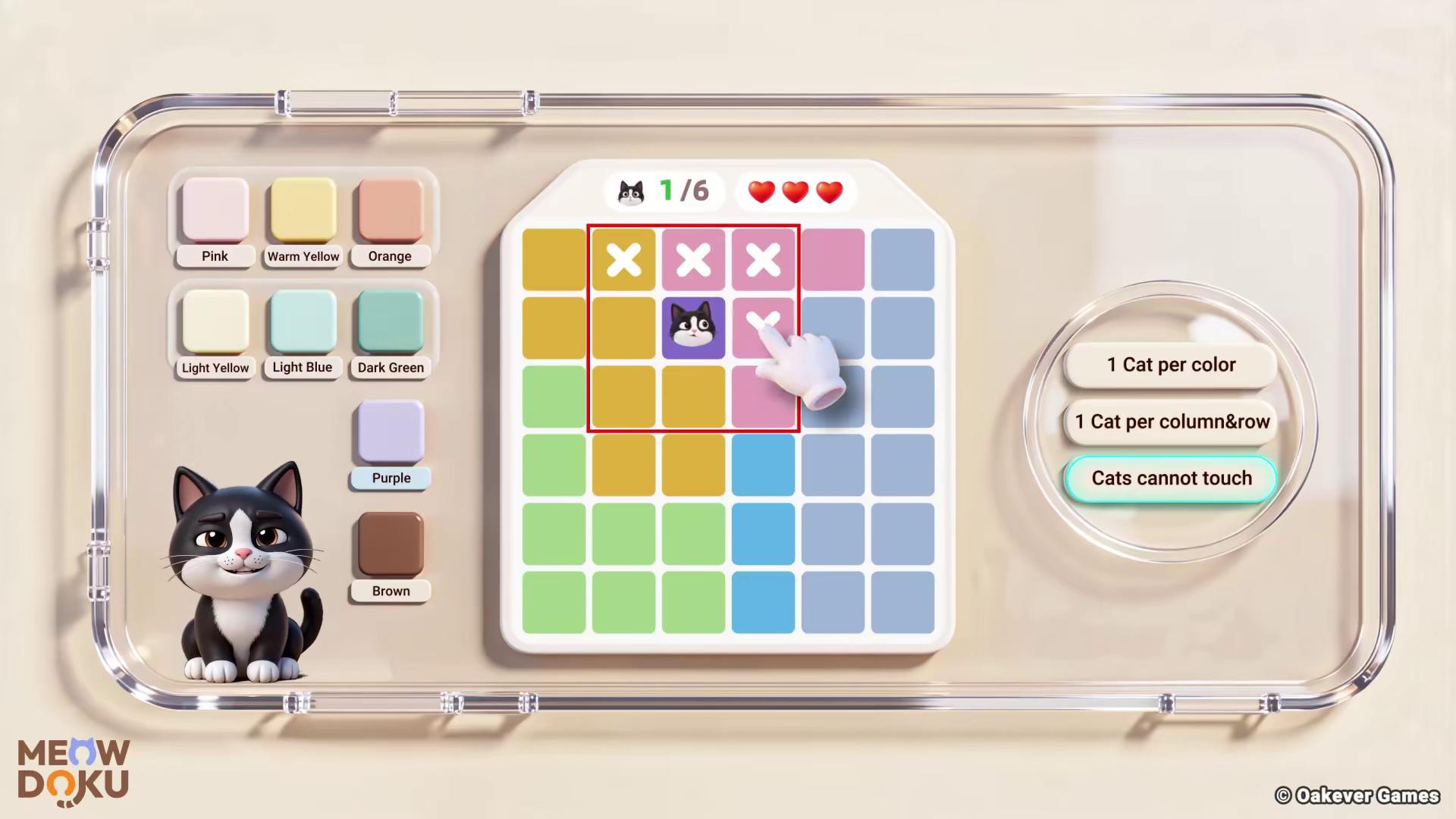 Creative #9 (iOS, 27s) — the fleet's shortest cut, 20.7M impressions in 42 days at the highest impressions-per-show ratio in the fleet (~1,233).
Watching a Drip: Three Alerts Worth Setting
A drip advertiser generates no events to alert on — so the alerts watch for the drip changing:
- Cadence break: a launch day with 4+ new creatives. Eleven launch dates, never more than a pair — a true batch would be Meowdoku's first, and given the competitive picture (Smash Fest! escalating two chart slots below), it would date the moment Oakever decided to fight rather than coast.
- First sweep: two or more creatives ending within the same day. The fleet's two retirements to date came five days apart, individually. A synchronized exit would signal the adoption of generational ops — and since nothing in a drip requires one, it would imply new management or new pressure.
- The 81-day veterans' fate. Three May creatives now define this series' launch-phase longevity record. Each additional week they survive extends the known ceiling for launch-fleet creative life at ~1M/day throttle; their eventual exit — individual or synchronized — will be this fleet's single most informative event either way.
All three are passive index watches. The drip's virtue for its operator — nothing ever happens — is its virtue for the analyst too: any event at all is signal. And because the baseline is ten weeks of documented stillness, the false-positive rate on these alerts is effectively zero — a luxury no blitz watcher enjoys, since blitz fleets generate events weekly and force the analyst to rank them. Watching Meowdoku is cheap precisely because Oakever made operating it look effortless; both facts flow from the same doctrine, and both end the moment the quiet machine makes its first loud move.
The Intensity Ladder, Six Rungs
Series scoreboard (top creative each; prior figures as published in this series' August teardowns):
| App | Playbook | Top creative | Lifespan | Est./day | Operational events |
|---|---|---|---|---|---|
| MONOPOLY GO! (Scopely) | Video blitz | 1.85B | 67d (retired) | ~27.6M | Generational sweep |
| Smash Fest! (Flow Games) | Playable blitz | 260.7M | 58d (retired) | ~4.5M | Batch launch + two-wave sweep |
| Meowdoku! (Oakever) | Two-SKU drip | 156.4M | 68d (live) | ~2.3M | None |
| Royal Match (Dream Games) | Marathon | 8.5M | 54d (live; fleet to 305d) | ~157K | Additions only |
| PineDrama (TikTok Pte. Ltd.) | Flood | 719K | 28d (dark) | ~26K | By-asset kills |
Two rows of that table repay a longer look because they bracket Meowdoku from either side. Against Smash Fest! one rung up, Meowdoku runs at roughly half the peak intensity with creatives living roughly twice as long — the series' inverse curve holding with almost suspicious precision between two games launched into the same chart within weeks of each other. Against Royal Match one rung down, Meowdoku prefigures its own future: the veterans-descending-the-ladder mechanic we found inside this fleet is the embryonic form of the marathon's four-tier pension system, suggesting that if Meowdoku's chart era ends and the operation throttles down, its fleet will age into a Royal Match shape without any doctrinal change at all. The drip may simply be the marathon's launch-phase form — same machine, different gear — which would make Oakever and Dream Games practitioners of one doctrine at two lifecycle stages rather than two doctrines. The series' taxonomy is provisional on exactly this kind of question, and the way to resolve it is the way this series resolves everything: keep reading the timestamps as both fleets age.
Meowdoku's rung — ~2.3M/day — is almost exactly the geometric middle of the ladder, and its lifespan profile (68-day leader still live, 81-day veterans still live) confirms the series' core curve from the middle: at half-blitz intensity, fatigue arrives at roughly double-blitz timescales, or never. The events column is this article's contribution: every other advertiser's operating model announces itself through events; Meowdoku's announces itself through their absence. A fleet with no events is itself a strategy — it means the operation trusts its baseline, and nothing in the chart's #8 slot argues with that trust.
Can You Copy This Playbook?
A production note before the role-specific advice, because the drip's feasibility hinges on it: fifteen creatives in eight weeks at fourteen distinct videos means Oakever's pipeline produces genuinely new footage weekly without batch deadlines — arguably harder to staff than a blitz pipeline, which concentrates production into sprints with recovery valleys between them. The drip has no valleys. Teams evaluating this playbook should audit their production calendar before their media budget: a studio that can crash-produce seven videos for a launch week but not sustain 1.7 per week indefinitely is structurally a blitz shop regardless of its media preferences, and the doctrine choice was made in the production org before the UA team ever voted.
If you're launching a casual game without a blitz budget: this is the most reproducible launch operation in the series. Requirements: a locked positioning (one copy line you believe in), a production pipeline of one to two videos per week, and the restraint to run ~2M/day instead of ~40M. What you give up versus Smash Fest! is learning speed and share-of-voice; what you keep is months of runway on the same budget and creatives that serve for quarters instead of weeks. The 81-day veterans are the proof: at this intensity, creative production compounds instead of burning.
If you run a multi-SKU or multi-store product: copy the split discipline. Separate copy strategies per SKU (lock the proven line where you're confident, test where you're not), separate budget weights (Meowdoku runs 2:1 toward iOS), and monitor per-SKU placement fingerprints — the two-band ratio split is reproducible from your own data and tells you when the stores' delivery environments diverge.
If you're competing against a quiet machine: the absence of events is diagnostic. An advertiser with no batches and no sweeps has no generational cliffs to exploit — there's no post-reset window where their fleet is unproven. What they're exposed to instead is escalation: today's chart shows Smash Fest! at +11.87% closing on Meowdoku's cooling -24.98%. A drip operation's counter-move to a blitz rival is the one thing its calendar has never shown: a batch. Watching for Meowdoku's first-ever multi-creative launch day is the cleanest tell that the duel has been joined.
What would change our read: a synchronized retirement or a 4+-creative launch day would mean the quiet machine is adopting event-driven ops under competitive pressure — and would date exactly when Oakever started taking Flow Games seriously. Conversely, if the drip continues unchanged and Meowdoku still holds a top-10 slot in September, half-throttle will have beaten full-throttle on efficiency, and we'll say so with the numbers. This series checks its own claims on schedule.
Methodology & Data Notes
- Source: AdMapix creative index, queried 2026-08-10, US market filter, sorted by model-estimated impressions; top 15 analyzed. Chart figures from the AdMapix general top chart, same-day pull. Comparison figures from this series' August 2026 teardowns.
- Impressions are model estimates, not platform-reported figures; ratios and rankings are more robust than absolute values. Days live = first seen → last seen in the index; "Live" means observed on the pull date. Coverage outside tracked placements may lag or undercount.
- SKU attribution follows the index's app records: iOS "Meowdoku!" (App Store ID 6761760135) and Android "Meowdoku: Brain Puzzle Games" (com.oakever.meowdoku on Google Play), both by Oakever Games.
- All figures are third-party estimates for research reference; they may differ from the advertiser's internal data.
Frequently Asked Questions
What is Meowdoku's ad strategy? A steady drip: one to two new 27–60-second videos per week across two store SKUs, run at ~2M impressions/day at the top, with no launch batches and no synchronized retirements — 13 of its top 15 US creatives are live as of 2026-08-10, including three that have run 80–81 days.
How is Meowdoku different from Smash Fest!'s launch campaign? They're operational opposites in the same launch window: Smash Fest! runs an all-playable batch-and-sweep blitz escalating to ~40M fleet impressions/day; Meowdoku runs an all-video continuous drip at a fraction of the intensity. Today Meowdoku charts higher (#8 vs #10) but is cooling faster (-24.98% vs +11.87%).
Why does Meowdoku run separate iOS and Android ad operations? The index shows two distinctly-managed SKUs: iOS takes ~2/3 of impressions under one locked copy line, Android runs three copy variants — and their impressions-per-tracked-show fingerprints split into non-overlapping bands (~740–1,300 vs ~320–430), reflecting genuinely different placement mixes per store.
How long do Meowdoku's ad creatives last? Longest of any launch-phase game in this series: the top creative is live at 68 days, and three May-launch veterans are live at 80–81 days. At ~2M/day peak intensity, creatives descend to low-frequency service instead of fatiguing out — no retirement sweep has ever appeared in this fleet.
Why are Meowdoku's ads 40+ seconds long? Positioning: the fleet sells a cozy, soul-soothing puzzle ("Looking for a game that soothes the soul…"), and calm doesn't demo in ten seconds. The 42-second median gives the deduce-and-place loop room to resolve at the product's actual pace — duration as positioning, consistent with every advertiser profiled in this series.
Did Meowdoku increase its ad spend after reaching the chart top 10? Not visibly. The fleet's cadence, throttle (~2M/day per top creative), and launch rhythm are indistinguishable before and after its chart rise — its first creatives predate meaningful chart presence by weeks, and the newest entry (July 11) runs at the same rate as its predecessors. The paid layer neither created a surge nor chased one. Whatever mix of featuring, algorithmic pickup, and word-of-mouth drove the chart ascent, the ads' role was to hold a constant floor under it — and the floor has not moved by a visible increment in ten weeks of index history, through obscurity, spike, and the current cooling phase alike.
Who is Oakever Games? Per the index: the developer behind both Meowdoku SKUs (iOS "Meowdoku!" and Android "Meowdoku: Brain Puzzle Games"), operating the most event-free ad fleet in this series — and, as our earlier chart snapshots recorded, the same publisher was already charting with Meowdoku when our MONOPOLY GO! teardown first flagged it as a launch-spike newcomer in early August. The index knows Oakever primarily through this fleet, and this fleet is the best introduction: disciplined, patient, and entirely legible from public timestamps.
Data: AdMapix creative index and top charts, US, pulled 2026-08-10. All figures are third-party model estimates for research reference only.
Events or no events — the index reads both. Batches, sweeps, drips, and the fingerprints that tell SKUs apart: all visible in minutes. Create your AdMapix account and profile your genre's quiet machines; pricing lists what each tier includes.
Related Reading
- Ad strategy teardowns (series index) — every teardown in the series, in publication order
- Mobile game ads guide: formats, examples and research — the format matrix, research workflow and KPI guardrails every teardown in this series applies
- Gossip Harbor — one 25-second video file carrying 70.5% of the account
- Vita Mahjong — the metronome — one creative running 467 days
- Mahjong Blast — 92.7% playable, 87.3% shipped inside a 16-day sprint
Turn these observations into your next creative study
Open the creative library and select samples for your market, network and research question.
Related Articles
PineDrama Ad Strategy in 2026: The Flood — 4.5-Minute Ads, Seven Copies per Video, and a Fleet That Dies Before It Peaks
PineDrama is the second-fastest riser on the US download chart, yet its biggest ad creative holds just 719K model-estimated impressions — and its entire top 15 went dark by August 5. We reconstruct TikTok Pte. Ltd.'s short-drama flood playbook from the AdMapix index: one 273-second video multiplexed under seven different copy lines, creator-style #ad distribution, by-asset synchronized retirements, and the methodological lesson an owned-inventory giant teaches every ad-intelligence reader.
Royal Match Ad Strategy in 2026: The Marathon Playbook — a 305-Day Creative, a Two-Year-Old Image, Zero Resets
Royal Match's top 15 US ad creatives are all still live — not one has ever been retired. We reconstruct Dream Games' marathon playbook from the AdMapix index: a 119-second video running 305 days, a static image whose asset dates to May 2024, the same proven video multiplexed across entries launched seven months apart, and per-creative intensity 175x below MONOPOLY GO!'s — sustained indefinitely.
Ad Strategy Teardowns: Six Advertisers, Five Playbooks, One Public Index
The AdMapix teardown series reconstructs real advertisers' entire ad operations from public index data — creative lifespans, launch batches, synchronized resets, and the intensity decisions that write everything else. This hub collects every teardown, the full intensity ladder, and the live predictions board the series grades itself against.