
TikTok Shop Ads: Home-Product Demonstration Ideas
Use eight dated home-product advertising references to plan measured-fit shots, honest setup demonstrations, clear result sequences, and original creative tests without assuming Shop attribution or campaign performance.
TikTok Shop Ads: Home-Product Demonstration Ideas
Home-product teams making TikTok Shop ads should show whether a product fits, what getting it ready involves, and what a buyer can actually do with it. The dated advertising references examined here illustrate room context, finished results, feature close-ups, and storage arrangements. They do not establish TikTok Shop checkout, installation performance, or sales results.
This guide is for ecommerce marketers, creative strategists, and creators turning product references into a practical shoot. It uses eight supplied images to separate what is visible from what still needs filming, measuring, or verifying. That distinction matters before the next production brief: an attractive cabinet photograph can suggest a useful storage story while leaving dimensions, assembly, and access unanswered. The output is a specific demonstration plan, with original scripts and acceptance checks rather than a list of supposedly winning ads.
Last updated: 2026-10-13.
AdMapix Research — prepared with Codex and checked against the dated source sample. Editorial ownership: Brad at AdMapix. This automated preparation disclosure does not imply personal human review. AdMapix is our product.
Quick Answer
Home-product advertising becomes more informative when each claim has a corresponding demonstration: measured space for fit, visible actions for setup, and a repeatable task for the result.
- Use room scenes to explain context, then add measurements and operating clearance before claiming compatibility.
- Distinguish an assembled product photograph from evidence of assembly, installation, or ease of use.
- Treat the eight examples below as creative references. Their Shop status and commercial performance are unverified.
- Use AdMapix to inspect indexed creative evidence and develop hypotheses; use your product documentation and account data to validate claims and outcomes.
Start With the Buyer’s Unanswered Question
The useful starting point for a home-product ad is the question that prevents someone from deciding whether the item belongs in their home. A buyer may understand what a rolling cabinet looks like but still need to know whether its doors open beside a table. Someone considering a mold may recognize the finished shape yet wonder how filling, freezing, and release work. Those are different production assignments, even when both products appear under a broad kitchen search.
Organize the brief around the uncertainty rather than around a fashionable editing style. A presenter, a close-up, and a room reveal are useful only when they answer something specific. Before choosing any of them, write the buyer’s question in ordinary language: “Will my printer fit on top?” is more actionable than “Communicate versatility.” “Can I reach the plates without moving the cabinet?” is more useful than “Show convenient storage.”
A practical distinction is between appearance, compatibility, and operation. Appearance concerns finish, shape, and how an object looks beside other furniture. Compatibility concerns dimensions, access, power, placement, and the particular objects or spaces involved. Operation concerns the actions needed to achieve the advertised result. A single beauty shot can contribute to the first category while leaving the other categories largely unresolved.
For a small team, choose the most consequential uncertainty first. If the product cannot be described without an unsupported load claim, obtain that information before writing a capacity script. If the main concern is whether a door clears a wall, devote production time to the opening movement. If the product’s appeal depends on a finished result, show the steps that connect the purchased object to that result.
This article focuses on those home-product decisions. For the broader relationship between commerce research and creative research, the TikTok Shop GMV Max research guide provides the topic parent. The examples here support production planning; they do not reveal campaign settings, bidding decisions, or merchant economics.
Methodology: What the Dated Sample Contains
The evidence is a bounded US search sample for 2026-09-14 to 2026-10-13, collected on 2026-10-13 at 17:05 UTC, using the query kitchen. The collection requested up to three pages of ten advertising records per page, sorted by model-estimated impressions in descending order. It returned thirty records. This is a search sample, not a complete inventory of home-product advertising or any advertiser’s campaigns.
The requests used a TikTok-labelled media filter. However, a media filter is not sufficient evidence of each returned record’s underlying ad network, and the supplied records do not independently establish TikTok Shop product attachment or checkout. Some records contain a source code while others leave that field empty; an undocumented code should not be translated into a network claim. Accordingly, this article offers ideas for teams producing TikTok Shop ads, rather than presenting every reference as a verified TikTok Shop ad.
The supplied counts distinguish advertising records from media files. Six records contain video references, which resolve to four distinct video fingerprints. The sample also contains ninety-three distinct image fingerprints and no playable fingerprints. These counts describe different units and should remain separate. Ninety-three image fingerprints do not mean ninety-three products, and thirty records do not mean thirty independently produced videos.
Visual analysis is limited to the attached material. The first four images are contact sheets showing frames at 0, 2, 5, and 10 seconds. Those frames support observations about the visible moments, not claims about every intervening action, the complete soundtrack, or the rest of a video. The remaining images are individual static source images or ad thumbnails. Their order in this article is editorial; it does not establish an original carousel sequence.
The appliance records discussed below share the supplied Samsung product association, identified by c934b4a240e34732ce345c7dcbe844fc. That association is more specific than a name match, but it does not identify the ad buyer. The selected static records contain Amazon-referencing copy and no returned product association. We therefore describe them by their reported record titles and visible content, without attributing them to Amazon as an advertiser or assigning an unverified seller.
Any impression values in the underlying sample are third-party model estimates for the stated window. They are not observed delivery, spend, orders, installs, revenue, profit, or lifetime totals. This article does not rank the examples by commercial effectiveness, calculate daily impressions from ad age, or use product-search aggregates.
The public source package linked in Sources preserves the dated batches, request parameters, and checksums for reproduction. Its reproducibility supports checking the sample and its counts; it does not make unsupported product or performance claims true.
Evidence Table: Eight References and Their Limits
The references illustrate different information jobs, with clear gaps between what a picture shows and what a production team still needs to establish. Read this table as a planning aid rather than a performance leaderboard. The image numbers correspond to the analyses that follow, and each caption identifies the underlying record so that the observation remains attached to its source.
| Image | Reported association or record wording | Visible evidence | Missing evidence that matters |
|---|---|---|---|
| 1 | Samsung association; kitchen-design copy | Presenter, appliance setting, wider kitchen view | Measured clearance, installation process, complete narration |
| 2 | Samsung association; daily-meal copy | Finished dishes, pan on a range, hands reaching for eggs | Continuous cooking process, measured convenience, product-specific result |
| 3 | Samsung association; refrigerator-fit copy | Refrigerator shown against different cabinet settings | Actual room dimensions, opening movement, verified installation requirements |
| 4 | Samsung association; appliance-package copy | Range, microwave, refrigerator, control-panel detail | What the package includes, feature operation, purchase conditions |
| 5 | “Shop Amazon For Your Kitchen & Dining Needs!” | Dice-shaped molds, transparent forms, packaging | Seller identity, material specification, filling and release process |
| 6 | “Shop Amazon For Your Kitchen Furniture Needs!” | Shelf unit staged with printer, files, boxes, and books | Dimensions, load rating, assembly, printer operating clearance |
| 7 | “Shop Amazon For Your Kitchen Furniture Needs!” | White cabinet, drawers, sliding doors, wheels, coffee setup | Included accessories, movement, drawer operation, safe appliance placement |
| 8 | “Shop Amazon For Your Kitchen Furniture Needs!” | Garden workbench, storage, tools, pots, open compartments | Outdoor durability, load rating, assembly, stable placement |
The count distinction is equally relevant to planning: the thirty records include six video-bearing records but only four distinct video files. Repetition can help identify reused media, but it cannot establish why it was reused. A team looking for additional demonstration ideas should therefore inspect actual visual differences instead of treating every record as a new production concept.
Example 1: A Presenter Can Introduce the Space
The first contact sheet connects a person with a furnished kitchen, making the surrounding room part of the product explanation. At the observed opening moments, the presenter holds a small microphone in a seated shot. The 5-second frame places the presenter beside the refrigerator, while the 10-second frame shows the kitchen without the presenter dominating the view. This is a useful reference for establishing context before specifying fit.
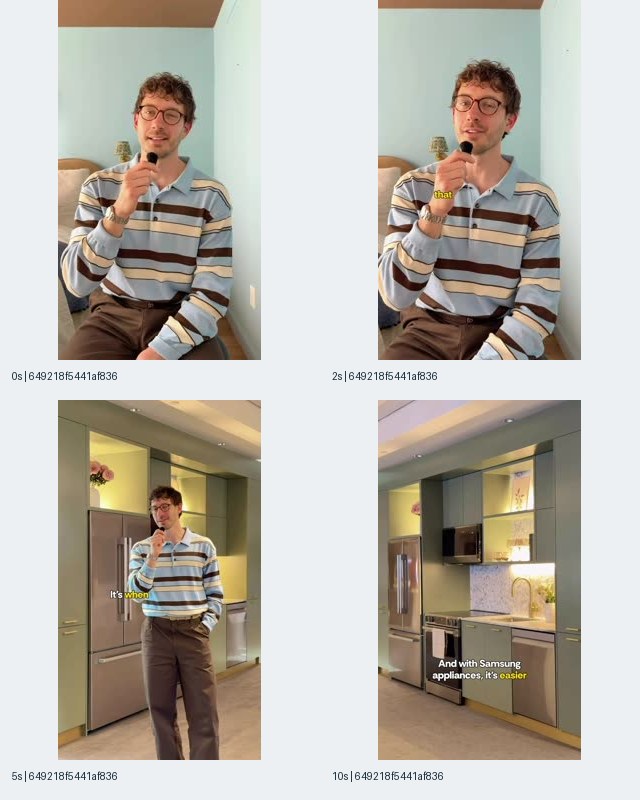
Image 1. Contact sheet for Samsung-associated record 649218f5441af8363e625ba1000ae18b. Only the displayed 0-, 2-, 5-, and 10-second frames were examined; the image does not verify installation or campaign performance.
The source copy discusses appliances working with kitchen design and names refrigerator fit and microwave design features. Those are advertiser statements. The visible frames establish that appliances are presented within a room, but they do not independently verify the named features or their installation requirements.
For a home-product brief, the transferable idea is to move from a person’s concrete question to the physical area involved. A creator could introduce an awkward corner, explain what needs to occupy it, and then show the candidate product in that same location. The room should remain recognizable between shots so that the viewer can follow the relationship between the original space and the finished arrangement.
Human presence can also make scale easier to interpret, but it does not replace dimensions. Camera distance, lens choice, and the presenter’s position can all alter the apparent proportions. For an original shoot, pair the contextual view with a readable measurement of the actual opening. Keep the measuring tool aligned with the dimension being discussed, and distinguish the product body from handles or other projecting parts.
A useful hypothesis is that a room-specific introduction will make the following fit demonstration easier to understand. Test that against a product-only introduction while preserving the same later evidence. Do not translate that hypothesis into a claim that presenters increase sales.
The additional shot this reference suggests is an operating-clearance view. Show the product in position, then show the door, drawer, or lid moving through its normal range. That would answer a question the sampled room reveal leaves open. It would also give the editor a visual basis for a narrowly worded statement about the demonstrated arrangement.
Example 2: A Finished Meal Establishes the Desired Result
The second contact sheet starts with food imagery before showing selected preparation-related moments, making the desired outcome visible early. The 0-second frame shows pasta, and the 2-second frame shows a composed salad with other ingredients. A pan appears on a range at 5 seconds, followed by hands reaching toward eggs at 10 seconds. These are discrete observations, not a verified account of how either finished dish was prepared.
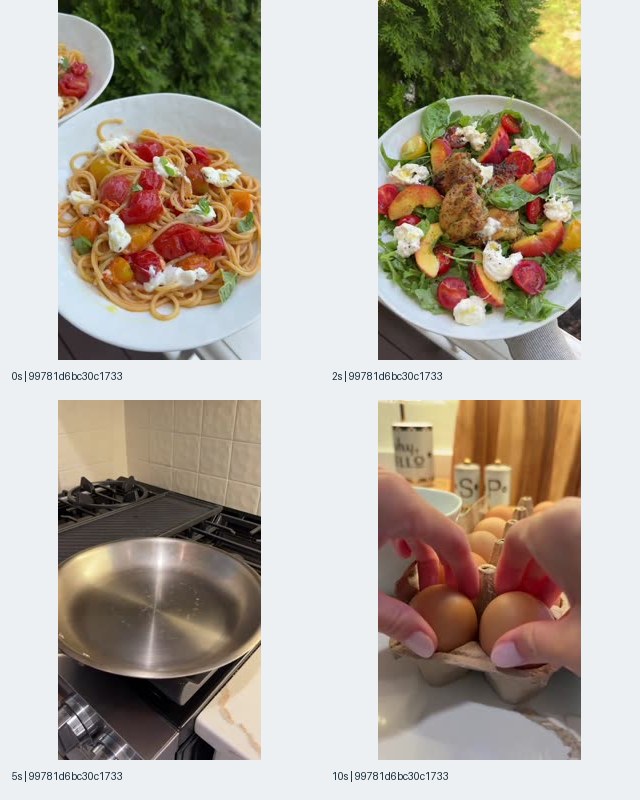
Image 2. Contact sheet for Samsung-associated record 99781d6bc30c17335538bdbe0ab3d4c2. The source copy describes daily meals and appliance use; the selected frames do not establish cooking time, ease, or a causal product benefit.
The creative lesson is that the outcome can explain why a household task is worth watching. A buyer may care more about the completed meal, organized shelf, or finished drink than about an isolated product feature. Starting with that result can establish the purpose of a later demonstration, provided the demonstration actually connects the product to the result.
That connection is the missing production requirement. For a kitchen accessory, show the specific action the accessory performs and retain enough context to distinguish its contribution from other equipment. If the result depends on preparation completed beforehand, disclose that in the script or edit. A finished dish should not silently imply that the featured item performed every step.
Consider an original brief for a food-storage product. Begin with the packed meal, then show the actual container being filled, closed, and placed in the intended storage location. The product’s dimensions, closure, and handling become visible. Any statement about leak resistance, temperature suitability, or freshness would require separate support appropriate to that claim; the attractive meal alone would not supply it.
The source sample also illustrates why duplicate records deserve attention. This daily-meal video fingerprint appears in another supplied advertising record. That establishes reuse of the referenced file within the sample, not a second independently produced daily-meal demonstration. It does not tell us whether the creative was successful, how budgets were assigned, or why the records differ.
A testable hypothesis for an original ad is that showing the completed household task first will clarify the product’s purpose. Keep the process footage and purchase proposition consistent when comparing introductions. The question is whether the opening improves understanding under your conditions, not whether appetizing food is universally a better hook.
Example 3: Different Room Styles Show Appearance, Not Universal Fit
The refrigerator contact sheet presents a similar product form against different cabinet settings, offering a reference for visual compatibility across interiors. The sampled frames show reddish cabinetry at 0 seconds, a lighter setting at 2 seconds, and green cabinetry at 5 seconds. A customer-satisfaction badge appears at 10 seconds. None of these stills supplies the measurements needed to establish fit in a buyer’s kitchen.
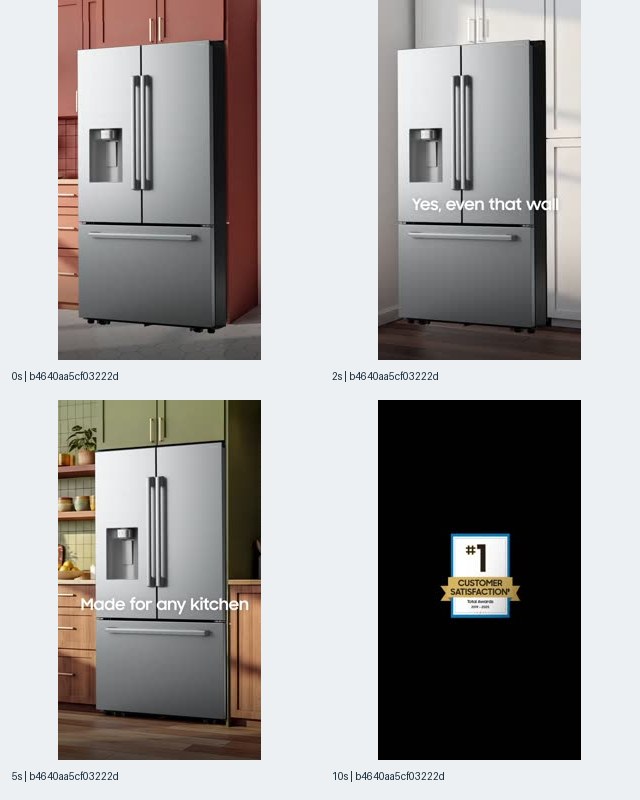
Image 3. Contact sheet for Samsung-associated record b4640aa5cf03222dd9d311c413a7364c. The room settings are visible; the fit claim and award-related wording are source advertising claims, not independently verified findings.
This example helps separate two meanings of “fits.” A finish can look compatible with a room’s colors. A physical product can fit within a measured opening and still require additional space for ventilation, handles, doors, or servicing. Advertising that moves casually between those meanings risks answering an aesthetic question while appearing to answer an installation question.
For an original storage or furniture ad, use a room variation only when the product identity remains clear. Keep the same variant identifiable, or explicitly name the variant when it changes. Otherwise, the viewer may attribute a difference in size or finish to lighting or room styling. A beautiful sequence is less useful if it obscures which item is available to purchase.
A practical adaptation is to show the product beside different existing finishes, then move to a measurement panel for the actual variant. The first part addresses appearance. The second establishes the documented dimensions and the space shown in the demonstration. Where operating clearance matters, show the movement from an angle that makes adjacent surfaces visible.
Avoid borrowing broad copy such as “made for any kitchen” as a factual promise for another product. A narrower statement tied to the demonstrated setting is easier to substantiate. Likewise, do not reuse the visible badge or imply that its underlying recognition applies to the product in your brief. The source image does not provide the award’s full scope, methodology, or transfer rights.
The useful hypothesis is that showing a product in a recognizable interior will help buyers imagine placement. A separate hypothesis concerns whether measured-fit information improves compatibility judgments. They should be treated separately because the creative elements answer different questions. Neither hypothesis establishes that any particular finish, room, or layout produces higher conversion.
Inspect the relevant indexed kitchen creatives in AdMapix, then sort your notes by the question each example answers: appearance, fit, setup, access, or result. A live search can differ from this dated sample and requires its own source checks.
Example 4: Feature Close-Ups Need a Visible Action
The appliance-package contact sheet moves between a room-level appliance view and a control-panel detail, illustrating how a feature label can become the subject of a shot. The range and over-the-range microwave are visible at the observed opening moments. A refrigerator appears at 5 seconds. The 10-second frame contains control-panel wording including “Air Fry Max” and “Air Sous Vide.” The frame does not show either function being used.
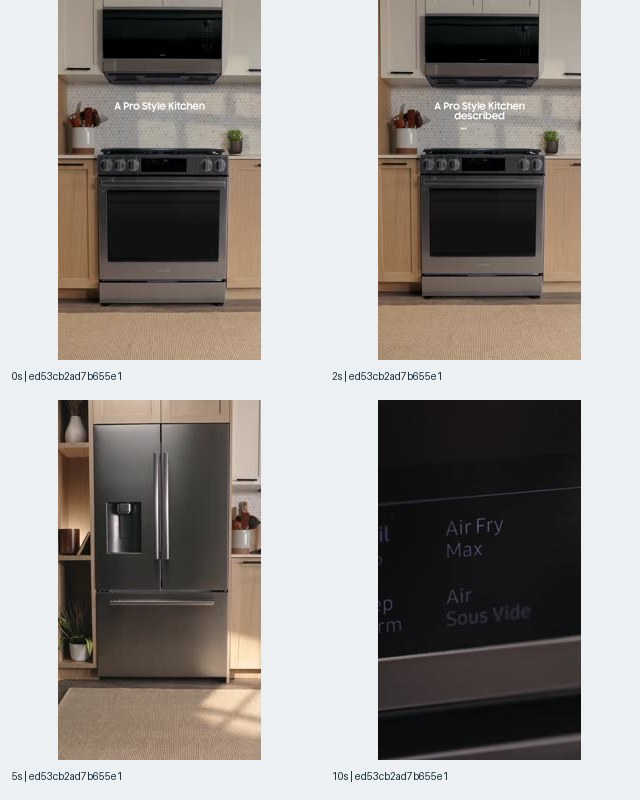
Image 4. Contact sheet for Samsung-associated record ed53cb2ad7b655e170b44fdb98f30ea8. Visible controls support a feature-label observation, not a feature test or verification of package contents.
A close-up can make a feature legible, but the production brief should explain why the viewer needs to see it. A label identifies an option. A hand selecting it demonstrates an interaction. A completed task may demonstrate an outcome under stated conditions. Those are progressively different evidence requirements, and an editor should not substitute the label shot for the entire explanation.
For a home accessory, the equivalent might be a latch, adjustable shelf, wheel lock, or removable tray. Begin by identifying the part, then film the action it enables. If a drawer is described as removable, show the actual removal and replacement according to the product instructions. If a shelf height can change, show the adjustment method rather than relying on a graphic arrow.
The package framing adds a second issue: the difference between a coordinated scene and the purchased bundle. A room can contain several matching products even when they are sold separately. Before writing “everything you need” or showing an end card with a collection, confirm the exact offer. Record which items are included, which are optional, and which are set dressing.
For an original shoot, an effective information sequence could be the assembled scene, the included product or bundle, the relevant mechanism, and the resulting task. This is a proposed structure, not a reconstruction of the unseen portions of the source video. It should be adapted to the actual product and available evidence.
The hypothesis to test is whether an action shot makes a feature easier to understand than a label-only close-up. Ask viewers what changes when they use the feature. If they can repeat the label but cannot explain the action, the creative may still be missing its central demonstration. That comprehension result would remain separate from any later campaign outcome.
Example 5: A Novel Shape Needs a Process Explanation
The dice-shaped product image makes the intended visual result conspicuous while leaving the use process unresolved. It shows colored mold-like components, transparent dice-shaped forms, and illustrated packaging against a white background. The associated record says “Shop Amazon For Your Kitchen & Dining Needs!” but supplies no product association. The image therefore supports a visual description, not a verified seller identity, material claim, or manufacturing specification.
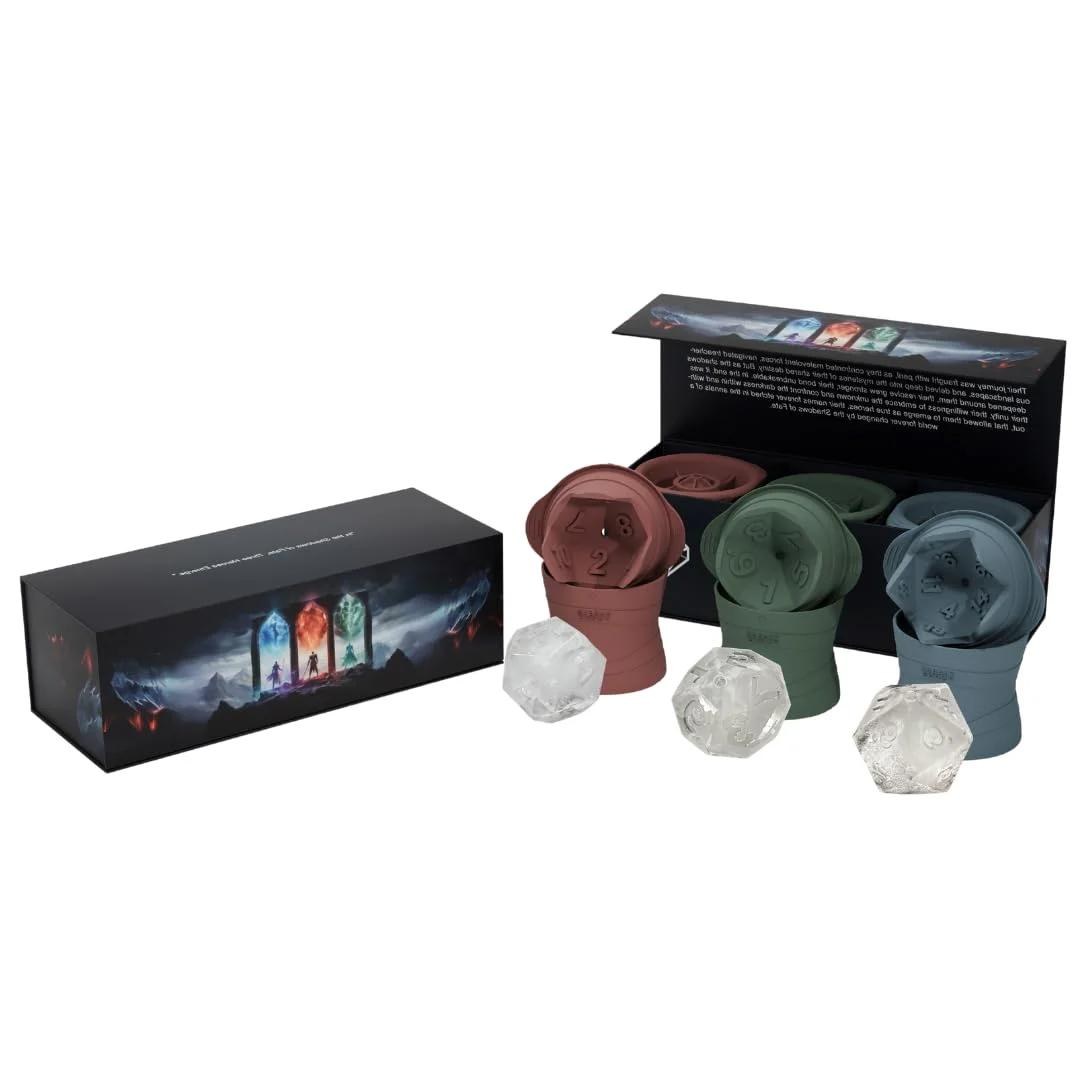
Image 5. Static source image from record ed1d2d3b6655be5a05a7006fe4812d81. The product appears to be presented as a dice-shaped molding set; exact use, materials, seller, and included contents are not verified by the record.
The arrangement invites an obvious creative question: how does the purchased object produce the finished shape? That question is more useful than simply deciding to reproduce the dramatic packaging composition. A buyer may need to understand filling, closure, placement, waiting, release, and cleanup. The static image shows none of those actions.
For a comparable product that your team has verified, film the actual process with the supplied instructions available on set. Show the empty component clearly enough that the viewer can understand its orientation. Make the filling point visible. If the procedure involves waiting, distinguish elapsed time from edited screen time. A cut from filling to a finished result should not imply an instantaneous process.
The release shot deserves particular attention because it connects setup to outcome. Keep the product and finished form in view during the key action. If the attempt requires an additional step, show or explain that step. Do not use a separately prepared display object as though it emerged from the demonstrated attempt.
Scale remains an unanswered question in the source image. A hand, measuring tool, or clearly identified vessel could help an original ad explain the result’s dimensions. Exact measurements should come from the actual product and captured result, not from estimating proportions in this photograph. A decorative composition can make a small item appear substantial or a large item appear convenient.
The original test hypothesis is that process visibility will make an unfamiliar product easier to understand. A result-first version and a process-first version could use the same verified footage in different opening orders. Preserve the same included contents and use conditions so that the test is about explanation, rather than a different offer disguised as a creative variation.
Example 6: Familiar Objects Suggest Capacity Without Measuring It
The shelving image uses recognizable office objects to communicate possible storage roles, but it does not establish dimensions or a load rating. A printer sits on the top surface, with files, boxes, books, and markers arranged below. The source record references kitchen furniture even though the visible setup is an office arrangement. That mismatch is a useful reminder to classify the image by what it shows rather than by the search keyword alone.
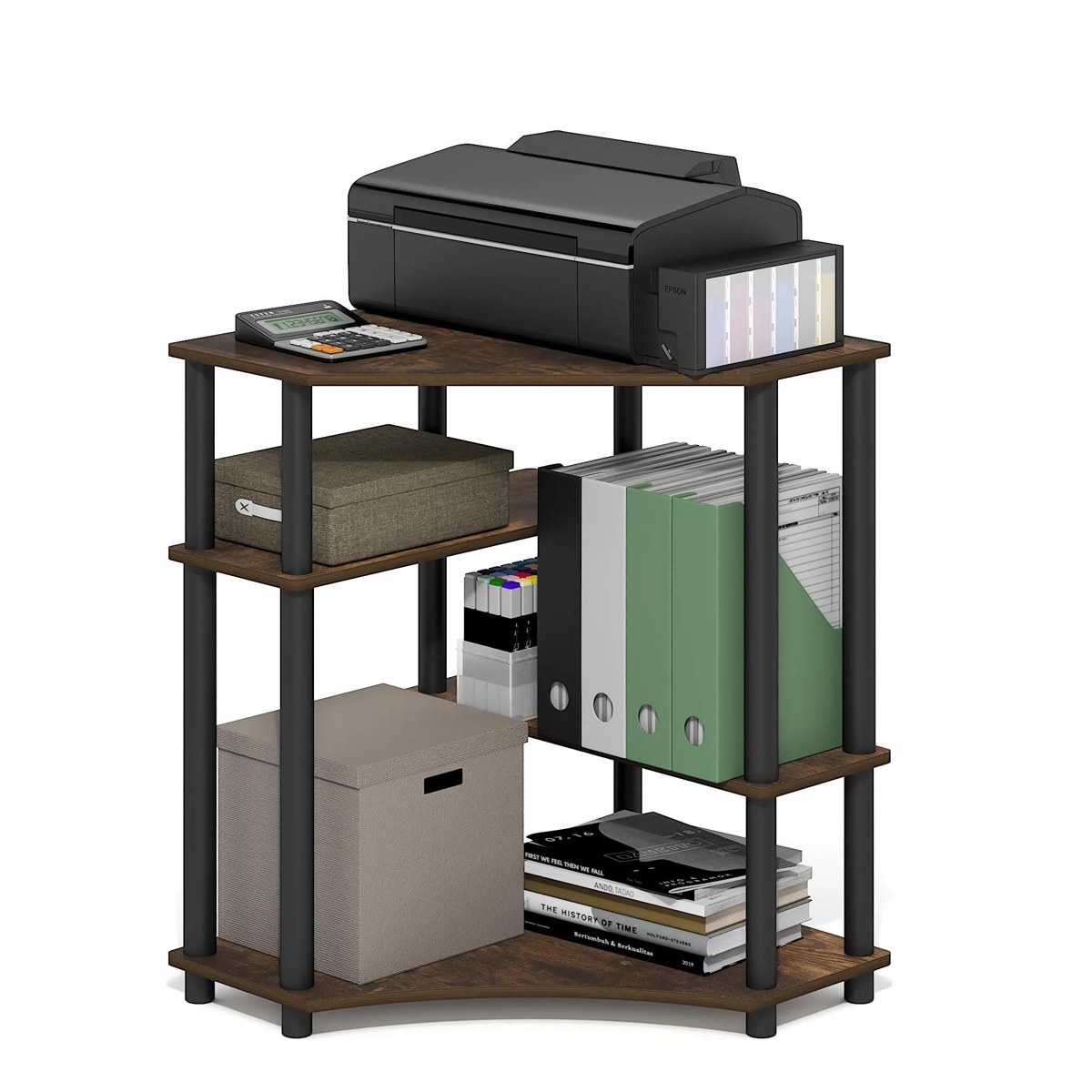
Image 6. Static source image from record a5595998e3b8be3b5c16e342c7071711. The staged objects illustrate possible organization; printer compatibility, shelf strength, dimensions, and assembly remain unverified.
Recognizable objects can provide intuitive scale, but their dimensions vary. A printer is not a standardized measuring device. Neither are storage boxes or binders. The photograph can inspire a task-based composition while leaving the team responsible for documenting the actual product’s measurements and supported uses.
An original demonstration should distinguish the exterior footprint from usable interior space. Measure the surface where the intended object sits, then measure any opening it must pass through. For a shelf holding a printer, the product body is only part of the fit question. Paper trays, lids, cables, and access for replacing supplies may require additional space. Follow the relevant equipment instructions when staging that use.
The camera should show the item being placed and operated in the demonstrated arrangement. A printer resting on a shelf does not prove that its lid opens or its paper path remains clear. A storage box sitting inside a compartment does not prove that it can be removed without tilting or disturbing neighboring objects. The task completes the explanation.
Load claims need a different basis from visual capacity. Showing a heavily stocked unit is not a substitute for a documented rating or suitable testing. An ad can accurately describe the items used in a particular demonstration without generalizing to an unsupported maximum. Keep the staging consistent with the manufacturer’s instructions and the actual variant being sold.
A useful hypothesis is that showing retrieval and operation will answer more compatibility questions than a fully stocked still image alone. The proposed comparison should preserve the same shelf, objects, and offer. That makes it possible to evaluate the contribution of access footage without confusing it with a more attractive room or a larger product variant.
Example 7: A Styled Cabinet Leaves Access and Mobility Unanswered
The white cabinet image presents an assembled household arrangement with drawers, sliding doors, wheels, and a coffee-making scene. The central storage area is visible, while the doors cover other portions of the cabinet. This makes the image useful for discussing how a product might organize a room. It does not show assembly, door travel, wheel operation, or whether the appliances and decorations are included.
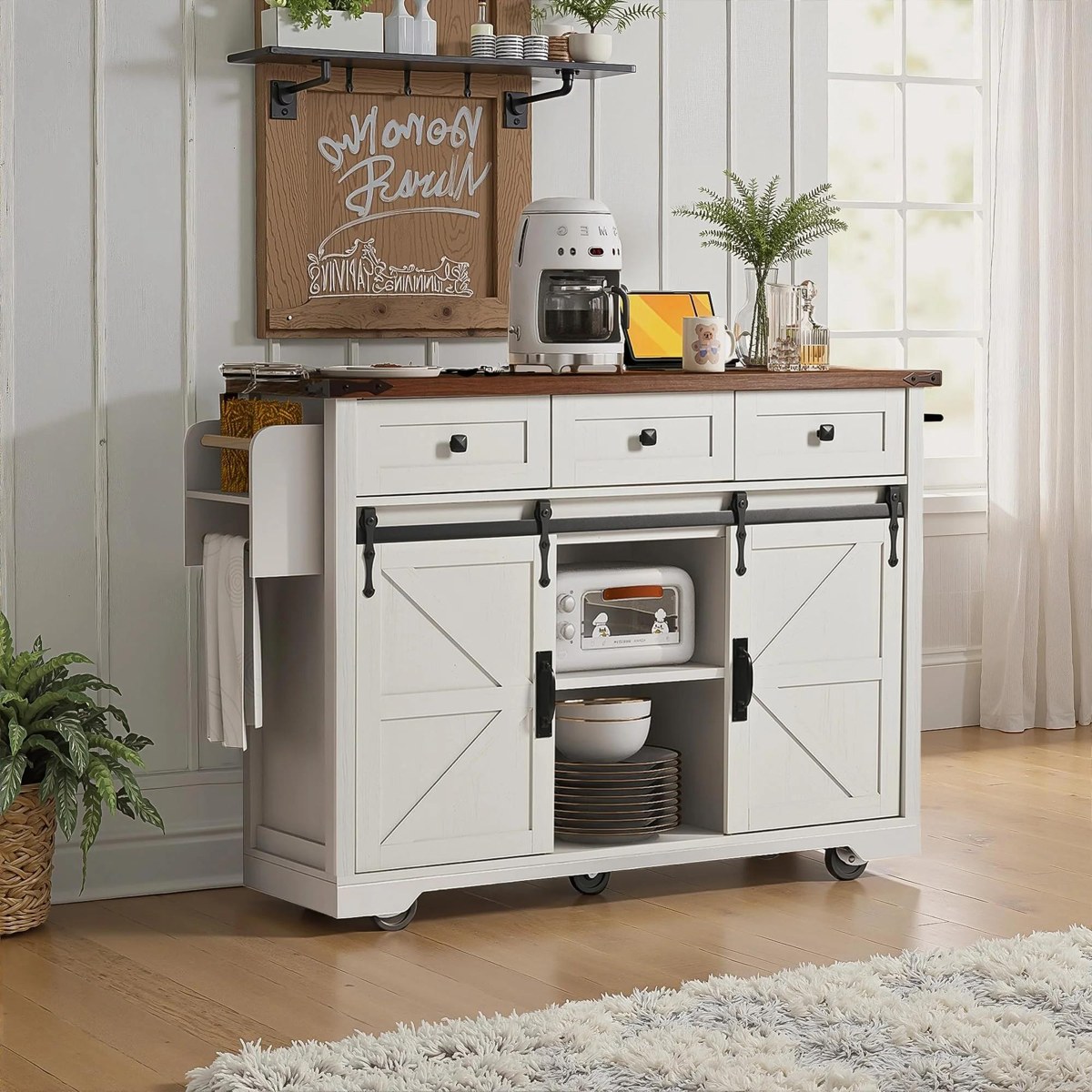
Image 7. Static source image from record 207b66b69cf4d9a4e85469afade761ef. The cabinet is shown assembled and styled; no assembly sequence, movement test, package inventory, or appliance-use verification is supplied.
For a comparable cabinet, the most useful additional footage would show how storage access changes as the doors move. Begin with the whole unit visible, move a door through its normal travel, and retrieve an item from the area revealed. Keep neighboring doors and drawers in frame where they affect access. This gives the viewer a more complete explanation than an isolated handle close-up.
Wheels introduce another unanswered question. Their presence does not establish that a loaded cabinet can be moved easily, safely, or across every surface. An original demonstration should use the manufacturer’s approved conditions and show the relevant floor, load, movement, and stopping method. If locks are supplied, identify and demonstrate them according to the instructions rather than assuming that every visible wheel has one.
The coffee setup is also a purchase-expectation issue. A buyer could interpret an attractive scene as a bundle unless the ad identifies the item being sold. Clarify the cabinet, included hardware, and optional or decorative objects. If the product is supplied unassembled, the polished final arrangement should not be the only representation of what arrives.
For appliance staging, verify that the appliance can be used in the chosen location under its own instructions. A photograph of a small oven inside a compartment does not establish adequate clearance or an approved operating position. If an original shoot only stores an appliance in that position, make the storage context clear.
A testable hypothesis is that an access demonstration will help buyers understand the cabinet’s layout. A separate mobility hypothesis would require its own footage and conditions. Keeping these questions distinct prevents a broad phrase such as “flexible kitchen storage” from hiding several untested product promises.
Example 8: A Garden Workbench Shows the Task Environment
The garden workbench image places storage and a work surface inside a recognizable potting task, making it a reference for organizing around activity. Pots, tools, bags, and seed packets occupy different parts of the unit. Cabinet doors and drawers are open, and soil is visible on the work surface. This communicates a possible use arrangement, but a single outdoor image cannot establish weather resistance, durability, or safe load capacity.
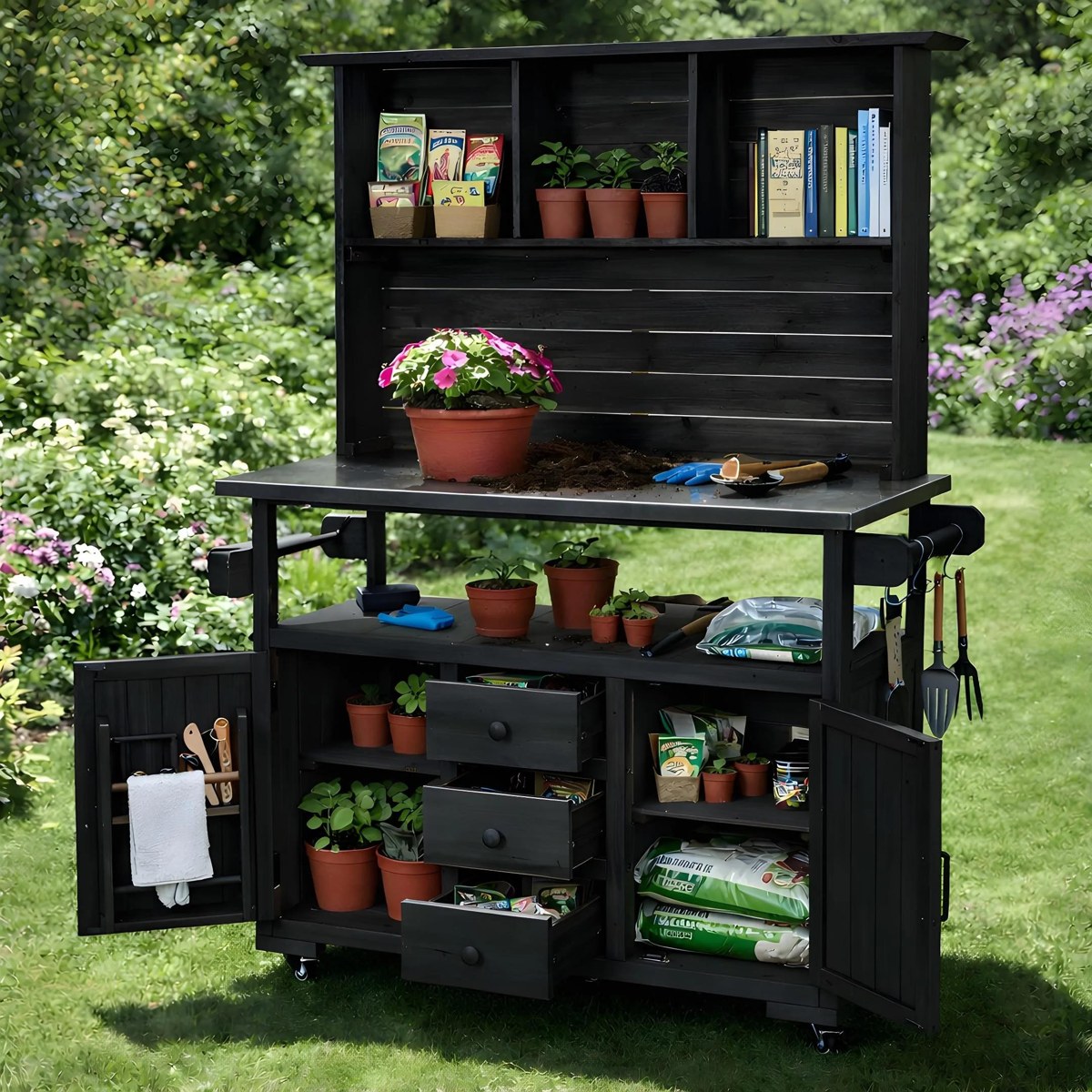
Image 8. Static source image from record 014d1f75e3daf4da46832a1655d9e457. The visible garden scene supports a task-context observation; outdoor suitability, stability, assembly, and material performance are not verified.
This example broadens the home-product brief beyond a clean “after” picture. The surface contains signs of a task in progress, and the open compartments reveal where related items might be kept. For an original ad, that suggests a sequence built around retrieval, use, and return rather than a tour of empty storage spaces.
A comparable demonstration could begin by taking the required tool from its storage position, completing the intended task, and putting the tool back. The camera should preserve enough of the unit to show how the work surface and storage relate. If the edited sequence changes the arrangement between shots, the viewer may lose the practical relationship the ad is trying to explain.
Open drawers and doors also create a spatial question. Show the operating footprint, including the area needed for access. A product that occupies a manageable rectangle when closed may need substantially different space during use. Do not calculate that difference from this photograph; measure the actual product and setup used in the original shoot.
The setting raises specific claims that require documentation. A black finish does not establish weather protection. Grass under the unit does not prove that the surface is suitable for stable operation. Stored bags do not verify shelf capacity. Treat each of these as a question for the supplier or product team before choosing camera directions and copy.
The useful hypothesis is that a complete task will explain the storage arrangement more clearly than a static, fully loaded scene. The result should be practical: the viewer understands where supplies go and how they are accessed. Whether that understanding affects purchase behavior remains a question for an owned test with the actual product, offer, and audience.
Show Scale Through Dimensions and Operating Space
Scale becomes actionable when the ad connects a product’s measured dimensions to the space and activity shown. Familiar objects and people can make an image easier to interpret, but the final compatibility claim should rest on verified measurements. For home products, the relevant measurement is often not just width, depth, or height. It may be the opening through which an item passes, the space a lid needs, or the area a person requires to use it.
Begin with the product’s documented exterior dimensions, including the particular variant. Then identify the dimension that decides the demonstrated use. A shelf may have enough overall height but insufficient usable clearance between levels. A cabinet may fit against a wall but interfere with a nearby door. A mold may produce an attractive shape that does not fit the intended glass.
Use a measurement worksheet before the shoot:
| Measurement question | What to capture | What the ad can then explain |
|---|---|---|
| Does the body fit? | Actual exterior dimensions and the available space | The relationship between this product and this opening |
| Can it operate? | Door, drawer, lid, handle, or tray movement | The clearance required by the demonstrated action |
| Can the stored object be used? | Object dimensions and access needs | Compatibility with the specific object shown |
| Can it enter the location? | Relevant access route and assembly state | Any documented placement considerations |
| Which variant is shown? | Model, size, color, and included configuration | The exact version viewers are evaluating |
Keep the measuring tool readable and aligned with the intended dimension. Avoid cutting away before the endpoints are clear. When using an overlay, derive it from the verified specification or captured measurement and label what it describes. A line across the front of a cabinet should not silently represent the depth of its interior shelf.
The same discipline applies to apparent capacity. Show the actual objects used, but do not convert their presence into a maximum rating. A shelf containing books demonstrates that arrangement only under its documented conditions. A strength claim requires appropriate support beyond staging.
This measurement approach also gives the editor useful alternatives when a broad claim cannot be supported. Instead of “fits any corner,” the ad can state the verified product dimensions and show the particular corner used. Instead of “holds everything,” it can demonstrate the objects relevant to the intended task. Specific information lets the buyer assess compatibility without relying on an exaggerated promise.
Make Setup Visible Without Hiding the Work
Setup should be presented as a sequence of real requirements, with any editing compression made clear. None of the supplied images establishes a complete assembly or installation process. That absence does not prove the underlying products are difficult or easy to prepare; it identifies a gap for an original production brief. A team claiming convenient setup needs evidence of the actual preparation, not just an assembled final scene.
First define what “setup” means for the product. It may involve unpacking and placement, assembling furniture, adjusting shelves, washing components, charging, connecting power, or professional installation. These should not be collapsed into one cheerful transition. The buyer’s practical commitment depends on which activities are actually necessary.
Build the shoot around the real instructions. Lay out the included parts and distinguish them from tools or accessories supplied by the creator. Film the key connection or adjustment closely enough to understand it, then show the completed state. Where an action must be performed in a particular order, preserve that order in the explanation even if the edit omits repetitive footage.
If a time claim is important, define its boundaries before recording. Decide whether it includes unpacking, reading instructions, finding tools, assembly, cleanup, and positioning. Record assistance and prior experience. A polished edit lasting a short time is not evidence that the task took that long. A genuine timed attempt also should not become a universal promise without appropriate qualification.
For waiting steps, such as curing, drying, or freezing, show the passage of time honestly. For installation involving specialist work, describe the relevant requirements from verified documentation rather than staging a misleading do-it-yourself shortcut. The objective is to explain what ownership involves, not to eliminate every inconvenient step from the picture.
A useful deliverable is a setup evidence log attached to the footage. It records the product version, instructions used, tools, assistance, interruptions, and any retakes affecting the apparent sequence. The editor does not need to publish the entire log, but should use it to keep captions and narration accurate. If the evidence supports only “here is how we assembled this unit,” retain that scope instead of upgrading it to “anyone can assemble this effortlessly.”
Define the Result as a Task Someone Can Recognize
A result is most informative when the viewer can identify what changed and how the product contributed. The supplied references show meals, coordinated kitchens, stocked shelving, and organized work areas. These are useful visual endpoints, but they do not automatically establish saved time, increased capacity, reduced effort, or improved quality. An original brief should name the particular result it intends to demonstrate before selecting a reveal shot.
For storage products, a result might be successful retrieval: a person opens the relevant compartment, removes the needed item, and returns it. For a kitchen accessory, it might be the completed form or prepared ingredient. For furniture, it could be a usable arrangement that preserves access to nearby fixtures. Each is more precise than a general promise to transform a room.
If using a before-and-after structure, keep the comparison intelligible. Preserve the room, camera position, and relevant objects unless a change is explicitly part of the explanation. Do not create the “before” by adding unrelated clutter that disappears off camera. If belongings are removed rather than stored, the edit should not imply that the product absorbed them all.
Choose a result shot that reveals the mechanism as well as the appearance. A closed cabinet looks tidy, but opening it can show what was actually stored. A finished mold shape looks interesting, but the release action helps explain where it came from. A coordinated appliance scene looks complete, but a clear inventory explains what the offer contains.
The practical hypothesis is that a visible, recognizable task result will reduce ambiguity about the product’s role. That hypothesis can be checked first through comprehension and later through campaign data. It should not be reported as a conversion benefit before either evaluation occurs. A satisfying reveal remains a creative choice until the team supplies evidence about what viewers understood and how the ad performed.
Turn the References Into a Research Workflow
A useful research workflow ends with a filming decision, a missing-evidence list, and a test hypothesis. Saving images is only the beginning. The supplied sample is especially helpful for this distinction because it contains clear visual ideas alongside missing seller associations, uncertain Shop status, and no complete installation demonstrations. The task is to preserve those boundaries while extracting something practical for production.
Define the product and decision. Start with the exact item your team can sell and demonstrate. Record the variant, current product documentation, included contents, and the buyer question. If the assignment is a rolling cabinet, do not combine footage requirements for several unrelated furniture products into one generic “home organization” brief.
Capture the research scope. Record the query, country, dates, source filters, and collection date. For this article, those are kitchen, US, and 2026-09-14 to 2026-10-13. A later live search is a new sample, even when the query is unchanged. Keep its notes separate so that a changing result set does not silently alter an earlier conclusion.
Check identity and association. Preserve the record’s reported product association and distinguish it from names in advertising copy. For the selected static images, the Amazon reference is wording in the record, not sufficient proof of the advertiser or seller. For your own planned ad, confirm that the demonstrated variant matches the destination product.
Deduplicate the media. Group repeated video and image references before counting concepts. Different record titles can accompany the same video file. Conversely, a record may contain several images addressing different products or views. Keep the record-level context while identifying the exact media used for each observation.
Write a literal observation. State what can be seen without interpreting success: “The cabinet is shown with the central compartment open” is appropriate. “The sliding doors remove purchase hesitation” is a hypothesis. This distinction makes the research note usable by someone who did not inspect the original reference.
Name the unanswered question. Translate the observation into a production gap. Does the buyer need dimensions, contents, assembly, access, cleanup, or a repeatable result? The gap should be something the team can resolve with documentation or a shoot, rather than a vague instruction to make the ad more persuasive.
Choose an original execution. Borrow the information structure, not the source’s exact scene, wording, footage, or badge. For example, the styled cabinet can inspire an access demonstration in your own room with your own product. Its value lies in the question it exposes, not permission to reuse the image commercially.
Write the hypothesis and next action. Specify the changed element and the expected comprehension effect. “Showing the full drawer opening may help viewers understand usable access” is testable. Assign the missing measurement to the product team and the opening shot to production. The research becomes useful when someone can act on it without inventing the missing evidence.
A Copyable Home-Product Production Brief
A home-product brief should connect every important statement to an approved source and a required shot. The template below is an original production aid derived from the questions exposed by the sample. It is not a description of a completed shoot or a claim that any example followed this process. Fill it with the actual product documentation before asking a creator to make performance or compatibility statements.
| Brief field | What to enter | Acceptance question |
|---|---|---|
| Product identity | Exact model, variant, finish, and destination item | Is the filmed product the one being offered? |
| Buyer question | The concrete uncertainty the ad addresses | Can a viewer identify the question from the opening? |
| Supported promise | A narrow statement with its evidence source | Does the claim remain within the documented scope? |
| Required measurements | Body, opening, usable space, and movement clearance | Are the relevant dimensions visible or accurately labelled? |
| Included contents | Product, parts, hardware, and any supplied accessories | Could a viewer mistake set dressing for included items? |
| Setup evidence | Instructions, tools, assistance, and key actions | Does the edit explain what preparation requires? |
| Result evidence | The task and conditions shown | Can the result be connected to the demonstrated product? |
| Exclusions | Claims or uses lacking support | Has the script avoided those statements? |
| Test variable | The creative element being changed | Can the versions be compared without a different offer? |
| Delivery | Required shots, captions, editable files, and usage permissions | Can the team verify and revise the final asset? |
For a hypothetical cabinet assignment, the buyer question might be whether the storage remains accessible in a particular dining area. The supported promise would describe the demonstrated access and verified dimensions. The required shots would include the empty space, placement, normal door travel, drawer opening, and retrieval of the actual items shown.
The brief should explicitly prohibit unsupported shortcuts such as “fits every kitchen,” “assembles instantly,” or “moves anywhere.” That instruction is not a replacement for evidence; it prevents a creator from filling a gap with familiar advertising language. If a desired claim lacks support, leave it out or commission the relevant verification before filming.
Give the creator room to speak naturally while fixing the facts that must remain stable. They may change the introductory phrasing, but should not change the product variant, imply a different bundle, invent personal ownership history, or turn a single demonstration into a universal result. A clear boundary often produces more usable footage than a rigid script with uncertain claims.
For a fuller handoff covering shots, claims, permissions, and deliverables, use the published UGC creator product-demo brief. The home-specific addition is the relationship between measured space, setup requirements, and the task shown on camera.
Original Script Patterns for Scale, Setup, and Results
A useful script tells the creator which question to answer and which action must make the answer visible. The following patterns are proposed original scripts, not transcriptions of the source ads or completed tests. Replace each bracketed field with verified product information. If the team cannot fill a field accurately, revise the concept before production rather than asking the editor to disguise the gap.
Pattern A: Fit before styling.
Opening: “I wanted to use this space, so I checked the measurements before choosing the unit.” Show the actual location with the relevant boundaries visible. Avoid a tight shot that conceals adjacent furniture or an opening door.
Demonstration: “This is the [verified variant], and these are the dimensions that matter here.” Show the product measurement or accurate overlay, then the available space. Follow with the door, drawer, or lid moving normally.
Result: “Here is the arrangement with [identified objects] in place, and here is how I reach them.” Show retrieval rather than ending at a closed, styled view.
CTA: “Check the listed dimensions and included parts against your space.” This action matches the uncertainty the ad has addressed. A purchase invitation can follow only with an accurate destination and current offer.
Pattern B: Setup without a disappearing process.
Opening: “Here is what arrived and what I needed to get it ready.” Identify included components separately from the creator’s tools and styling items.
Demonstration: “The key step is [documented action].” Film the action clearly, preserving orientation and order. If repetitive work is compressed, label the edit appropriately. Do not add a setup-time claim unless the timing method and observed attempt support it.
Result: “This is the completed setup, with [relevant adjustment or check] shown.” Demonstrate the usable state rather than presenting a beauty shot alone.
CTA: “Review the setup requirements and choose the correct version for your use.” This script is suitable when preparation is an important purchase consideration and the team has the necessary documentation.
Pattern C: Result, process, repeatable use.
Opening: Show the verified finished result, then say, “Here is how I made this with [identified product].” Keep the product’s contribution specific.
Demonstration: Show the real preparation, the critical action, and any waiting or additional equipment involved. For a molding product, that could mean filling, closing, waiting, and release, if those steps match the actual instructions. Do not infer them from the dice-shaped source image alone.
Result: Show the output from the demonstrated attempt and explain any conditions that affect it. If the display result came from a separate attempt, do not edit the sequence to imply continuity.
CTA: “Check the size, contents, and use instructions before choosing your set.” The wording can be adapted, but the factual purpose should remain intact.
These patterns can share a room and production session without becoming interchangeable ads. Each has a different principal question. Keep that question in the edit notes so that supplementary footage does not crowd out the essential demonstration. A montage of attractive details is not an adequate substitute for the action the opening promised.
Match the Ad to the Actual Product Destination
The destination should resolve the same product question that the ad raises, using the same variant, contents, and conditions. The frozen sample does not provide verified Shop checkout paths for these examples, so it cannot establish whether their advertising and commerce pages match. For an original campaign, that check belongs in the team’s own workflow before launch and whenever the offer changes.
Compare the filmed item with the destination’s model and variant selection. A compact shelf and a larger version may look similar in a vertical video while having materially different dimensions. A cabinet shown with wheels may also be offered in another configuration. The buyer should not need to infer which version produced the demonstration.
Next, compare the set dressing with the package inventory. The cabinet reference contains appliances, dishes, decorative items, and other objects. A source image does not establish which, if any, are part of the offer. In your own ad, distinguish the product from props through framing, copy, and a clear contents view where needed.
Review claims that depend on conditions. Dimensions should identify what is being measured. Setup statements should remain consistent with the instructions. Material and care claims should match current documentation. An ad that demonstrates indoor storage should not arrive at a page emphasizing outdoor durability unless that relationship is properly supported.
Finally, check commercial wording immediately before use. Prices, availability, delivery terms, and promotional conditions can change while an asset waits for approval. Keep changeable offer elements editable, and maintain a record of which destination version was checked. This is a proposed operating practice, not evidence that the sampled advertisers used it.
A clear match does not guarantee conversion. It gives the campaign a coherent proposition that can be evaluated without basic ambiguity about what the buyer is being offered.
Review the Edit for Product Understanding
The edit is ready for evaluation when viewers can identify the product, understand the demonstrated action, and distinguish the observed result from broader claims. This is a content acceptance standard, not a performance prediction. A visually polished ad can still fail it by hiding a measurement, skipping a setup dependency, or showing a styled bundle that differs from the actual offer.
Review the sequence first without relying on the voiceover. Check whether the key action is visible and whether text covers the part the viewer needs to inspect. A caption about drawer access should not sit over the drawer opening. A dimension overlay should not hide the measurement endpoints. Keep labels close enough to their subject to make the relationship clear.
Then review the words separately. Replace vague adjectives with supported information where possible. “Spacious” may be less useful than a clear view of the actual objects being stored. “Easy” may conceal the need for a particular tool or helper. The goal is not to eliminate personality; it is to avoid asking expressive language to do the work of missing evidence.
Check continuity around the result. Confirm that the same product variant appears throughout and that changes in props do not create an inflated impression of capacity. If the before-and-after uses different camera positions, consider whether that makes the apparent transformation misleading. Preserve the visual relationship that the test is meant to evaluate.
For a comprehension check, ask neutral questions: What is being sold? What would you need to prepare it? What dimension or clearance matters? Which items appear to be included? Avoid asking whether the viewer liked the ad before checking what they understood. Preference and comprehension are different observations.
Document any review that actually occurs, including who participated and what they saw. This article proposes that process; it does not claim such a viewer study was conducted on the supplied references.
Test the Information, Then Measure the Campaign
A creative test should isolate a meaningful information choice while using your own data to judge the outcome. The frozen advertising sample contains no conversion, spend, profit, or controlled experiment evidence. It can support hypotheses about what to demonstrate, but it cannot tell a team which version will sell more. Campaign evaluation starts after the original product, offer, and measurement conditions are established.
Choose a variable that maps to the buyer question. For a cabinet, compare an opening focused on measured fit with an opening focused on the finished room, while retaining the same later access demonstration. For an unfamiliar accessory, compare an outcome-first introduction with an action-first introduction. Avoid changing the product variant, creator, offer, room, and information order simultaneously if the intended conclusion concerns only one of those elements.
Write the expected mechanism explicitly. A fit demonstration may improve compatibility understanding. A setup sequence may clarify ownership requirements. An included-contents shot may reduce bundle confusion. These are hypotheses, and a campaign can produce mixed evidence: an ad might generate more attention without better purchase outcomes, or answer questions well without being an effective acquisition asset.
Before launch, define the outcome and denominator. If using click-through rate, keep its calculation consistent. If examining purchases, state the attribution window and the data source. If assessing returns or product questions, account for the delay before those observations are available. Do not combine incompatible reporting windows simply because they appear on the same dashboard.
Record the conditions that could affect interpretation, including price, inventory, destination changes, audience settings, and distribution. Delivery may differ between versions, and an uncontrolled allocation does not automatically support a causal conclusion. Report uncertainty instead of selecting a winner solely because one number is larger.
The creative testing framework provides a broader structure for isolating variables and recording decisions. Applied here, its output should be a narrow finding tied to the actual test: which information structure was evaluated, under which conditions, and what remains unresolved. It should never become a retroactive claim that the reference image proved the hypothesis in advance.
Common Mistakes in Home-Product Creative Research
The most consequential mistakes occur when teams promote a visual suggestion into a product or performance fact. The supplied references are useful precisely because they show how much can be learned from an image while also exposing what the image cannot answer. Correcting these errors early changes the brief, the shoot, and the resulting claim rather than merely adding a disclaimer at the end.
Calling every returned result a TikTok Shop ad. The research filter does not independently verify the network, product attachment, merchant, or checkout. Keep those fields unresolved until the relevant evidence exists. Do not borrow the authority of a platform label to strengthen a product example.
Treating a record title as advertiser identity. Amazon-referencing wording does not establish that Amazon bought the ad. The selected static records lack a returned product association. Keep captions tied to the reported record and visible item rather than assigning an unsupported owner.
Counting repeated media as new concepts. The sample has six video-bearing records but four distinct video files. A change in associated copy may be analytically useful, but it does not create a new visual demonstration. Preserve the distinction between copy variation and media production.
Calling a final scene an installation demonstration. The cabinet and workbench photographs show assembled objects. They say nothing reliable about the assembly sequence, tools, effort, or elapsed time. Commission those shots if setup is part of the promise.
Estimating dimensions from familiar props. Printers, plates, mugs, and people vary in size, and perspective affects apparent scale. Use them for context; use verified measurements for compatibility claims. The same caution applies to shelf capacity and usable interior space.
Turning outdoor placement into a durability claim. A garden setting does not establish weather resistance. A surface that looks metallic does not identify its material specification. Obtain documentation before choosing durability language or exposure demonstrations.
Presenting estimated impressions as a winning-product signal. Window estimates do not disclose sales or profitability. Repetition and age do not supply that missing evidence. Avoid daily-impression calculations based on the time since a record first appeared.
Losing conditions during editing. A waiting step, helper, accessory, or separate preparation can disappear between the shoot and the final cut. Maintain an evidence log so the finished ad accurately represents the conditions under which its result was obtained.
When AdMapix Fits This Workflow
AdMapix fits the discovery and evidence-organization stage when a team needs indexed creative references to turn into product-specific briefs. The practical handoff from this article is to search a relevant category term, preserve the record context, inspect the available media, and identify which buyer questions are answered or left open. That work can make the next shoot more precise without pretending to reveal private campaign economics.
It is less suitable as the sole basis for deciding whether a physical product is safe, compatible, durable, or profitable. Those decisions require product documentation, appropriate verification, supplier information, and owned commercial data. A creative library also cannot substitute for confirming that a merchant’s current destination matches the ad.
Before purchasing a research tool, assess the workflow you actually need. Can you find relevant examples? Can you distinguish repeated media from separate records? Can you retain enough context to write a defensible brief? Evaluate those questions against your category rather than assuming a broad database claim guarantees useful coverage.
The next decision is concrete: use the search workflow to assemble references for a product you can verify, then complete the measurement and demonstration brief before production. If AdMapix fits that recurring task, check the live pricing page for current commercial terms. This evergreen guide does not list plan prices or credit allowances, and it makes no paid-trial promise.
FAQ
Are these verified TikTok Shop ads?
No. The collection requested a TikTok-labelled media filter, but the supplied evidence does not independently verify each record’s ad network, Shop product attachment, merchant, or checkout. The examples are therefore creative references for teams making TikTok Shop ads. The appliance records have a supplied Samsung association; the selected static records contain Amazon-referencing copy without a returned product association.
What should a home-product ad show first?
Start with the question that matters most for the actual product: fit, preparation, access, or the desired result. The sample illustrates several opening possibilities, including a presenter, finished food, and a product in a room. It does not establish a universally superior opening. Choose a hypothesis, retain the necessary later demonstration, and evaluate the original version under your own conditions.
Can room styling prove that a product fits?
Room styling can show appearance and context, but physical compatibility requires the relevant dimensions and operating space. A refrigerator or cabinet can appear well placed while its door clearance remains unknown. For an original ad, show the verified variant, measure the relevant space, and demonstrate the movement or access required. Keep the resulting claim specific to the documented product and conditions.
How should assembly be shown in a short ad?
Show what arrives, distinguish included parts from external tools, capture the key assembly action, and make any compression clear. Do not treat a fast edit as evidence of a fast task. If claiming an assembly time, record the actual attempt and define what the timing includes. None of the supplied images establishes a complete assembly process for the displayed products.
Do the sample counts identify the most popular format?
No. The thirty records form a bounded keyword sample, with six video-bearing records, four distinct video fingerprints, ninety-three distinct image fingerprints, and no playable fingerprints. Those units are different, and the sample is not a census of platform advertising. It cannot establish the most popular format across TikTok Shop, an advertiser’s complete activity, or the format with the highest conversion.
Can these images be reused in my own ads?
Their availability for research does not establish permission to reuse them commercially. Use the analysis to identify information structures and unanswered product questions, then create original footage with appropriate permissions. Verify rights for creators, locations, music, and other production assets as needed. Do not transfer the source advertiser’s badges, endorsements, product claims, or identity to an unrelated offer.
How can a small team use AdMapix without overcomplicating research?
Begin with one verified product and a concrete buyer question. Inspect relevant indexed examples, preserve their source context, and write literal observations before proposing a test. The useful deliverable is a short brief specifying measurements, actions, and missing evidence. Confirm current access and commercial terms on the live product pages; do not assume a paid trial or a particular refresh guarantee.
Key Takeaways
The next home-product brief should specify the evidence the camera must capture, with each demonstration tied to the actual item being sold.
- Show measured fit and operating clearance when compatibility is part of the promise.
- Film setup as real preparation; an assembled photograph cannot establish ease or elapsed time.
- Connect the finished result to the demonstrated action, including relevant conditions and waiting steps.
- Preserve source identity and sample scope: thirty records are not thirty unique videos, and a media filter does not verify Shop status.
- Turn creative observations into hypotheses, then use product documentation and owned tests to evaluate them.
Sources
The sources below support the dated sample, research workflow, and interpretation boundaries; they do not establish commercial results for the pictured products.
- Frozen advertising source package — observed 2026-10-13: Public, reproducible sample with batches, request parameters, and checksums. Scope: US, kitchen query, 2026-09-14 to 2026-10-13, thirty records, and the eight illustrated media references. Visual observations are limited to the supplied static images and displayed contact-sheet timestamps.
- AdMapix search workflow — sample observed 2026-10-13: Kitchen creative search. This is the relevant discovery route; live results may differ from the frozen package and require their own date, identity, and source checks.
- AdMapix methodology — applied to the 2026-10-13 observation: Public methodology and data boundaries. Used for separating records from media, source labels from network verification, and modeled window impressions from observed delivery or business outcomes. Product boundaries supplied for this article were reviewed on 2026-08-13; no external tool test or complete video-playback review is claimed.
Turn these observations into your next creative study
Open the creative library and select samples for your market, network and research question.
Related Articles
Competitor Price Analysis: Compare Offers and Proof
Use eight dated advertising examples to distinguish discounts, coupons, bundles, shipping, and incomplete trial claims, then build a traceable offer comparison and original testing brief.
Halloween Ads: Seasonal Hooks That Keep the Product Clear
Analyze eight dated Halloween advertising examples and turn seasonal artwork, product demonstrations, and visible claims into original briefs with clear evidence limits and practical testing steps.
Candy Crush Ad Strategy: Puzzle Demos, Event Hooks, and End Cards
A dated US iOS sample connects 30 Candy Crush Saga advertising records to 27 video files and four playable files, with eight visual analyses and practical briefs that separate observed creative structure from untested performance hypotheses.