
TikTok Shop Ads: Beauty References for Demonstrations, Proof, and Offers
Compare eight beauty creative references from a dated US skincare sample, distinguish demonstrations from claims and historical offers, and build original briefs without assuming verified TikTok Shop attribution or campaign performance.
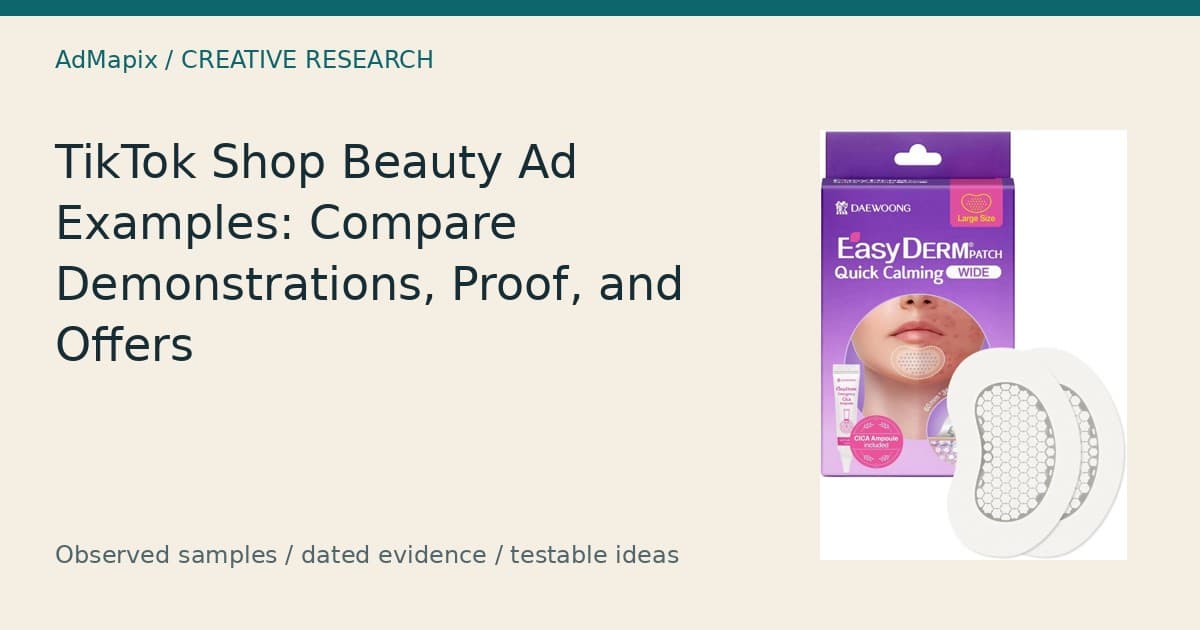
TikTok Shop Ads: Beauty References for Demonstrations, Proof, and Offers
TikTok Shop ads research becomes useful when you separate what a beauty creative shows from what its shopping destination and sales results actually establish. The dated sample examined here contains product packshots, retail discovery scenes, ingredient claims, gift presentations, and historical Amazon offers. It does not establish that the featured examples were shoppable TikTok Shop placements. For beauty sellers, creative strategists, and media buyers, that distinction changes the brief: borrow a communication structure only after checking the product, supporting evidence, and purchase path. This guide compares eight supplied visual references and turns their observable features into original production and testing decisions. It is especially useful when preparing a new campaign from saved examples whose offers, destinations, and attribution may have changed since capture.
AdMapix Research — prepared with Codex and checked against the dated source sample.
Editorial ownership: Brad at AdMapix. This identifies editorial responsibility and does not imply personal human review of this automated draft. AdMapix is our product.
Last updated: 2026-10-12.
Quick Answer
Beauty teams researching TikTok Shop ads should compare product demonstration, claim support, offer clarity, and purchase-path consistency separately. A recognizable bottle or a creator holding a product establishes much less than a documented usage demonstration or verified shopping link.
The frozen US search returned 30 advertising records, eight distinct video fingerprints, and 66 distinct image fingerprints for the specified window. Those are different counting units. The eight illustrations below are selected references, not a performance ranking. Use them to formulate hypotheses and request missing production evidence; do not treat them as verified TikTok Shop campaigns or proven sales winners.
What This Sample Can Help a Beauty Team Decide
This sample supports decisions about message structure and production requirements, while leaving sales performance and TikTok Shop attribution unresolved. It can help a team decide whether an upcoming creative needs a clearer product identity, an observable action, a better explanation of a bundle, or more precise offer terms. It cannot select a profitable SKU from the pictures alone.
The examples cover several distinct shopping questions. The EasyDERM package communicates where a patch might be placed. The handmade-soap cards explain care and thank a buyer. The golden dropper bottle makes the product category legible. The Whole Foods contact sheet connects a retail environment with a product close-up. The Kiehl’s set presents a routine, while the green gift assortment presents an occasion. The Sprouts contact sheet foregrounds ingredient exclusions. The Cyperus oil image relies on packaging and botanical identification.
These are different communication jobs, even though all appeared in a search for “skincare.” Comparing them only by visual polish would miss that distinction. A gift presentation may explain an occasion well while saying little about individual product use. A bottle close-up may identify a product clearly while leaving the application process entirely unknown.
For a TikTok Shop seller, the practical question is which of those jobs remains unfinished in the seller’s own advertising. If shoppers cannot identify the selected variant, another emotional opening may not resolve the problem. If the bundle is understood but the buying conditions are unclear, a more elaborate demonstration may leave the same purchase uncertainty.
The broader TikTok Shop creative, product, and offer research guide provides the topic context. This article concentrates on the narrower task of reading beauty references and translating them into inspectable briefs. It does not evaluate campaign automation or report a completed account experiment.
Methodology: Dates, Query, Country, and Evidence Limits
The analysis uses a frozen US keyword-search sample collected on 2026-10-12, with the explicit measurement window 2026-09-12 to 2026-10-11. The query was “skincare.” Collection requested three pages with ten records per page, sorted by descending modeled impressions. This is a bounded search sample rather than a census of beauty advertising, an advertiser’s complete activity, or the full TikTok Shop market.
The research request specified the TikTok media filter. However, the returned records do not supply populated record-level ad-source fields, verified shopping destinations, or identified TikTok Shop product listings. The distinction matters: a requested filter records how research was conducted, but does not independently prove the shopping placement or purchase route of every returned asset. Accordingly, the article describes the illustrations as indexed creative references and retains their actual Amazon, Whole Foods, Sprouts, or packaging context.
The frozen public source package dated 2026-10-12 contains the batches, request parameters, and checksums needed to inspect and reproduce the sample processing. Checksums support artifact integrity and reproducibility; they do not establish that advertising claims are accurate or that an advertisement performed well.
The supplied counts are 30 advertising records, 12 records containing video, eight distinct video fingerprints, 66 distinct image fingerprints, and no playable fingerprints or records containing playables. Fingerprints are file identifiers used for deduplication. A repeated video under different text remains the same indexed video file, while different image fingerprints need not represent different underlying creative concepts. These categories are reported separately rather than combined into an ambiguous asset total.
Every returned record reports the same modeled impression value of one. That provides no useful performance separation among these examples. We therefore omit impression totals, delivery rankings, daily rates, and related comparisons. Impression fields are third-party model estimates for the stated window, not observed delivery, spend, purchases, profit, or lifetime totals. Product-level search aggregates are excluded because their time scope is not established.
Visual analysis is limited to the eight attached illustrations. Six are static source images; two are contact sheets showing frames at 0, 2, 5, and 10 seconds. A contact sheet is a selection of timestamped frames, not continuous playback. We did not watch the complete videos, verify their audio, inspect their unseen endings, test the products, or complete purchases. Any proposed creative sequence or expected audience response below is explicitly a hypothesis or production recommendation.
Brand names are read from visible packaging or supplied copy. They do not identify the ad buyer, establish account ownership, or authenticate a merchant relationship. The sample has no verified product entity that resolves those questions. The governing interpretation of indexed evidence follows the supplied AdMapix methodology, with its limits applied to this particular collection rather than used to imply broader coverage.
Evidence Table: What Each Reference Actually Contributes
The eight references provide different kinds of creative evidence, so each should enter a brief with a specific purpose and a specific limitation. The table connects the numbered illustrations to their source context. It does not score effectiveness or imply that the examples share a merchant, purchase destination, or campaign objective.
| Reference | Supplied source context | Observable contribution | What remains unproved |
|---|---|---|---|
| 1. EasyDERM patch | Record titled “Shop Amazon For Your Skincare Needs!” | Package, patch shape, illustrated chin placement, included-ampoule wording | Actual application, skin outcome, current contents, Shop listing |
| 2. Handmade-soap cards | Record with the same Amazon-shopping title | Thank-you message and soap-care instructions | Whether the advertised item is stationery, soap, or a larger package |
| 3. Golden face drops | Record with the same Amazon-shopping title | Dropper bottle, self-tanning label, ingredient wording | Dispensing, application, developed color, selected variant |
| 4. Whole Foods discovery | Copy about clean-skincare finds at Whole Foods | Creator, store aisle, ACURE shelf, bottle close-up at sampled timestamps | Full narration, product application, sales destination |
| 5. Kiehl’s grooming set | Amazon-shopping title | Box and product lineup organized around grooming | Current bundle terms, savings, compatibility or results |
| 6. Green gift assortment | Amazon-shopping title | Coordinated gift presentation, blanket, eye mask, drinkware, bath items | Exact purchased contents, recipient satisfaction, current offer |
| 7. Sprouts discovery | “Paraben-Free Skincare: For a Healthier You” | Store context, ingredient-exclusion overlay, ACURE scrub close-up | Health superiority, buyer identity, shopping link |
| 8. Cyperus oil | Amazon-shopping title | Bottle and carton, product name, botanical picture, multilingual text | Composition verification, application, efficacy, listing identity |
The soap-card example is especially useful as a relevance check. It contains skincare-related language without clearly functioning as a skin-treatment demonstration. The gift assortment similarly extends beyond facial care. Keeping these examples visible prevents a broad keyword result from quietly becoming a supposedly uniform product-category sample.
Use the table as an assignment sheet. A producer can own missing usage footage; a catalog manager can resolve bundle contents; a commerce operator can verify the destination. Research becomes actionable when each uncertainty has an owner and an output, rather than remaining a vague note beneath a screenshot.
A Practical Framework for Demonstration, Proof, and Offer
A useful beauty-ad comparison separates the visible action, the support for the claim, and the conditions of the purchase. These elements can reinforce each other, but they are not interchangeable. A label can identify an ingredient without demonstrating a result. A creator can explain a purchase without establishing a representative customer outcome. A product bundle can communicate contents without establishing a discount.
Start with demonstration. Ask what a viewer can actually see happening to the product or with the product. Showing a closed bottle is product identification. Holding it near the camera is a presentation. Dispensing it, applying it according to approved directions, or arranging the purchased contents can provide an observable demonstration. The action should answer a defined question, such as how the closure works or which components arrive together.
Then examine proof. In this article, proof means evidence appropriate to the specific statement being made. A readable label supports the narrower observation that the label contains certain wording. Footage can support an observation about visible texture or handling under the recorded conditions. Claims about treatment, suitability, or lasting outcomes require separate substantiation. Making the image more convincing does not fill that evidence gap.
Finally, inspect the offer. Record the actual item, selected variant, included components, price basis, eligibility, timing, and destination wherever those details are available. If they are absent, record them as unknown. Do not substitute a familiar brand’s usual packaging or a historical promotion for the conditions of the item currently being sold.
| Dimension | Research question | Production output |
|---|---|---|
| Product identity | Which item and variant are visible? | Approved product reference and readable identification shot |
| Demonstration | Which action answers a shopper question? | Shot instruction tied to authorized usage |
| Claim support | What exactly supports the spoken or written statement? | Claim ledger with evidence and limits |
| Offer | What does the shopper receive, and under what conditions? | Current offer card with accountable owner |
| Destination | Does the purchase page fulfill the same promise? | Dated listing check linked to the creative version |
This framework produces a useful diagnosis even when performance data are unavailable. It can reveal that an attractive concept lacks essential information. Whether fixing that omission improves commercial results remains a hypothesis for the seller’s own test.
Example 1: EasyDERM Uses Packaging to Explain Placement
The EasyDERM reference communicates patch shape and intended placement through packaging imagery, but it does not show an actual application or a measured skin outcome. The purple package names “Quick Calming WIDE,” includes a large-size marker, and depicts a patch positioned beneath a person’s mouth. Separate patch images reinforce the shape shown on the package.
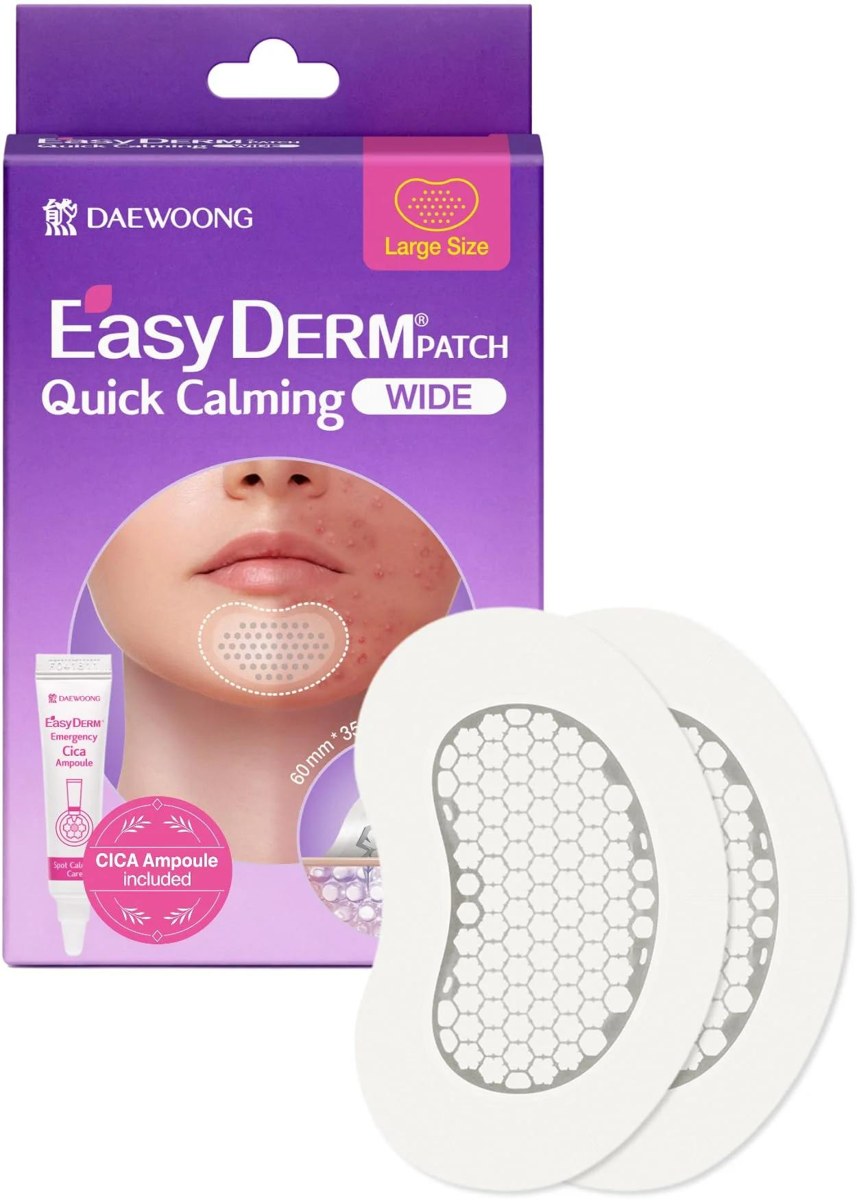
Image 1. Static source image associated with record 223ec5c606061027cae4432f9eb73e2a, titled “Shop Amazon For Your Skincare Needs!” The package illustration explains placement; it is not a recorded application or a verified TikTok Shop placement.
The communication structure is concrete. A viewer can connect the product’s unusual outline with a body location. The picture therefore addresses a practical recognition problem that a package name alone might leave unresolved. The “CICA Ampoule included” wording adds a contents claim, but it appears on the photographed packaging. It is not a current offer verified against a live merchant listing.
For an original patch creative, a useful hypothesis is that showing the package and then a permitted handling action will make the product easier to understand than showing the package alone. The production brief should identify the exact patch variant and use the manufacturer’s current directions. Request clear footage of the relevant preparation, handling, and placement steps only where those steps are authorized and suitable to film.
Keep the intended measurement narrow. A comprehension review could ask whether viewers understood which product was being presented and where the demonstration showed it being used. That is different from asking whether the patch actually calms skin. The first concerns communication; the second concerns product efficacy and needs appropriate evidence.
The visual also illustrates a common editing hazard. If a producer adds a skin close-up before the package and a smoother-looking close-up afterward, the sequence can imply an outcome that the source image never established. A brief should specify whether any comparison is permitted, what supports it, and which conditions must remain visible.
The reusable lesson is to make an unfamiliar physical format legible. Preserve the relationship between product shape and demonstrated use, while developing original footage, wording, and composition for the seller’s own verified item.
Example 2: Soap-Care Cards Reveal the Limits of Keyword Relevance
The handmade-soap reference shows printed care and thank-you cards, making it a useful example of product-context ambiguity in a skincare search. The visible material is stationery-like: floral layouts, soap illustrations, storage instructions, and a purchase acknowledgment. Nothing in the image demonstrates cleansing, lather, skin feel, or a treatment result.
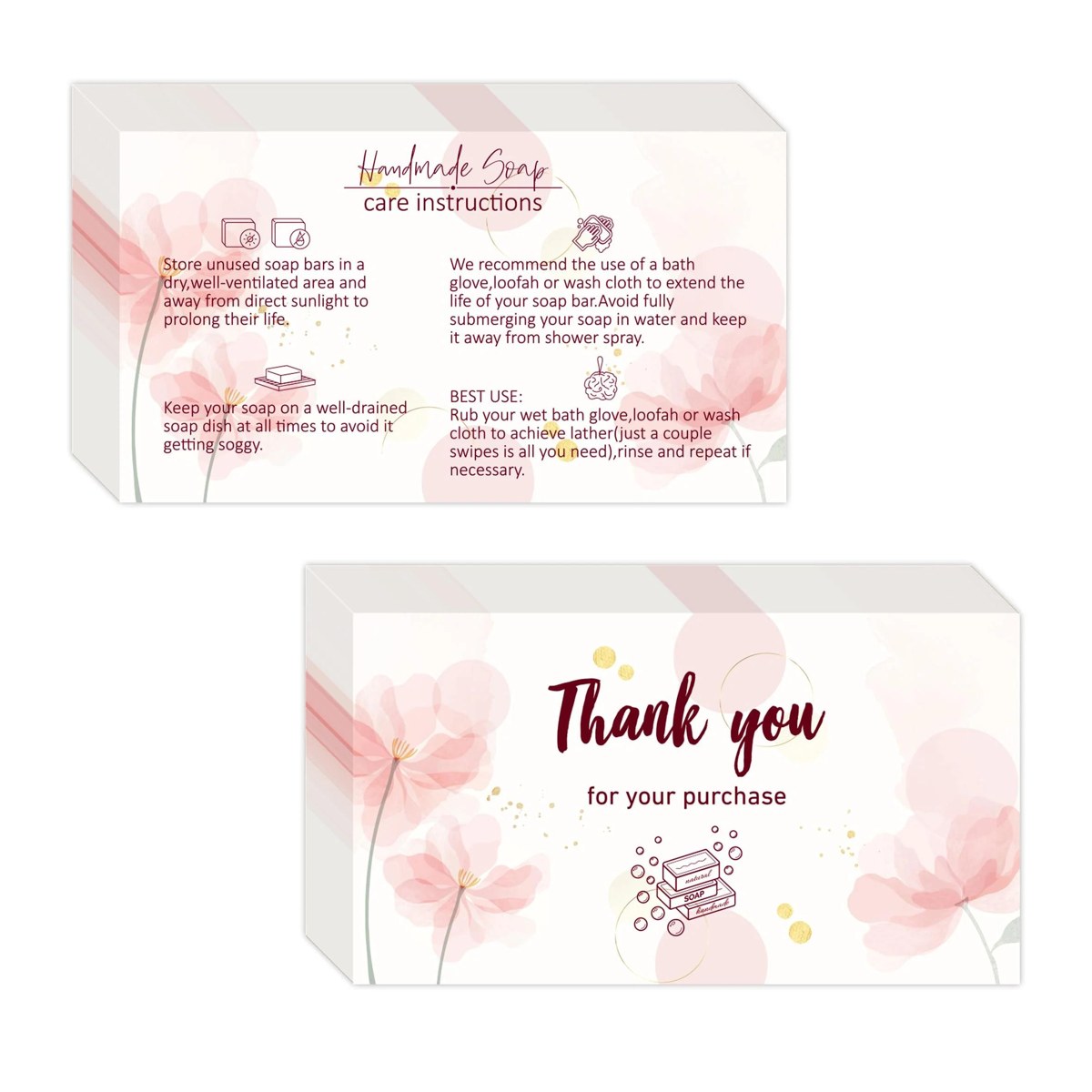
Image 2. Static source image associated with record 81e8be57d768e8c33d38227d79b0033f. The visible objects are soap-care and thank-you cards; the supplied record does not resolve whether the purchased item is printed material, soap, or a bundle.
The distinction changes the analysis. If the product is a pack of printed inserts, the relevant selling points might concern the card design and intended packaging use. If the cards accompany soap, they may communicate aftercare and presentation. Without the listing, a researcher cannot confidently choose between those interpretations.
There is still a useful creative observation. The image makes post-purchase instructions part of the visible product experience. It shows storage, drainage, and handling advice as designed information. For a seller whose actual product includes instructions, a production hypothesis could test whether showing that support helps shoppers understand what arrives and how they will use it.
An original brief should first resolve the item being sold. Request a contents photograph, a verified listing, and confirmation of whether the card is included, optional, or merely a prop. Only then decide whether the creative should present the card as a product, an accessory, or explanatory material.
If a skincare team adapts the educational structure, it should use its own product’s approved directions. The sample’s soap instructions do not become universal advice for other cleansers, patches, oils, or creams. The design principle is transferable; the usage instruction may not be.
This example belongs in the research folder because it teaches a classification decision. A broad search can retrieve material adjacent to the category rather than a direct substitute for the seller’s product. Tagging it as “packaging education reference” preserves its value without inflating a list of comparable skincare demonstrations.
Example 3: Golden Face Drops Identify the Product but Leave Use Unseen
The golden face-drops packshot makes the product category and dispensing format visible, while leaving the actual use process unobserved. The bottle is labeled “Self Tanning Face Drops,” with hyaluronic-acid and vitamin-C wording. Its black dropper closure and yellow contents are visually prominent, but the supplied image contains no dispensing action or developed tanning result.
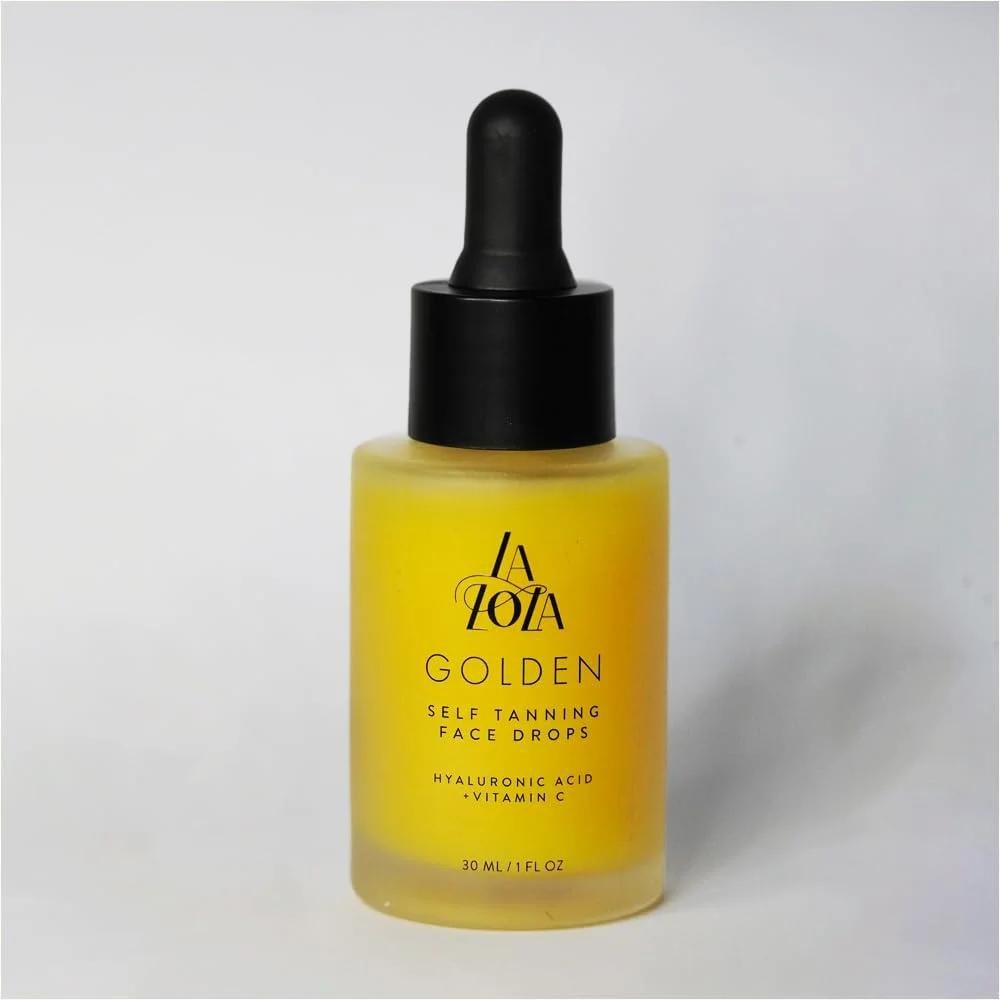
Image 3. Static source image associated with record a5440e1e443d25e7f1c37c0f0f038013. The label identifies a self-tanning face-drops product; application instructions and results are not supplied.
The main creative advantage visible here is identification. The front label names a use category more specifically than a generic “glow” message would. That gives a producer a clear starting point: preserve enough label visibility that the audience can distinguish tanning drops from another serum-like product.
The open question is what explanation comes after recognition. A shopper might need to understand the approved preparation, application method, expected development conditions, or selected shade. The source image answers none of those questions. A responsible brief requests the current product directions rather than inferring a procedure from the presence of a dropper.
For the seller’s own product, a possible hypothesis is that a label-led opening followed by a clearly documented handling demonstration improves understanding of the product category. Keep the proposition at that level until the team has evidence for any stronger outcome claim. Ingredient names should not automatically become promises about brightening, hydration, tanning speed, or universal suitability.
A production comparison could hold the same presenter, product, destination, and closing information constant while changing whether the opening starts with the readable bottle or with the approved action. The purpose would be to test the information order. If the team simultaneously changes lighting, outcome imagery, and promotional terms, it will be harder to interpret the result.
The packshot also makes a useful acceptance reference. The product name should remain readable in the finished creative, and the photographed bottle should match the offered variant. Those checks are available before campaign launch and do not depend on guessing what happened in another advertiser’s account.
Example 4: Whole Foods Connects Retail Discovery with a Close-Up
The Whole Foods contact sheet shows a retail-discovery context followed by selected product-focused frames, but it does not establish a complete demonstration or shopping journey. At the supplied early timestamps, a presenter holds a basket in a store aisle. Later sampled frames show an ACURE shelf and a bottle held close to the camera.
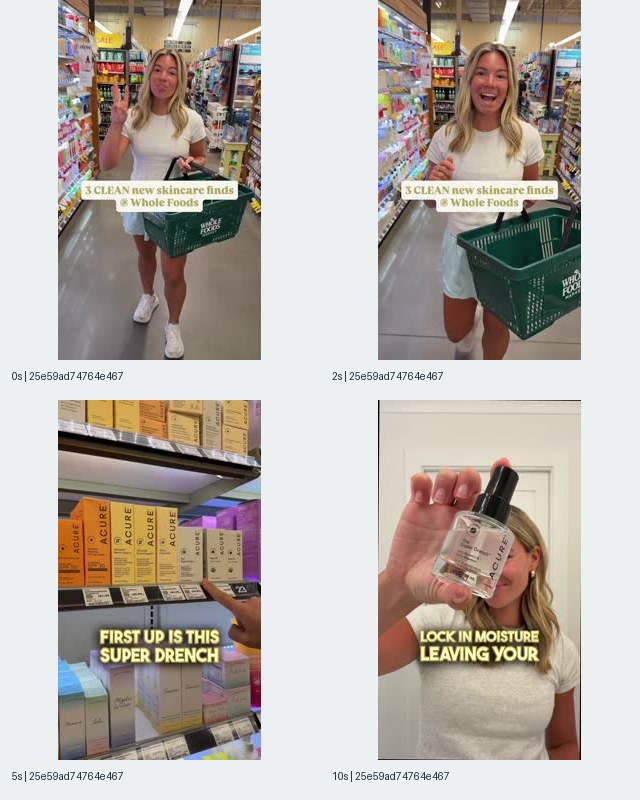
Image 4. Timestamped contact sheet for record 25e59ad74764e4678ba1e82e14c343b3, whose copy describes Whole Foods skincare finds. Only the frames at 0, 2, 5, and 10 seconds were observed; the full video and audio were not reviewed.
The opening overlay references skincare finds at Whole Foods. The shelf frame makes a brand selection visible. At the later sampled timestamp, the creator presents a bottle while a partial text overlay discusses moisture. Those observations support an analysis of context and product visibility. They do not establish the wording between frames, the complete claim, or what appears after the sampled portion.
For a beauty team, the useful hypothesis is that a recognizable shopping situation can orient viewers before the product close-up. The mechanism being proposed is contextual clarity: viewers may understand why the product is being introduced. That remains a hypothesis, not a measured retention or conversion result from this sample.
A TikTok Shop adaptation would need to replace the purchase-path assumptions. A physical-store discovery scene should not silently imply that the same item, retailer relationship, or purchase conditions apply to a Shop listing. The producer should show the seller’s actual product and ensure the eventual CTA points to the verified item being offered.
The brief can also specify the role of the close-up. If its purpose is identification, require readable packaging. If its purpose is a texture demonstration, request actual footage of that action under the product’s approved directions. Merely moving a bottle toward the camera does not satisfy both requirements.
A useful editorial note is to preserve the source’s retail context when sharing the reference internally. Calling this “a TikTok Shop serum winner” would discard the very uncertainty that matters. Label it as a Whole Foods discovery reference with observed product close-ups, then write the seller’s own test hypothesis beside it.
To inspect related indexed material, search skincare creatives in AdMapix. Use the results to find comparable product presentations, then check the source, date, and destination of each candidate; the live query will not necessarily reproduce this frozen sample or its filters.
Example 5: Kiehl’s Presents a Routine Through a Product Lineup
The Kiehl’s image organizes several grooming products as a set, making the relationship between components more visible than a single isolated tube would. The box says “Get Up & Groom” and “From Cleanse to Post-Shave.” The arrangement gives the viewer an overall routine proposition while retaining individual product labels.
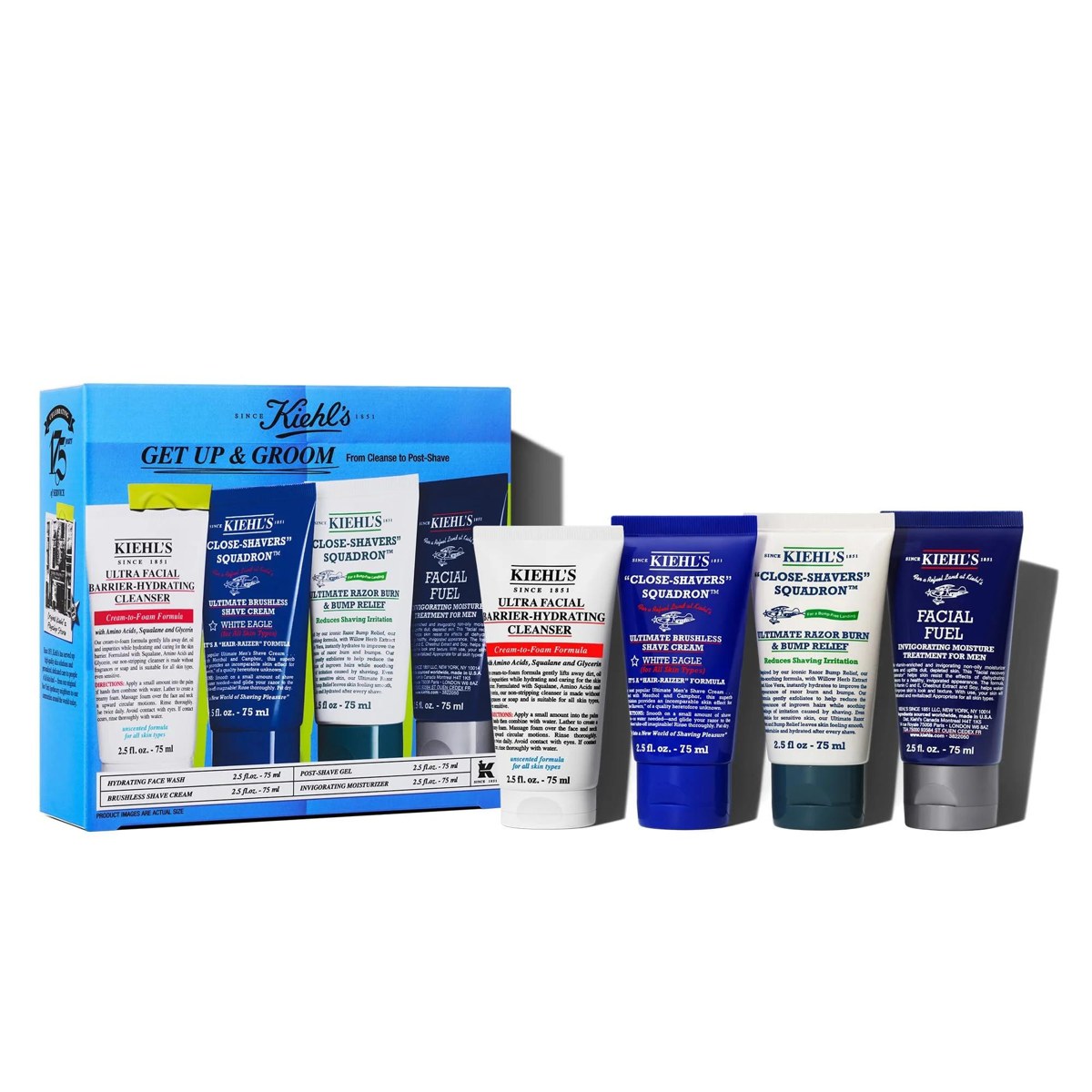
Image 5. Static source image associated with record 0931292d0059efe5be150db7bcae53ad. The photograph presents a grooming set; it does not verify current bundle availability, savings, or the advertiser’s relationship with Kiehl’s.
The compositional lesson is about hierarchy. The set has an umbrella purpose, and the individual products provide detail beneath it. A team can borrow that hierarchy when its own bundle has a coherent use case. It should not assume that placing unrelated products together creates a meaningful routine.
An original production brief should state the exact purchased contents and explain the role of each component using approved product information. Ask for a shot of the unopened set, a clear contents layout, and any authorized demonstrations needed to explain how the items relate. Keep props separate from included items so the finished image does not accidentally expand the offer.
The offer hypothesis is distinct from the usage hypothesis. One test might examine whether a component-by-component explanation improves bundle comprehension. Another might examine whether a verified financial offer changes purchase behavior. Combining them into one variant would change both the information and the commercial proposition.
The image does not display a verified savings calculation. Consequently, it cannot support language such as “better value than buying separately.” A seller making that claim would need a current, relevant price comparison and clearly defined components. The routine structure itself can still be communicated without a discount.
For acceptance, ask a reviewer of the proposed creative to identify what arrives, which products are distinct, and whether any pictured object appears excluded. This is a communication check, not evidence that the combination is suitable for every user. Product compatibility and directions remain questions for the seller’s own substantiated information.
The transferable idea is to explain the bundle’s organizing purpose while keeping its contents inspectable. That helps production avoid a dense wall of labels whose commercial meaning is left for the viewer to reconstruct.
Example 6: The Green Gift Assortment Sells an Occasion Visually
The green gift assortment uses coordinated color, soft textures, and a supportive message to frame an occasion rather than demonstrate a skincare routine. The visible arrangement includes a blanket, eye mask, drinkware, socks, a candle, and bath-related items. Its strongest observable theme is gifting and comfort, not evidence of a skin benefit.
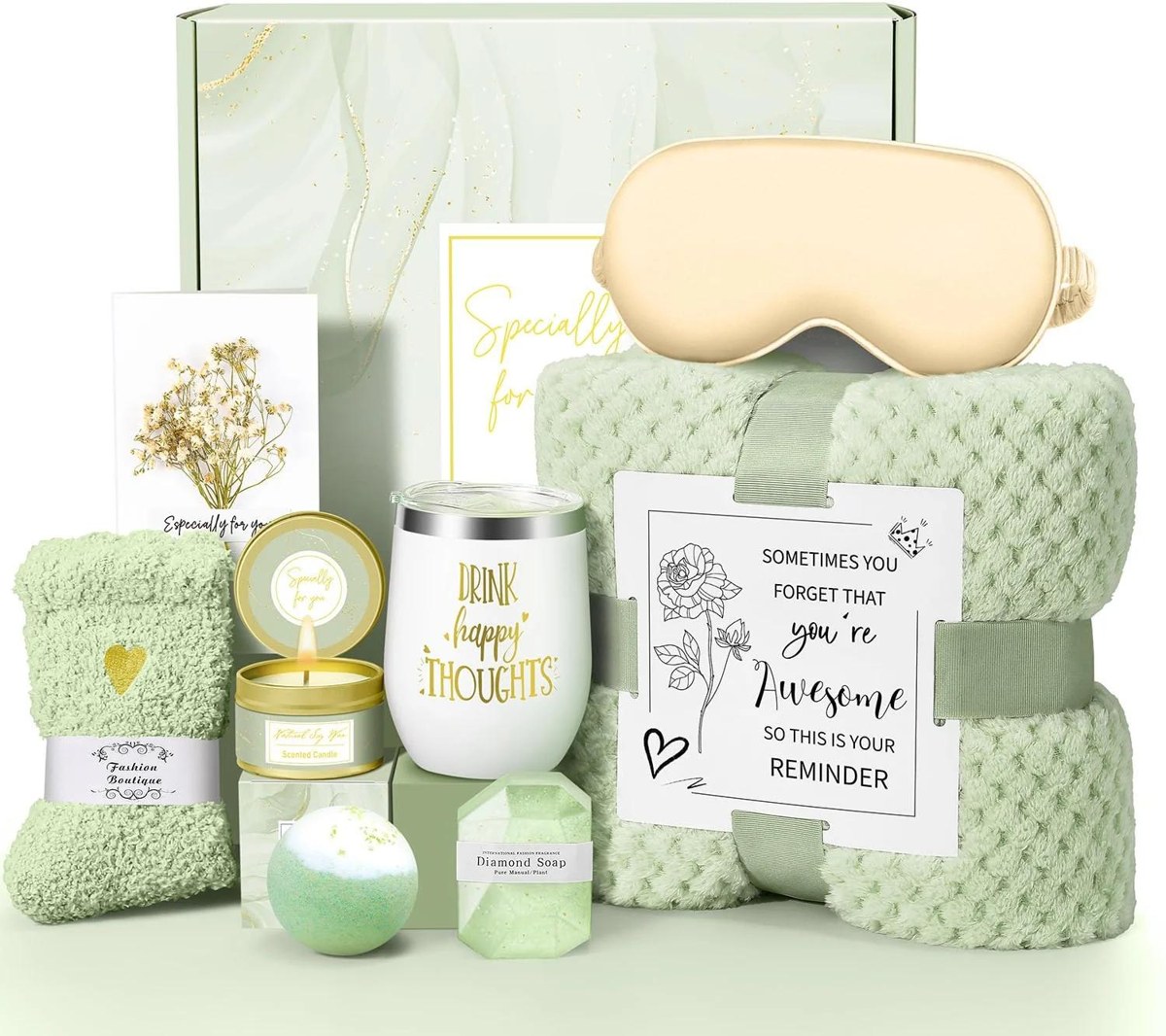
Image 6. Static source image associated with record 0a331a7e41a0d72baf797999c3438d97. The pictured assortment suggests a gift occasion; exact purchased contents and current commercial conditions are not independently verified.
This example should prompt a classification choice. If the seller’s actual item is a gift set, the occasion may be central to the creative. If the item is an individual skincare product, importing the same assortment could create confusion about what is included. The attractive scene does not remove the need for product-specific clarity.
A useful hypothesis for a genuine gift bundle is that showing the complete contents and packaging will answer practical gifting questions more clearly than an emotional message alone. A production sequence could move from the closed package to the contents and then to the prepared gift. That is a proposed sequence, not something observed in this static source.
The brief should identify which objects are included, which options vary, and whether the outer packaging is part of the purchase. It should also specify whether a message card is standard, customizable, or simply a photographic prop. These distinctions matter because the photographed emotional promise is partly carried by the card and presentation.
The sample does not verify the recipient’s reaction. An original creative should not turn the photograph into an invented customer story. If a real recipient participates, the script should reflect that person’s actual experience and the permitted use of their contribution. Otherwise, an illustrative gifting scene can be presented without claiming a testimonial.
The production lesson is to keep occasion and contents connected. A creator can explain why a bundle was chosen while showing exactly what the shopper receives. The commercial test then asks whether that presentation helps the seller’s audience under the seller’s actual offer, rather than treating the source image’s visual coherence as proof of demand.
Example 7: Sprouts Shows Ingredient Positioning and Video Reuse
The Sprouts contact sheet foregrounds ingredient-exclusion messaging, while the associated records demonstrate why repeated listings must be separated from distinct video files. The supplied frames show a presenter outside Sprouts, a shelf containing ACURE products, and a close-up of an ACURE facial scrub. They do not establish the truth of a broad health or safety comparison.
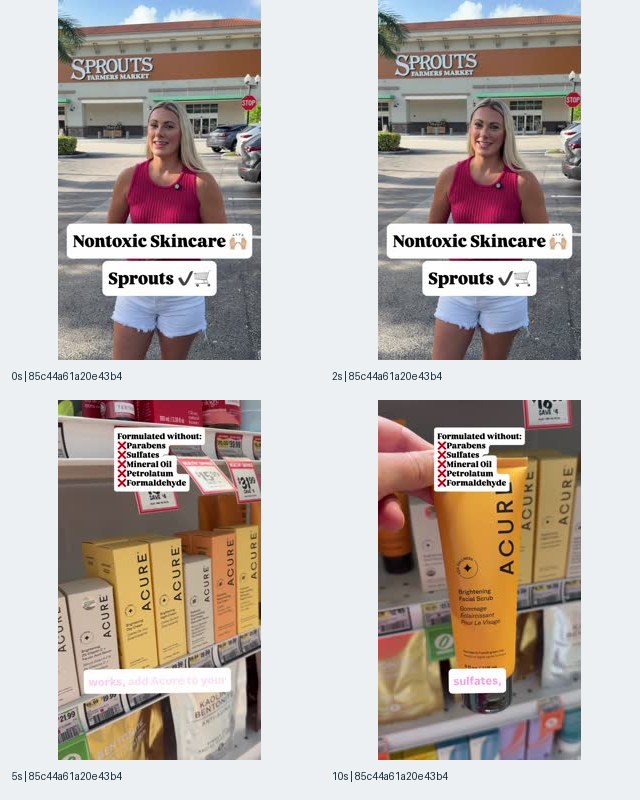
Image 7. Timestamped contact sheet associated with record 85c44a61a20e43b4fcf00bcf63ad7235, titled “Paraben-Free Skincare: For a Healthier You.” The sampled overlays are advertiser statements, not independently verified health findings.
At the early timestamps, the overlay uses “Nontoxic Skincare” and names Sprouts. Later frames list substances under “Formulated without,” while the product close-up identifies the item being discussed. These visual elements show how the creative positions the product. They do not prove that omitted ingredients are generally harmful or that the featured product is healthier than alternatives.
For a seller considering an ingredient-focused concept, the brief should distinguish a factual formulation statement from an implied superiority claim. Request current product documentation for the exact variant. Decide which wording can be supported, and make sure the spoken message does not expand a narrow ingredient fact into a sweeping safety promise.
The same video fingerprint appears in the records beginning 85c44a61, b5509bba, 18edb298, cd7f58bf, and cb6d83ff. Their supplied copy includes different clean-skincare, routine, brightening, and ingredient framings. Those identified records establish reuse of an indexed video file under different text. They do not establish a controlled copy test, its audience allocation, or a winning headline.
That distinction is useful for creative planning. A team may formulate a hypothesis that one approved body video can support alternative, truthful openings or accompanying text. But it should judge the proposed variants against its own product evidence and testing design. The source’s repetition is a reason to inspect the relationship between text and asset, not a reason to assume the relationship is profitable.
When reporting this reference, keep the physical-store context and the claim boundary in the same entry. That makes it harder for a later presentation to transform a Sprouts discovery clip into an unsupported TikTok Shop success story.
Example 8: Cyperus Oil Makes Identity More Visible Than Efficacy
The Cyperus oil image provides packaging and naming evidence, while leaving application and product outcomes unknown. A brown bottle appears beside a carton, with “Cyperus” prominent in the Latin-script labeling. Botanical imagery and multilingual text contribute to the presentation, but neither independently verifies composition, origin, or effectiveness.
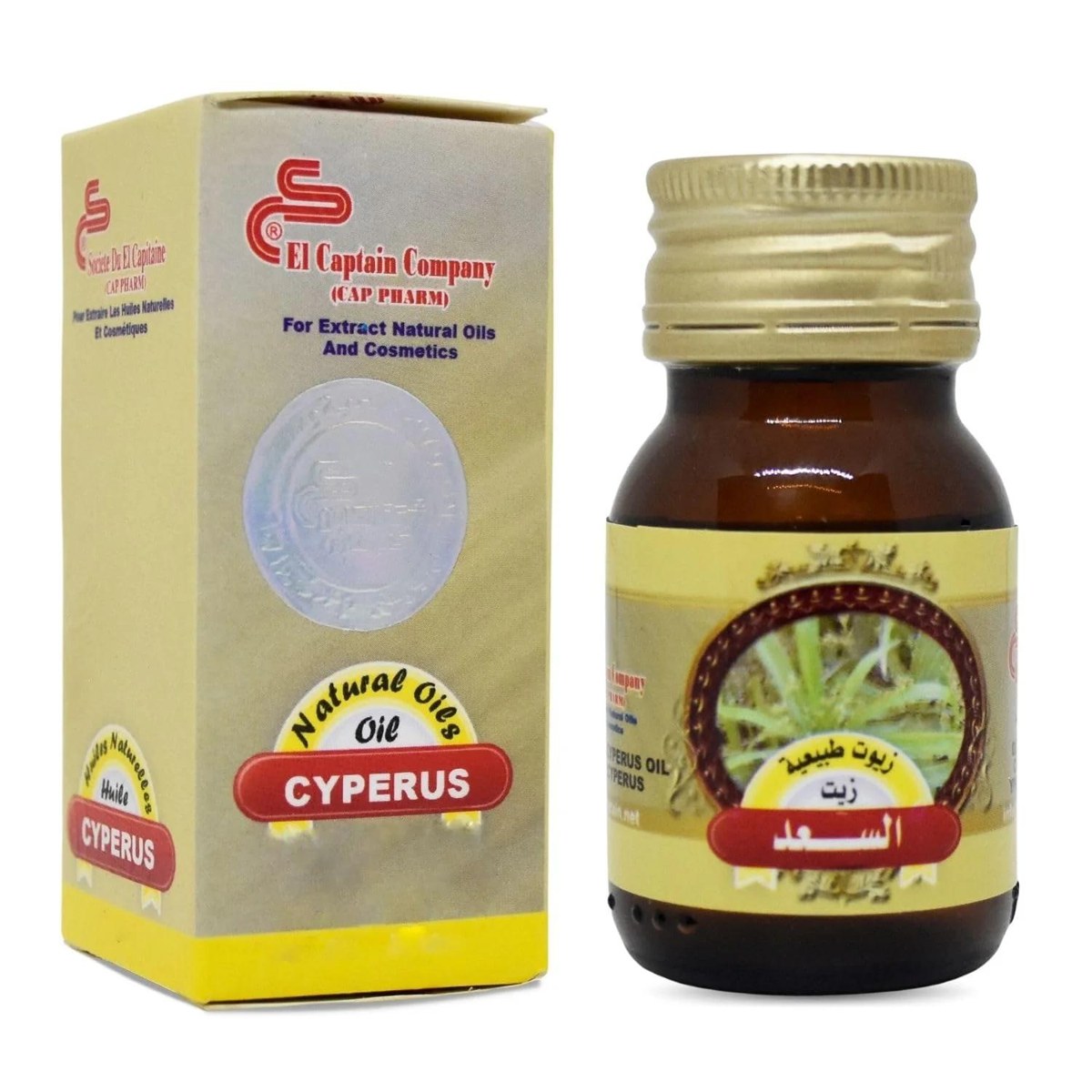
Image 8. Static source image associated with record 32025b31292091746bcf343fc4b401b9. The packaging identifies Cyperus oil; no usage demonstration, verified merchant listing, or efficacy evidence is supplied.
The immediate creative question is whether the audience can identify the product being offered. For a less familiar product name, a recognizable bottle and a clear label may be essential before any broader message makes sense. The sample supports that identification task, but it does not provide a basis for adding a treatment promise.
A research team should resist importing claims it remembers from other advertisements for similarly named oils. A name match is not a verified formulation match. The next evidence request should concern the exact product, supplier documentation, approved directions, selected variant, and current listing. Those details determine which demonstration, if any, is appropriate.
For an original video, a reasonable hypothesis is that showing the verified label alongside a concise explanation of the product category will reduce ambiguity. If an approved application demonstration is available, it can be added as a separate piece of information. The script should not imply that the botanical picture itself proves a natural composition or a particular result.
Localization also requires care. Multilingual packaging can help identify the photographed item, but it does not tell the researcher which audience was targeted. For a US-facing creative, the seller should decide what needs plain-English explanation and verify that any translated statement preserves the same supported meaning.
The broader lesson is to treat unfamiliar products as an evidence-gathering task before treating them as a creative opportunity. A packshot can reveal what deserves investigation. It cannot supply the missing product facts simply because the packaging looks specific or established.
What the Examples Show About Demonstration and Credibility
The references show that product visibility, usage demonstration, and outcome evidence occupy different positions in a beauty creative. Several images identify products clearly; the contact sheets show presenters and product close-ups. None of those observations alone demonstrates a complete, verified customer outcome. The useful comparison is therefore about which shopping question each image answers and which question remains open.
The patch image connects shape with placement. The face-drops image identifies a dispensing format. The grooming set groups components under a routine. The gift assortment connects objects with an occasion. These are all meaningful communication functions, even where no product is being used on camera.
A production team can organize footage around progressively more specific questions. First, can the viewer identify the item? Next, can the viewer understand the relevant action or contents? Then, can the viewer distinguish what was demonstrated from what was merely claimed? Finally, can the viewer find the same item under the stated offer?
This approach avoids assigning a vague “proof score” to every close-up. A crisp bottle image may be excellent evidence of visible labeling and weak evidence of anything else. A creator’s confident expression may support an engaging presentation without establishing product suitability. A retail setting can provide context without proving endorsement by the retailer.
The practical output is a missing-evidence list attached to each concept. For a patch, that might be authorized handling footage. For face drops, it might be the approved instructions and any substantiated outcome language. For a gift set, it might be a verified contents layout. For an ingredient-led concept, it might be current formulation documentation.
Prioritize those requests by the promise the ad intends to make. There is little value in collecting more attractive footage if the central statement remains unsupported. Conversely, a modest demonstration can be sufficient when the creative makes a modest, clearly bounded statement about the item and what arrives.
Historical Offers Must Stay Attached to Their Retailer and Dates
The supplied copy contains historical Amazon promotions, which can illustrate offer structure but cannot establish a current TikTok Shop deal. In the frozen record beginning 5f0943b3, Dr.BRID C copy advertises “30% OFF” on Amazon for October 6–7. The record beginning 50e17ad5 similarly contains Paula’s Choice partner copy referring to an Amazon promotion on October 6–7. These are statements in archived advertising text, not offers independently redeemed or verified by this article.
The relevant creative lesson is the separation of scope, timing, and destination. A percentage alone is incomplete. The surrounding copy supplies the named retailer, the claimed product scope, and the promotional dates. Removing those conditions changes the meaning of the offer.
By the 2026-10-12 observation date, the named October 6–7 dates were already past. A later draft should preserve that historical status. It should not turn the copy into a live shopping recommendation or suggest that the same terms apply to a different retailer.
| Offer component | What to preserve from an observed ad | What to verify for a new creative |
|---|---|---|
| Item scope | Exact wording about included products | Eligible products and selected variants |
| Benefit | Discount or inclusion as advertised | Approved current commercial benefit |
| Time | Stated dates and any visible conditions | Start, end, timezone, and expiration handling |
| Destination | Named retailer or shopping surface | Actual destination used by the new creative |
| Eligibility | Any stated restrictions | Account, region, stock, or other applicable conditions |
A seller’s offer card should have an accountable owner and a revision date. If the benefit expires while the creative remains in production, the text and destination need another check before release. This is particularly important when a producer edits from an old reference folder and assumes the promotional line is evergreen.
For an original TikTok Shop concept, use only the seller’s verified current conditions. The test hypothesis might compare a product-led opening with an offer-led opening while holding the offer itself constant. That would examine presentation order. Changing the actual discount at the same time would test a different commercial proposition and should be documented accordingly.
Verify the Shopping Path Before Calling an Example a Shop Ad
A TikTok Shop attribution claim needs evidence connecting the creative to a specific shopping experience, not just a familiar social-video style or a beauty keyword. In this sample, destination fields and verified Shop listing relationships are missing. The visible retailer references therefore remain context rather than substitutes for purchase-path verification.
For a future research entry, capture the relationship in stages. Preserve the creative and its source context. Record the exact product destination when accessible. Identify the item and variant shown there. Then compare the destination’s contents and conditions with the creative’s promise. If a stage cannot be resolved, retain the uncertainty at that stage rather than filling it from memory.
A useful worksheet has separate fields for the visible brand, displayed product, merchant listing, selected variant, source account, and verified buyer information if available. These fields should not collapse into a single “advertiser” cell. A brand printed on a bottle is not necessarily the organization that paid for the advertisement.
The same rule applies when different listings appear to show the same product. Different identifiers do not by themselves establish different ownership, competition, infringement, or fraud. They establish that the observed references point to different identifiers. Resolving the commercial relationship requires additional evidence.
If the purchase destination cannot be inspected, the creative can still remain useful. Tag it as a visual or messaging reference with an unresolved destination. That preserves its contribution to production research without overstating what it represents.
For a team’s own campaign, this verification becomes a release requirement. The advertised item, selected variant, offer wording, and destination should agree at launch. That is a condition the team can control directly, unlike the unknown shopping behavior behind a third-party screenshot.
A Reader Workflow: Turn the Sample into an Original Brief
The practical workflow is to move from a documented observation to a bounded hypothesis, then to a production request and an owned test. Each transition should produce something another team member can inspect. A folder of screenshots is only the starting point; the usable deliverable explains what to make, why it is being made, and what evidence will be needed to judge it.
Begin with the shopper question. Choose the uncertainty the creative is meant to resolve. Examples include identifying an unfamiliar product, understanding application, distinguishing bundle components, or checking offer eligibility. Use customer questions or owned-account evidence where available. If no such evidence exists, label the chosen question as a working hypothesis rather than a discovered audience problem.
Select the closest reference by communication task. The gift assortment may be a better reference for a gift-box seller than the face-drops bottle, even if both came from the same keyword search. A patch seller may learn from the placement illustration without adopting the source’s wording. The selection criterion is the question being answered, not superficial similarity alone.
Write an observation sentence. Keep it literal: “The image shows the patch shape beside an illustrated placement,” or “The sampled frame shows the product held close to the camera.” Exclude predicted effects from this sentence. This makes it possible for a producer to verify the note against the image without debating a marketing theory.
Write the hypothesis separately. State the expected communication change and how it could be checked. For example: “Showing the purchased contents before the occasion scene may make the gift bundle easier to identify.” That hypothesis does not claim the source improved conversion, and it does not guarantee that the seller’s audience will respond in the same way.
Gather the seller’s product evidence. Obtain the exact item, approved directions, permitted claims, current offer, and verified destination. A reference cannot supply these on behalf of a different product. If a required claim is unsupported, revise the concept around what can be shown and said accurately.
Create the production specification. Describe each required action, readable label, contents shot, and spoken line. State what counts as an acceptable take. For example, a contents shot should allow the team to identify the included items, while a label shot should make the selected variant legible in the final composition.
Check the handoff against the destination. The commerce owner should confirm that the product page fulfills the same promise. A bundle creative should not lead to a single-item selection without making that distinction clear. An expiring offer should not survive in evergreen narration after its conditions change.
Define the learning record before launch. Identify the changed variable, the evidence to collect, and the decision the team expects to make. Keep comprehension findings separate from campaign metrics. A viewer interview can reveal misunderstanding, but it cannot establish purchase lift.
The UGC creator product-demo brief is a relevant companion when the output will be commissioned footage. Use it to formalize shots, claims, and acceptance criteria after the research question has been resolved.
A completed brief should let someone unfamiliar with the reference produce the intended information accurately. If the producer still needs to guess which item is sold, what a claim means, or whether a prop is included, the brief is not ready.
Original Creative Briefs for Different Beauty Shopping Questions
An original brief should preserve the useful communication principle from a reference while replacing its product facts, setting, script, and offer with the seller’s own verified material. The following briefs are proposed production concepts, not observed source sequences or completed tests. They illustrate how the same research framework produces different deliverables for different shopping questions.
Brief A: Explain an unfamiliar physical format. This concept takes the patch reference’s shape-and-placement relationship as inspiration. The intended shopper question is “What is this item, and what does using it involve?” Open with the actual product and a plain category description. Follow with the authorized handling action that resolves the question. Close with the verified item name and purchase destination.
The product owner supplies directions and permitted statements. The producer supplies readable identification footage and an unobstructed demonstration. The editor preserves the action sufficiently for the intended step to remain understandable. The acceptance check asks whether the viewer can identify the product and describe the demonstrated action without inventing an outcome.
The hypothesis is that the action-led explanation improves understanding compared with a packaging-only version. It does not predict a medical result, a particular conversion lift, or universal suitability.
Brief B: Make a bundle’s contents unmistakable. This concept draws on the grooming set’s organization and the gift assortment’s occasion framing. The intended shopper question is “What do I receive, and why do these items belong together?” Begin with the actual purchased package. Show the included contents in a clear arrangement. Explain the bundle’s verified purpose, then present the relevant occasion or routine.
The catalog owner confirms every included item and variant. The producer distinguishes included objects from props. The editor keeps the contents language consistent with the destination. The acceptance check asks the viewer to identify what arrives and whether anything pictured appears optional.
The hypothesis is that a contents-first version improves bundle comprehension compared with an occasion-first version. Keep the commercial terms identical if the test is intended to examine information order alone.
Brief C: Explain a formulation fact without expanding it. This concept uses the Sprouts reference as a prompt to inspect ingredient messaging carefully. The intended shopper question is “What is the specific formulation fact being communicated?” Open with the seller’s exact, supported statement. Show the product identity and the relevant documentation or label wording where appropriate. Explain only what the approved evidence allows.
The product owner confirms the formulation for the selected variant. The copy owner checks that the spoken line does not convert an exclusion into a general health claim. The creator presents the information without inventing a personal result. The acceptance check asks whether the final message says more than its support establishes.
The hypothesis is that a precise formulation explanation helps the relevant audience understand the product. Its commercial effect remains to be measured in the seller’s own context.
Production Acceptance: Check the Message Before Buying Traffic
A production review should establish that the creative communicates the intended product and supported promise before a campaign tests its commercial effect. This is a practical quality check, not a substitute for performance measurement. It prevents avoidable ambiguity from entering a test whose results would otherwise be difficult to interpret.
Start with the product match. Compare the item in the footage with the selected listing, packaging version, and variant. A beautiful close-up of the wrong size or set can undermine the entire concept. Where packaging differs across available variants, make the intended item explicit rather than relying on a general brand resemblance.
Check the action match next. If the brief calls for a demonstration, identify the action actually visible in the delivered footage. A creator holding a bottle may satisfy an identification shot while failing to show dispensing or application. Return the footage for the missing action instead of silently marking the demonstration complete.
Then check the claim match. Read the spoken line, overlay, captions, and visual implications together. A narrowly worded voiceover can still become a broad outcome promise when combined with a suggestive before-and-after edit. The review should consider the combined message rather than approving each element in isolation.
Check the offer match against the live conditions controlled by the seller. Confirm that the named items, inclusion statements, eligibility, and timing agree. If the creative is intended to remain usable after a promotion, keep the temporary offer in a replaceable component rather than embedding it throughout the narrative.
Finally, conduct a comprehension check with people who have not seen the brief. Ask them to identify the item, explain what was shown, and describe what they believe the purchase includes. Preserve their actual answers. Do not convert a small internal review into a statistical claim about the market.
These checks create a cleaner starting point for experimentation. If the concept performs poorly later, the team will at least know whether it tested the intended message rather than an accidental mismatch among footage, copy, and destination.
Test the Hypothesis with Owned Data
A creative hypothesis becomes a performance finding only when an appropriately designed test supplies the missing evidence. The frozen references provide no conversion, revenue, spend, or profitability results. They can inform what to test, while the seller’s own experiment determines what happened under its audience, offer, product, and delivery conditions.
Begin by choosing the decision. A test intended to compare product identification should not quietly become a test of discount depth. Write the changed variable in plain language: “readable product first versus approved action first,” or “contents first versus occasion first.” Keep other material conditions aligned as far as the available campaign setup allows.
Record any differences that cannot be held constant. Different creators, products, offers, destinations, delivery periods, or audience conditions can affect interpretation. If several variables change together, call the exercise a comparison of complete concepts. Do not report it as isolating a single hook or shot order.
Separate communication measures from commercial measures. Product recognition or contents comprehension can indicate whether the message was understood. Product-page visits, purchases, refunds, and contribution calculations answer different questions and depend on the seller’s measurement system. Define each measure and its denominator before reading the results.
For commercial evaluation, include the costs and conditions relevant to the business decision. A concept that generates attention may still attract shoppers whose expectations do not match the product. A bundle presentation may produce orders while creating contents confusion that appears later in service contacts or returns. Those are reasons to inspect the full owned customer experience, not conclusions drawn from the source sample.
Set the evaluation and stopping rules before results arrive. There is no universal budget, duration, or sample threshold supplied by this evidence package. The appropriate design depends on the expected effect, traffic availability, variability, measurement quality, and the decision’s consequences. Avoid declaring a winner simply because an early result looks favorable.
The creative testing framework provides a broader structure for documenting variables, decisions, and uncertainty. In this workflow, the final learning record should connect the source observation, original hypothesis, produced version, actual test conditions, and resulting decision.
A useful result may be “the product remained unclear,” “the offer changed during the test,” or “the evidence is insufficient to choose.” Those outcomes can guide the next production decision without turning uncertainty into an invented success story.
Common Mistakes When Building a Beauty Swipe File
The most consequential mistakes occur when a research label becomes stronger than the evidence beneath it. A source image can gradually become a “winning TikTok Shop ad,” an ingredient statement can become a health conclusion, and a repeated file can become evidence of a large creative program. Correcting the label early protects every later brief and presentation.
- Calling every skincare result a comparable product ad. The soap cards and gift assortment show why category relevance needs inspection. Keep adjacent references, but label their actual communication task.
- Treating the requested network filter as complete placement verification. Preserve the query context while leaving missing record-level source and Shop relationships unresolved.
- Calling every product close-up a demonstration. Identify the action shown. Product presentation, handling, application, and outcome evidence answer different questions.
- Promoting packaging wording into independent proof. The image can show that a label makes a statement. Additional substantiation is needed before the article or a new creative endorses that statement.
- Counting records as unique videos. The repeated Sprouts file illustrates why accompanying copy and underlying video identity need separate fields.
- Reading repetition or longevity as profitability. Reuse can be observed without knowing its cause, spend, purchases, or financial result.
- Moving an Amazon offer into a TikTok Shop brief. Retailer, timing, eligibility, and item scope must survive the handoff, or be replaced by the seller’s own verified conditions.
- Inventing the unseen parts of a video. Timestamped frames do not establish the audio, intervening actions, or closing CTA.
- Importing an unverified product claim from memory. Similar names, ingredients, or packaging do not resolve the exact formulation and approved directions.
The remedy is a compact evidence entry with separate observation, hypothesis, uncertainty, and next-action fields. This structure is more useful than adding increasingly confident adjectives to an incomplete screenshot.
When AdMapix Fits This Workflow
AdMapix fits the discovery and evidence-organization stage when a team needs indexed creative references for product messages, demonstrations, and offers. In this article, its concrete contribution is the dated search sample and the source-linked material used to form production hypotheses. That contribution should remain separate from claims about private campaign results or verified shopping transactions.
A suitable handoff is specific: choose a shopper question, inspect relevant indexed results, preserve the source context, and build a brief from the examples that actually answer the question. If the question concerns a bundle, compare contents presentations. If it concerns an unfamiliar product, compare identification and authorized demonstrations. Avoid expanding the research merely to accumulate more screenshots.
AdMapix does not turn the missing fields in this sample into known facts. Product suitability still requires appropriate product evidence. A campaign outcome still requires account data. A TikTok Shop attribution still requires a verified relationship with the shopping experience. A tool should be evaluated by whether it helps the team complete the research task with those boundaries intact.
For a decision-oriented next step, take one current SKU and use this article’s worksheet to prepare one original, inspectable brief. Then check whether the available research workflow supports the references and documentation your team needs. Review the live AdMapix pricing page for current access terms and allowances; this evergreen guide does not enumerate prices, credit quotas, or promise a paid-plan trial.
FAQ
The questions below address the practical boundaries between useful creative research and unsupported conclusions about TikTok Shop advertising. They are answered from the dated sample and the workflow developed here, rather than from an unseen platform experiment or a claim that the featured products were tested.
Are these verified TikTok Shop beauty ads?
No. The research request used the TikTok media filter, but the returned records do not establish verified TikTok Shop product links or shopping destinations. Several references explicitly involve Amazon, Whole Foods, or Sprouts. They are useful beauty and adjacent-product creative references, with their original context preserved, rather than authenticated Shop campaign examples.
What is the difference between a product close-up and a demonstration?
A close-up can make the product name, package, or dispensing format visible. A demonstration shows a relevant action, such as authorized handling, application, or arranging purchased contents. Neither automatically proves a lasting result. The brief should name the shopper question and specify which observable action is required to answer it.
Does repeated use of a video mean that it converts well?
No. The sample shows that the Sprouts video fingerprint appears under several text records, which establishes file reuse within this collection. It does not reveal the advertiser’s experiment, budget allocation, conversion rate, or reason for reuse. Treat repetition as a research lead and test any resulting hypothesis with your own data.
Can a contact sheet support a video-ad analysis?
Yes, if the analysis stays tied to the observed timestamps. The supplied contact sheets show frames at 0, 2, 5, and 10 seconds. They support descriptions of those frames and their visible text. They do not establish continuous action, narration, music, the full sequence, or what appears in the unseen ending.
Can ingredient exclusions be used as proof of a healthier product?
An exclusion statement alone does not establish a broad health or safety advantage. In this sample, the wording is part of the advertiser’s positioning. For an original creative, verify the exact formulation and use only claims supported for that product. Keep a factual ingredient statement separate from any stronger comparative or outcome claim.
Should a beauty offer always include a discount?
The sample does not establish that discounts are necessary or superior. A clear product proposition can explain contents, routine, or gifting purpose without a price reduction. If a discount is used, preserve its eligible items, dates, conditions, and destination. Test its effect using the seller’s own commercial data rather than assuming it from archived copy.
What should a small team do first, and what does AdMapix cost?
Start with one SKU, one shopper question, and a brief that specifies the required evidence and footage. This keeps the research manageable and makes the next decision concrete. AdMapix commercial terms can change, so use the live pricing page linked above for current access conditions rather than relying on evergreen article figures or an assumed trial.
Key Takeaways
The useful outcome of beauty-ad research is a better-supported production decision, with the source evidence and the proposed test kept distinct.
- Match the reference to a shopper question: identity, use, contents, formulation, occasion, or offer.
- Preserve the original retailer and source context; a beauty creative is not automatically a verified TikTok Shop ad.
- Separate product presentation, demonstration, and outcome evidence in both briefs and reviews.
- Keep records, video fingerprints, and image fingerprints as different counting units.
- Verify the seller’s own product, claims, offer, and destination before testing an original adaptation.
Sources
The article’s observations come from the frozen sample collected on 2026-10-12, covering the explicit US measurement window 2026-09-12 to 2026-10-11 and the query “skincare.” The linked resources below distinguish the reproducible evidence from the live research workflow and general methodology.
- Frozen public source package, observed 2026-10-12: search batches, request parameters, checksums, advertising copy, record identifiers, and media relationships for the bounded collection. Supports the reported sample counts and record-specific observations, not campaign performance or verified Shop attribution.
- AdMapix skincare search workflow: the relevant product-search entry point for continuing the research. The article’s observation date is 2026-10-12; live results and applied filters may differ from the frozen collection.
- AdMapix methodology: interpretation of indexed creative evidence and estimated metrics. Applied here to the 2026-10-12 sample; the supplied product-facts review is dated 2026-08-13. No current refresh guarantee, private performance access, or paid trial is inferred.
The eight numbered illustrations are source advertising images or timestamped contact sheets supplied with this collection. They are not generated product outputs, independently verified efficacy demonstrations, or evidence of campaign profitability.
Turn these observations into your next creative study
Open the creative library and select samples for your market, network and research question.
Related Articles
Clash Royale Ad Strategy: Hooks, Gameplay, and Video Reuse
A bounded US sample links 72 Clash Royale advertising records to 57 video files and 12 playable files, with eight timestamped visual analyses and practical briefs that separate creative observations from unmeasured performance.
Black Friday Ads: Build a Competitor Offer Tracker Before Launch
Build a competitor offer tracker from a dated US Black Friday search sample, using eight visual examples to preserve offer conditions, resolve conflicting claims, track versions, and prepare original tests.
Instagram Carousel Ads: Examples for Product Storytelling
Use eight separately captured creative references, clearly labelled hypothetical sequences, production worksheets, accessibility and proof checks, and measurement guidance to plan original Instagram carousel ads.