
TikTok Carousel Ads vs Video Ads: How to Compare Creative Structure
Compare carousel and video creative structure through eight source-linked images from a reproducible US kitchen-keyword sample, matched production briefs, and a practical testing workflow.
TikTok Carousel Ads vs Video Ads: How to Compare Creative Structure
Last updated: 2026-09-17
Editorial owner: Brad at AdMapix. AdMapix Research — prepared with Codex and checked against the dated source sample. This disclosure does not imply personal human review.
Compare TikTok carousel ads and video ads by the information a shopper needs before acting. A carousel can distribute product details across cards that viewers inspect at their own pace. Video can show an action unfolding and guide attention through a timed sequence. Neither format earns a performance advantage merely by being static or moving.
For media buyers, ecommerce strategists, agencies, and creative teams planning their next production brief, the immediate decision is which information needs inspection and which needs demonstration. The dated kitchen sample below makes that distinction concrete through presenter footage, food imagery, mugs, and storage furniture. It supports creative analysis, not a claim that one format converts better.
The examples also expose a research problem: an image attached to a search result is not automatically a verified TikTok carousel card. This guide preserves that boundary while showing how to build comparable concepts, verify the intended placement, and measure a future test with your own account data.
Quick Answer
Compare formats around the same product promise, then choose how the viewer should encounter the supporting evidence.
- Consider a carousel when shoppers need to inspect details, compare options, or revisit information.
- Consider video when movement, an unfolding action, or a guided explanation supplies essential information.
- Hold the product, offer, destination, audience logic, and business outcome constant when designing a format comparison.
- The frozen US
kitchenquery contains 29 records, 3 distinct video fingerprints, 94 distinct image fingerprints, and no playable fingerprints. These are separate counting units within a bounded sample. - The supplied images demonstrate creative structures. They do not establish a carousel-versus-video performance winner or verify every record as a TikTok placement.
Start With the Shopping Question, Then Choose the Format
The most useful format brief starts with a question the buyer needs answered. A shopper considering a mug may need to inspect the printed design. A shopper considering storage furniture may need dimensions, shelf clearance, and an explanation of what is included. Someone considering an appliance may need to see a particular task performed. Those information needs are more specific than an instruction to make something engaging.
A carousel, as used in this guide, means an advertising presentation organized into image cards that the viewer can navigate. This is a creative definition, not a statement about every TikTok account's current format eligibility. A video ad presents information over time, combining moving images with whatever text and audio the production supplies. Actual playback controls, card behavior, destinations, and available metrics depend on the placement you verify.
The distinction matters because several creative jobs can hide inside the same broad campaign objective. An ad might introduce an unfamiliar category, help a shopper choose a finish, explain a mechanism, answer an objection, or remind someone of a product they already recognize. A format that serves one job can be awkward for another.
For example, an appliance walkthrough could make a control easy to understand but leave installation questions unanswered. A furniture image could make the overall shape clear while revealing nothing about assembly. A video and a carousel could therefore support the same purchase while addressing different uncertainties. If you compare those executions, describe the experiment as a comparison of complete creative approaches rather than an isolated format effect.
Write the buyer's question at the top of the brief. Then identify the evidence needed to answer it. Only after that should the team decide whether to organize the answer into cards, timed scenes, or both. The broader TikTok ads research guide provides the topic's research context; this article concentrates on the structure of that production decision.
Methodology: Exact Dates, Country, Query, and Limits
This analysis uses a frozen US keyword sample collected on 2026-09-17, with an explicit measurement window of 2026-08-19 to 2026-09-17. The query was kitchen. The collection requested up to three pages of ten rows each, sorted by descending modeled impressions. After the bounded collection, the supplied package contains 29 records. It is not a census of kitchen advertising, an advertiser's complete fleet, or a randomized format experiment.
The source is the public frozen evidence package. Its collection batches, request parameters, and checksums are public and reproducible. The checksums identify the frozen material; they do not validate advertising claims, prove performance, or guarantee that a later live query will return identical results.
The requests used the supplied TikTok-oriented media filter. That request context is distinct from record-level network verification. The supplied record fields do not establish a verified TikTok placement for every result, and media labels are not interchangeable with ad networks. Consequently, the examples below are described as indexed kitchen-search records. Their appearance in this collection does not establish that every attached image was delivered as a TikTok carousel card.
The two illustrated video records carry the same reported Samsung product association, identified by listing ID c934b4a240e34732ce345c7dcbe844fc. This supports keeping their reported product relationship together. It does not identify the person who paid for the advertising. The illustrated static-image records have titles mentioning Amazon, but their supplied product-association lists are empty. They are therefore described by their reported titles and visible objects, without assigning them to a verified Amazon advertiser account.
Media counts were supplied after flattening the fingerprint arrays: 3 distinct video fingerprints, 94 distinct image fingerprints, and no playable fingerprints. A record can contain several image files, and files can recur across records. These categories must remain separate. In particular, 94 image fingerprints does not mean 94 carousel ads.
Visual observations come from the eight attached sample images. The two video contact sheets contain frames labeled 0, 2, 5, and 10 seconds. They support descriptions of those frames and their sampled order. They do not supply continuous playback, complete audio, all intervening edits, or the ending of either video.
Impression values are third-party model estimates for the stated window. They are not observed delivery, spend, purchases, installs, revenue, profit, or lifetime totals. Product-level search aggregates are excluded. No daily intensity metric is calculated, and no relationship between asset age and performance is inferred.
Evidence Table: What the Sample Can Establish
The sample establishes the contents of a bounded retrieval and several visible creative structures. It does not establish platform-wide format adoption or relative advertising effectiveness. The table separates quantities that are easy to confuse and connects each one to the narrow conclusion it supports.
| Evidence item | Frozen observation | Supported use | Unsupported extension |
|---|---|---|---|
| Measurement window | 2026-08-19 to 2026-09-17 | Reproduce the date scope | Describe lifetime delivery |
| Country and query | US; kitchen | Understand retrieval context | Represent every kitchen advertiser |
| Collection limit | Up to three pages, ten rows per page | Describe bounded sampling | Claim exhaustive coverage |
| Sample records | 29 | Count distinct records in the package | Count unique creative files |
| Distinct video fingerprints | 3 | Count indexed video files | Count campaigns or winning concepts |
| Distinct image fingerprints | 94 | Describe image-file diversity | Count verified carousels |
| Distinct playable fingerprints | 0 | Describe this sample's media fields | Claim platform-wide absence |
| Records carrying video | 3 | Identify records with video attachments | Estimate video market share |
| Illustrated Samsung video A | Reported duration: 43 seconds | Distinguish file metadata from observed frames | Claim complete viewing |
| Illustrated Samsung video B | Reported duration: 60 seconds | Identify a separate video file | Infer watch time or completion |
| Other indexed video | Reported duration: 6 seconds; cereal-related title | Document an additional video record | Describe unseen footage |
| Illustrated still-image records | Titles mention Amazon; product associations unpopulated | Preserve reported listing context | Identify a verified buyer or merchant |
| Record impression estimates | 3,055 and 1,527 for the illustrated Samsung records | Report window-scoped model values | Rank format profitability |
Sorting by estimated impressions affects what enters the sample. It does not create comparable experimental groups. The illustrated videos and still images differ in product category, visible treatment, and identity completeness. Those differences are useful for a structural workshop, but they prevent a credible numerical verdict about carousel versus video performance.
Use the Same Analysis Framework for Both Formats
A useful comparison gives every card and video beat a job, then checks whether the sequence answers the buyer's question. Visual polish alone is an incomplete evaluation. A beautiful image may leave the product ambiguous; a fluent presenter may explain a benefit without demonstrating it. The framework below keeps the review focused on information rather than taste.
| Dimension | Carousel question | Video question | Briefing output |
|---|---|---|---|
| Opening promise | What does the cover card offer? | What does the opening frame or line offer? | A single promise sentence |
| Product identity | Can the item be recognized in each relevant card? | When does the item become identifiable? | Required identifying shot |
| Sequence | What new question does each card answer? | What new information does each beat add? | Ordered message outline |
| Demonstration | Which states or details show the function? | Which action needs continuous movement? | Proof shot list |
| Claim support | Which card supports each claim? | Which scene supports each claim? | Claim-to-evidence map |
| Objections | Where are fit, inclusion, or use concerns answered? | Does the explanation arrive before the action request? | Objection priority |
| Destination | Does the next page answer the remaining question? | Does the next page continue the same promise? | Landing-page requirement |
Do not turn this table into a pseudo-scientific score. A numerical total would imply that the dimensions have known weights and that a high score predicts results. Neither is established here. Use descriptive judgments such as clear, incomplete, or unverified, with a short explanation.
For example, a product image can receive “identity clear, dimensions unverified.” A video contact sheet can receive “presenter visible, spoken claim unavailable.” Those notes tell a producer what additional material is needed. A vague label such as “strong creative” does not.
The framework also makes disagreements productive. If one reviewer prefers the styled room and another prefers the isolated product, identify the question each image answers. The team may discover that both belong in the brief, with different roles, rather than spending the meeting choosing a favorite aesthetic.
Example 1: A Presenter Introduces the Kitchen Context
The first Samsung-associated contact sheet shows a presenter before it shows the wider kitchen and appliances. At the labeled 0- and 2-second moments, the person is seated against a pale interior background and holds a small microphone. At 5 seconds, the presenter stands in a kitchen. At 10 seconds, the frame shows kitchen cabinetry and appliances with on-screen text; no installation action is visible. This sampled progression supports a discussion of human introduction followed by environmental context.
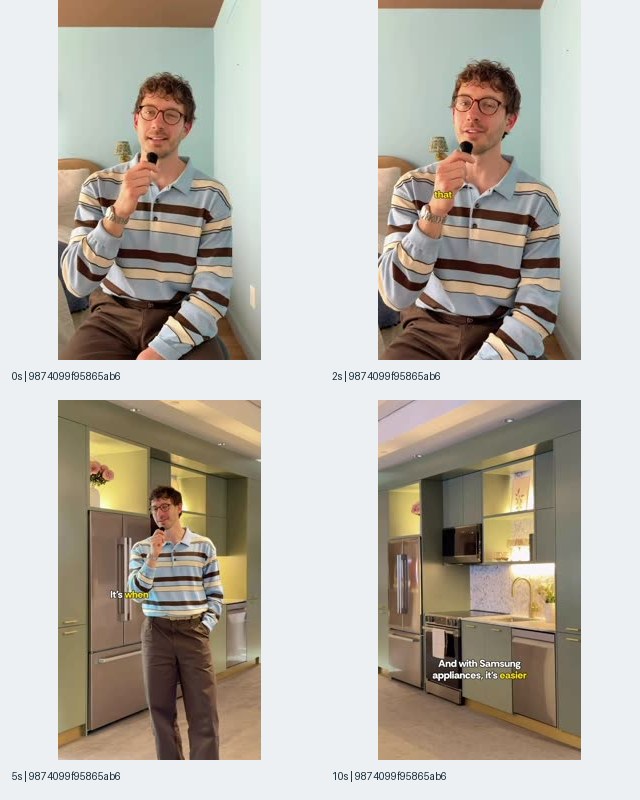
Figure 1. Contact sheet from the Samsung-associated record beginning 9874099f, collected in the 2026-09-17 source package. Only the labeled timestamps are observed. The sheet does not establish the full script, continuous action, or campaign performance.
The accompanying record copy discusses appliance integration with kitchen design, including refrigerator clearance and the microwave's front shape. Those are advertising statements in the source text. The sampled images show appliances within cabinetry, but they do not measure clearance or verify the claimed design benefits. A brief should preserve that difference between appliances shown within cabinetry and a proven fit claim.
The structural hypothesis is that a presenter can introduce a design question before the product environment supplies context. To test that idea with your own product, make the question explicit: does the shopper need help imagining the appliance in a finished kitchen, or understanding a particular installation constraint? Those are related but different promises.
A carousel adaptation might begin with a wide installation view, then move to the feature that addresses the constraint, then to the verified dimensions or installation conditions. A video adaptation could let a presenter introduce the same question and demonstrate the relevant feature. The two versions should use the same approved claim and the same destination.
Do not assume the original video's seated introduction is the best opening for your product. It may depend on the speaker's context, words, or audience familiarity, none of which is established by the contact sheet. The transferable idea is the relationship between person, problem, and environment. Your production should supply its own speaker, language, and evidence.
Example 2: Finished Food Appears Before Preparation Details
The second Samsung-associated contact sheet places finished dishes at the earliest sampled timestamps and preparation details later. The 0-second frame shows pasta, and the 2-second frame shows another plated meal. At 5 seconds, a pan sits on a stovetop; at 10 seconds, hands reach toward eggs in a carton. This supports an observation about sampled information order: food outcomes appear before the later preparation images.
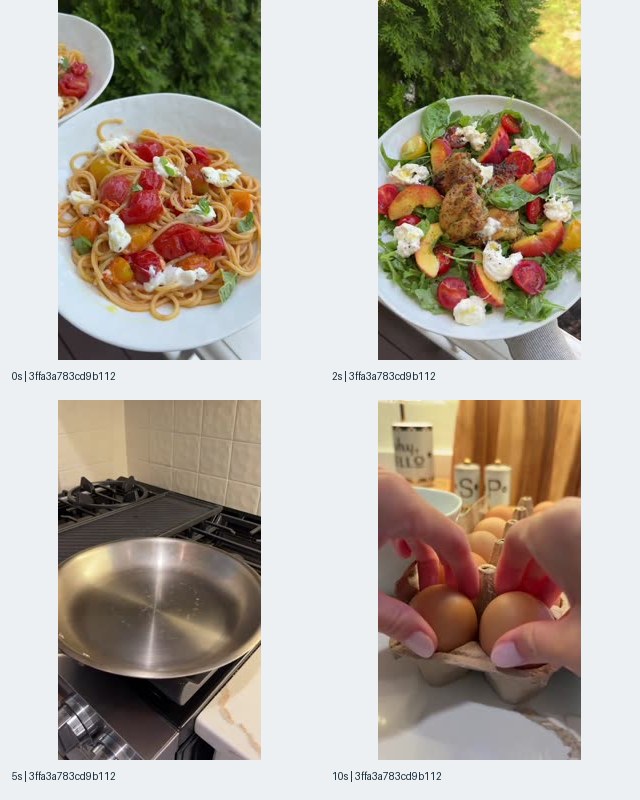
Figure 2. Contact sheet from the Samsung-associated record beginning 3ffa3a78. The source copy describes a day of eating and kitchen appliances. The sampled frames show dishes and preparation objects; they do not verify an appliance's operating performance or reveal the complete video.
This differs from the first example's presenter introduction. Here, the visible opening offers a food outcome before the sampled preparation context. A reasonable hypothesis is that outcome imagery can make a routine feel relevant before a product explanation arrives. That remains a hypothesis because the package contains no attention, comprehension, click, or purchase measurements.
The production question is whether the finished food makes the advertised product easier to understand. A dish can communicate appetite and occasion while leaving the appliance entirely unclear. If your product's role is essential to the promise, the sequence needs a bridge: which action did the product enable, and what visible evidence explains that contribution?
For a carousel, that bridge could be a card showing the product performing the relevant task, followed by a detail that makes the task understandable. For video, it could be a continuous shot of the action with a concise explanation. The original contact sheet does not establish that either bridge exists later in the source video, so this is a recommendation for a new brief.
Keep the outcome credible. A meal image should not become evidence that an appliance caused a particular cooking result unless that result has been demonstrated under appropriate conditions. Attractive presentation and verified function are different kinds of evidence. A creative team can use both, but should identify which one each shot provides.
Example 3: The Aries Mug Makes the Design the Subject
The purple Aries mug illustrates a product whose visible design can carry the opening message without an unfolding action. The mug fills much of the image, its handle and rim remain visible, and the white lettering and constellation motif contrast with the purple surface. A viewer can inspect the decorative treatment in a single still.
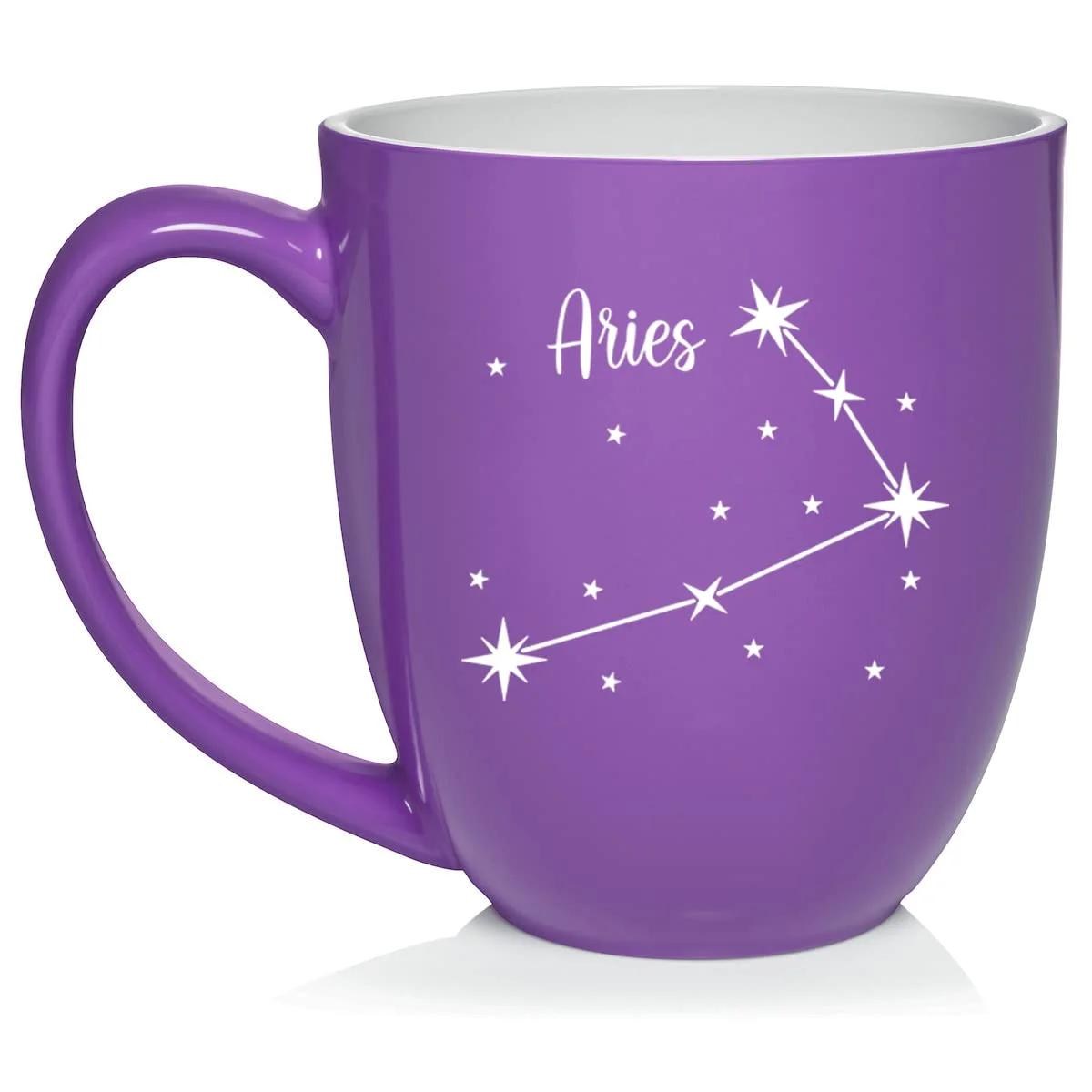
Figure 3. Static image attached to the record beginning 466e9bff, whose reported title mentions Amazon kitchen and dining needs. No verified product association or delivered carousel order is supplied for this record.
The image supports recognition of color, shape, and printed decoration. It does not establish capacity, dishwasher suitability, print durability, exact material, or current availability. Those missing facts determine what a subsequent card should contribute if the team were building an original sequence for a similar product.
A useful carousel hypothesis is that a design-led opening followed by verified practical details could help shoppers decide whether the object suits a gift or personal purchase. The follow-up cards should answer actual buying questions rather than repeat the same mug at slightly different angles. A view of the opposite side might matter if the design wraps around; a verified scale reference might matter if size is ambiguous.
A video version needs a reason for motion. A rotation could reveal the design's coverage, and a hand holding the mug could communicate handling context. Simply animating the static image would create a moving asset without necessarily adding information. That may still be a deliberate aesthetic choice, but the brief should not mistake it for product demonstration.
The comparison can be made concrete: keep the same mug, the same design promise, and the same product page, then compare a detail sequence with a short handling demonstration. Evaluate whether shoppers understand the product and proceed to the intended action. The source image provides the inspection problem; your own experiment supplies the result.
Example 4: The Zelda Mug Combines Product, Packaging, and Claims
The Zelda-themed mug image shows how a still can combine several messages in one composition. The foreground mug carries pixel-style artwork and a visible slogan. Packaging sits behind it, and a separate graphic says the artwork is officially licensed. Other packaging text presents product specifications and durability-related claims. These elements are visible advertising content, not independently verified facts about the item.
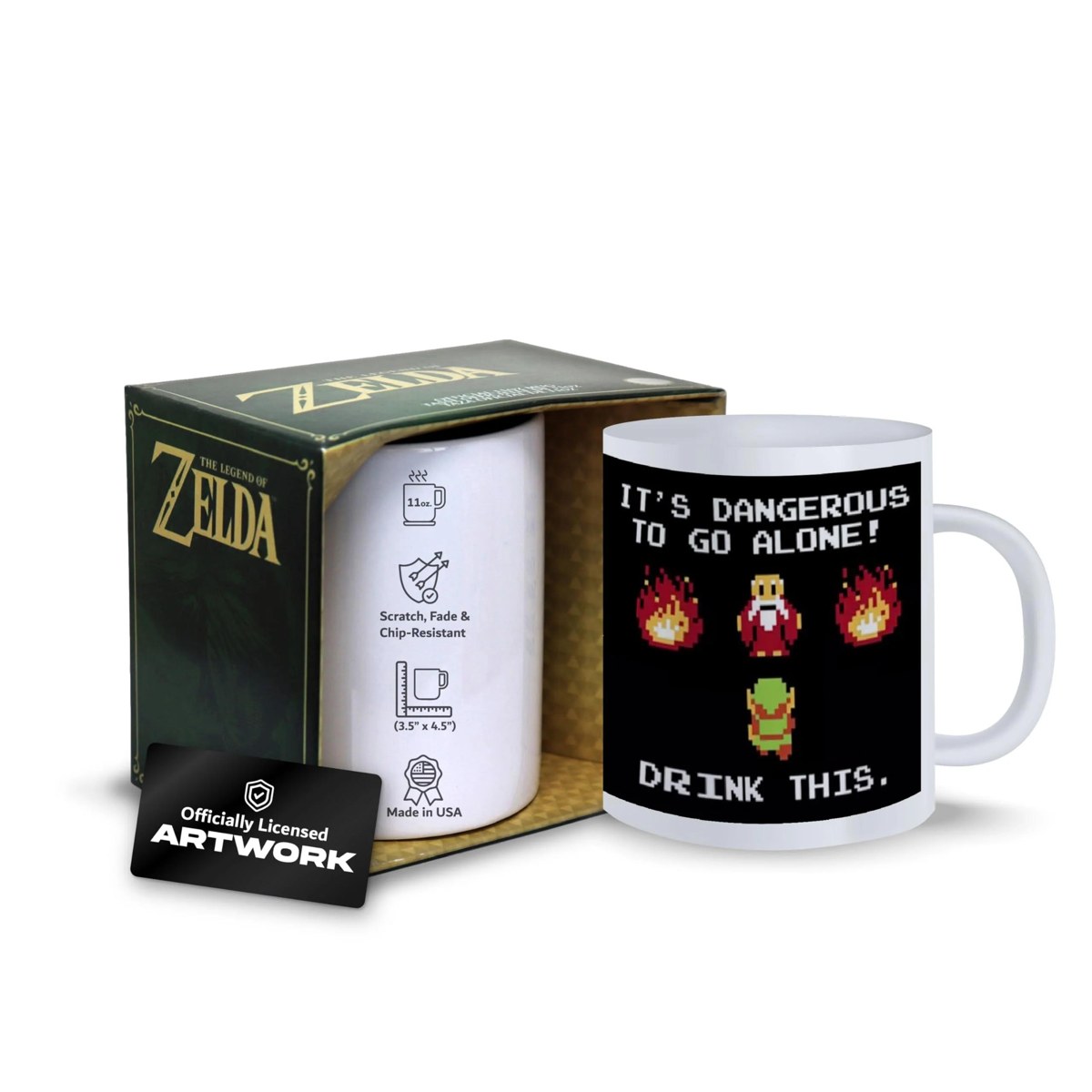
Figure 4. Static image from the record beginning 3bc4bffc, reported under the Amazon kitchen-and-dining title. Packaging and licensing language are visible claims within the image. The source package does not independently validate those claims or establish a TikTok carousel placement.
The structural lesson is information hierarchy. At a large viewing size, the viewer can inspect the mug, box, slogan, and small specification panel. In a mobile advertising preview, those elements compete for attention. A carousel could separate product recognition, packaging context, and verified specifications into distinct cards. A video could reveal the box and mug sequentially, but would need to hold any essential text long enough to read.
The hypothesis should name the intended improvement. “Separate packaging from specifications so shoppers can understand what arrives” is testable. “Make a more premium carousel” is too vague to guide production or interpretation. The former identifies a comprehension problem; the latter invites subjective judgments about style.
This example also shows why source copy should never be copied into a new brief as established truth. If your own product uses a license, specification, or durability statement, obtain the relevant confirmation before writing it into the ad. The fact that a competitor image contains a badge does not supply support for your claim.
For a matched pair, use your own product and verified information. Keep packaging inclusion and the gift proposition consistent across versions. If the video includes an unboxing but the carousel omits packaging entirely, you are changing the amount of purchase information as well as the format. That can be a useful business test, provided the report describes it accurately.
Inspect Related Creatives Without Losing the Source Context
A useful research search produces questions and references that remain attached to their sources. Open the AdMapix kitchen creative search to inspect relevant indexed creatives, then verify the available country, date, source, and media information before using a result in a brief. A live search is a new observation, so do not expect it to reproduce this frozen package automatically.
For each candidate, record why it belongs in the comparison. The Aries mug might be relevant to decorative detail; the boxed mug might be relevant to packaging explanation. They do not need to share an advertiser to inform the same creative question. They do need separate attribution notes so the research folder does not gradually turn unrelated images into one supposed campaign.
Save the unresolved fields alongside the useful ones. An unknown card order is still unknown after the image has been placed in a presentation. An empty product association does not become verified because the title mentions a familiar retailer. Making those limits visible at collection time prevents later briefing errors.
Example 5: A Printer Shelf Shows Function Through Its Contents
The printer-shelf image communicates a storage use case through the objects placed on it. A printer and calculator occupy the upper surface, while folders, boxes, and books fill the lower areas. The shelf structure remains visible, allowing a viewer to relate compartments to their apparent uses. This is a static demonstration of arrangement, although it is not a load test or a measurement of usable space.
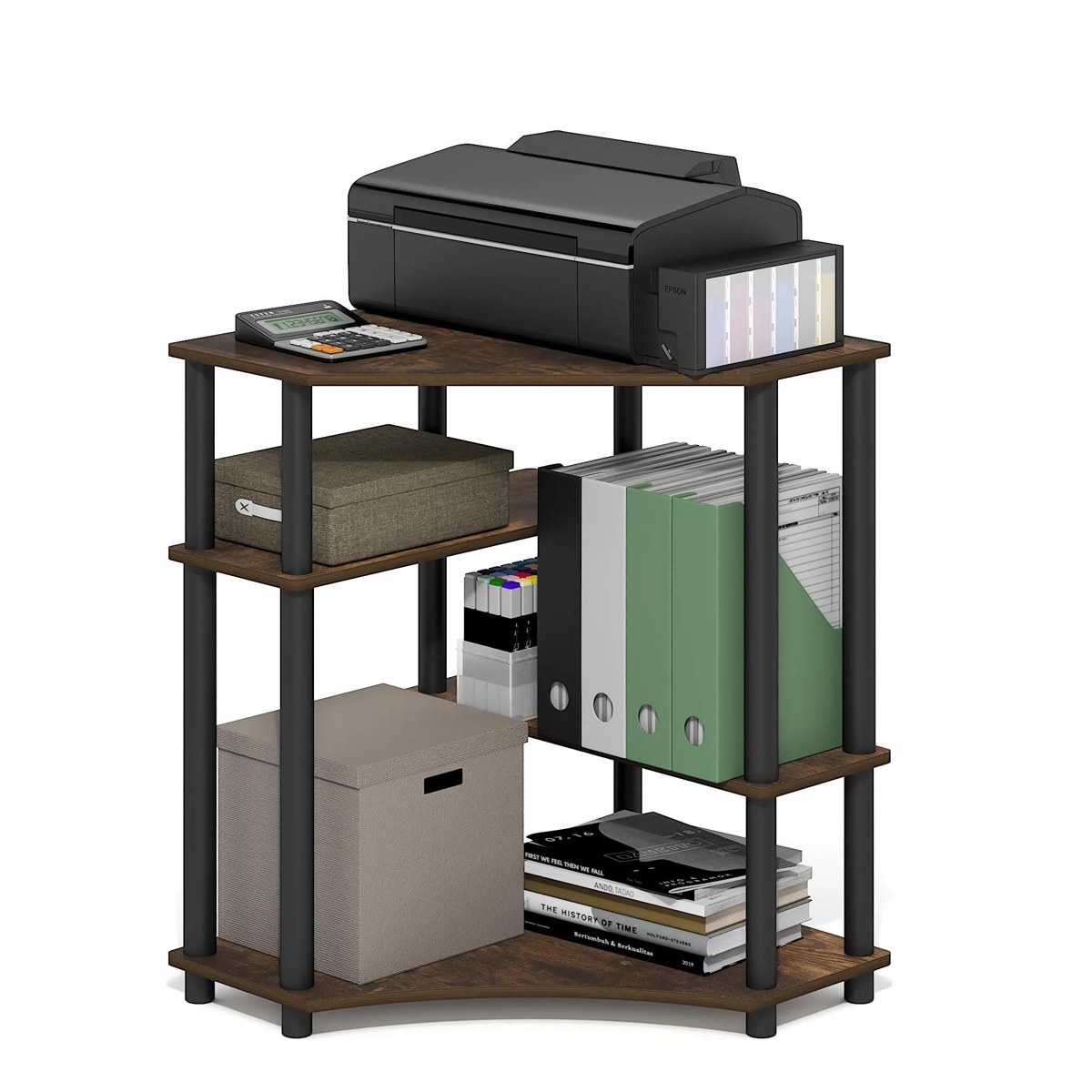
Figure 5. Static image from the record beginning a5595998, titled Shop Amazon For Your Kitchen Furniture Needs! The visible office-storage scene also illustrates why a kitchen keyword match is not a guarantee of close category relevance.
This result is particularly useful for understanding retrieval noise. The title supplies a kitchen-furniture context, but the visible arrangement centers on office equipment and documents. The right response is to preserve both observations. Do not rewrite the image as a kitchen appliance stand merely to fit the query, and do not infer that the mismatch explains campaign performance.
A new carousel brief for comparable storage furniture could separate the empty structure, a verified dimension diagram, and a furnished use case. That gives shoppers a way to distinguish the product itself from the objects used to illustrate it. A video could demonstrate placing an appropriate item on the surface or moving between storage zones, with claims limited to what has actually been verified.
The central objection is likely to be fit, but that is a hypothesis to confirm through customer questions or owned research. The image does not establish whether any particular printer fits safely. For production, use the actual unit, measure it, and identify whether styling objects are included. A visually plausible arrangement is not a substitute for those details.
A useful test might compare an isolated product opening with the same product shown in use. That is an opening-context experiment within a format. Run it separately from the carousel-versus-video comparison if you want to understand the contribution of context itself.
Example 6: The Garden Workbench Contains Several Information Zones
The garden workbench image presents a large amount of functional information in a single scene. Upper cubbies contain packets, plants, and books; the work surface holds gardening objects; lower storage includes open doors, drawers, pots, and bags. Side-mounted items and visible wheels add further details. The viewer has many places to look, making this a useful example of information density.
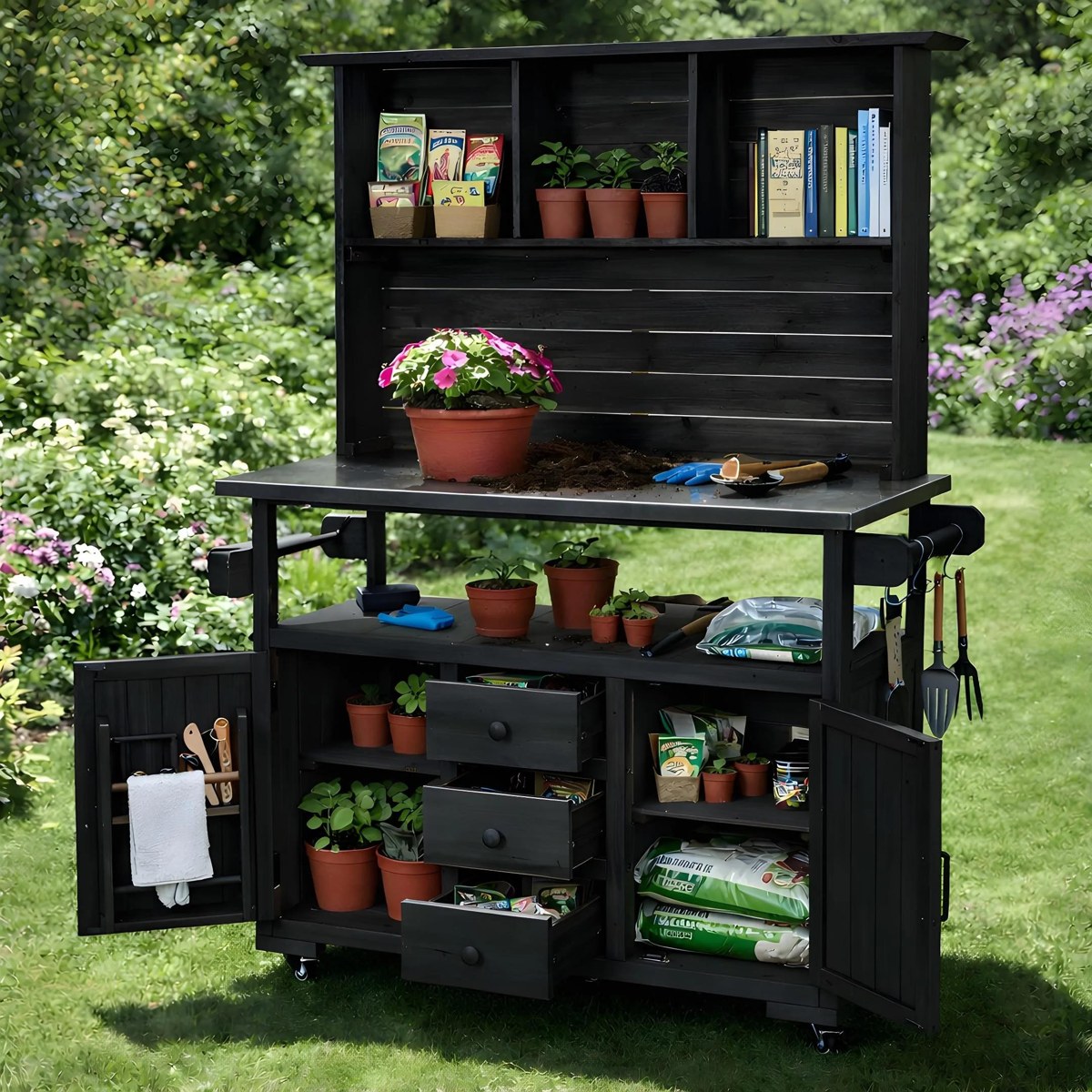
Figure 6. Static image attached to the record beginning 8ad268d7, reported under the kitchen-furniture shopping title. The pictured setting is a garden. No delivered card sequence, weather-resistance test, or storage-capacity measurement is supplied.
A carousel could give each relevant zone its own explanation. The first card might establish the whole object, followed by close views of the work surface, accessible storage, and verified mobility features. A video could direct attention through a walkthrough. The decision depends on whether the shopper mainly needs to inspect several independent details or understand how those details work together during a task.
The visible wheels do not establish how easily the unit moves, whether they lock, or what load they support. The outdoor setting does not establish weather resistance. The open drawers show a depicted state, not a tested opening mechanism. These distinctions prevent creative analysis from silently becoming a product review.
For a new brief, identify the claim attached to each detail before commissioning the shot. If the claim is “keeps tools within reach,” show the relevant arrangement and action. If the claim is a material or load specification, obtain separate support. A close-up can clarify a feature's location but cannot validate every statement about that feature.
The hypothesis worth testing is whether guided segmentation makes a complex object easier to understand. The carousel and video can both implement that idea. A fair comparison would preserve the same featured zones and the same verified information, allowing the format to change how the explanation is encountered.
Example 7: The Kitchen Island Connects Storage With Room Context
The kitchen-island image combines a wide room view with visible storage and a prepared tabletop. Plates, jars, bottles, and baskets populate the shelves, while food, fruit, greenery, and candlesticks create a hosting context above. The image makes the furniture's relationship to the kitchen easy to inspect, but it does not provide exact dimensions or prove how much working clearance remains around it.
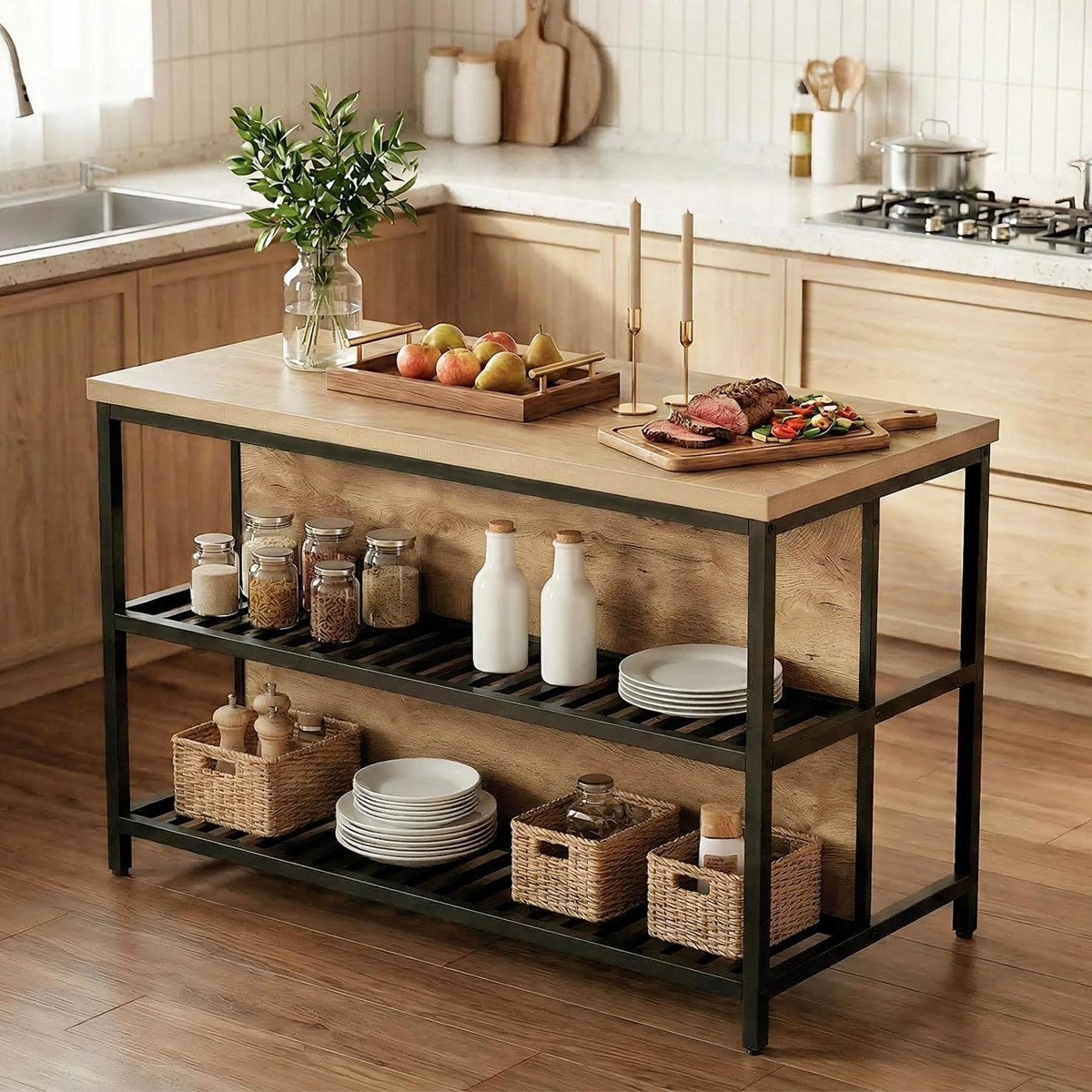
Figure 7. Static image from the record beginning d32d7d11, reported under the kitchen-furniture shopping title. The room scene supports analysis of context and visible organization, not installation dimensions, included accessories, or measured utility.
This composition gives a carousel a natural opening: establish the whole object in a relevant room, then answer the practical questions the room view raises. Where does it fit? Which areas provide storage? What is included in the purchase? Which surfaces or materials require explanation? The source image cannot answer all of these, but it shows why they belong in the brief.
A video could demonstrate a person moving between preparation and storage. That would add information if the interaction is central to the promise. A slow pan over the same arranged scene would mainly change presentation. Neither treatment is automatically wrong; the producer should understand whether the assignment is demonstration or atmosphere.
For comparison, keep staging from becoming a hidden variable. If the carousel uses an empty island and the video uses a decorated kitchen with prepared food, the experiment includes different context and emotional cues. You might choose that broader test deliberately, but you cannot interpret the outcome as a clean effect of motion.
A narrower initial brief could use the same room, product, styling, and verified specification content. The carousel would distribute wide and detail views across cards; the video would connect them through a guided sequence. The result could then inform whether shoppers benefit more from inspection or from the guided presentation under those test conditions.
Example 8: The White Storage Table Prioritizes the Product Silhouette
The white storage-table image isolates the furniture against a plain background, making its outline and contrasting top prominent. Drawers, turned legs, and lower shelves are visible without room decoration competing for attention. This differs from the kitchen-island scene because the product itself supplies nearly all the visual information.
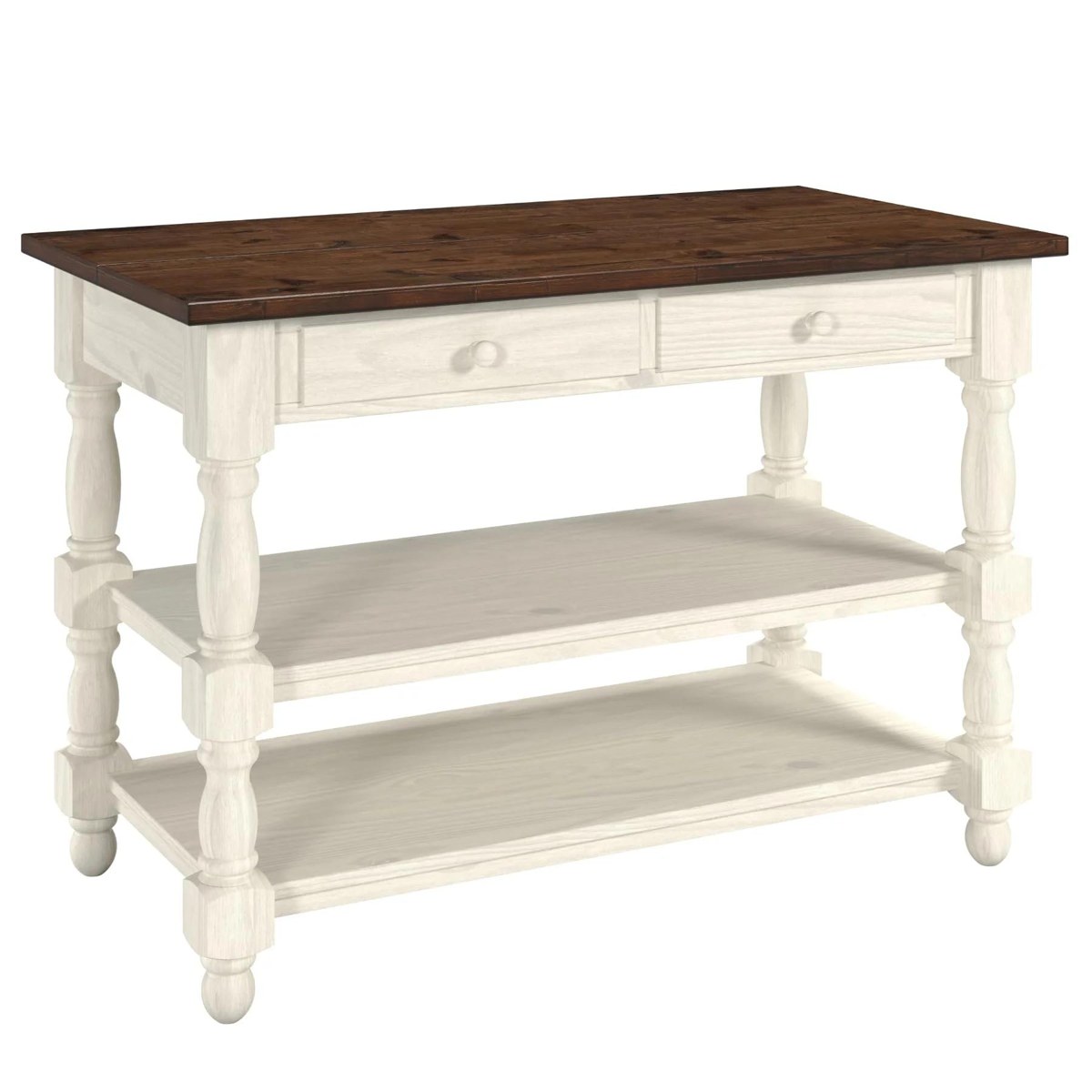
Figure 8. Static image from the record beginning 651bae5f, reported under the kitchen-furniture shopping title. The image shows product appearance and visible storage areas. It does not verify materials, dimensions, assembly requirements, or delivered carousel position.
An isolated product image can be useful when the shopper's first question is what the item looks like. Its limitation is that scale and room fit remain unresolved. A carousel could retain this image's clarity while adding a verified scale reference, storage detail, and room context. A video could show the same furniture from additional angles or demonstrate a drawer, provided the actual mechanism is available to film.
Do not assume the white areas are a particular material or finish from appearance alone. Similarly, a wood-like surface is a visible design characteristic, not proof of solid-wood construction. Advertising briefs should keep appearance language separate from specification language until the merchant confirms the latter.
The comparison with Figure 7 supplies a useful creative question, but not a matched product test. The two images depict different furniture. Any apparent difference in appeal could come from the object, room, styling, lighting, or composition. To test isolated versus contextual presentation, photograph your own product both ways while keeping the other relevant conditions stable.
Across the static examples, the practical lesson is consistent: identify what the image makes inspectable, then list what remains unknown. That list determines the next card or scene. A sequence becomes purposeful when every addition resolves a buying question rather than merely adding another attractive view.
Card Order and Scene Order Require Different Planning
A carousel sequence needs a reason to continue, while a video sequence needs a reason to keep watching. Both should build an argument, but their transitions operate differently. A card can hold a specification for inspection; a scene must allocate enough time to communicate it. A card can be revisited where the placement allows; a video may require the viewer to wait, replay, or use available controls.
Start with an information outline that does not mention either format. For a storage product, it might read: show the object, establish room fit, explain the storage arrangement, clarify included items, and invite the shopper to inspect the verified dimensions. That outline describes the decision path. The format treatment describes how to present it.
Next, test the dependency between adjacent messages. If a later card says “this solves it,” the viewer must remember what “it” refers to. Replace ambiguous references with a concise product or problem cue. In video, make sure a spoken explanation does not refer to a feature that disappeared several edits earlier. The important information should be visible when the claim needs it.
Avoid distributing essential qualifications so widely that the main claim becomes misleading in isolation. If a benefit applies only under a particular condition, the relevant condition should remain associated with the benefit. A later disclaimer should not be asked to repair an opening that creates the wrong understanding.
Then examine the final transition. The action request should continue the question the sequence has raised. A dimension-focused furniture ad could invite the shopper to check fit. A design-focused mug ad could invite inspection of the design. A generic “learn more” may be available as an interface label, but the creative can still explain what useful information awaits.
Finally, preserve the planned order in your production notes while distinguishing it from observed source order. A source record containing several images does not establish their delivered sequence. Your proposed order is an original editorial decision and should be labeled that way in the research brief.
Decide Whether Motion Actually Adds Evidence
Motion adds useful evidence when the relationship between states matters. Opening a door, reaching a control, placing an item into a compartment, or completing a preparation step can be easier to understand as an action than as disconnected stills. The creative decision is whether that action answers the buyer's question, not whether a moving image looks more expensive.
Use a simple counterfactual: if the viewer saw only the beginning and ending states, what would remain uncertain? For a drawer, the missing information might be the opening motion or available access. For a printed mug, a rotation might reveal design coverage. For a food image, the transition between raw ingredients and a finished dish may still fail to explain the advertised appliance's contribution.
A carousel can show successive states, but it should not imply continuity that the evidence does not establish. A before-and-after presentation needs a credible relationship between the images. Likewise, a video edit can juxtapose states without documenting the actual process. Movement alone does not make a demonstration reliable.
When producing original footage, specify the action that must remain visible without an ambiguous cut. If the claim concerns a mechanism, frame the mechanism. If it concerns ease of access, show the relevant interaction. If a product specification requires measurement, keep the measurement source separate from the aesthetic demonstration.
The supplied contact sheets do not let us perform this continuity review on the source videos. Their timestamps identify snapshots, not complete action sequences. They are useful for planning what to inspect next, but cannot establish the quality of an unseen demonstration. Record that limitation rather than filling the gaps with an assumed narrative.
Treat Duration as a Production Constraint, Not a Winner Signal
The recorded video durations describe files, not recommended TikTok lengths. The package reports 43 seconds for the presenter-led Samsung-associated record, 60 seconds for the food-related Samsung-associated record, and 6 seconds for the additional cereal-related record. Only the first two have illustrated contact sheets here, and neither sheet covers the full reported duration.
Choose the length of a new video around the information needed to answer the buyer's question. A longer explanation may be justified by a complex demonstration, but extra time should have a defined role. A short edit can communicate a recognizable product quickly while leaving important objections unanswered. Neither observation establishes which version will produce better business results.
For editing, mark the point at which each necessary message becomes understandable. Distinguish product recognition from feature explanation and from proof. A product can appear early without its relevance becoming clear. Conversely, an outcome can appear early while the actual item for sale remains ambiguous.
For a carousel adaptation, do not equate a card with an arbitrary number of seconds. Viewers may inspect cards at different speeds, and a later card may never be reached. Each unit should be clear enough to understand locally while contributing to the broader sequence.
If the team wants to test length, keep that experiment distinct from the initial format comparison where practical. A short video, a long video, and a carousel introduce different information exposure opportunities. They can be useful alternatives in a business test, but the report should explain what was held constant and what changed.
Make Text, Captions, and Mobile Cropping Part of the Brief
Readable text and deliberate cropping determine whether the intended evidence reaches the viewer. A mug slogan, a furniture detail, or a product qualification can disappear when a large source image is adapted to a mobile placement. Review the final execution in the intended preview rather than assuming that a readable source file will remain readable after delivery.
For cards, identify the main message and the detail it relies on. If the message concerns storage, the crop must preserve the relevant compartment. If it concerns decoration, the design should remain legible. Avoid adding a large headline that covers the very feature the card is supposed to explain.
For video, align captions with the action or claim they describe. Review an audio-free version to see whether the essential product relationship remains understandable, then review the audio track for claims that the visual edit fails to support. The source contact sheets contain no complete audio evidence, so this is production advice for a future asset rather than a statement about the original videos.
Distinguish captions from decorative text. Captions communicate spoken content; headline overlays direct attention; qualifications limit claims. They can coexist, but they should not compete at the same visual priority. A dense frame may be technically readable when paused and still be difficult to process during playback.
Localization needs the same attention. Longer translated phrases can obscure a product or require more reading time. Keep the underlying promise consistent while allowing the layout and edit to change for comprehension. Do not force a translated sentence into the exact space allocated to the original if that makes the claim unclear.
Before launch, check the verified placement's preview, interface overlays, and current requirements. This article does not supply current TikTok safe-zone dimensions or file specifications. The practical deliverable is a tested preview in your own eligible setup, with important product details and claim qualifications still visible.
Verify TikTok Eligibility Before Committing Production
The frozen sample does not establish current TikTok carousel eligibility, specifications, or account availability. A structural brief can be prepared from the evidence here, but a launch plan needs a separate check in the intended account and campaign setup. Treat platform availability as a production dependency rather than guessing from a collection of product images.
Confirm the format offered for the intended market, objective, destination, and placement. Record the available image or video requirements, how the preview behaves, and which reporting fields are actually exposed. If catalog connections, product selections, or account permissions are required by the setup you see, document them before asking the creative team for final exports.
The same principle applies to interactions. Do not promise a particular card-level destination, navigation behavior, music treatment, or engagement metric unless it is available in the verified configuration. A general description of carousel structure is not a substitute for checking the campaign interface.
If only one of the intended formats is available under the relevant conditions, a clean format experiment may not be possible. You can still use the other treatment for concept development or another eligible surface, but that becomes a different comparison. Write the limitation into the plan rather than changing the campaign conditions silently.
No official TikTok specification document or completed Ads Manager setup test is included in this source package. Accordingly, the article provides a creative workflow and verification questions, without asserting unverified platform limits or presenting a planned account check as completed work.
Build a Matched Carousel and Video Brief
A matched brief preserves the same buying question and supporting evidence while letting each format communicate naturally. Literal conversion is rarely enough: screenshots extracted from a video may rely on missing speech, and a slideshow of product cards may add no useful motion. Match the message inventory, then adapt the presentation.
Consider an original storage-furniture concept inspired by the inspection questions in Figures 5–8. The proposed promise is: understand how the unit organizes a particular space and whether it fits. This is a planning example, not an observed advertiser campaign or a completed test.
| Message job | Proposed carousel treatment | Proposed video treatment |
|---|---|---|
| Identify the item | Clear whole-product image | Whole-product opening shot |
| Establish use context | Product in the intended room | Product in the same room with a relevant interaction |
| Explain organization | Detail card identifying storage areas | Guided movement between the same storage areas |
| Answer fit concerns | Verified dimensions with a clear scale reference | The same verified dimensions paired with the product view |
| Clarify inclusion | Explicit statement of what is supplied | Equivalent spoken or visible clarification |
| Invite action | Inspect dimensions or product details | The same invitation and destination |
The matching requirement applies to evidence, not identical composition. A carousel can hold the dimension diagram on its own card. A video can give it a dedicated beat. Both should communicate the same measurement and condition, but their typography and pacing can differ to remain usable.
Write a production note for every claim. “Dimensions confirmed by the product team” is different from “appearance inferred from reference imagery.” If the actual product has not been measured, leave the dimension content unresolved. Do not borrow measurements or material statements from a visually similar competitor item.
Specify the assets the team must create: actual product views, relevant interactions, verified specifications, and approved copy. Then separate optional atmosphere from necessary evidence. Food, plants, or decorative objects may help establish a setting, but the brief should identify whether they are included or merely styling.
The video script should give the presenter or narrator a concrete task. Explain the buying question, demonstrate the relevant interaction, and point to the next useful information. The carousel copy should perform the same jobs across cards without relying on a voice track. For a deeper scripting structure, use the UGC video ad script template as a production companion.
Before approving the pair, compare the message inventory side by side. If one version offers a stronger discount, introduces extra proof, or omits an important qualification, decide whether to repair the difference or acknowledge a broader concept comparison. Either choice can be useful; ambiguity about the experiment is the problem.
Practical Workflow: Turn a Search Result Into a Testable Concept
A repeatable workflow keeps source observations, creative hypotheses, and measured outcomes separate while making each usable by the next person. The output should be a brief someone can produce and a test someone can interpret. A folder of images without source context leaves both jobs unfinished.
Step 1: Define the decision. State whether the team is choosing a format, an opening, a proof treatment, or a complete concept. “Make better kitchen ads” is too broad. “Compare inspection-led cards with a guided demonstration for the same verified furniture offer” gives the research a specific purpose.
Step 2: Capture the retrieval scope. Save the query, country, exact date bounds, collection date, sort order, and sample limit. For this article, that means the US kitchen query, 2026-08-19 to 2026-09-17, collected on 2026-09-17, with a bounded impression-descending retrieval. A later search should receive its own date and scope.
Step 3: Preserve identity and source uncertainty. Record the verified product association where available. Keep title text separate from verified entity identity. The Samsung-associated videos and the static records whose titles mention Amazon should not receive the same attribution treatment. A familiar name in copy does not establish the ad buyer.
Step 4: Separate records from files. Count the retrieval records and distinct media fingerprints independently. Preserve reuse relationships where they matter, but do not inflate asset counts by treating every record as a new production. For images, also remember that several files in one record do not establish a delivered carousel order.
Step 5: Write an observation without interpretation. For Figure 2, a defensible note is: finished dishes appear at the early sampled timestamps, with a pan and eggs visible later. It would be unsupported to write that the opening generated strong retention or that the appliance made cooking easier.
Step 6: Add a labeled hypothesis. Explain what the observed structure might help a shopper understand. For example: an outcome-led opening may establish relevance before the product explanation. Specify what would count against that idea, such as viewers recognizing the food but failing to identify the item for sale.
Step 7: Translate the hypothesis into original production. Use your own product, footage, copy, and verified claims. Identify the information that both formats must carry. Give the designer and editor freedom to solve presentation problems while keeping the core promise and evidence aligned.
Step 8: Verify the destination. The next page should answer the question raised by the ad. If the creative asks shoppers to check dimensions, those dimensions should be easy to find. If the creative centers on a design, the advertised variant should remain identifiable on arrival.
Step 9: Register the test and decision rule. Name the primary business event, the relevant attribution settings, the planned evaluation period, and the minimum evidence needed for a decision. Choose these from your own account conditions rather than borrowing a universal threshold from an unrelated advertiser.
Step 10: Store the result with its scope. Connect the final assets and account results to the original brief. A measured improvement for one product, offer, audience, and period should remain attached to those conditions. That makes the learning reusable without turning it into a blanket rule that one format always wins.
Design a Fair Experiment and Name Its Limits
A fair format experiment makes the alternatives comparable enough that the result answers the stated decision. It should preserve the product, offer, destination, audience logic, campaign objective, and measurement setup as closely as the eligible configuration allows. Where those conditions cannot be matched, document the difference before launch.
| Test component | What to align | Why it matters |
|---|---|---|
| Product and variant | Same item and available selection | Avoid testing different merchandise |
| Core promise | Same buying question | Avoid confusing format with message |
| Proof content | Equivalent verified information | Avoid giving one cell a stronger argument |
| Offer | Same commercial terms | Avoid discount-driven differences |
| Destination | Same page state and relevant variant | Avoid landing-page confounding |
| Audience logic | Comparable eligibility and exclusions | Reduce audience-composition differences |
| Objective and measurement | Same business event and attribution definitions | Keep the outcome interpretable |
| Evaluation period | Concurrent or otherwise explicitly comparable | Reduce timing effects |
| Production treatment | Similar care and completeness | Avoid comparing a finished concept with a placeholder |
Use a suitable experimental setup where available rather than assuming that two ordinary ads receive equivalent opportunities. Campaign optimization can allocate delivery unevenly, and separate ad groups can encounter different conditions. Equal planned budgets alone do not guarantee random exposure or identical audiences. Describe the test method you actually used.
Separate a format test from a concept-selection test. In a format test, the message and proof remain closely aligned. In a concept-selection test, each format can use its own strongest treatment for the business objective. The latter may be the practical decision a team needs, but its result applies to those complete executions rather than to format alone.
Write a decision rule before seeing results. Identify the outcome that would justify moving forward, the quality or cost conditions that could block that decision, and what would leave the result inconclusive. The rule should reflect your baseline event volume, uncertainty tolerance, and commercial requirements. This source package does not supply those account-specific inputs.
Avoid ending an experiment simply because one arm leads early. Small or immature result sets can change, and business outcomes may arrive after the initial click. Conversely, do not continue a broken test when tracking fails, inventory changes, or the destination becomes inconsistent. Record those issues and decide whether the affected period remains usable.
The creative testing framework is a relevant internal companion for organizing hypotheses and decision rules. The recommendation here is a future testing plan. No carousel-versus-video experiment was run for this article, and no performance result is implied by the source images.
Measure Business Outcomes and Use Engagement to Diagnose Them
Business outcomes should decide the experiment, while format-specific engagement should help explain it. A deep card interaction and a completed video are not equivalent events. They describe different viewer behaviors and may be defined differently in the available reporting. Compare them within their own meaning rather than forcing them into a common score.
Start with the campaign's intended result: a purchase, a qualified lead, or another clearly defined business event. Confirm that the event is recorded consistently across the test cells. Then examine the path leading to that event, using only metrics available in the actual account setup.
| Measurement layer | Possible owned-data observation | Interpretation question |
|---|---|---|
| Delivery | Reported impressions, reach, and spend | Did both cells receive usable exposure? |
| Attention | Available video-view or card-interaction measures | Where might the presentation lose attention? |
| Traffic | Destination clicks and landing-page visits | Did attention produce visits to the intended page? |
| Qualification | Relevant downstream actions | Did visitors understand and pursue the offer? |
| Business result | Purchases, qualified leads, or the chosen event | Did the creative support the actual objective? |
| Economics | Relevant revenue, margin, and measured costs | Is the result commercially useful? |
Specify denominators whenever you calculate a rate. Purchases per landing-page visit answer a different question from purchases per impression. A video-view rate uses a different population from a card-interaction rate. Changing the denominator can change the interpretation even when the numerator stays the same.
Use diagnostic patterns to generate follow-up questions. Strong video attention with weak qualified traffic may suggest that entertainment and product relevance are poorly connected. Card interaction followed by few page visits may indicate that the sequence satisfies curiosity without motivating the next step. These are hypotheses to investigate, not automatic diagnoses.
The competitor sample cannot populate this measurement table. Its modeled impression estimates are a different evidence layer from owned account delivery and conversion reporting. Keep those datasets separate in presentations so an audience does not mistake research ranking values for experimental outcomes.
Include Production Effort Without Assuming Static Is Cheaper
Production effort belongs in the decision, but this sample does not establish the cost of either format. A carousel requiring new photography, dimension graphics, localization, and claim verification can take substantial work. A video assembled from suitable owned footage may be simpler than expected. The reverse can also be true when a demonstration requires filming, talent, or a difficult location.
Record actual effort by task: product preparation, photography or filming, design, editing, copy, verification, localization, and revision. Separate reusable work from version-specific work. A verified specification diagram or a product shoot may support both formats, so charging its entire cost to one test cell would distort the comparison.
Also record maintenance requirements. A changed product variant may require replacing several cards. A revised claim may require rerecording speech or rebuilding captions. A new destination can make an old action request inaccurate. These are practical production considerations, not evidence that one format is inherently more scalable.
If the initial test identifies a promising execution, plan the next production batch around the unresolved question. That might mean improving the opening while preserving the proof sequence, or simplifying a crowded detail without changing the offer. Reusing a structure is useful when the team knows what it is preserving and why.
Do not infer production efficiency from the source record count. Repeated images or videos reveal reuse in the index, but they do not reveal the original production budget, staff time, revision history, or commercial return. Those inputs must come from your own operation.
Common Mistakes That Make the Comparison Misleading
Most misleading format comparisons begin with a small labeling or scope error that later becomes a confident conclusion. Fixing the label early is easier than repairing a report after the team has acted on it.
Calling every image bundle a carousel. Multiple attached images establish multiple files, not a verified advertising format or delivered card order. Preserve the distinction until the placement is checked.
Calling every result a TikTok ad. A TikTok-oriented retrieval filter is useful context, but it does not replace record-level source verification. Use the strongest attribution the evidence supports and leave the rest unresolved.
Treating retailer wording as advertiser identity. The static records illustrated here mention Amazon in their titles while lacking populated product associations. That wording should remain reported copy, not become a verified buyer or merchant relationship.
Describing the opening inaccurately. Figure 1 begins with a seated presenter in the sampled early frames; the kitchen view appears later in the sheet. Figure 2 shows dishes, a pan, and eggs, without proving an appliance's operation. Accurate visual description is the foundation of useful analysis.
Turning file counts into market shares. The sample contains 29 records, 3 distinct videos, and 94 distinct image fingerprints. These counts use different units and come from a bounded keyword retrieval. They cannot establish the platform's carousel adoption rate.
Treating modeled impressions as a performance test. The window-scoped estimates do not provide spend, conversion, or profitability. They also do not remove differences in product, audience, objective, or placement.
Dividing window estimates by asset age. First-observed dates and measurement-window estimates answer different questions. Combining them into an apparent daily rate can manufacture a misleading relationship. No such calculation is needed for this structural comparison.
Giving one format extra proof. A video with a real demonstration and a carousel containing only decorative photos compare more than format. Either align the evidence or report the broader concept test honestly.
Forgetting the destination. If the ad promises a fit check, the destination must make fit information accessible. A mismatch can obscure whether the creative helped or whether the page failed to continue the task.
Calling every inconclusive result a loss. An experiment with inadequate events, inconsistent tracking, or changed inventory may not answer the question. Preserve the uncertainty and identify what a usable follow-up would require.
When to Brief a Carousel, Video, or Both
Brief a carousel when independent details need inspection, video when a relevant action needs explanation, and both when the same promise can reasonably use either route. This is a production decision framework, not a performance ranking. The right starting point depends on the product evidence you can actually create.
A carousel candidate should have a clear opening and a sequence of nonredundant information units. The mug examples suggest design inspection; the furniture examples suggest detail, fit, and inclusion questions. If the team cannot identify what each additional card contributes, it may need a simpler concept or better product information before adding more cards.
A video candidate should contain a meaningful temporal relationship. A presenter can guide an explanation, and a product interaction can make a mechanism understandable. The team should be able to state what motion contributes beyond the still views. If the answer is only atmosphere, treat that as the creative hypothesis rather than calling it functional proof.
A paired brief is useful when the business question remains open and both treatments are feasible under the verified setup. Keep the same message inventory, then allow each format to use appropriate composition and pacing. Do not force artificial sameness that makes one execution unusable merely to make the test appear tidy.
If the evidence needed for the promise is missing, resolve that before choosing a format. A polished carousel cannot establish an unknown load limit, and a polished video cannot verify an unsupported durability claim. The production decision should follow the evidence requirement.
Where AdMapix Fits and What the Handoff Should Contain
AdMapix is an advertising-intelligence product for researching indexed creative evidence. In this workflow, its role is to help you inspect relevant records and develop source-linked hypotheses. AdMapix is our product; its research role should remain separate from the delivery and business reporting used to judge your own campaigns.
The useful handoff contains the source observation, its identity and placement limits, the buying question, a labeled hypothesis, and the original production brief. Keep measured account results in a separate part of the learning record. That distinction lets the team see what came from public research and what it established through its own work.
Use the workflow when the bottleneck is finding comparable references or explaining why an observed structure is worth testing. Use your campaign reporting, commerce data, or lead-quality systems when the question concerns your actual results. This sample does not establish current refresh guarantees, account-specific TikTok coverage, or a replacement for owned analytics.
Next action: inspect my kitchen creative references in the AdMapix search workflow, then choose a matched brief to produce. Check the live AdMapix pricing page for current access and commercial terms. Prices and credit allocations can change, so they are not reproduced here, and no paid-plan trial is promised.
FAQ
These answers address the practical format decisions raised by the sample while preserving its limits. They are guidance for research and future production, rather than claims from a completed advertising experiment.
Are TikTok carousel ads better than video ads?
Neither format is universally better. A carousel can organize inspectable details, while video can explain an action over time. The right comparison holds the product promise and commercial conditions stable and measures a relevant business outcome. This article's public source sample contains creative references, not the controlled delivery and conversion evidence needed to identify a performance winner.
How many cards should a TikTok carousel use?
First verify the current requirements in your intended account and campaign setup. Within those requirements, give every card a distinct job and remove repetition. A cover, a useful detail, a verified objection answer, and an action request may form a proposed outline, but this article does not establish a universal card count or a current TikTok specification.
What should the first carousel card show?
The opening card should make the product or buying question understandable and give the viewer a reason to continue. For a decorative mug, that could be the design. For furniture, it could be the overall object in a relevant setting. Choose the opening around the intended promise, then test alternatives without changing the rest of the argument unnecessarily.
What should happen at the start of a video ad?
The opening should connect attention to the product's relevance. A presenter, outcome image, or product interaction can serve that purpose, but none is automatically effective. Check whether the early visual and text make the intended item and question understandable. The supplied contact sheets show sampled openings; they do not provide measured retention or a universal timing benchmark.
Are the static images here verified TikTok carousel cards?
No. They are static images attached to records in the frozen kitchen-search sample. Their titles mention Amazon, but the supplied product associations are unpopulated, and a delivered carousel sequence is not established. The article uses them to explain product inspection and information structure without assigning verified TikTok placement, advertiser identity, or campaign performance.
Do three distinct videos mean the advertiser ran only three ads?
No. The three video fingerprints describe distinct video files in this bounded keyword sample, which contains records from different contexts. They do not describe one advertiser's complete output. Record counts, file counts, campaign counts, and concept counts are different units. The sample cannot establish how many video ads existed outside the collected results.
Can modeled impressions tell me which format to choose?
Modeled impressions can describe the source's window-scoped estimates, but they do not establish conversion, spend, or profitability. They also do not create comparable test groups. Use public creative evidence to form the hypothesis, then evaluate eligible executions with your own account data and a predefined business outcome. Keep those evidence layers separate in the report.
Can AdMapix replace TikTok campaign reporting?
AdMapix serves the creative-research part of this workflow. Your campaign account and connected business systems provide the relevant first-party delivery and outcome reporting. Use indexed references to develop a brief, then use consistent event definitions and actual results to evaluate it. Check live product information for current access rather than assuming capabilities from an older article.
Key Takeaways
A useful format decision follows the buying question, the available product evidence, and a clearly scoped test.
- Separate inspectable details from actions that need motion before choosing a format.
- Preserve source identity and placement uncertainty; image bundles do not automatically establish TikTok carousels.
- The US
kitchensample covers 2026-08-19 to 2026-09-17 and contains 29 records, 3 distinct video fingerprints, 94 distinct image fingerprints, and no playable fingerprints. - Match the promise, proof, offer, and destination in a format test, then use owned business outcomes to judge it.
- Keep observations, hypotheses, and measured results distinct so the next production brief inherits useful evidence rather than unsupported certainty.
Sources
The factual sample claims come from the dated frozen package; the linked AdMapix pages provide methodology, workflow context, and current commercial information. No external tool test, complete source-video viewing, or official TikTok specification verification was performed for this article.
- Frozen advertising source package — collected 2026-09-17: Public, reproducible evidence snapshot. Scope: US
kitchenquery, 2026-08-19 to 2026-09-17, bounded collection, record associations, media fingerprints, timestamped previews, request batches, and checksums. - AdMapix methodology — product reference supplied with the 2026-09-17 sample; current product facts reviewed 2026-08-13: Data methodology and limitations. Relevant to counting units, modeled metrics, and source-coverage boundaries.
- AdMapix search workflow — research entry point accompanying the 2026-09-17 observation: Inspect indexed kitchen creatives. A live query may differ from the frozen sample and requires its own date and scope.
- TikTok research topic parent — published destination supplied for this draft: TikTok Ads Research in 2026. Additional workflow context; not evidence that the illustrated stills are verified TikTok carousel cards.
- Production and experiment companions — published destinations supplied for this draft: UGC video ad script template and creative testing framework. Resources for preparing original scripts and future tests, not records of tests conducted here.
- AdMapix commercial terms — live reference, with supplied product facts reviewed 2026-08-13: Current pricing and access. Consult the live page for current terms; this article does not freeze plan prices or credit allocations.
Turn these observations into your next creative study
Open the creative library and select samples for your market, network and research question.
Related Articles
UGC Video Ads: Script Template for Hook, Demo, Proof and CTA
A complete UGC video ad script template for skincare teams, covering hook, demonstration, proof, CTA, creator direction, testing, and evidence limits.
Ad Optimization Best Practices: The 2026 Performance Playbook
The definitive 2026 guide to ad optimization best practices — a high-output creative production system, statistically honest A/B testing, budget governance and pacing rules, the metrics that matter, structured account hygiene, an optimization cadence, and an FAQ that settles the hard questions performance teams keep arguing about.
Similarweb Alternative for Ad Intelligence in 2026: Market Data or Creative Evidence?
A 2026 decision framework for choosing a Similarweb alternative for ad intelligence — when traffic and market data wins, when creative-evidence tools like AdMapix win, how to run a fair head-to-head trial, and how to build a two-layer competitive stack.