
Oakever Games UA Playbook 2026: 4.8 Billion Impressions, 1,320 Videos, and the Title That Spends Like a Winner but Doesn't Convert Like One
A publisher-level teardown of Oakever Games across Meowdoku!, Amaze GO! and Tile Explorer in the US. Nearly 2,500 measured ad instances carry 4.83 billion impressions off 1,320 distinct video assets. Amaze GO! carries the most impressions of the three and converts at a fifth of its siblings' rate — and the ad data also captures a live app rename, from Arrows GO! to Amaze GO!, in progress.
Oakever Games is running three titles on the US charts out of what looks like a single creative factory. Across Meowdoku!, Amaze GO! and Tile Explorer - Triple Match, 2,497 measured ad instances account for 4,826,920,126 impressions built from 1,320 distinct video assets.
Meowdoku!, one of Oakever's titles, appears with a Japan creative in our AppLovin game ad examples.
The number that actually matters is the gap between them. Measured over an identical 30-day window, Meowdoku! and Tile Explorer both convert at about 1.2 downloads per thousand impressions, while Amaze GO! converts at 0.25 — despite carrying the largest impression volume of the three. Same publisher, same factory, same quarter, a 4.8x gap in download yield.
And buried in the Amaze GO! creative set is something you almost never get to watch in public data: a live app rename in progress. The first ad instance carrying the name "Amaze GO!" appeared on 2026-06-09. The last one still saying "Arrows GO!" launched on 2026-08-14. Both names are running, on the same app ID, right now.
Executive summary (TL;DR)
- One factory, three speeds. Meowdoku! delivers 1,786,574,888 impressions from 1,000 measured instances; Amaze GO! delivers 2,656,810,175 from 1,174; Tile Explorer delivers 383,535,063 from 323. Total measured: 4,826,920,126.
- The bigger spender is the smaller game. Amaze GO! carries 48.7% more impressions than Meowdoku! while sitting 116 places lower on the US download chart (rank 126 vs rank 10).
- Efficiency, measured properly. Over the same 30-day window, Meowdoku! returns 1.21 downloads per thousand impressions and Tile Explorer 1.12 — while Amaze GO!, the biggest spender, returns 0.25. A 4.8x gap that raw impression totals completely hide.
- A rename you can date. App ID
6758326278is listed on the App Store as Amaze GO!, but 300 of its 1,174 measured ad instances still carry "Arrows GO!" copy, including instances first seen as recently as 2026-08-14. The transition began 2026-06-09 and is roughly 78% complete by August volume. - Eight hooks versus thirty-seven. Meowdoku!'s entire fleet runs on 8 distinct ad-copy strings; Amaze GO! runs on 37. The winning title is the one that stopped experimenting with messaging.
- Playables are shared components. Meowdoku! attaches 37 distinct playable assets across 367 instances — roughly one playable serving ten placements' worth of creative. This is a component library, not a per-creative build.
- Watch the developer IDs. Oakever appears under two different publisher identifiers —
1604529155on iOS and961586492on Android — for the same three games. Grouping by publisher name alone would have merged them correctly by luck; grouping by ID naively would have split the portfolio in half.
All figures are AdMapix third-party estimates for the United States, pulled 2026-08-19. Sample definition and caveats are in the methodology section.
The publisher at a glance
| Meowdoku! | Amaze GO! | Tile Explorer | |
|---|---|---|---|
| US download rank | 10 | 126 | 246 |
| Monthly downloads | 2,158,898 | 668,165 | 430,959 |
| Download growth | -27.00% | -37.54% | -37.18% |
| iOS app ID | 6761760135 | 6758326278 | 6498883328 |
| Android bundle | com.oakever.meowdoku | com.oakever.arrows | — |
| Ad instances measured | 1,000 | 1,174 | 323 |
| Total impressions | 1,786,574,888 | 2,656,810,175 | 383,535,063 |
| Share of publisher total | 37.0% | 55.0% | 7.9% |
| Total placements | 2,333,070 | 1,159,740 | 900,777 |
| Impressions per placement | 766 | 2,291 | 426 |
| Distinct video assets | 461 | 674 | 185 |
| Distinct playable assets | 37 | 107 | 45 |
| Top single instance | 303,334,608 | 322,984,071 | 46,636,099 |
| Oldest instance first seen | 2026-05-21 | 2026-03-18 | 2025-04-05 |
| Campaign history (days observed) | 91 | 155 | 502 |
| Average days live | 26.7 | 45.4 | 122.0 |
| Longest-running instance | 91 days | 155 days | 502 days |
| Instances still live | 44.8% | 50.9% | 52.6% |
| Instances carrying a playable | 36.7% | 24.8% | 71.5% |
Three titles, three completely different shapes. Tile Explorer is an old, slow, playable-heavy account with assets that have been running for well over a year. Meowdoku! is a ninety-day blitz. Amaze GO! sits in between on age and above both on spend.
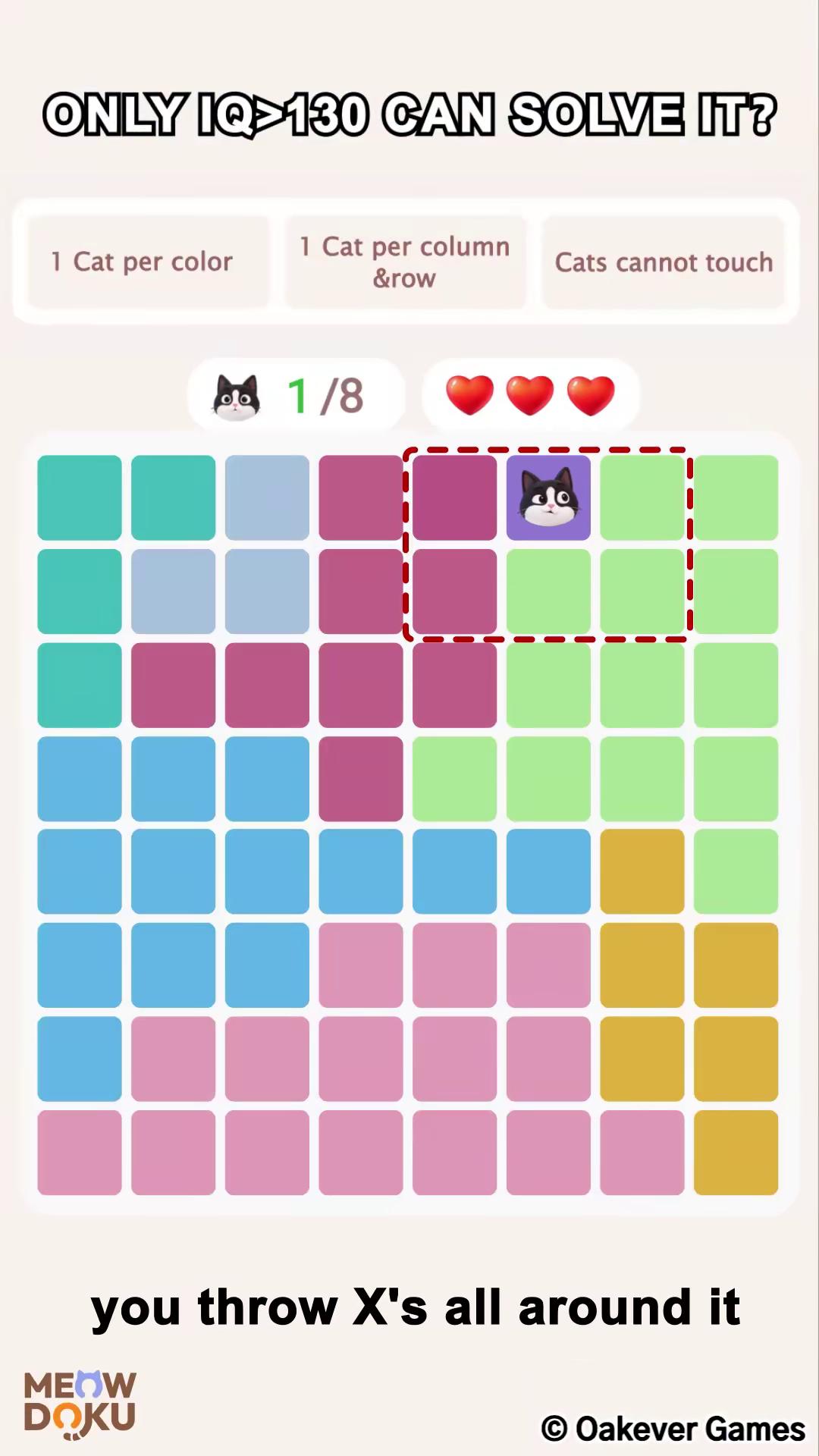 Meowdoku!'s single largest measured ad instance: 303,334,608 impressions across 163,037 placements, 59 seconds, first seen 2026-06-03 and still running on the pull date
Where the three titles sit on the US charts
Meowdoku! is the outlier here, and not just inside Oakever's own portfolio. At 2,158,898 monthly US downloads it ranks 10th across all categories — ahead of Threads, Roblox, Temu and Facebook. It is the highest-ranked game on the chart that is not a platform product, and the only Oakever title anywhere near the top.
| Rank | App | Publisher | Downloads | Growth |
|---|---|---|---|---|
| 9 | Netflix Game Controller | Netflix, Inc. | 2,192,963 | -33.49% |
| 10 | Meowdoku! | Oakever Games | 2,158,898 | -27.00% |
| 11 | PineDrama - Series Cortas | Bytedance | 2,085,045 | +27.87% |
| 14 | Roblox | Roblox Corporation | 2,029,022 | -8.91% |
| 126 | Amaze GO! | Oakever Games | 668,165 | -37.54% |
| 246 | Tile Explorer | Oakever Games | 430,959 | -37.18% |
All three titles are contracting, and contracting hard — between 27% and 38% month over month. That matters for interpretation. Nothing in this teardown describes a publisher on the way up. What it describes is how a publisher allocates a creative machine across three assets that are all sliding at once, and the allocation turns out to be the interesting part.
Note also that all three declines land in a narrow band. A publisher whose portfolio drops 27%, 37% and 37% in the same month is more likely looking at a shared external factor — seasonality, a network-level bidding change, a measurement shift — than three independent product failures.
Meowdoku!: 1.79 billion window impressions off a 91-day campaign
The entire Meowdoku! US campaign is younger than a single quarter. The oldest measured instance was first seen 2026-05-21; the pull date is 2026-08-19. That is a 91-day campaign history. Within the 30-day measurement window it recorded 1,786,574,888 impressions across 2,333,070 placements off 461 distinct video assets.
Across that window Oakever produced roughly 5.1 new video assets per day for this title.
Here are the ten largest instances.
| # | Window impressions | Placements | Impr/placement | First seen | Days in market | Duration | Playable | Status |
|---|---|---|---|---|---|---|---|---|
| 1 | 303,334,608 | 163,037 | 1,860 | 2026-06-03 | 78 | 59s | — | Live |
| 2 | 114,776,828 | 84,661 | 1,355 | 2026-06-15 | 66 | 53s | — | Live |
| 3 | 62,384,510 | 59,934 | 1,040 | 2026-07-11 | 40 | 60s | Yes | Live |
| 4 | 48,966,038 | 149,017 | 328 | 2026-05-21 | 91 | 55s | — | Live |
| 5 | 43,585,201 | 22,498 | 1,937 | 2026-06-15 | 66 | 37s | — | Live |
| 6 | 37,313,798 | 19,652 | 1,898 | 2026-06-29 | 52 | 27s | — | Live |
| 7 | 26,596,599 | 12,286 | 2,164 | 2026-07-18 | 32 | 59s | Yes | Ended 2026-08-18 |
| 8 | 26,549,160 | 65,179 | 407 | 2026-06-10 | 71 | 40s | — | Live |
| 9 | 23,280,430 | 13,061 | 1,782 | 2026-06-20 | 61 | 37s | — | Live |
| 10 | 21,633,253 | 8,932 | 2,421 | 2026-07-26 | 25 | 60s | — | Live |
Three things stand out.
Concentration is moderate, not extreme. The top instance takes 17.0% of the title's impressions; the top ten take 39.7%; the top fifty take 61.6%. Compared with publishers that ride one or two champion assets for a year, Oakever's volume is spread across a genuinely wide base — which is what you would expect from a fleet of 461 videos rather than 15.
Instance #4 is the anomaly. It is the oldest asset in the fleet, it has the second-highest placement count of any instance (149,017), and it converts those placements into only 328 impressions each — a fifth of what instance #1 manages. It is also the only Android-side asset in the top five. Whatever inventory that instance is buying is broad and thin, and Oakever has left it running for the full 91 days anyway.
Nothing here has been running long. The average instance in the Meowdoku! fleet has been live 26.7 days. Only 44.8% were still recording placements on the pull date. This is not a fleet that gets curated; it is a fleet that gets replaced.
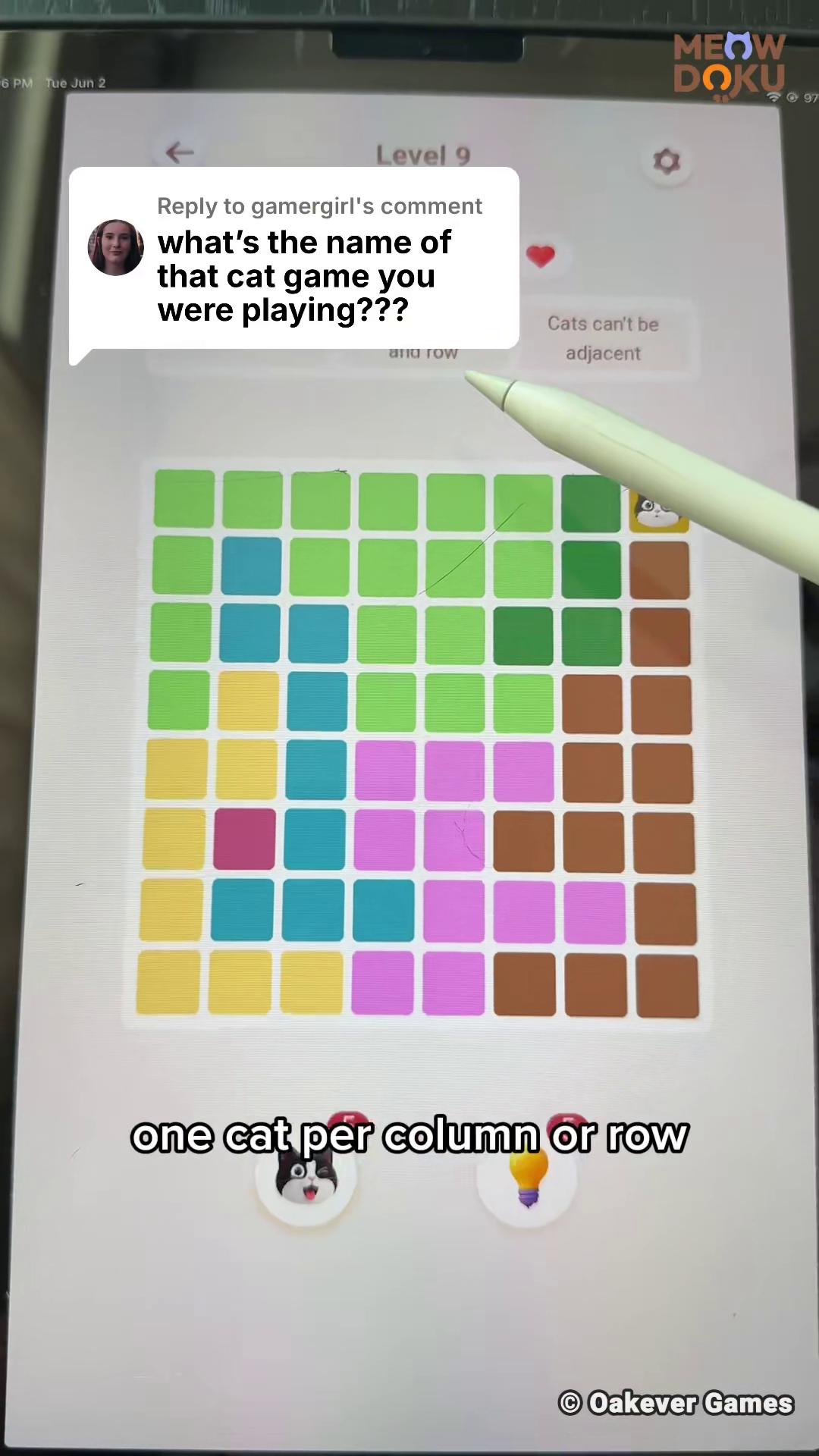 Meowdoku! instance #2 — 53 seconds, 114,776,828 impressions across 84,661 placements, first seen 2026-06-15, still live after 66 days.
Amaze GO!: more impressions, one-third the downloads
Now the same treatment for the title that is, by media volume, Oakever's largest US investment.
Amaze GO! carries 2,656,810,175 impressions across 1,174 measured instances — 48.7% more impressions than Meowdoku! — built from 674 distinct video assets. Its oldest instance dates to 2026-03-18, giving a 155-day observed campaign history.
| # | Window impressions | Placements | Impr/placement | First seen | Days in market | Duration | Playable |
|---|---|---|---|---|---|---|---|
| 1 | 322,984,071 | 60,762 | 5,315 | 2026-03-20 | 153 | 60s | Yes |
| 2 | 227,974,622 | 50,922 | 4,476 | 2026-08-02 | 18 | 54s | — |
| 3 | 172,125,664 | 56,376 | 3,053 | 2026-06-28 | 53 | playable | Yes |
| 4 | 170,121,071 | 34,974 | 4,864 | 2026-04-18 | 124 | 54s | — |
| 5 | 134,908,271 | 66,256 | 2,036 | 2026-04-10 | 132 | playable | Yes |
| 6 | 80,532,905 | 15,611 | 5,158 | 2026-03-20 | 153 | 60s | Yes |
| 7 | 70,220,618 | 13,603 | 5,162 | 2026-04-17 | 125 | 60s | — |
| 8 | 64,919,654 | 26,736 | 2,428 | 2026-06-27 | 54 | 60s | — |
| 9 | 62,682,519 | 11,551 | 5,426 | 2026-04-12 | 130 | 60s | Yes |
| 10 | 62,046,808 | 11,253 | 5,513 | 2026-06-21 | 60 | 59s | Yes |
Instance #2 accumulated 227,974,622 window impressions having been first seen only 18 days before the pull — the fastest-ramping asset in the portfolio, and second only to Amaze GO! own 153-day leader.
It is also, on inspection, not a new video. Instance #2 and instance #4 share the same video fingerprint. The same 54-second creative was first seen 2026-04-18, ran for 124 days accumulating 170 million impressions, and was then relaunched as a fresh instance on 2026-08-02 — where it immediately out-delivered its own original by 34%, in one-seventh of the time.
Together those two instances make the largest video asset in the portfolio: 398,095,693 impressions across 85,896 placements, spanning 2026-04-18 to the pull date.
That relaunch is worth dwelling on. It is not creative fatigue being managed by replacement — it is the same asset being given a second, larger budget line four months later, and performing better the second time. Whatever changed, it was not the video.
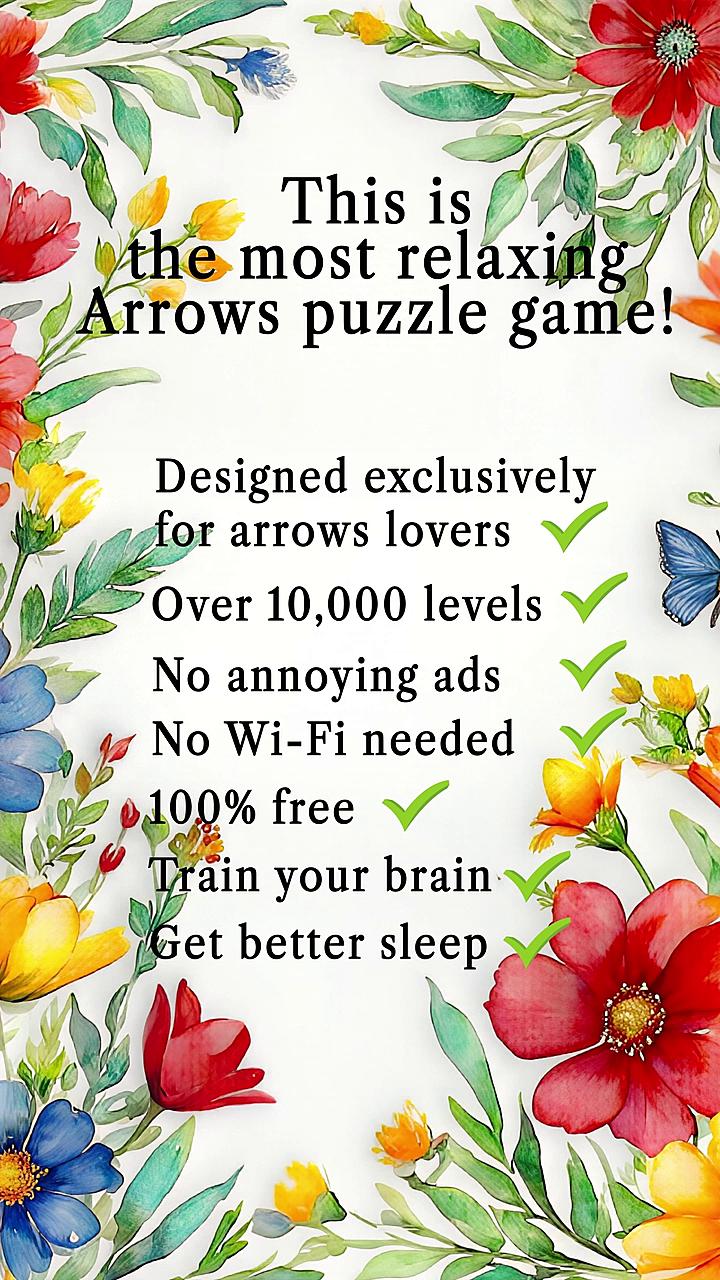 Amaze GO! instance #1 — 60 seconds with a playable end card, 322,984,071 impressions across 60,762 placements, first seen 2026-03-20 and live for 153 days.
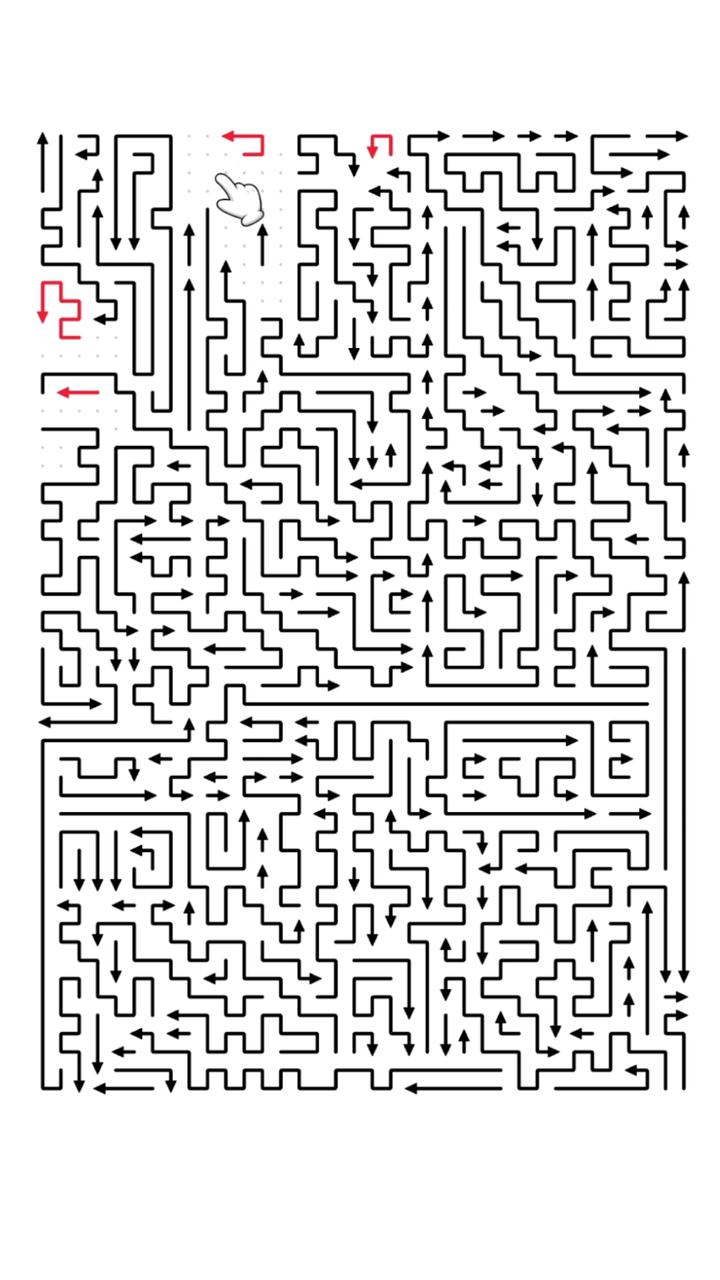 The same 54-second video behind Amaze GO! instances #2 and #4. First seen 2026-04-18, relaunched as a new instance 2026-08-02, and now the portfolio's largest video asset at 398,095,693 combined impressions.
The efficiency gap, measured properly
Raw impression totals say Amaze GO! is Oakever's flagship. Download data says the opposite. Reconciling the two requires normalising both sides.
Impressions in this dataset are a 30-day window value — 2026-07-20 to 2026-08-19 — not a lifetime total. Downloads are a monthly figure. That is a lucky alignment: the two cover almost exactly the same period, so they can be compared directly with no normalisation at all.
The right metric is simply downloads per thousand window impressions. No division by campaign age, which would be wrong here for two reasons: it would put a 30-day numerator over a denominator running to 502 days, and it would invent a rate the data does not support.
| Meowdoku! | Amaze GO! | Tile Explorer | |
|---|---|---|---|
| 30-day window impressions | 1,786,574,888 | 2,656,810,175 | 383,535,063 |
| Monthly downloads | 2,158,898 | 668,165 | 430,959 |
| Downloads per 1,000 window impressions | 1.21 | 0.25 | 1.12 |
| Index (Meowdoku! = 100) | 100 | 21 | 93 |
That table contains the finding, and it is sharper than the raw impression totals suggest.
Meowdoku! and Tile Explorer convert at almost the same rate — 1.21 and 1.12 downloads per thousand window impressions, within 8% of each other despite a 4.7x difference in media volume and a title-age gap of well over a year. That is what a normal conversion rate looks like for this publisher.
Amaze GO! converts at 0.25 — roughly a fifth of both its siblings. It carries the largest impression volume in the portfolio and returns the fewest downloads per impression by a factor of 4.8x against Meowdoku! and 4.5x against Tile Explorer.
So the anomaly is not Tile Explorer, the old title coasting on residual demand. The anomaly is Amaze GO!, the title receiving the most media. Two of Oakever's three products convert within 8% of each other; the third, which gets the most impressions, converts at a fifth of that rate — and has done for 155 days.
The honest three-way summary: Meowdoku! is the paid engine, Tile Explorer is a smaller engine running at the same efficiency, and Amaze GO! is the expensive outlier.
The rename you can watch happening in the ad data
App ID 6758326278 is listed on the App Store today as Amaze GO!. Its ad copy tells a longer story.
Across the 1,174 measured instances, 811 carry readable copy or a creative title. Splitting those by which brand name they use, and bucketing by the month the instance was first seen:
| First seen | "Arrows" only | Both names | "Amaze" only | No brand name | Total |
|---|---|---|---|---|---|
| 2026-03 | 13 | 0 | 0 | 31 | 44 |
| 2026-04 | 22 | 0 | 0 | 67 | 89 |
| 2026-05 | 33 | 0 | 0 | 9 | 42 |
| 2026-06 | 65 | 139 | 77 | 20 | 301 |
| 2026-07 | 120 | 64 | 115 | 55 | 354 |
| 2026-08 | 47 | 29 | 169 | 99 | 344 |
The first ad instance carrying "Amaze GO!" was first seen 2026-06-09. Before that date, every branded creative in the fleet — 68 instances across three months — said "Arrows GO!" and nothing else. June is the crossover month, and it is messy: 139 instances that month carry both names, which is what you would expect from a period where new copy was being written against old video.
By August the transition is largely done. Of 245 branded instances first seen that month, 169 (69%) use "Amaze GO!" alone and only 47 are still "Arrows"-only. But the tail is real: the most recent "Arrows GO!"-only instance was first seen 2026-08-14, five days before the pull, and it is still live.
The dominant hook strings show the same handover:
| Ad copy | Instances | Impressions |
|---|---|---|
| 🏹 Find Your Flow with Amaze GO! | 219 | 136,016,095 |
| Welcome to Arrows GO! A clean arrows puzzle… | 129 | 134,648,983 |
| 🏹 Find Your Flow with Arrows Go! | 90 | 131,720,272 |
| Welcome to Amaze GO! A clean arrows puzzle… | 69 | 40,265,486 |
| 🧩 Tap, clear, and relax with Arrows Go! 🌟✨ | 56 | 49,990,152 |
| Arrows GO : Enjoy Hours Of Fun And Challenge | 41 | 22,998,771 |
Those are literally the same two sentences with the product name swapped. "Find Your Flow with Amaze GO!" and "Find Your Flow with Arrows Go!" are running side by side, on the same app, at 136.0 million and 131.7 million impressions respectively.
Why this matters beyond Oakever: a rename is one of the few UA events that is genuinely invisible in your own dashboards — your app ID does not change, your campaign IDs do not change, and your spend does not move. It is only visible from the outside, in creative copy. If you are tracking a competitor by product name, a rename silently splits your dataset in two and you will conclude a title collapsed when it merely changed its label.
Eight hooks versus thirty-seven
The most striking difference between Oakever's best- and worst-converting titles is not budget or format. It is messaging discipline.
Meowdoku! runs its entire 1,000-instance fleet on eight distinct ad-copy strings.
| Ad copy | Instances | Impressions | Impressions per instance |
|---|---|---|---|
| Looking for a game that soothes the soul… | 578 | 1,339,345,361 | 2,316,860 |
| Quick to learn. Impossible to put down! 😄 | 270 | 271,514,390 | 1,005,609 |
| Only 1% get it right. Are you one of them? 🤔 | 14 | 17,584,156 | 1,256,011 |
| Tap, deduce, place. Can you find every cat? 🐱 | 56 | 49,249,977 | 879,464 |
| Tap, deduce, place… Try Meowdoku free today. | 23 | 8,409,656 | 365,637 |
| Cute cats, clever logic. Free to play, easy to love. | 31 | 11,021,026 | 355,517 |
One hook carries 75.0% of the title's impressions, and it also has the best per-instance average by a factor of 2.3. Oakever found a line — a calm, anti-stress framing rather than a puzzle-difficulty framing — and then put it on 578 different videos.
Amaze GO! runs 37 distinct copy strings across 811 branded instances. Its top hook accounts for 136,016,095 impressions, or 5.1% of the title's total. There is no dominant message. There is a rename in progress, two competing product names, and four and a half times the copy variance for a title that converts at a third the rate.
This is a correlation across two titles, not a controlled experiment, and the rename is an obvious confound — you cannot consolidate messaging while you are changing the product's name. But the direction is worth taking seriously, because it inverts the instinct most creative teams have. The assumption is usually that more messaging variants means more chances to find a winner. Meowdoku! suggests the opposite: the win comes from finding the line first, then spending all your variance on visuals.
Note also that Meowdoku!'s "Only 1% get it right" hook — a difficulty-flex framing, the exact opposite of the soothing angle — was tried on just 14 instances and posts a respectable 1.26 million impressions each. It was tested, it did fine, and it was not scaled. That is a decision, and it is legible.
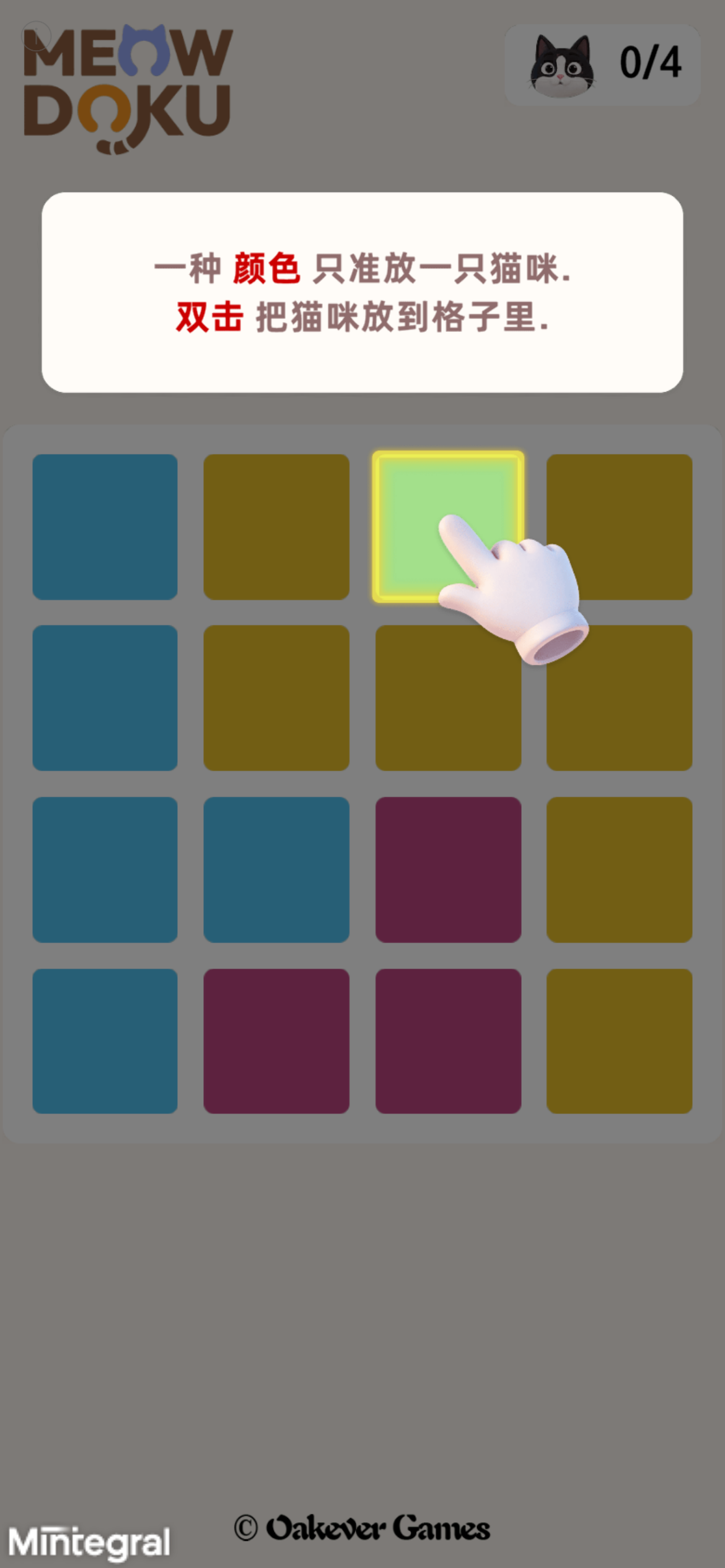 The playable end card attached to Meowdoku! instance #3 — 62,384,510 impressions across 59,934 placements, first seen 2026-07-11. One of only 37 distinct playable assets serving the entire title.
The playable is a shared component, not a per-creative asset
Across the three titles, playable attachment looks inconsistent: 36.7% of Meowdoku! instances, 24.8% of Amaze GO! instances, 71.5% of Tile Explorer instances. Looking at asset counts instead of attachment rates explains why.
| Meowdoku! | Amaze GO! | Tile Explorer | |
|---|---|---|---|
| Distinct video assets | 461 | 674 | 185 |
| Distinct playable assets | 37 | 107 | 45 |
| Videos per playable | 12.5 | 6.3 | 4.1 |
| Instances carrying a playable | 367 | 291 | 231 |
| Instances per playable asset | 9.9 | 2.7 | 5.1 |
Meowdoku! produced 461 videos and 37 playables in 91 days. That is not a fleet where each ad gets its own interactive build. It is a component library: a small, stable set of playable end cards that get bolted onto a constantly churning stream of video fronts.
The economics are obvious once you see it. A playable is expensive — it is a build, it needs QA across networks, it has size limits. A 55-second gameplay capture is cheap. Oakever appears to have decided the playable is the fixed capital and the video is the consumable, and it has structured production accordingly: roughly five new videos per day against roughly one new playable every two and a half days.
Amaze GO! runs the same architecture at a different ratio — 6.3 videos per playable, more than twice Meowdoku!'s build burden for a title with a third of the downloads. Tile Explorer, the mature title, is the most playable-heavy of the three at 4.1 videos per playable and 71.5% attachment, which is consistent with an account that stopped scaling video production but kept its interactive inventory in rotation.
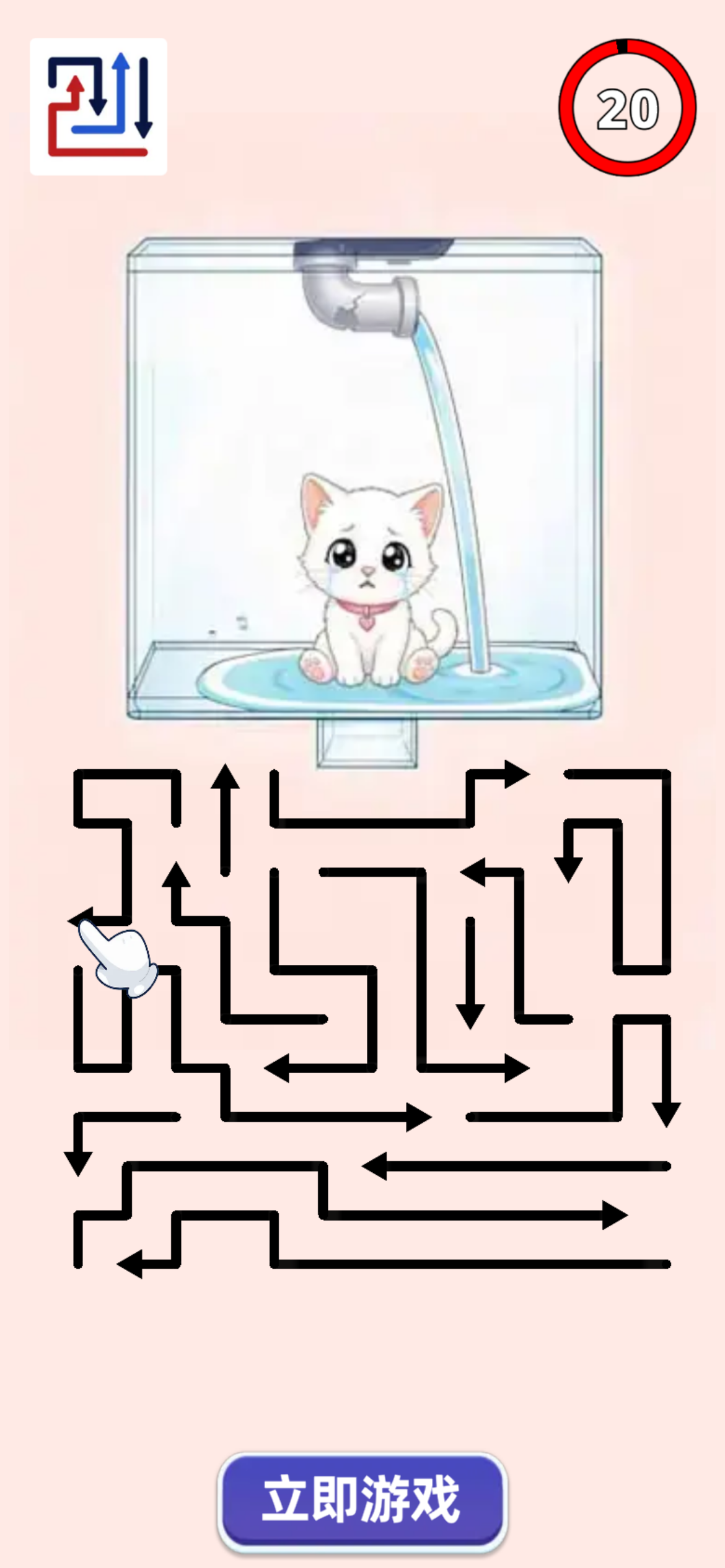 Amaze GO! instance #3 — a playable-first unit with no recorded video duration at all. 172,125,664 impressions across 56,376 placements in 53 days, making it the third-largest asset in the portfolio.
Both Amaze GO!'s #3 and #5 instances are playable-first units with no video duration recorded. Together they carry 307,033,935 impressions, 11.6% of the title's total, with no video component measured at all. Whatever the format mix looks like on the video side, roughly one impression in nine on Oakever's biggest-spending title is interactive from the first frame.
Oakever's answer — the playable as fixed capital, the video as consumable — is a publisher-wide rule run at three different ratios. It is not the only workable shape. Century Games reaches the opposite arrangement across its own three US titles: there the playable ratio is set per title rather than per publisher, which is why its portfolio-level average is uninformative in a way Oakever's is not. Read together, the two publishers bracket the question of whether "how much playable" belongs at the publisher level or the title level.
Tile Explorer: what a mature Oakever title looks like
If Meowdoku! shows the factory at full output, Tile Explorer shows what the factory leaves behind.
Its oldest measured instance was first seen 2025-04-05 and was still recording placements on 2026-08-19 — a 502-day run. The fleet's average instance age is 122.0 days, 4.6x Meowdoku!'s. And the impression curve is spread across sixteen months rather than three:
| First seen | Instances | Impressions | Share |
|---|---|---|---|
| 2025-04 → 2025-10 | 33 | 37,463,457 | 9.8% |
| 2025-11 | 12 | 39,732,784 | 10.4% |
| 2025-12 | 8 | 75,119,615 | 19.6% |
| 2026-01 → 2026-03 | 50 | 60,762,106 | 15.8% |
| 2026-04 → 2026-05 | 79 | 42,724,414 | 11.1% |
| 2026-06 | 38 | 73,185,718 | 19.1% |
| 2026-07 | 43 | 46,444,154 | 12.1% |
| 2026-08 | 60 | 8,102,815 | 2.1% |
Eight instances launched in December 2025 still account for 19.6% of everything this title has ever delivered. That is the opposite of the Meowdoku! pattern, where no cohort is older than three months and the whole fleet turns over every four weeks.
Tile Explorer is also still producing — 60 new instances in August alone, more than any other month in its history. They just are not delivering: those 60 instances carry 2.1% of the title's impressions. The production line is running; the budget behind it is not.
 Tile Explorer's largest instance — 53 seconds, 46,636,099 impressions across 41,883 placements, first seen 2025-12-22 and still live after 241 days. Oakever's most durable single asset by impressions.
Cohorts: the month that produced nothing
Sorting each title by first-seen date instead of impressions exposes something the impression ranking hides completely.
Meowdoku!
| First seen | Instances | Impressions | Share | Impressions per instance |
|---|---|---|---|---|
| 2026-05 | 23 | 82,913,328 | 4.6% | 3,604,927 |
| 2026-06 | 142 | 827,498,699 | 46.3% | 5,827,455 |
| 2026-07 | 527 | 646,615,363 | 36.2% | 1,226,974 |
| 2026-08 | 308 | 229,547,498 | 12.8% | 745,284 |
June produced 142 instances carrying 46.3% of the title's lifetime impressions. July produced 527 instances — 3.7x the volume — carrying less. On a per-instance basis, June creative is 4.7x more productive than July creative and 7.8x more productive than August creative.
Some of that is simply exposure time: a June asset has had two extra months to accumulate. But the gap is far too large for age alone to explain, and the July cohort's per-instance average is already below the August cohort's on a like-for-like basis when you account for the ramp. The plain reading is that June's creative was better, and Oakever responded to the fall-off by shipping more, not by shipping differently.
Amaze GO!
| First seen | Instances | Impressions | Share | Impressions per instance |
|---|---|---|---|---|
| 2026-03 | 44 | 573,830,555 | 21.6% | 13,041,604 |
| 2026-04 | 89 | 566,767,237 | 21.3% | 6,368,171 |
| 2026-05 | 42 | 21,396,226 | 0.8% | 509,434 |
| 2026-06 | 301 | 788,176,709 | 29.7% | 2,618,527 |
| 2026-07 | 354 | 374,886,884 | 14.1% | 1,058,997 |
| 2026-08 | 344 | 331,752,564 | 12.5% | 964,397 |
May 2026 is a dead month. Forty-two instances, 21.4 million impressions, 0.8% of the title's lifetime output — a per-instance average 25x below April's and 5x below the next-worst month. Then June arrives with 301 instances and 29.7% of everything.
Two readings fit. Either May's creative genuinely failed and Oakever's response was a wholesale June rebuild, or May was a deliberate pause in spend — a budget gap rather than a creative one — while the rename and the new June wave were prepared. The June crossover in the naming data supports the second reading: the first "Amaze GO!" instance appears on 2026-06-09, right at the start of the recovery.
Either way, the practical point stands. A month-cohort view of your own creative will tell you things a top-creatives leaderboard cannot. Nobody looking at Amaze GO!'s top ten would ever notice that an entire month produced nothing.
 Amaze GO! instance #6 — 60 seconds with a playable, 80,532,905 impressions, first seen 2026-03-20 and live for 153 days. Part of the 44-instance March cohort that still carries 21.6% of the title's impressions.
Duration: a 55-to-60-second core with a deliberate short tail
Oakever's duration distribution is not the tight single-format lock some publishers run, but it is not a scatter either.
Meowdoku! (top durations by instance count)
| Duration | Instances |
|---|---|
| 59s | 163 |
| 58s | 76 |
| 57s | 69 |
| 60s | 68 |
| 55s | 60 |
| 37s | 53 |
| 27s | 49 |
| 47s | 44 |
| 56s | 34 |
| 38s | 31 |
436 of 1,000 instances sit in the 55–60 second band. The rest fan out across a long tail of shorter cuts — 27s, 37s, 38s, 47s — that behave like edits of the same source footage rather than separately conceived creatives. Meowdoku!'s instances #5, #6 and #9 are 37s, 27s and 37s respectively and all sit in the top ten, so the short cuts are not a dumping ground.
Amaze GO! concentrates harder: 289 instances at exactly 60s and 194 at 59s — 41.1% of the fleet in a two-second window — plus a distinct 115-instance cluster at 30s and 39 playable-first units with no duration at all.
The pattern across both titles: a near-minute hero format doing the heavy lifting, a half-minute cut as the designated alternative, and playable-first units as a third leg. There is no 6-second or 15-second bumper strategy of any scale here at either title.
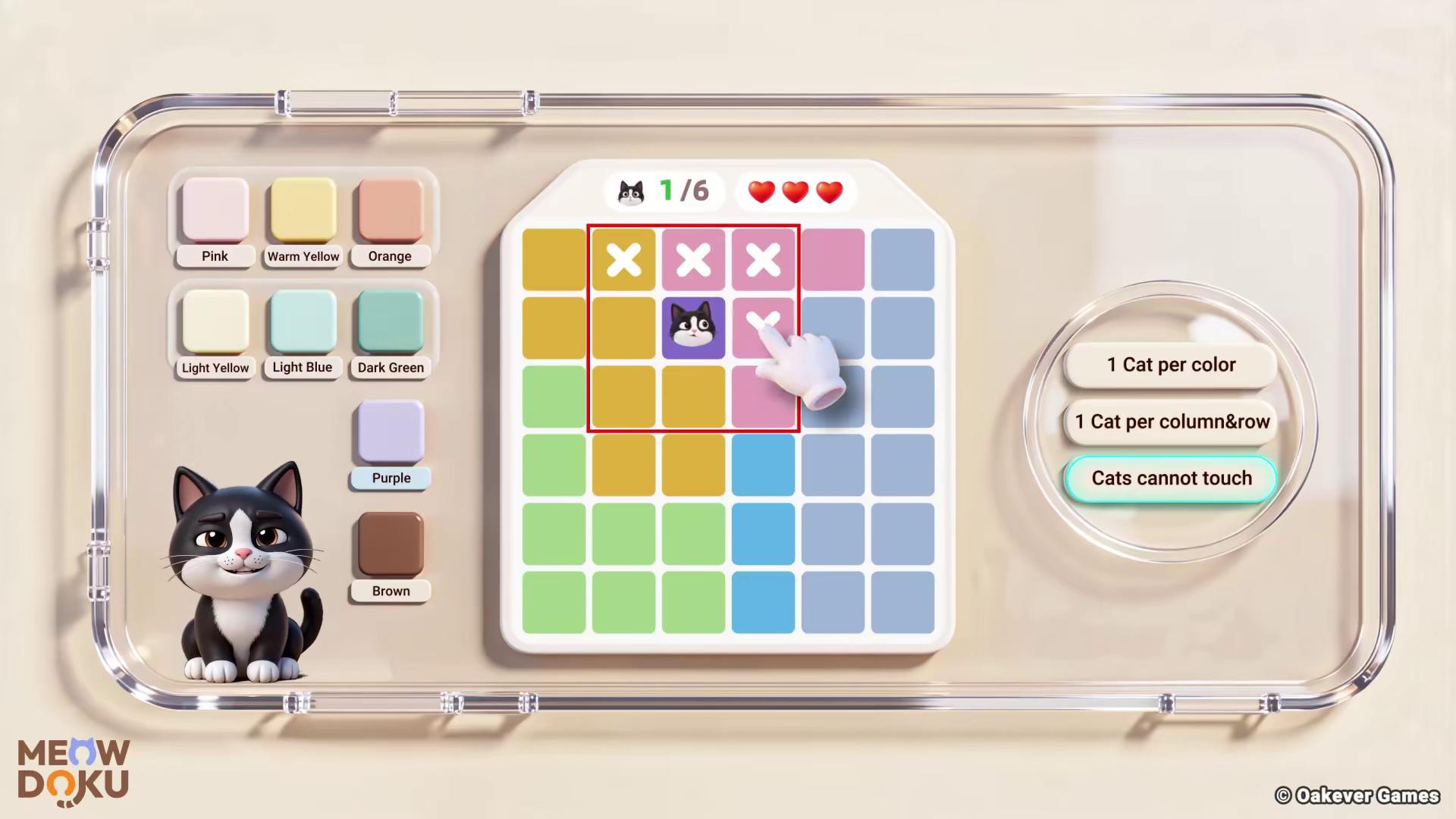 Meowdoku! instance #6 — a 27-second cut, 37,313,798 impressions at 1,898 impressions per placement, first seen 2026-06-29. The shortest creative in the title's top ten.
Two developer IDs, two platforms, one factory
Every Oakever title in this analysis appears under two distinct publisher identifiers in the creative data:
| Platform | Publisher ID | Meowdoku! | Amaze GO! |
|---|---|---|---|
| iOS | 1604529155 | app 6761760135 — 420 instances, 1,194,042,289 impr | app 6758326278 — 522 instances, 2,156,331,918 impr |
| Android | 961586492 | com.oakever.meowdoku — 580 instances, 592,532,599 impr | com.oakever.arrows — 652 instances, 500,478,257 impr |
Both IDs report the display name "Oakever Games". Both are the same company. But an analysis that grouped strictly by publisher ID without checking display names would have produced two half-portfolios, and an analysis that grouped by app ID would have missed the Android side entirely — which, on Meowdoku!, is 58% of the instance count.
The split is not cosmetic. iOS and Android behave completely differently inside the same title.
| Meowdoku! iOS | Meowdoku! Android | |
|---|---|---|
| Instances | 420 | 580 |
| Impressions | 1,194,042,289 | 592,532,599 |
| Placements | 702,478 | 1,630,592 |
| Impressions per placement | 1,700 | 363 |
| Largest instance | 303,334,608 | 48,966,038 |
| Average days live | 30.0 | 24.3 |
| Still live | 49.3% | 41.6% |
The Android side runs 2.3x the placement count for half the impressions — 363 impressions per placement against iOS's 1,700, a 4.7x density gap. Amaze GO! shows the same shape even more sharply: 3,767 impressions per placement on iOS against 852 on Android.
That is a different inventory mix, not a different creative strategy. The same videos appear on both sides; the delivery pattern does not. Any benchmark that blends the two platforms into one "impressions per placement" figure is averaging across two genuinely distinct media buys.
How to reproduce this teardown
The publisher-level version of this analysis has three steps that the single-title version does not.
- Find the portfolio by ID, then sanity-check by name. Pull the ranking data and group by publisher identifier, but verify display names too — Oakever spans two IDs, and a strict ID grouping would have split it. The reverse failure is more common and worse: two unrelated publishers using the same product name.
- Never join creative data to ranking data on app name. Match on app ID or bundle ID and confirm the publisher matches on both sides. Product names collide constantly in casual-puzzle categories, and — as the Amaze GO! rename shows — a single product can carry two names simultaneously.
- Separate ad instances from creative assets. A creative-search API returns measured ad instances, each with its own impressions and dates. Many instances share one underlying video. Meowdoku!'s 1,000 instances resolve to 461 videos and 37 playables. Counting instances tells you about media weight; counting fingerprints tells you about production capacity. They are different questions.
- Never divide window impressions by asset age. The impression field is a 30-day window, not a lifetime total, so dividing it by a 502-day history mixes incompatible periods and manufactures a rate. Use impressions per placement to see what kind of inventory is being bought, and compare volumes only within an identical window.
- Read the copy, and read it by cohort. Ad-copy strings are how you catch renames, messaging consolidation and positioning shifts. None of those are visible in impression numbers.
What transfers to your UA program
If you run creative production: the component-library structure is the most portable thing here. Oakever produced 461 videos against 37 playables on Meowdoku! — roughly a 12:1 ratio — and shipped five new videos per day. If your playable build cost is the bottleneck on your creative velocity, the answer may not be a cheaper playable pipeline; it may be treating the playable as fixed capital and putting all your iteration into the cheap layer in front of it.
If you own messaging: Meowdoku! runs eight copy strings and one of them carries 75% of impressions. Amaze GO! runs thirty-seven and none carries more than 5.1%. Before you brief another round of hook variants, check what share of your delivery your best line already holds. If one line is not dominant, you may have a consolidation problem rather than a discovery problem.
If you run experiments: the Meowdoku! "Only 1% get it right" hook is a clean example of a test that was run, produced a decent result, and was deliberately not scaled — 14 instances, 1.26 million impressions each, against a house line at 2.32 million. Most teams either never run the off-strategy test or, having run it and got a decent number, scale it out of enthusiasm. Running it small and leaving it small is the harder discipline.
If you run competitive intelligence: monitor product names in ad copy, not just app IDs. The Arrows GO! → Amaze GO! transition would have looked like one title dying and another appearing to anyone tracking by name, and would have been completely invisible to anyone tracking only by ID.
If you are competing with Oakever: Meowdoku! is the defended position — the newest fleet, the highest intensity, the consolidated messaging, rank 10 on the chart. Amaze GO! is spending nearly as hard for a third of the yield and is mid-rename. Tile Explorer has stopped receiving budget in any meaningful sense.
A falsifiable prediction
Prediction: by 2026-10-31, fewer than 10% of Amaze GO! ad instances first seen after 2026-09-01 will carry "Arrows GO!" copy, and its 30-day window impressions will fall below Meowdoku!.
The basis: the naming transition ran from 0% "Amaze" in May to 69% of branded August instances, a consistent monthly slope that puts residual "Arrows" copy in low single digits by October. The intensity call is the riskier half — Amaze GO! is currently at 87% of Meowdoku!'s daily rate — but a title contracting at -37.54% while carrying 55% of a publisher's media weight is not a stable allocation, and the May 2026 pause shows Oakever is willing to cut spend on this title abruptly.
If instead Amaze GO! gains intensity relative to Meowdoku! over that window, the efficiency reading in this article is wrong and Oakever is seeing something in its own attribution data that the public download figures do not capture.
We will re-pull and report the outcome either way.
Methodology and data notes
- Source: AdMapix creative search and ranking APIs, queried 2026-08-19, country filter
US, sorted by impressions descending. - Sample definition. For Meowdoku! and Amaze GO! we retrieved the top 1,000 measured ad instances by impressions per keyword query and filtered to instances whose primary app ID matched the target title. The impression tail had not reached zero at that depth (the smallest retained Meowdoku! instance carries 84,898 impressions), so these fleets are larger than the sample. All totals in this article are therefore lower bounds on the true fleet, not complete counts. Tile Explorer's 323 instances represent the full retrievable set.
- Instances versus assets. The API returns individual measured ad instances, each with its own impressions, placement count and date range. Multiple instances frequently share one underlying video: Meowdoku!'s 1,000 instances resolve to 461 distinct video fingerprints. Impressions are reported per instance and do not double-count, so instance-level sums are valid. Where this article says "video assets" or "playable assets" it means distinct fingerprints.
- Publisher attribution was verified on both the ranking side and the creative side by app ID and publisher ID, not by name. Oakever appears under two publisher IDs,
1604529155(iOS) and961586492(Android). These are AdMapix publisher identifiers and are not App Store artist IDs. - "Days live" is the span between first-observed and last-observed dates, inclusive. Instances last observed on the pull date are treated as live.
- Stop dates carry a scan-lag caveat. Across every title in this dataset, the single most common "last observed" date other than the pull date is the day immediately before it. That is more consistent with observation cadence than with a synchronised daily cull, so we do not treat a last-observed date within two days of the pull as evidence of a deliberate stop. Excluding that window, 40.5% of Meowdoku! instances and 28.8% of Amaze GO! instances had genuinely stopped.
- ⚠️ Impressions are a 30-day window value, not a lifetime total. With no explicit date range the API returns a rolling 30-day window, verified here as 2026-07-20 to 2026-08-19. Every impression figure in this article is that window. A different window returns different values for the same creative, and the values are neither additive nor monotonic across windows. Reproducing this requires passing explicit dates, and window impressions must never be divided by an asset age.
- Download efficiency compares monthly downloads against 30-day window impressions. The two periods align closely, which is why no normalisation is applied. It is a relative index for comparing titles measured the same way, not an install rate or a CPI proxy.
- Impressions, placement counts and download figures are third-party estimates, not publisher-reported and not spend. They support relative comparison between assets measured the same way.
- Store listings for the three titles: Meowdoku!, Amaze GO! and Tile Explorer on the App Store.
- Coverage is limited to creatives observable through third-party monitoring. Assets in unmonitored placements would not appear.
Frequently Asked Questions
Who is Oakever Games? Oakever Games is a mobile puzzle-game publisher with at least three titles on the US charts as of 2026-08-19: Meowdoku! (rank 10, 2,158,898 monthly downloads), Amaze GO! (rank 126, 668,165) and Tile Explorer - Triple Match (rank 246, 430,959). Their combined measured US creative output is 4,826,920,126 impressions across 2,497 ad instances.
How many ads is Meowdoku! running in the US? At least 1,000 measurable ad instances, built from 461 distinct video assets and 37 distinct playable end cards, totalling 1,786,574,888 impressions. The oldest instance was first seen 2026-05-21, making the entire campaign 91 days old on the pull date.
What is Oakever's best-performing ad creative? By window impressions, a 60-second Amaze GO! video with a playable end card first seen 2026-03-20, carrying 322,984,071 impressions across 60,762 placements. A 54-second Amaze GO! creative relaunched on 2026-08-02 accumulated 227,974,622 window impressions having been in market only 18 days.
Why is Amaze GO! running more ads than Meowdoku! if it has fewer downloads? Amaze GO! carries 2,656,810,175 impressions to Meowdoku!'s 1,786,574,888 despite ranking 116 places lower on downloads. Over the same 30-day window Amaze GO! returns 0.25 downloads per thousand impressions against Meowdoku! 1.21 — a 4.8x gap. The public data does not explain why Oakever continues funding it at that level; the most likely explanations are downstream monetisation differences or a longer payback window that is not visible in download counts.
Is Amaze GO! the same game as Arrows GO!? Yes. Both names refer to App Store ID 6758326278, published by Oakever Games. The store listing reads "Amaze GO!" as of 2026-08-19, but 300 of the title's 1,174 measured ad instances still carry "Arrows GO!" copy, including instances first seen 2026-08-14. The first "Amaze GO!" creative appeared 2026-06-09, making this a rename that is roughly two and a half months into rollout.
Does Oakever Games use playable ads? Yes, but as a shared component rather than a per-creative build. Meowdoku! attaches just 37 distinct playable assets across 367 instances — about one playable per twelve videos. Tile Explorer is the most playable-heavy title at 71.5% attachment across 45 distinct playables, while Amaze GO! sits lowest at 24.8%.
Why do Oakever's games show two different developer IDs? Its iOS titles report under publisher ID 1604529155 and its Android titles under 961586492, both displaying the name "Oakever Games". This is a platform-level split in the underlying data, not two companies. It matters because the two sides buy very different inventory: Meowdoku! on iOS delivers 1,700 impressions per placement against 363 on Android.
Want to know whether a competitor's newest creative is a fresh test or a four-month-old asset being relaunched? First-seen and last-observed dates, per-instance impressions, placement counts, video and playable fingerprints, and ad-copy strings are all live in AdMapix, filterable by country, publisher and app ID. Create a free account to run this teardown on any publisher in your category, or see plans for full historical coverage.
Data source: AdMapix third-party ad intelligence estimates, United States, retrieved 2026-08-19. Impression, placement and download figures are modelled estimates for comparative analysis and are not publisher-reported. Figures change as new creatives enter rotation.
Related Reading
- Ad strategy teardowns (series index) — every teardown in the series, in publication order
- Mobile game ads guide: formats, examples and research — the format matrix, research workflow and KPI guardrails every teardown in this series applies
- Bus Traffic Fever! — one asset carrying 66% of a 3B-impression fleet
- Century Games — one publisher, three titles, playable vs video decided between them
- Voodoo — Paper.io 2 and Hole.io are not being advertised, they are being farmed
Use this article in your next research task
- Set the scope. Choose one app or brand, one country and one date window. Case-study figures refer to the historical sample dates in the article; this editorial update did not collect a new underlying campaign dataset.
- Inspect attributable records. Continue the research in AdMapix. For a case study, verify the developer, store and app ID before opening its creatives. For a workflow guide, start in the creative library and set the relevant network and market manually. A missing result means no match in that query, not no advertising.
- Write one testable hypothesis. Open matching examples and record the source, observation date, opening hook, mechanic or offer, and CTA. Change one variable in your own creative brief, then evaluate it with your own results.
Check the research methodology and compare context with the ad lifespan benchmarks. Repetition, estimated impressions and download trends do not establish ROAS, profit or causation. Current index coverage and access depend on the query and plan.
Continue researching Oakever Games
Find the company, verify its apps, then inspect each app’s recent creatives.
Related Articles

DramaBox Ad Strategy 2026: One Serial Hook Takes 75.5% of the Top 10
DramaBox's recent US Top 10 is a portfolio with a sharp center: one 111-second drama video fingerprint appears twice and contributes 75.5% of the visible scale, while shorter cuts test more story archetypes.
Pixel Flow! Ad Strategy 2026: One Playable Took 2.3 Billion Impressions in 30 Days, and Loom Games Rebuilt the Fleet Around It on 2026-08-04
Loom Games' Pixel Flow! runs the largest single creative we have measured: one playable with 2,298,804,130 US impressions across 2,113,657 placements inside a single 30-day window, 78.1% of the top-fifteen fleet. On 2026-08-04 Loom retired ten creatives and launched three on the same date — and every one of the ten retirements was a video, while all four of the fleet's pure playables were left untouched. Downloads are down 19.29%, revenue down 23.07%.
Vita Mahjong Ad Strategy in 2026: The Metronome — a 467-Day Creative and 14 Assets Delivering at Exactly the Same Rate
A creative-level teardown of Vita Studio's US user acquisition for Vita Mahjong. Fifteen creatives account for 10.5 billion impressions, all fifteen still running, and one first seen 2025-05-09 has been live 467 days — the oldest asset in this fleet, fifth-oldest across the series. Fourteen of the fifteen deliver between 967 and 1,117 impressions per placement, a consistency band no other advertiser we have measured comes close to.