
Magic Sort Ads Explained: Sorting Hooks, Tall Bottles, and Video Reuse
Eight dated Magic Sort advertising examples reveal sorting hooks, unusual receiving containers, hand guidance, and video reuse, while separating verified iOS identity from unproven gameplay and performance claims.
Magic Sort Ads Explained: Sorting Hooks, Tall Bottles, and Video Reuse
Magic Sort ads in this dated sample show layered colors being poured between bottles, crowded puzzle boards, and unusually tall receiving containers. The visible hook is a sorting problem already in progress: you can inspect the colors and consider the next move. The supplied frames do not establish a specific “tiny bottle” ad, an impossible puzzle, or an “only 1% can solve” claim. A separate static image supplies the Magic Sort logo and a “Play Now!” invitation, but its position in any video is unknown.
For players, this guide helps identify the advertised scene without promising that it appears in the installed game. For user acquisition and creative teams, it separates observable design choices from evidence of file reuse, then turns those findings into original production briefs and test questions.
Last updated: 2026-10-16.
AdMapix Research — prepared with Codex and checked against the dated source sample. Editorial ownership: Brad at AdMapix; this does not imply personal human review. AdMapix is our product.
Quick Answer
The sampled Magic Sort ads make bottle sorting visible immediately, with variations in board density, palette, receiving-container proportions, and hand guidance. Their recurring visual question is where the next color should go.
- The US sample covers 2026-09-17 to 2026-10-16 and contains 30 advertising records, including 23 records with video that resolve to 16 distinct video fingerprints.
- The attached contact sheets show selected frames at 0, 2, 5, and 10 seconds. They support analysis of those moments, not a description of complete playback.
- The verified reference is Magic Sort!, iOS ID 6499209744, associated with Grand Games. Store identity is established; exact advertised-level availability is not.
- Tall containers and dense boards are visible. A tiny-capacity bottle, mathematical impossibility, and a numerical solve-rate claim are not established by the supplied visual evidence.
- Repeated video files appear with different linked playable files. That documents asset reuse, not conversion performance or a proven testing strategy.
What Players and Creative Teams Can Learn From These Ads
The useful decision is whether a particular visual promise has been identified clearly enough to investigate or test. A player searching for a remembered bottle puzzle needs recognizable details. A creative strategist needs a description that survives being handed to an animator, producer, or analyst. Both benefit from separating the board itself from assumptions about what happens next.
Start with the objects. Several examples arrange ordinary bottles on shelves around a tall, narrow container. Others use a wooden background, a flatter grid, or a different color palette. Those distinctions are more useful for recognizing an ad than a broad description such as “the hard water-sort game.” They also help a team avoid treating every bottle-sorting reference as the same concept.
Then identify the visible action. A tilted bottle is evidence of an illustrated pouring action. A changing fill level across timestamped frames supports a description of changing board states. Neither observation tells us whether a real viewer could interact with that particular screen, whether the sequence obeys the installed game's rules, or whether the move eventually leads to a solution.
Finally, identify the promise. The supplied examples emphasize the act of sorting and the appearance of a crowded problem. They do not show a verified success-rate statistic. Calling the hook “a visibly constrained sorting problem” is defensible. Calling it “the puzzle almost nobody can solve” would introduce a claim absent from the evidence.
This article belongs to the AdMapix ad strategy teardown series. Its contribution is a bounded reading of one verified product sample, with the visual and measurement limits kept attached to the findings.
Methodology: What Was Collected and What Was Actually Viewed
This analysis uses a frozen US sample collected on 2026-10-16, with an explicit measurement window of 2026-09-17 to 2026-10-16. The research query was “Magic Sort.” Product identity was then restricted to the verified iOS listing 6499209744, rather than inferred from the words in an advertising title.
The collection requested up to three pages of ten records each, using descending estimated impressions. The result is a bounded sample of 30 advertising records. It is not a census of Magic Sort advertising, a complete account export, or proof that every relevant advertisement was captured. Page ordering and sampling should not be converted into a claim about the full advertising portfolio.
The verified store information identifies Magic Sort!, bundle ID com.grandgames.magicsort, and seller GRAND GAMES OYUN VE YAZILIM ANONIM SIRKETI. Some advertising records also carry an Android association, but this analysis is anchored to the verified iOS reference. It does not establish Android coverage or an operating-system split in delivery.
Visual analysis is limited to seven supplied video contact sheets and one static source image. Each video contact sheet contains frames labelled 0, 2, 5, and 10 seconds. The static image has no demonstrated temporal position. No complete video playback, installed-game session, playable interaction, audio assessment, or external-tool test forms part of this article.
All supplied advertising records share the same source code, but a verified mapping from that code to a named advertising network is not included. Consequently, the examples are described as AdMapix-indexed advertising records, without assigning them to Meta, TikTok, AppLovin, Unity, or another network. An iOS destination also does not identify the network or the ad buyer.
Where impressions inform collection or appear in the underlying sample, they are third-party model estimates for the stated window. They are not observed delivery, spend, installs, revenue, profit, or lifetime totals. Product-level aggregates with an unknown time scope are excluded. This article does not divide window impressions by the age of a record.
The public frozen source package contains the dated batches, request parameters, and checksums needed to inspect and reproduce the archived analysis. A future live query may return different results; reproducibility here means preserving the evidence and procedure behind this version.
Evidence Table: Records, Files, and Visual Coverage
The sample contains fewer distinct video files than advertising records, and its playable associations overlap with its video associations. These categories must remain separate because a record can contain more than one media type. Adding them together would produce an ambiguous “creative total” rather than a clearly defined measurement.
| Evidence item | Result in the frozen sample | What it supports |
|---|---|---|
| Advertising records | 30 | Size of this bounded collection |
| Records containing video | 23 | Presence of video in those records |
| Distinct video fingerprints | 16 | File-level video deduplication |
| Records with a playable association | 29 | Linked playable presence, not verified interaction |
| Distinct playable fingerprints | 13 | File-level playable deduplication |
| Distinct image fingerprints | 1 | Reuse of the indexed static image file |
| Supplied visual references | 8 | Seven contact sheets and one static image |
| Verified reference listing | iOS 6499209744 | Product identity used for inclusion |
The visual references also have different analytical jobs. A contact sheet is useful for comparing selected states. A static image is useful for examining composition and wording. A fingerprint is useful for identifying repeated files. None substitutes for the others.
| Numbered example | Record identifier prefix | Main visible feature | Important boundary |
|---|---|---|---|
| 1 | 7553c4675e6e2a78 | Shelves around a tall central container | Selected opening frames only |
| 2 | ae8e4e8cd16cc43f | Four-color board and blue accumulation | No verified solution sequence |
| 3 | c0ffec10b02efe38 | Dense, narrow bottles on wood | Density does not establish difficulty |
| 4 | ee6bbf5cf695ef1d | Logo, pouring illustration, “Play Now!” | Static image, not a confirmed video ending |
| 5 | de1701f7f61ada73 | Pink, cyan, green, white, and dark bands | Dark regions do not establish a hidden-color rule |
| 6 | eb2da65882de80fa | Tall receiver at the left edge | Geometry does not establish capacity rules |
| 7 | 4c0d61d900d841e7 | Large hand guidance over a shelf board | Gesture overlay does not prove interactivity |
| 8 | 75187a8cd6be0778 | Close visual resemblance to Example 2 | Different fingerprint and recorded duration |
Example 1: A Tall Central Container Gives the Board a Focal Point
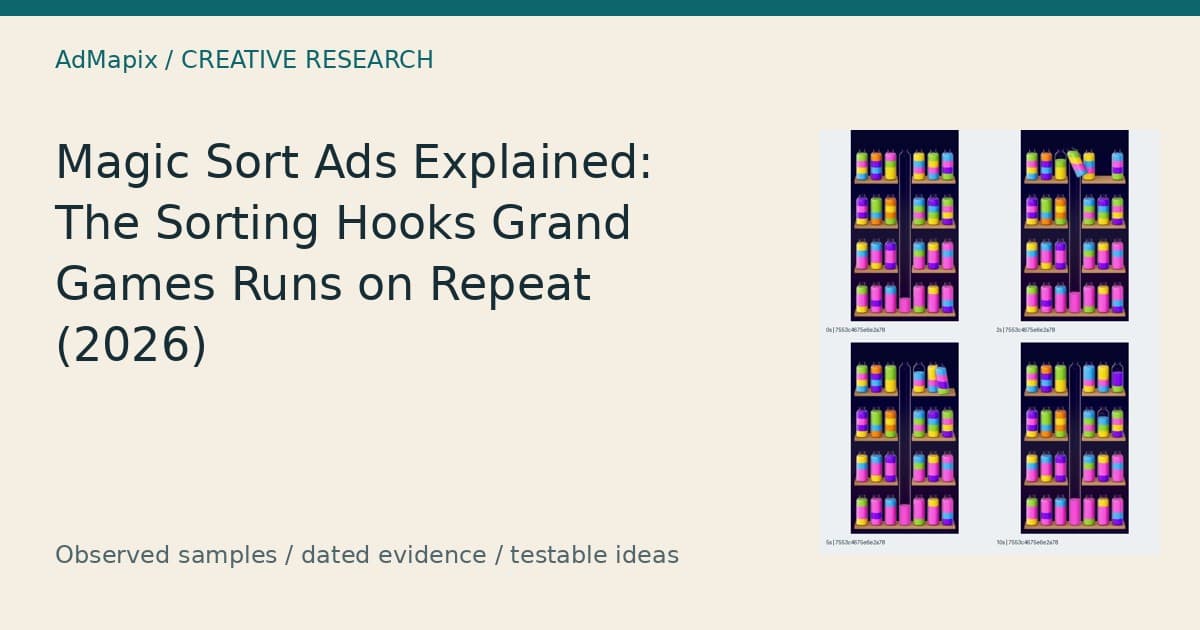
Example 1 places a conspicuously tall container between two banks of shelves, making that vessel a useful visual anchor for the sorting scene. The surrounding bottles contain bright horizontal layers, while the central outline extends through much of the board. The arrangement makes the relationship between many small sources and one unusual destination easy to notice.
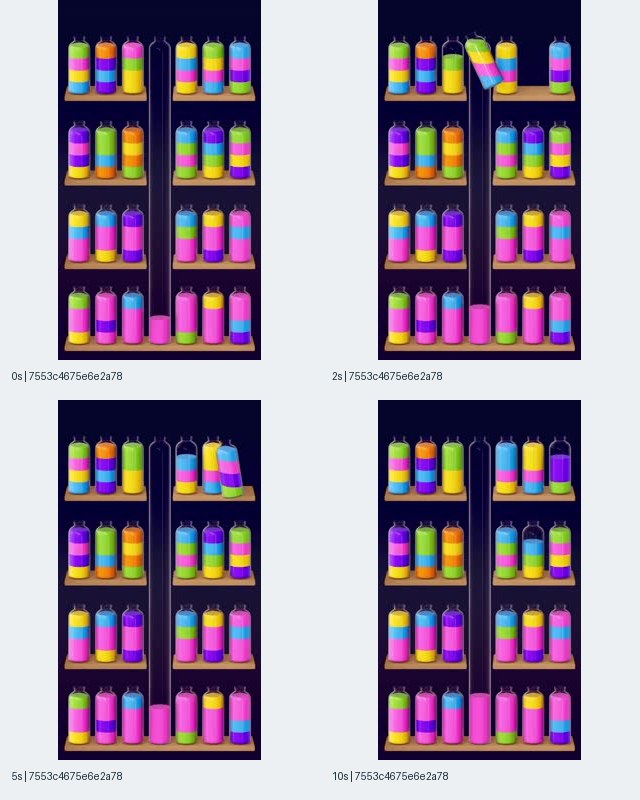
Image 1. Contact sheet for record 7553c4675e6e2a784e88199bd7d6a181, associated with Magic Sort! iOS 6499209744. Only the labelled 0-, 2-, 5-, and 10-second frames are assessed.
At 0 seconds, the board is already populated. The viewer does not need to wait for an introductory character or a separate explanation of the setting. Mixed colors, bottle outlines, and the central vessel are the subject of the opening image. A small pink fill is visible at the bottom of that central container.
At 2 seconds, a bottle near the top is tilted across the central area. At 5 seconds, a different upper arrangement is visible, including another tilted bottle toward the right. By 10 seconds, the upper bottles have changed again while the broader shelf layout remains recognizable. These are selected states; they do not reveal every intermediate transfer.
A plausible creative hypothesis is that the tall vessel helps viewers track one accumulating color while the rest of the board remains complicated. That hypothesis concerns attention and comprehension. It does not establish that the format attracts more installs, or that the unusual vessel is a level mechanic in the installed app.
For an original brief, the transferable decision is to give a busy puzzle one stable reference point. That might be a legitimate receiving container, a clearly marked target, or a highlighted destination in the team's own game. The production requirement should specify how the destination remains identifiable before, during, and after a move.
This example also helps answer the “tiny bottle” question. A shallow amount of liquid at the bottom of a very tall outline should not automatically be described as a separate tiny bottle. The visible boundary of the vessel matters more than the height of its current fill.
Example 2: A Simpler Palette Makes State Changes Easier to Describe
Example 2 presents the shelf-and-central-container arrangement with yellow, red, green, and blue layers. Its useful distinction is the relationship between repeated colors and changing empty space. The board remains crowded, but the analyst can follow particular color regions without relying on a numerical challenge caption.
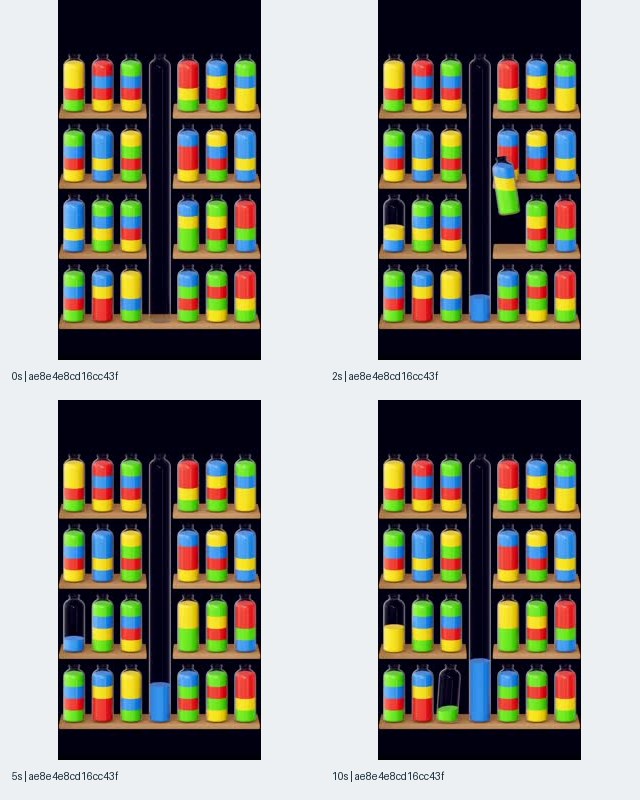
Image 2. Contact sheet for record ae8e4e8cd16cc43f6e6b14c3afb2f31e, linked to the verified Magic Sort! iOS listing. The record reports a 59-second video; the supplied visual evidence stops at the selected 10-second frame.
At 0 seconds, the tall central container appears empty and the smaller bottles show mixed color stacks. At 2 seconds, a bottle on the right is tilted toward the central area, with blue visible at the bottom of the tall container. A bottle on the left has also developed a substantial empty region.
At 5 seconds, blue occupies a larger portion of the central vessel. At 10 seconds, the board has changed again: a lower bottle is tilted and other containers show different amounts of empty space. The contact sheet gives us recognizable before-and-later states, but it does not supply a complete move list.
The creative hypothesis is that a stable palette and consistent camera position make progress readable even when the final objective remains unresolved. To test that idea, a team would need its own comparison between alternative presentations of the same legitimate puzzle. These images do not measure whether viewers actually understood the sequence.
For production, record both the selected source and the intended destination. A pouring animation can look clear to the person building it while leaving an unfamiliar viewer unsure where the liquid went. A useful review asks someone to identify the changed bottle after viewing the proposed sequence, without first explaining the answer.
Do not turn the remaining mixed colors into a failure claim. At 10 seconds, an unfinished board is visible. That establishes incompletion at that selected moment, not an impossible level, a deliberate mistake, or a failed attempt. The distinction matters when a research note becomes an advertising script.
Example 3: Narrow Bottles Create a Denser Puzzle Presentation
Example 3 changes the visual structure by placing many narrow, layered bottles against a wooden background. The available frames make the board appear dense, with thin color bands and limited open space between vessels. That is an observable presentation choice; the actual difficulty of the underlying puzzle remains unverified.
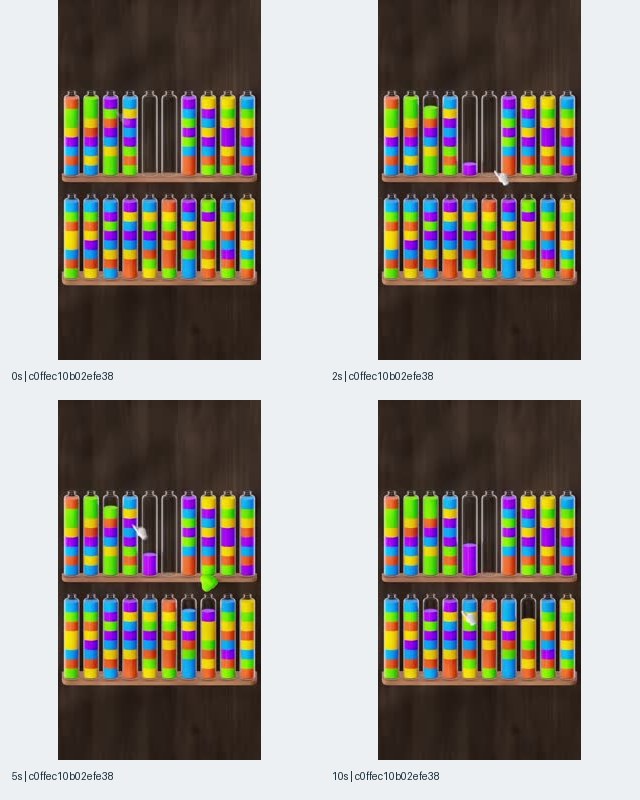
Image 3. Contact sheet for record c0ffec10b02efe38d10fbbe9d17ef173, associated with Magic Sort! iOS 6499209744. The source record lists a 29-second video; only the displayed timestamps are analyzed.
At 0 seconds, the upper row includes empty bottle outlines among densely filled neighbors. At 2 seconds, purple is visible at the base of an upper receiving bottle. By 5 seconds, that purple region is larger, and a bright green pointer-like marker appears near the space between rows. At 10 seconds, additional bottle states have changed, including a lower vessel with a substantial dark or empty upper region above yellow and orange bands.
The image encourages an analytical distinction between visual complexity and rule complexity. Visual complexity concerns how much the viewer must inspect: narrow objects, repeated stripes, close spacing, and similar shapes. Rule complexity concerns what moves are legal and how many steps a solution requires. The contact sheet supports discussion of the former, not a measurement of the latter.
A reasonable hypothesis is that this layout appeals to viewers who enjoy scanning a crowded puzzle for a possible next move. An equally plausible concern is that the narrow bands make the task difficult to read at small display sizes. Neither response has been measured here, so both belong in a test brief rather than a performance conclusion.
For an original adaptation, preserve the actual game's geometry and inspect legibility at the intended display size. If a target color cannot be distinguished from adjacent bands, increasing the challenge wording will not repair the unclear demonstration. The production question is whether the viewer can identify the action without needing a verbal explanation.
This is one of the examples closest to an “impossible-looking” search memory, because the board is visibly crowded. It still contains no visible evidence that the puzzle is unsolvable and no displayed “only 1%” claim in the supplied frames.
Example 4: The Static “Play Now!” Image Shows the Brand Handoff
Example 4 connects the bottle-sorting illustration with explicit Magic Sort branding and a large “Play Now!” button. It is the clearest supplied reference for the transition from showing a puzzle to inviting an action. Its format is static, so we cannot place it at the end of any particular video or describe an animation leading into it.
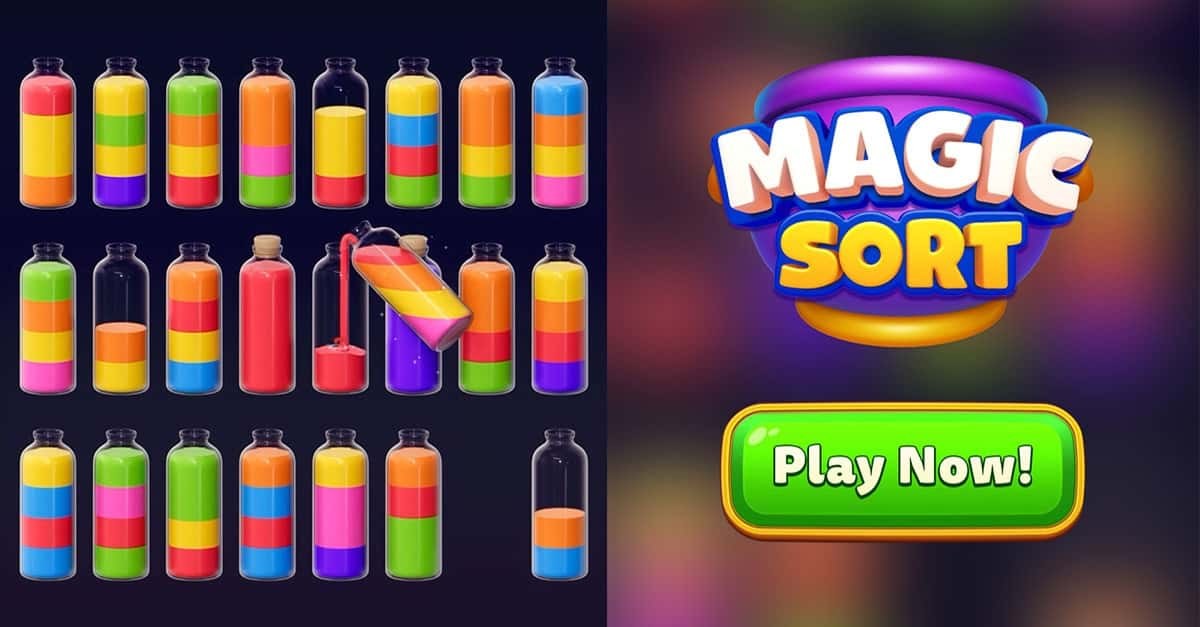
Image 4. Static image from record ee6bbf5cf695ef1dda052ee4cebc5bda, linked to Magic Sort! iOS 6499209744. This is an advertising image or thumbnail, not a verified frame from a video ending.
The left side shows layered bottles, including a tilted vessel and a red pouring stream. Some bottles appear filled with a single color, while others remain mixed or partly empty. On the right, the logo occupies the upper portion and the green button occupies the lower portion. The composition presents the activity and the product name together.
The visible wording is an invitation to play. It does not promise an ad-free experience, unlimited free access, a particular level, or a guaranteed reward. Those are different commercial or gameplay claims and would require their own evidence. A button's wording should not be expanded into conditions that the image does not state.
For a creative team, the practical lesson is to examine what survives the brand handoff. Here, bottles remain present rather than being replaced entirely by a logo. The illustrated action therefore stays connected to the invitation. Whether that connection improves recognition or conversion would need an actual test.
A useful original brief can require the final composition to retain a recognizable object from the demonstration and use the team's own brand assets. It should also state the destination accurately: opening a store page, installing an app, or starting an available interaction are different experiences. The visible button alone does not establish which behavior occurred in this record.
The source sample contains the same image fingerprint in multiple advertising records. That is evidence of static-file reuse. It does not establish that every linked playable used this image in the same position, or that every viewer saw it after the same video sequence.
Example 5: Palette Changes Alter the Reading Task
Example 5 retains the central-container shelf layout while changing the palette to prominent pink, cyan, green, white, and dark bands. This makes it useful for studying how a familiar composition can take on a different visual character without changing its broad arrangement. The dark regions should be described as visible regions, without assigning them an unverified game rule.
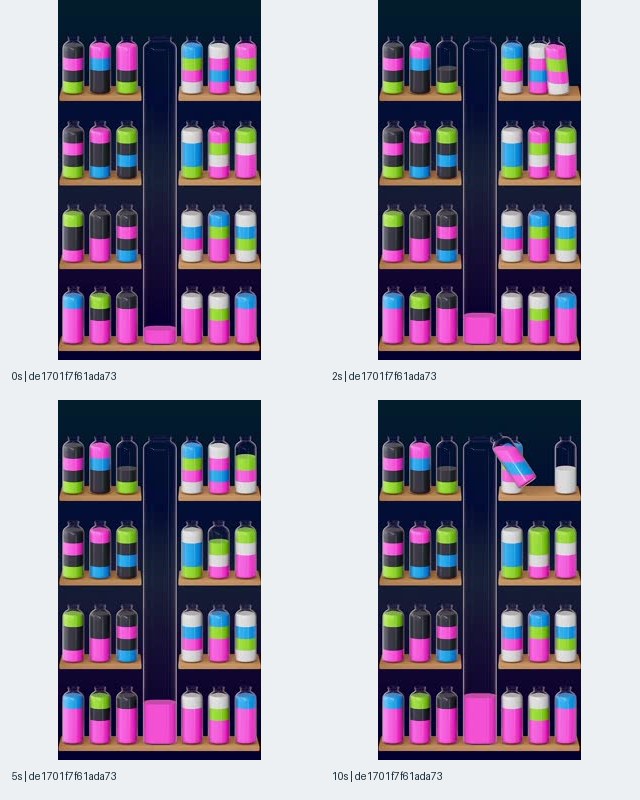
Image 5. Contact sheet for record de1701f7f61ada73c10c09161ac96687, associated with the verified Magic Sort! iOS listing. Observations are limited to 0, 2, 5, and 10 seconds.
At 0 seconds, a short pink region sits at the bottom of the tall central vessel. Several smaller bottles contain broad dark sections. At 2 seconds, pink occupies more of the central base, while an upper bottle on the right is tilted. At 5 seconds, the central pink fill is higher. At 10 seconds, a bottle is tilted over the upper-right shelf area and a neighboring vessel contains a white region.
The dark sections could be interpreted in several ways by an unfamiliar viewer. They might look like another material, an obscured portion, or a strongly shaded area. The supplied evidence does not verify a concealed-color mechanic, so the article does not label this a “mystery bottle” variant.
That uncertainty creates a useful production question: can the visual design communicate the intended rule without requiring viewers to guess what a color or shading treatment means? If the team's actual game uses hidden layers, the reveal should be demonstrated faithfully. If it does not, an ambiguous dark treatment may create an expectation the product cannot satisfy.
A testable hypothesis is that palette contrast changes how quickly a viewer finds the relevant source and destination. To investigate it, keep the puzzle, move sequence, camera, and guidance consistent while changing only the visual treatment being evaluated. A completely different board would make the result harder to interpret.
This reference also shows why aesthetic variation should be tagged separately from mechanical variation. Two ads can feel different because of color and contrast while presenting the same broad sorting action. A research library becomes more useful when those differences remain searchable instead of being collapsed into “new gameplay.”
You can inspect indexed Magic Sort creatives in AdMapix search and compare the visual details with the verified listing. Live results may differ from this frozen collection; preserve the date and product association for anything added to your research.
Example 6: Moving the Tall Receiver Changes the Composition
Example 6 places the unusually tall receiving container at the left edge, with a grid of smaller bottles to its right. The composition gives the receiver a separate vertical lane. This is a meaningful variation on the central-container examples because the viewer's attention must move between the grid and an edge destination.
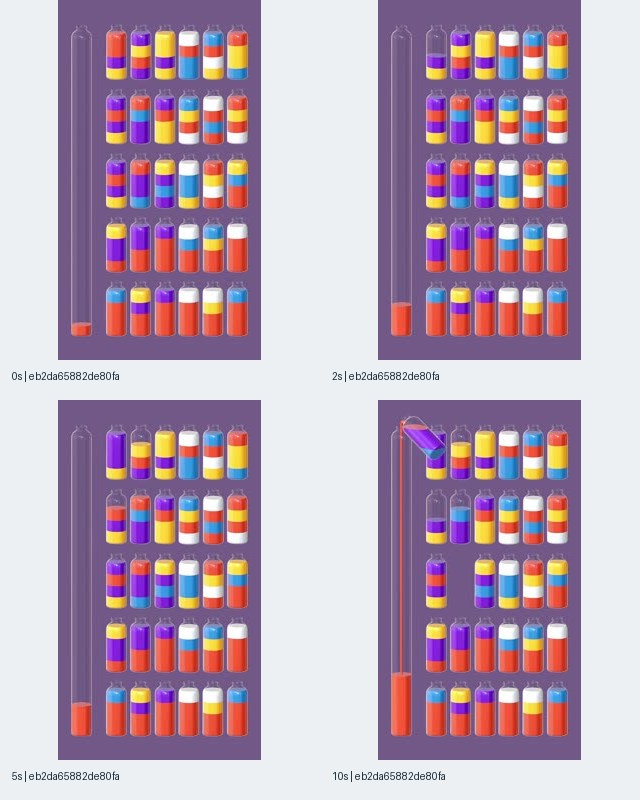
Image 6. Contact sheet for record eb2da65882de80fafae64f7a4593eb8f, associated with Magic Sort! iOS 6499209744. The selected frames show the left receiver and surrounding board; complete playback was not assessed.
At 0 seconds, a small red-orange region is visible at the bottom of the tall bottle. At 2 seconds, the fill has increased. The 5-second frame shows a larger filled section again. At 10 seconds, a small bottle is tilted near the tall vessel's opening and a red-orange stream extends downward along the left side.
The discrepancy between the tall receiver and the ordinary bottles is visually striking. It does not, by itself, establish unusual capacity rules. An illustration can stretch a container for composition, and a game can contain special vessels; deciding which explanation applies requires evidence beyond the frame.
The creative hypothesis is that a dedicated receiving lane makes accumulation easier to monitor. The counter-hypothesis is that an edge destination lengthens the visual path between source selection and result. An original test could compare two truthful layouts of the same supported mechanic, with the resulting comprehension difference measured directly.
For production review, examine the route of the pour and the visibility of the destination opening. The viewer should be able to connect the tilted bottle, the stream, and the changing fill. A decorative stream that cannot be traced to a destination may create motion without communicating the action.
This example is also the clearest reminder that “tiny bottle” and “small amount of liquid” describe different things. The first frame contains little liquid in a very tall bottle. Its outline continues far above the fill. The evidence therefore supports an oversized receiving-container observation, not confirmation of a tiny-capacity challenge.
Example 7: A Hand Overlay Makes the Intended Action Explicit
Example 7 adds a prominent hand pointer to a familiar shelf board, making the intended interaction more explicit in the supplied frames. The hand identifies a bottle or area of interest while the puzzle remains visible. That is evidence of instructional presentation, not evidence that a viewer could actually control this video.
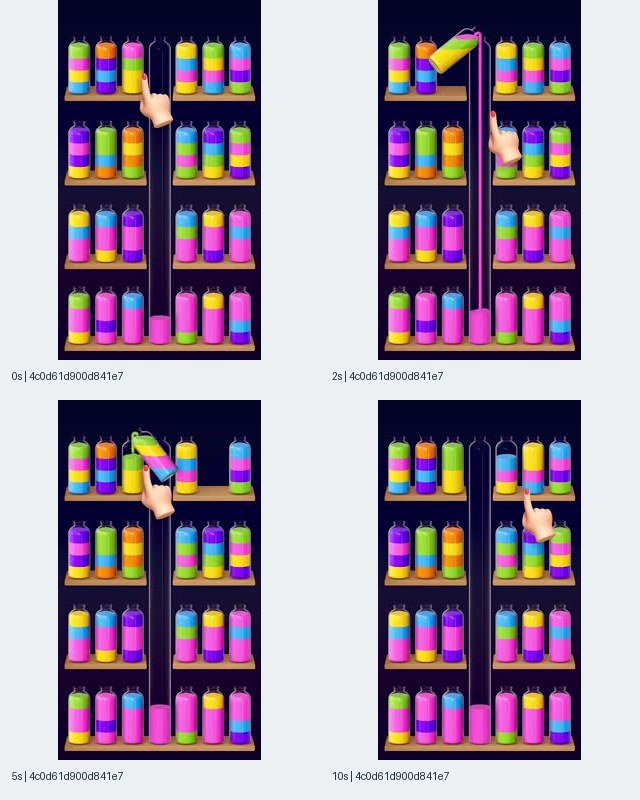
Image 7. Contact sheet for record 4c0d61d900d841e7321d98bd790bb0aa, linked to Magic Sort! iOS 6499209744. The hand is a visible graphic within the sampled video frames.
At 0 seconds, the hand points near an upper bottle on the left side of the central vessel. At 2 seconds, a bottle is tilted near the top while the hand appears farther right, beside the central area. At 5 seconds, the hand is again close to an upper pouring action. At 10 seconds, it points near the upper-right shelf.
Those observations support a guidance role. They do not establish the exact timing of a tap, the number of taps required, or whether the pointer follows a real user's input. A tutorial-style animation and a playable tutorial can look similar in a still frame while requiring very different technical implementations.
A plausible hypothesis is that the hand reduces uncertainty about which bottle matters next. Another is that it partially obscures useful puzzle information. A team can investigate both by creating matched versions with and without the overlay, then checking source identification and destination identification separately.
The brief should specify what the pointer teaches. “Add a hand” is too vague for production because the hand might select a source, indicate a destination, or merely attract attention. Each role should align with the demonstrated action. If the game requires a source-then-destination interaction, the guidance should not imply a different control scheme.
This example should not be treated as a controlled comparison with Example 1. They share broad visual features, but the supplied evidence does not establish identical underlying states, timing, or distribution conditions. Their relationship is useful for forming a guidance hypothesis, not for concluding that a hand overlay caused a performance difference.
Example 8: Similar Opening Frames Can Belong to Different Video Files
Example 8 closely resembles Example 2 in its selected opening frames, yet the source records identify different video fingerprints and different durations. This is a concrete reason to separate visual similarity from file identity. A near-matching contact sheet cannot establish that two complete videos are the same asset.
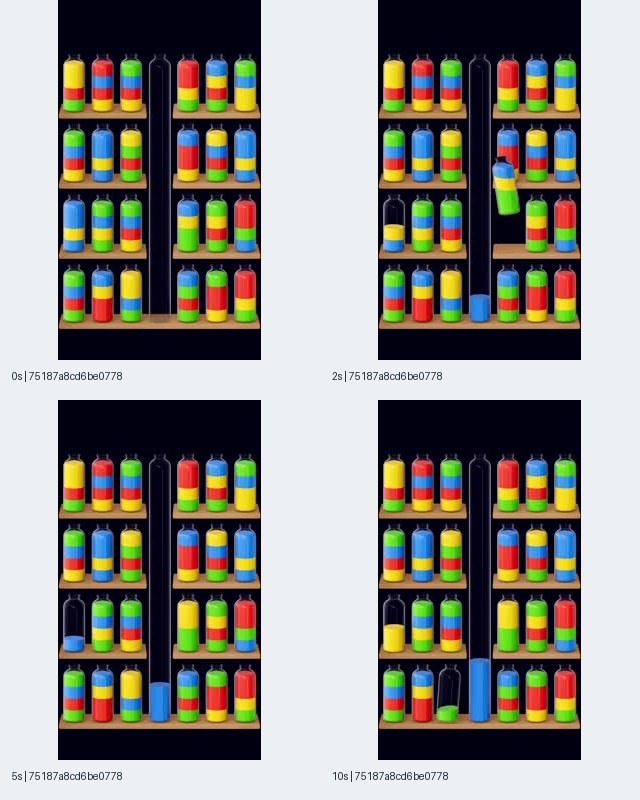
Image 8. Contact sheet for record 75187a8cd6be077880a99dd28ac1e3df, associated with Magic Sort! iOS 6499209744. Its recorded duration is 32 seconds, compared with 59 seconds for Example 2; the displayed frames alone do not reveal the complete difference.
At 0 seconds, the arrangement of yellow, red, green, and blue layers is strongly reminiscent of Example 2. At 2 seconds, a tilted bottle and blue at the central base are visible. The 5- and 10-second states likewise preserve a similar board and progression. These similarities justify grouping the references into a visual family for research.
They do not justify merging the files. Different fingerprints indicate different indexed files, while the duration difference establishes a further distinction in the supplied metadata. The reason could involve editing, a later sequence, encoding, or other differences. The contact sheets do not identify which explanation applies.
For a research library, retain both levels of organization. File identity answers whether the exact indexed video repeats across records. A visual-family label answers whether different files share a recognizable layout or opening. These are complementary fields, and neither should overwrite the other.
For a production team, this distinction prevents inflated claims about concept output. Different exports can belong to the same creative idea, while one source video can appear in multiple advertising combinations. Planning needs to know whether the task is to develop a new concept, edit an existing concept, or change the attached interaction.
The lesson for someone trying to find a remembered ad is equally practical: a matching opening does not guarantee a matching ending. Save the full record identity and reported duration along with the screenshot. If the remembered scene happens later, the opening contact sheet may identify only the family of ads it came from.
Does the Sample Contain the “Tiny Bottle” or “Impossible” Ad?
The supplied visual sample does not establish a tiny-capacity bottle challenge, an impossible puzzle, or an “only 1% can solve” claim. It does contain unusually tall receiving containers, shallow fill levels, and crowded boards that could be relevant when identifying a remembered sorting ad. Those are the closest observed patterns, and they should be described precisely.
In Examples 1, 5, and 6, a small colored region sits at the bottom of a much taller vessel. Looking only at the colored portion could make the receiving area seem short. Looking at the complete outline reveals the larger container. That is why a description should distinguish vessel dimensions from the amount currently inside it.
Example 3 offers a different resemblance to “near-impossible” imagery: many narrow bottles, numerous visible layers, and relatively little open space. The board looks demanding to inspect. But an actual impossibility finding would require a complete state, exact capacities, legal-move rules, and a reliable solution analysis. None is supplied here.
No “only 1% can solve” wording appears in the attached images. The available advertising descriptions are truncated, and complete audio and later video frames were not reviewed. The defensible statement is therefore limited to the supplied evidence: that numerical challenge claim was not observed. It would be too broad to say Magic Sort has never used it.
For players, an effective identification note would describe the receiver's location, background, palette, hand guidance, and any exact text remembered. “Tall bottle on the left, purple background, red-orange fill” is more specific than “the impossible ad.” For researchers, the same details form useful tags that can be checked against future captures.
A team should also resist filling an evidence gap with a plausible genre convention. Bottle-sorting ads may invite a difficulty interpretation, but an interpretation is not a quotation. If a brief needs a numerical challenge line, its factual basis must be established separately; the present sample cannot supply it.
Do These Ads Match the Actual Magic Sort Game?
The evidence confirms the advertised product's identity but does not verify that the illustrated layouts appear in the installed game. The frozen store information identifies Magic Sort! and its seller; it does not include a gameplay session or enough listing content to establish the exact tall-bottle mechanics. A full ad-to-game match therefore remains unresolved.
The verified destination is the US App Store listing for Magic Sort!, ID 6499209744. The recorded seller is GRAND GAMES OYUN VE YAZILIM ANONIM SIRKETI. These facts answer which product the sample is associated with. They do not answer whether a particular board exists, how it is unlocked, or what a new player experiences first.
The visible creative promise can be broken into several parts. The broad action is moving layered colors among bottles. The visual packaging includes shelves, dense grids, and oversized receivers. The implied interaction is choosing a bottle or destination, sometimes with hand guidance. The static invitation is “Play Now!” Each part calls for a different kind of verification.
| Creative promise | Evidence available here | What would establish a closer game match |
|---|---|---|
| Bottle-sorting activity | Visible throughout the selected images | Dated listing content or an installed-game session showing the activity |
| Tall central or left-side receiver | Visible in several examples | A documented game mode or level with that container |
| The exact advertised board | Only selected advertising states | Matching game state, rules, and access conditions |
| Hand-guided interaction | Visible overlay in Example 7 | A session demonstrating the real control sequence |
| Ad-free or free-play conditions | No such verified promise in these images | Current product terms and observed access conditions |
The ad-versus-gameplay framework is useful because it separates a broad mechanic match from an exact experience match. A game can involve bottle sorting while still differing from a particular advertised layout. Conversely, an unusual advertising presentation does not itself prove that the promised activity is absent.
A proper follow-up would record the app version, country, device, and date, then document the path from installation to the relevant mechanic. If the advertised board cannot be found, the report should describe what was checked and what remains unknown. This article does not call the ads fake or claim the advertised levels are available, because neither conclusion is established by the supplied evidence.
Video Reuse: What 30 Records and 16 Video Files Actually Mean
The sample documents repeated use of exact video files across different advertising records. Its 30 records contain 23 video-bearing entries, which resolve to 16 distinct video fingerprints after treating fingerprint fields as lists and deduplicating their members. This is a file-level finding within the stated US window, not an estimate of the team's total concept production.
The clearest example is the video shown in Image 1. Its fingerprint appears in four records: 7553c467, de1afcde, 3833437a, and a3585a6c. Each is associated with a different playable fingerprint. That supports the statement that one indexed video file appears in several video-and-playable combinations.
Other examples show the same relationship on a smaller scale. The video in Image 2 appears in records ae8e4e8c and 922bc0a0, with different playable associations. The video in Image 5 appears in de1701f7 and 37e8872f, also with different playable associations. The video in Image 6 appears in eb2da658 and 67f0cc8e, again with different linked playable files.
| Visible reference | Records sharing its video file | Observed relationship |
|---|---|---|
| Image 1 | 7553c467, de1afcde, 3833437a, a3585a6c | Same video fingerprint, different playable fingerprints |
| Image 2 | ae8e4e8c, 922bc0a0 | Same video fingerprint, different playable fingerprints |
| Image 5 | de1701f7, 37e8872f | Same video fingerprint, different playable fingerprints |
| Image 6 | eb2da658, 67f0cc8e | Same video fingerprint, different playable fingerprints |
The identifiers are shortened here for readability; the public source package preserves the full records. These relationships can be checked without guessing from thumbnails. They also explain why counting every row as a newly produced video would overstate file diversity.
The finding does not establish why the combinations exist. They could reflect creative testing, packaging, distribution requirements, or another operational choice. The sample does not contain the experiment assignments or account decisions needed to distinguish those explanations. “Reusable components are present” is supported; “the team proved a particular end card wins” is not.
A second distinction concerns concepts. Sixteen different video fingerprints do not necessarily mean sixteen wholly different ideas. Images 2 and 8 demonstrate how different files can share similar opening visuals. A useful report therefore keeps three separate concepts: advertising records, exact media files, and manually assessed visual families.
For planning, this changes the production conversation. A team can ask whether it needs a new puzzle premise, a different presentation of the same premise, or a different linked interaction. That is more actionable than ordering additional “creatives” without specifying which component should change.
Playable Associations Do Not Reveal the Whole User Journey
The sample's 29 records with playable associations and 13 distinct playable fingerprints show that an interactive component is frequently linked to the sampled records. They do not show when that component appeared, what interactions it accepted, or whether its visual promise matched the accompanying video. Those questions require playable inspection that was not supplied.
A playable ad is an advertising unit designed to accept user interaction. In this article, a playable fingerprint is evidence that the source indexes a linked file in that category. It is not proof that the article's author opened it, completed it, or observed its behavior on a device.
That distinction matters for the static “Play Now!” image. A button can be part of an image associated with a playable record, but the image alone cannot establish the playable's start state. It also cannot tell us whether pressing anywhere on the screen opens the store, whether sorting is possible first, or whether a success state appears.
For a later inspection, record the initial screen, the first accepted input, the first visible response, any completion or failure state, and the destination of the call to action. Preserve the video-to-playable pairing rather than reviewing the interactive component in isolation. The promise made by the video is part of the context in which the interaction is interpreted.
A useful hypothesis from this sample is that a reusable sorting video can support multiple interaction treatments. The confirmed fact is only the file relationship. To determine whether the treatments differ in guidance, difficulty, or completion behavior, each linked playable would need to be examined under documented conditions.
The practical recommendation is to name the deliverable precisely. “New playable association,” “new playable file,” and “verified new interaction design” describe progressively stronger findings. Using the strongest label before doing the corresponding inspection creates false certainty in a production report.
Where Magic Sort Sits in Grand Games' Portfolio
Magic Sort is linked to Grand Games by the verified iOS listing and seller information, and the supplied chart snapshots place it near the top of the US free Games chart. That establishes product identity and dated chart context. It does not establish its share of publisher revenue, its advertising budget, or its strategic priority relative to other titles.
AdMapix's supplied store-rank snapshot places Magic Sort! at #3 on 2026-10-11, compared with #5 on 2026-09-11, in the US App Store free Games chart. The comparison was pulled on 2026-10-13. These are chart positions on two dates, not download counts or a continuous ranking history.
The Grand Games portfolio playbook provides broader publisher context. This article does not import that page's older aggregates into the current measurement window or assume that another title's creative system applies to Magic Sort. The present finding is narrower: reusable video-and-playable combinations are visible in this Magic Sort sample itself.
There is no causal bridge from those combinations to the chart movement. The evidence does not isolate advertising effects from product changes, store presentation, organic discovery, seasonality, or other factors. Saying the game moved from the supplied #5 snapshot to the supplied #3 snapshot is accurate. Saying the tall-bottle ads caused the rise would exceed the evidence.
For a publisher-level research brief, keep a separate row for each verified product and measurement period. Shared seller identity permits a portfolio grouping, but it should not erase product-specific evidence. A recurring visual structure across titles would need to be demonstrated with comparable examples before being described as a publisher-wide creative practice.
A Practical Workflow for Finding and Documenting a Remembered Ad
A useful identification workflow starts with observable details and ends with a source-linked record, rather than stopping at a similar-looking thumbnail. The goal is to preserve enough information that another person can recognize the same example and understand what was actually checked. Players can use a lightweight version; research teams can use the full record.
First, write down the scene before searching. Useful details include the location of the unusual container, the background, the main colors, whether a hand appears, and any exact on-screen wording. Separate confident memories from uncertain ones. “There was a tall bottle on the left” is a stronger search clue than an uncertain interpretation such as “the game was impossible.”
Second, establish the product identity. For this article, the reference is iOS 6499209744. A name search can help discover candidates, but the linked store identity decides whether a candidate belongs in this product-specific collection. A matching title or familiar icon is insufficient when the underlying listing differs.
Third, preserve the search scope. Record the country, collection date, measurement bounds, and whether the results were ordered by discovery or estimated impressions. A query aimed at finding recent variants answers a different question from a query ordered by estimated volume. Neither should be silently presented as the entire advertising history.
Fourth, save a source-linked observation. Include the advertising record identifier, relevant file identity, observed timestamp, and a sentence describing the visible scene. If only a contact sheet is available, say so. If a later full playback is reviewed, add that as a new observation rather than rewriting the earlier evidence as though it had always been complete.
Fifth, distinguish the matches. An exact file match, a similar opening, a shared board layout, and a remembered color palette represent different confidence levels. Image 8 demonstrates why this matters: a familiar opening can belong to a different file with a different recorded duration.
Sixth, preserve unresolved questions. If the viewer remembers a tiny bottle but the reference shows a tall outline with a shallow fill, note the discrepancy. Do not force the reference to fit the memory. The unresolved detail becomes a targeted question for the next search.
A compact record could read:
Product: Magic Sort!, iOS 6499209744. Scope: US, 2026-09-17 to 2026-10-16. Reference: Image 6, record eb2da658. Observed: tall left-side receiver, red-orange fill increasing across selected frames, tilted bottle at 10 seconds. Unknown: full ending, audio, exact capacity rules, installed-game availability. Next action: inspect the complete source and compare the promised mechanic with dated game evidence.
That note is useful because it can be checked. It avoids attaching a performance conclusion or a gameplay guarantee to a visual resemblance.
Turn the Observations Into an Original Creative Brief
An original brief should translate one observed structural choice into a testable question for the team's own product. It should preserve the real game's rules and use original art, layout, and wording. The value of these references lies in identifying decisions worth examining, not in reproducing Magic Sort's assets.
Consider a hypothetical team whose game already supports bottle sorting. The team wants to know whether viewers understand the destination of a pour. Images 1 and 6 suggest a research question about destination placement. Image 7 suggests a separate question about guidance. Those questions should become separate briefs unless the team deliberately designs a broader experiment.
| Brief field | Example instruction for an original production |
|---|---|
| Product truth | Use a documented, available sorting mechanic from our game |
| Viewer question | Can a new viewer identify where the selected color should go? |
| Reference observation | Several sampled ads give the receiving vessel a conspicuous position |
| Hypothesis | A stable destination may improve comprehension of the demonstrated move |
| Variable | Destination emphasis, with the underlying puzzle held consistent |
| Required footage | Initial state, selected source, transfer, and resulting state |
| Guidance | Specify whether the hand selects the source or identifies the destination |
| Claims boundary | No invented solve rate, impossible-level claim, or unsupported access promise |
| Handoff | Show our brand and accurately describe the next action |
| Acceptance evidence | Source capture and a check that the depicted move follows our rules |
The storyboard should describe changes, not just shots. “Show a colorful board” leaves the editor without a clear informational goal. “Show the initial board, identify the source, preserve the destination in view during the pour, then show the resulting layer” describes a sequence whose clarity can be evaluated.
The same principle applies to challenge framing. If the goal is to invite a next-move judgment, ask a concrete question that the footage supports. Do not replace missing puzzle clarity with a numerical boast. An audience can be invited to consider a move without being told that nearly everyone fails.
For a palette brief inspired by Image 5, define which colors or shading treatments are under examination and what must remain fixed. If the purpose is to improve layer recognition, request checks on small-screen readability and adjacent-band separation. If the purpose is to communicate a real hidden-layer mechanic, require footage showing the reveal rather than relying on a dark patch alone.
For a guidance brief inspired by Image 7, specify the hand's timing and role. Ask whether it should disappear after the selection so the resulting state remains visible. The producer can then assess whether the overlay teaches the action or simply competes with it.
The broader puzzle-game advertising examples guide offers additional genre context. For this project, however, keep the brief tied to the specific question raised by the dated Magic Sort examples. A focused question produces a more interpretable result than a collection of unrelated visual changes.
How to Test the Hypotheses Without Borrowing a Performance Claim
The hypotheses in this article require new evidence before they can guide a performance decision. A sensible testing sequence first checks whether the intended action is understandable, then evaluates campaign outcomes under documented conditions. Neither stage was completed for this article, and no result is implied by the existence of a proposed test.
For a comprehension check, show the original production to people who were not involved in making it. Ask them to identify the selected source, the intended destination, and the visible result. Record their answers before explaining the scene. This can reveal whether a tall receiver, a hand overlay, or a palette treatment communicates what the team intended.
Keep the questions descriptive. “Which bottle receives the color?” checks understanding. “Did this exciting ad make you want to play?” combines a leading adjective with a different objective. A participant can understand a move without finding the game appealing, and can find the image appealing without understanding the move.
For a campaign test, document the variable and the conditions that should remain comparable. If the question concerns hand guidance, changing the board, duration, soundtrack, and destination at the same time would make the result difficult to interpret. Preserve a version record so that a later report can identify what was actually delivered.
Choose outcomes that match the decision. A click measure can help assess an immediate response, but it does not establish that the installed experience matches the promise. Post-install behavior may be relevant to that broader question, provided the team has legitimate access to its own measurement and a consistent attribution approach.
Avoid inventing universal sample sizes or thresholds from this creative reference. The required test size depends on the baseline, the outcome being measured, the smallest difference worth acting on, and the uncertainty the team can accept. Those inputs are absent here. A published rule such as “run every variant for a fixed number of days” would create precision without a basis.
Before reading the result, write down what would count as support, contradiction, or insufficient evidence. If a pointer makes source identification clearer but does not improve the campaign outcome, preserve both findings. They answer different questions. Do not erase the comprehension result or promote it into a conversion claim.
Finally, record the cost of the production change using the team's actual records. Reuse may reduce work in some circumstances, but the Magic Sort fingerprints do not reveal production hours, tooling, staffing, or cost. Any efficiency claim about the team's own process should come from its own documented work.
Common Mistakes When Reading Magic Sort Ads
The most damaging mistakes arise when a visible feature is promoted into a stronger claim without the evidence required for that claim. This sample is useful precisely because it contains several tempting shortcuts: unusual bottles, long-lived records, repeated files, similar openings, and a clear store identity. Each needs its own interpretation boundary.
Calling shallow liquid a tiny bottle. In several frames, the colored fill is short but the transparent vessel extends much farther upward. Inspect the outline before describing capacity. A cropped screenshot or a remembered color patch can hide the geometry that changes the interpretation.
Calling a crowded board impossible. Dense layers and limited empty space can make a board look challenging. Actual impossibility depends on rules and complete state information. Without those, describe the visual challenge and leave the solution status unresolved.
Treating the last displayed frame as the ending. The contact sheets stop at a selected 10-second frame, while the linked records may report longer videos. The final displayed panel is the end of the supplied visual inspection, not necessarily the end of the advertisement.
Calling a static image an end card. Image 4 has an end-card-like composition, but its temporal role is unknown. Describe its logo, illustrated action, and button. Do not attach it to a particular video's ending without a verified sequence.
Counting records as distinct videos. The sample contains 30 records and 16 distinct video fingerprints. Neither number can replace the other. A production estimate based on the record count would confuse advertising combinations with underlying files.
Treating different fingerprints as different concepts. Images 2 and 8 share similar opening visuals while belonging to different files. Keep file identity and visual-family labels separate so that export variation does not automatically become concept variation.
Reading longevity as profitability. A record's first and latest observations establish indexed observations. They do not establish continuous delivery, profitable acquisition, or the absence of creative fatigue. The sample contains no campaign economics to support those conclusions.
Assigning a network from the appearance of the ad. Portrait format, hand guidance, and a playable association do not identify a distribution network. The supplied source code lacks a verified network mapping, so this article declines that inference.
Using chart movement to validate the hook. The supplied chart positions are real dated context, but the dataset does not isolate their causes. A product's chart position and a visual pattern can coexist without establishing that one caused the other.
Turning missing evidence into a negative product claim. Not seeing a tiny-bottle scene in these selected frames does not prove it never existed. Not verifying an exact level does not prove it is absent. Report the search and inspection limits with the result.
When AdMapix Fits This Research Task
AdMapix fits the discovery and evidence-organization stage: finding indexed creative references, checking their associated products, and preserving the sample behind a research decision. This article demonstrates that role through a dated collection and traceable media relationships. It does not present AdMapix as a source of a competitor's private conversion results or a substitute for playing the game.
For a player, the immediate task may simply be locating a remembered scene. For a creative team, the task may be comparing visual families, identifying repeated files, or preparing an original brief. Both tasks benefit from a source record that stays attached to the screenshot and from a clear statement of what has been viewed.
A live search should begin with the product association and the question being investigated. If the goal is to find a particular receiver layout, inspect that feature directly. If the goal is to understand reuse, compare file identities and linked components. If the goal is to verify gameplay, obtain dated product evidence rather than expecting the advertising index to answer the whole question.
For current access conditions, consult the live AdMapix pricing page. Commercial terms can change, so this evergreen analysis does not enumerate plan prices or credit allocations and does not promise a paid-plan trial.
Start my Magic Sort research in AdMapix — sign up or log in to inspect live indexed data, then preserve the product identity, dates, and source records behind your findings. Live results are a new observation, not an automatic replacement for this frozen sample.
FAQ
What do the sampled Magic Sort ads show?
They show layered colors in bottles, selected pouring actions, crowded boards, and several unusually tall receiving containers. Some examples add hand guidance; one static image combines the bottle illustration with the Magic Sort logo and “Play Now!” wording. These findings come from selected timestamped frames and a static image, so they do not describe every moment of the linked videos.
Is the Magic Sort tiny-bottle ad included here?
The supplied images do not establish a tiny-capacity bottle challenge. Several show a shallow colored fill at the base of a much taller transparent container. That distinction may help identify a remembered scene, but it does not prove that this is the specific ad a searcher recalls. A complete source capture would be needed to resolve additional details.
Does Magic Sort use an “only 1% can solve” claim?
No such wording was observed in the supplied visual references. That is a finding about these images, not a statement about every Magic Sort advertisement. The available descriptions are truncated, and complete audio and later video frames were not reviewed. A numerical solve-rate claim would need an exact captured quotation and supporting evidence before being repeated as fact.
Are these the same puzzles available in the game?
The records are associated with the verified Magic Sort! iOS listing, but the evidence does not establish exact level availability. The stored listing information verifies the product name, ID, bundle, and seller. It does not provide a gameplay session demonstrating the tall receiver or each advertised board. The exact ad-to-game match therefore remains an open verification task.
How many different Magic Sort videos were in the sample?
The 30 advertising records include 23 records containing video, which resolve to 16 distinct video fingerprints. This is a file-level count within the US sample for 2026-09-17 to 2026-10-16. It is not the game's total advertising output, and it does not necessarily equal the number of original concepts because different files can share similar openings.
Does video reuse mean those ads performed well?
No performance conclusion follows from reuse alone. The records show the same video files associated with different playable files, but they do not supply conversion results, spend, profit, or experiment assignments. Reuse is an observable production and packaging relationship. Its effectiveness would need to be assessed using appropriate campaign data under a defined measurement method.
Do these ads prove Magic Sort is free or has no ads?
No. The supplied static image says “Play Now!”, and the chart evidence concerns the US free Games chart. Neither establishes an ad-free installed experience, the scope of any free access, or current purchase conditions. Players should check current listing information and in-app terms. This article did not install the app or test its monetization experience.
Can this sample identify the advertising network or buyer?
It cannot establish either with confidence. The source records contain a shared source code without a supplied verified network mapping, while the store association identifies the destination product. A product match does not identify who paid for the ad. Accordingly, this article avoids network-specific coverage claims and does not name a verified advertising payer.
Key Takeaways
The defensible lesson from this Magic Sort sample is how to document a sorting hook and its reuse without turning visual evidence into a performance story.
- Describe the visible mechanism: layered bottles, pouring, receiver placement, board density, and guidance.
- Keep the tiny-bottle and impossible-puzzle questions unresolved when the supplied frames do not establish them.
- Separate verified product identity from exact gameplay availability, network attribution, and buyer identity.
- Report 30 advertising records, 23 video-bearing records, 16 distinct video files, and 13 distinct playable files as different measurements.
- Turn each observation into an original, falsifiable brief, then use new evidence to decide whether the resulting creative works for your own product.
Sources
The sources below support the dated sample, product identity, methodological boundaries, and research handoff; they do not supply an installed-game test or campaign conversion evidence.
- Frozen advertising source package, collected 2026-10-16: Public sample, request parameters, batches, and checksums. Scope: US, 2026-09-17 to 2026-10-16, verified iOS reference 6499209744, bounded collection of 30 records. Includes the basis for record counts, media fingerprints, and example attribution.
- Verified store reference in the 2026-10-16 evidence: Magic Sort! on the US App Store. Supports product identity and seller attribution. Exact advertised-level availability was not verified.
- AdMapix store-rank snapshots, supplied comparison pulled 2026-10-13: US App Store free Games chart, #3 on 2026-10-11 and #5 on 2026-09-11. These dated positions are used only as chart context, without download or causal claims.
- AdMapix methodology, referenced for this 2026-10-16 analysis: Measurement scope and limitations. Product documentation was supplied with a 2026-08-13 review date; this article applies the explicit window and estimate boundaries stated in the frozen sample.
- AdMapix product/search workflow, referenced 2026-10-16: Magic Sort creative search. A live discovery entry point; it may return a different collection from the archived sample and does not guarantee a complete advertising history.
Turn these observations into your next creative study
Open the creative library and select samples for your market, network and research question.
Related Articles
TikTok Shop Ads: Home-Product Demonstration Ideas
Use eight dated home-product advertising references to plan measured-fit shots, honest setup demonstrations, clear result sequences, and original creative tests without assuming Shop attribution or campaign performance.
Competitor Price Analysis: Compare Offers and Proof
Use eight dated advertising examples to distinguish discounts, coupons, bundles, shipping, and incomplete trial claims, then build a traceable offer comparison and original testing brief.
Halloween Ads: Seasonal Hooks That Keep the Product Clear
Analyze eight dated Halloween advertising examples and turn seasonal artwork, product demonstrations, and visible claims into original briefs with clear evidence limits and practical testing steps.