
Amaze GO Game Ads: Arrow Puzzles, Hooks, and Video Reuse
A verified US iOS sample links 30 Amaze GO advertising records to 24 video files and 10 playable files, with eight visual analyses covering arrow puzzles, relaxation claims, filmed challenges, and practical creative tests.
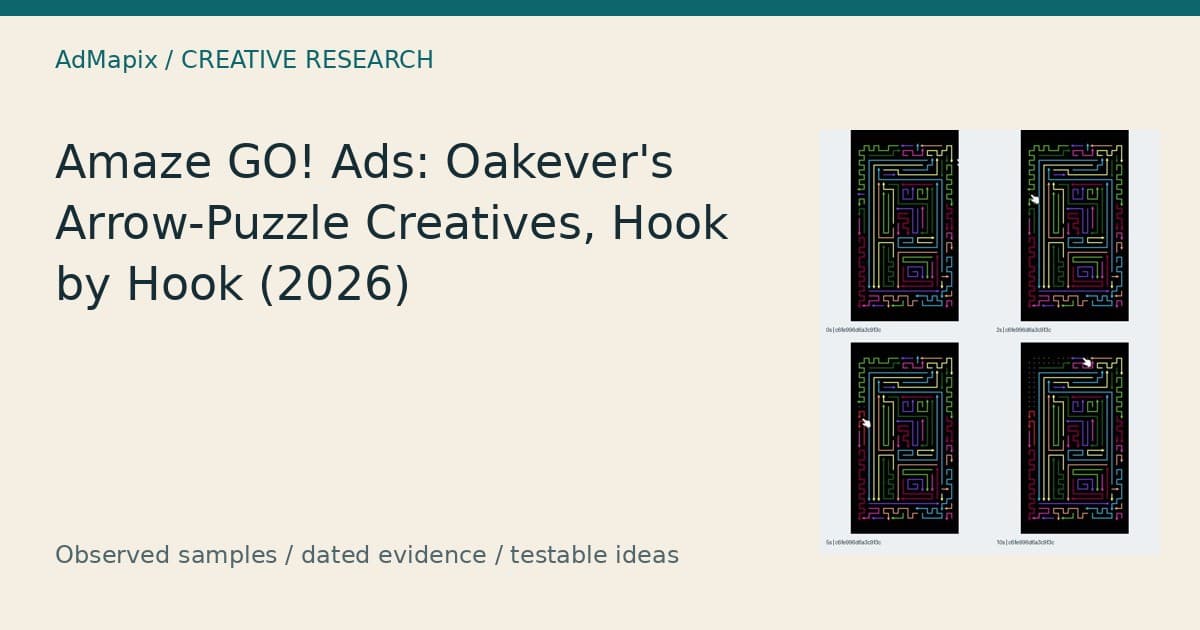
Amaze GO Game Ads: Arrow Puzzles, Hooks, and Video Reuse
Amaze GO game ads in this dated sample show more than arrow puzzles: they also use relaxation promises, filmed dot-connection challenges, and a colorful animal reveal. The clearest gameplay-style examples place a hand pointer over densely packed arrows, with selected paths disappearing or receiving red feedback in the supplied frames. No money-making or payout promise appears in the supplied advertising text or eight contact sheets; that finding does not establish whether the app offers rewards.
For user-acquisition managers and creative teams, the useful decision is which visual idea to investigate and turn into an original test. This analysis connects those ideas to a verified iOS listing, separates repeated videos from advertising records, and explains what remains unknown about gameplay, distribution, and results.
Last updated: 2026-10-21.
AdMapix Research — prepared with Codex and checked against the dated source sample. Editorial ownership: Brad at AdMapix. This disclosure does not imply personal human review. AdMapix is our product.
Quick Answer
Amaze GO’s sampled advertising presents several different invitations to engage: inspect an arrow board, react to a visible mistake, read a relaxation promise, or watch someone attempt a spatial challenge.
- The US sample for 2026-09-22 to 2026-10-21 contains 30 advertising records, associated with 24 distinct video fingerprints and 10 distinct playable fingerprints.
- The eight illustrated examples show arrow demonstrations, decorative text presentations, filmed dot puzzles, and an animal-shaped visual opening.
- Reuse is directly supported within this Amaze GO sample, including the same video associated with different playable files. Cross-title reuse with Meowdoku is not established.
- The visible phrase “No annoying ads” is advertising copy, not verified evidence of an ad-free app. No visible payout promise was found in the inspected material.
What This Sample Can Help a Creative Team Decide
This sample helps teams choose a communication problem to test: explaining an action, making feedback legible, presenting a benefit, or connecting an attention-grabbing opening to a recognizable puzzle. It does not identify the most profitable approach. Those are different decisions, and the distinction determines whether the research produces a useful brief or an unsupported recommendation to copy a competitor.
The examples are especially useful because similar ideas appear in different visual treatments. A tall arrow board appears with bright lines on black and dark lines on white. A relaxation message appears on parchment and inside a floral border. A dot-connection challenge appears on a television and on a street-side board. These pairings let a researcher separate the underlying communication task from its scenery.
For a production team, that separation changes the assignment. “Make something like the floral ad” leaves the writer, designer, and editor guessing about what matters. “Test a readable benefit statement before the first puzzle demonstration, using an original visual treatment” defines a question. It also leaves room to reject the concept if viewers misunderstand the product.
This article belongs to the AdMapix ad strategy teardown series. Its contribution is a bounded examination of this game’s supplied records and frames. It does not turn the series into a common performance benchmark or import results from other titles.
Methodology: Verified Listing, Exact Window, and Observation Limits
The analysis uses a product-filtered US sample collected on 2026-10-21, with the explicit measurement window 2026-09-22 to 2026-10-21 and the discovery query “Amaze GO.” The verified reference is iOS App Store ID 6758326278, listed as Amaze GO!™, with seller OAKEVER GAMES PTE. LTD. Product identity comes from that store ID, not from a matching title or a visual resemblance to another arrow game.
The supplied US App Store reference identifies the listing used for inclusion. The sampling requests selected that verified iOS product across three pages of ten records, requesting descending order by estimated impressions. Every retained record includes the reference listing among its product associations. This is a verified-product sample, rather than a name-search attribution audit.
Several records also associate with another store identifier. That does not make this an Android study, and it does not establish that a record’s impression estimate is exclusively attributable to iOS. Throughout the article, “iOS sample” describes the verified listing used to select records. It is not a claim that the supplied delivery estimates have been separated by operating system.
The public frozen source package preserves the dated batches, request parameters, and checksums. Readers can reproduce the sample accounting from that package. Checksums establish which saved material is being referenced; they do not validate the accuracy of an impression model or prove the quality of a creative.
Visual analysis is limited to eight supplied contact sheets, each containing frames labelled 0, 2, 5, and 10 seconds. A contact sheet is a set of selected video frames assembled into one image. It supports observations about those images and differences between them. It does not supply continuous playback, a complete transcript, audio, or the remainder of each video.
No app session, interactive playable session, external tool test, conversion experiment, or advertiser-account analysis was supplied. The article therefore distinguishes what appears in the images from hypotheses about why a producer might use it. Statements about likely attention, understanding, curiosity, or frustration are test hypotheses, not measured audience responses.
All impression figures below are third-party model estimates for the stated window. They are not observed delivery, unique people, spending, installs, revenue, profit, or lifetime totals. Product-search impression and spend aggregates are excluded. We do not divide window estimates by a record’s age or use continued observation as proof of performance.
The records contain a source identifier, but the supplied evidence does not establish its network name. Consequently, these examples are not labelled as Meta, TikTok, Google, AppLovin, or another specific network. Their vertical presentation does not resolve that uncertainty. The sampling limit also means that the results should not be described as Amaze GO’s complete advertising inventory.
Evidence Table: Records, Files, and Illustrated Examples
The sample contains overlapping media associations, so advertising records and media files must be counted separately. An advertising record is an indexed instance; a fingerprint identifies a media file within the supplied data. Multiple records can point to the same video, while a single record can contain both a video and a playable association.
| Measure | Count in this sample | Meaning |
|---|---|---|
| Advertising records | 30 | Retained records associated with the verified iOS reference |
| Records containing video | 28 | Records with at least one video fingerprint |
| Distinct video fingerprints | 24 | Video files after deduplication across fingerprint arrays |
| Records containing a playable association | 23 | Includes records that also contain video |
| Distinct playable fingerprints | 10 | Playable files after deduplication |
| Playable-only records | 2 | Records with a playable fingerprint and no video fingerprint |
| Distinct image fingerprints | 1 | Indexed image-file count; not the number of editorial contact sheets |
The playable-only count is supported by records beginning 95d99794 and ef1e7e96, which contain playable associations without video associations. A playable association does not prove how the interaction appeared, whether it worked, or where it followed a video. Those questions require an interaction capture.
The following table ties the visual examples to individual records. Short record identifiers match the labels on the images and can be located in the public source package.
| Image | Record begins | Visible subject | Estimated record impressions, 2026-09-22 to 2026-10-21 |
|---|---|---|---|
| 1 | c6fe996d | Neon arrow board on black | 340,534,463 |
| 2 | 8b899a72 | Heart-shaped arrow board with error feedback | 340,485,496 |
| 3 | 199a95da | Tall monochrome arrow board | 336,496,586 |
| 4 | 873bbd28 | Parchment with relaxation copy | 179,310,723 |
| 5 | 9d75c6ac | Television dot puzzle and later illustrated panel | 172,595,178 |
| 6 | 2f7447bf | Floral border with relaxation copy | 142,601,284 |
| 7 | dcc3822a | Street-side dot-connection challenge | 121,285,794 |
| 8 | d387de52 | Giraffe-like outline and dense colored puzzle | 121,173,287 |
These estimates describe individual sampled records, including any listed product associations. They are provided for traceability, not as a ranking of conversion quality. The eight images illustrate selected distinct videos; they do not visually audit all video files in the sample.
Sample 1: The Neon Arrow Board Makes the Puzzle the Opening
The neon example opens directly on a tall arrow board, giving the viewer a spatial task before presenting a written benefit. Colored paths occupy most of the black field, and arrowheads indicate different directions. Later sampled frames show a white hand pointer and a changed board. This is a demonstration-led opening in the visible material, although the complete interaction sequence is not available.
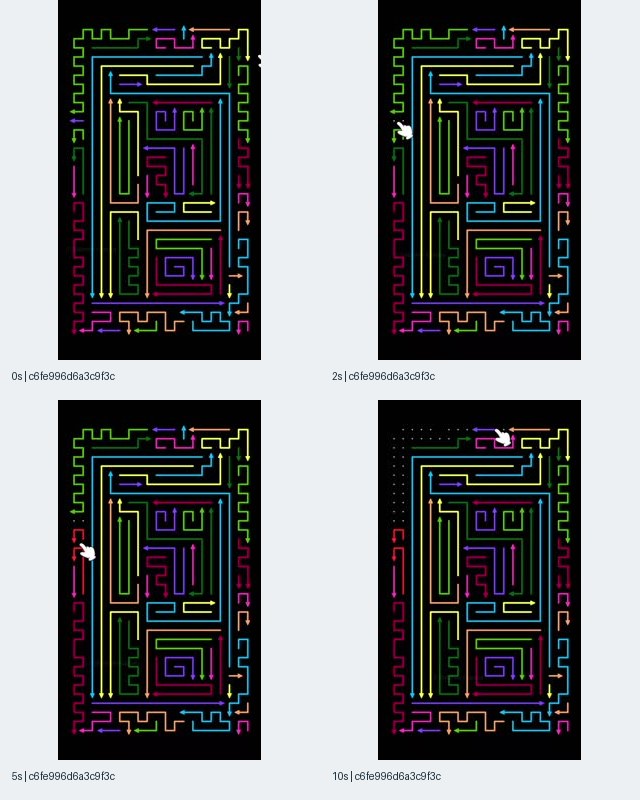
Image 1. Record c6fe996d, associated with Amaze GO’s verified iOS listing. The supplied frames show a neon arrow board, pointer positions, and differences in the remaining paths. This contact sheet is creative evidence, not a performance result.
At the opening timestamp, the composition is already dense. Long straight paths fill the interior, while shorter bends sit around the perimeter. The colored strokes help distinguish adjacent shapes, but they also create many possible places to look. The pointer therefore has a practical visual role: it marks a location inside a board that otherwise offers little hierarchy.
At the later sampled timestamp, part of the upper-left area is largely empty, with faint dots where paths were previously visible. The board still contains many arrows. It would be inaccurate to describe this as a completed solve. The visible change is partial clearing, with the hand now near the top edge.
Hypothesis: this structure may invite viewers to search for a valid next move because the unresolved board remains visible while individual actions receive emphasis. That hypothesis concerns comprehension and participation. It does not establish that viewers actually attempted the puzzle mentally, watched longer, or installed the app.
For an original production brief, preserve the communication problem rather than tracing the board. Build a different puzzle with a clearly visible action, a clear destination or direction, and an understandable result. Ask the editor to maintain the board’s position while the pointer moves. If the camera also shifts, the team may struggle to determine whether viewers followed the action or merely noticed motion.
The useful acceptance question is: can a viewer identify what changed after the indicated action? If the answer depends on a voiceover explaining every detail, the visual demonstration may need a clearer before-and-after state. Color can assist that explanation, but it should not be the only cue separating a selected path from its neighbors.
Sample 2: The Heart Board Adds a Visible Cost to a Mistake
The heart-shaped example makes error feedback more explicit than the neon board by showing hearts and a red screen-edge effect. Its supplied frames include the labels “Level 18” and “Hard,” a pointer over the puzzle, and a reduction from three colored hearts to two. Together, these visible elements suggest a mistake-and-consequence presentation, without establishing the precise input that caused it.
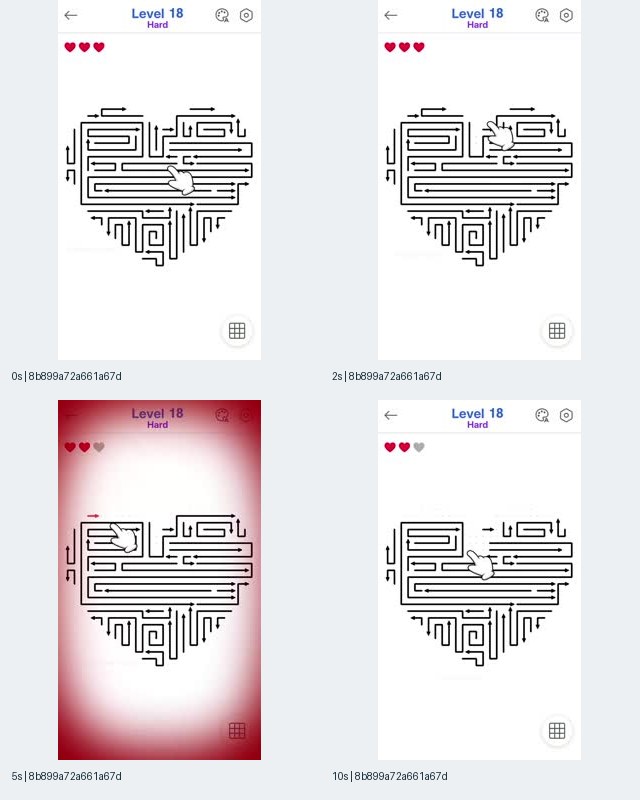
Image 2. Record 8b899a72, associated with the verified Amaze GO iOS listing. The five-second frame shows a red vignette; the later frame retains fewer colored hearts. The screenshots do not establish a complete playable session.
The central board is smaller than the tall rectangular boards in Images 1 and 3. It is surrounded by substantial white space, and the heart silhouette gives the arrangement a recognizable outer shape. This changes the visual reading task. A viewer can recognize the overall object before understanding the many directional lines inside it.
The red vignette is a separate information layer. It extends beyond the location of the pointer and makes the changed state visible at the screen’s edges. The hearts provide a persistent marker after the vignette disappears. In the available images, the temporary feedback and the persistent state reinforce one another.
Hypothesis: a clearly signalled mistake may make the puzzle’s consequences easier to understand and encourage a viewer to consider a different action. An alternative hypothesis is that a strong failure cue makes the experience look frustrating. Neither response can be selected as the explanation from these still frames.
A useful original test would keep the board, action, and outcome constant while changing the strength of the feedback. One version could use a localized highlight; another could combine that highlight with a persistent state indicator. The test would ask whether viewers understand the mistake, rather than assuming that a louder effect is better.
The production team should also distinguish difficulty copy from demonstrated difficulty. “Hard” is a label in the advertisement. It does not tell us how challenging the installed game is, whether the shown board belongs to its actual level sequence, or whether viewers would agree with the classification.
For quality review, require an unobscured view of the relevant arrow before the pointer arrives. Then check that the feedback is attached to the same action. A dramatic red effect is easy to add; making the cause of that effect readable is the more useful creative task.
Sample 3: The Monochrome Board Separates Shape from Color
The monochrome example presents a similar tall-board composition to the neon example, but its dark paths on white shift attention toward line geometry and red highlights. The visual resemblance makes these references useful for discussing presentation variables. It does not prove they were produced as a controlled experiment, share identical underlying gameplay, or differ only in color.
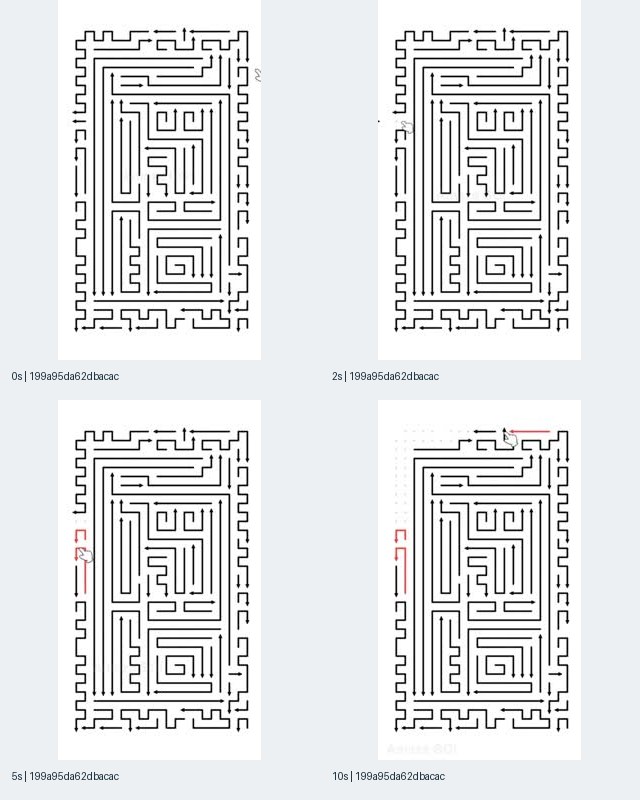
Image 3. Record 199a95da, associated with the verified Amaze GO iOS listing. Frames at 0, 2, 5, and 10 seconds show a monochrome board with localized red emphasis and a changed upper-left region.
The first frame contains no prominent explanatory headline. As in the neon example, the board itself carries the opening. Long vertical and horizontal runs provide a strong rectangular structure, with smaller loops and bends filling the interior. The hand appears near the left edge in the middle frames and near the top in the final supplied frame.
Red is comparatively unusual in this treatment, which gives highlighted paths a different role from the many persistent colors in Image 1. A researcher should record this as a difference in emphasis, rather than claiming superior readability. Line thickness, compression, display brightness, and actual screen size would affect any readability judgment.
Hypothesis: a largely monochrome board may help a temporary color cue stand out, while a multicolored board may help viewers distinguish separate paths before an action. These are different potential benefits. A fair test would need to define which task matters: locating a path, predicting its movement, or recognizing the result.
An original brief could therefore specify a common board and common action sequence, then request separate color treatments. Keep stroke weight, arrowhead size, pointer placement, and timing consistent. If those also change, the team will be comparing complete executions rather than learning specifically about color.
This example also matters for asset accounting. Its video fingerprint appears again in another sampled record, beginning 56f18c93. The additional record is not evidence of another independently produced video. It is an instance of the same indexed video file appearing more than once.
That distinction prevents a common production mistake: presenting a long list of records as a large collection of creative ideas. Here, the visual concept and the file identity should be recorded separately. A repeated file can be operationally interesting without representing a new creative concept.
Sample 4: Parchment Presents the Benefit Before the Board
The parchment example uses a decorative environment and progressively visible text to present a relaxation promise. No arrow board is visible in the supplied frames. The scene includes a scroll, moon, lantern, feather, and open book, while the copy describes an arrows puzzle game and lists claimed benefits. This makes the inspected opening primarily a message presentation.
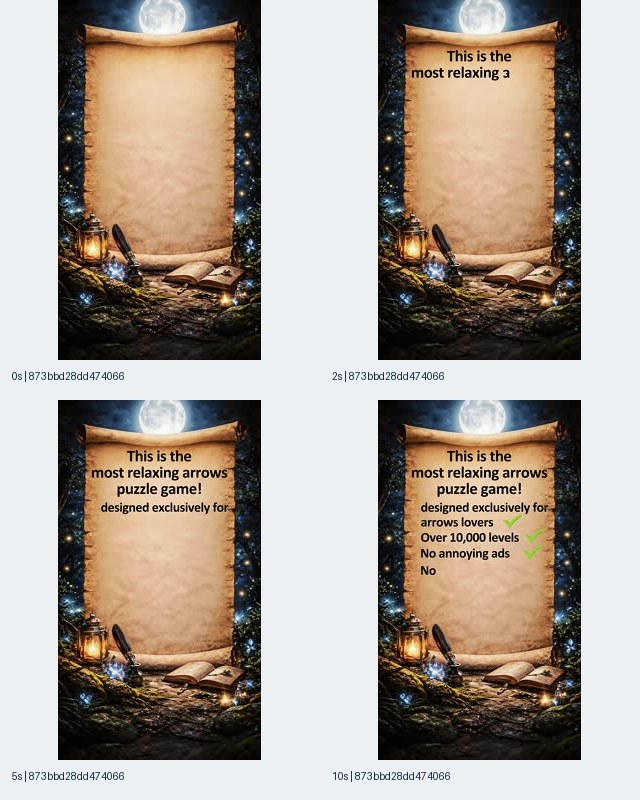
Image 4. Record 873bbd28, associated with the verified Amaze GO iOS listing. The later supplied frames contain “This is the most relaxing arrows puzzle game!”, “Over 10,000 levels,” and “No annoying ads.” These are observed advertising claims.
The empty scroll at the opening timestamp creates a reserved reading area. By the next sampled frame, text has begun to appear near its upper edge. Later frames retain the same environment while adding more copy. The background’s visual continuity is directly observable; the exact animation, reading time, and accompanying sound are not.
The visible copy performs several distinct jobs. “Most relaxing” makes a comparative experiential claim. “Designed exclusively for arrows lovers” addresses an interest group. “Over 10,000 levels” states a quantity. “No annoying ads” addresses an objection, but leaves “annoying” undefined. Treating all of these as a single relaxation message would hide the different evidence each statement would require.
Hypothesis: the decorative environment may make the written relaxation promise feel coherent before gameplay appears. Another possibility is that delaying a visible puzzle leaves viewers uncertain about the activity. A production test should examine that tradeoff directly instead of assuming that a calm-looking background communicates the game successfully.
For an original execution, the team can borrow the order of communication: a clear promise, a relevant demonstration, and an invitation to continue. It should use original artwork and verified product language. A beautiful background cannot substantiate a level count, an experience guarantee, or a statement about advertising inside an app.
The unfinished lower line in the final supplied frame is also a useful research reminder. Do not complete partially visible copy from expectation. The later video might contain additional claims, qualifications, or a different scene, but those are outside the inspected material.
A practical acceptance check is to show the opening without explanation and ask what kind of activity the viewer expects. If the answer is only “a relaxing app,” the brief may need to introduce the puzzle earlier or name the action more concretely.
Sample 5: The Television Challenge Changes the Demonstration Medium
The television example shows a person engaging with colored dots before the final supplied frame switches to an illustrated puzzle panel. The opening action is dot connection, rather than the dense arrow selection visible in Images 1–3. It is therefore a distinct creative reference within the same verified-product sample, not proof that every shown activity is available in the installed app.
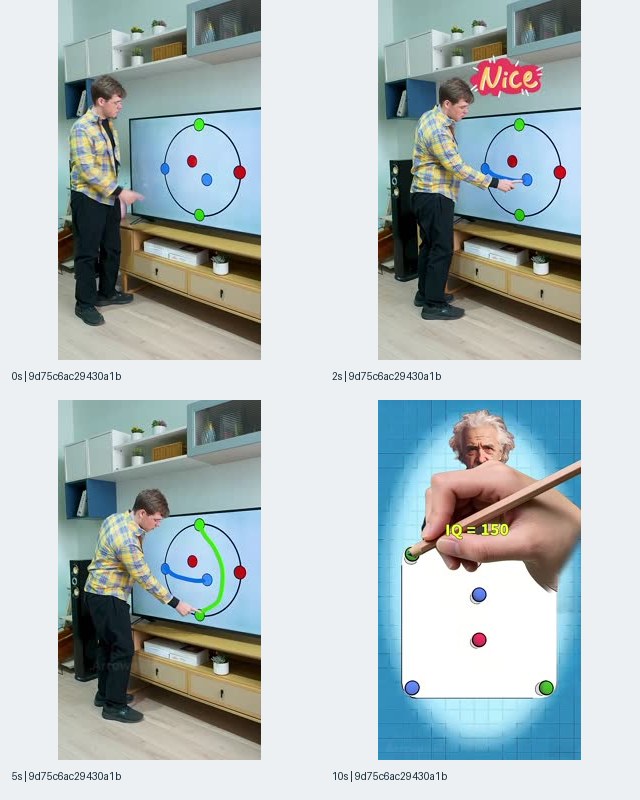
Image 5. Record 9d75c6ac, associated with the verified Amaze GO iOS listing. The supplied images move from a room-based dot puzzle to a different illustrated panel. The “IQ = 150” text is creative copy, not a validated intelligence assessment.
The room setting gives the puzzle a familiar physical scale. The television contains an oval boundary and colored dots; the person’s arm indicates where attention should go. At the sampled two-second point, a “Nice” graphic is visible above the television. At five seconds, blue and green connections are visible on the display.
By the ten-second frame, the composition is substantially different. A large hand and pencil occupy the foreground, a white rounded panel holds colored dots, and an older white-haired figure appears behind it. The still images establish that the presentation changes between sampled moments. They do not show the exact edit, whether dialogue connects the scenes, or the final outcome.
Hypothesis: a filmed attempt may offer an accessible entry into a spatial problem before a more graphic presentation takes over. The important test question is whether viewers understand that connection. If the opening creates an expectation of a different game, attention alone would be an incomplete measure of success.
For an original brief, specify the relationship between the physical demonstration and the product footage. If both use the same rule, show that rule consistently. If the opening is only an analogy, make the relationship understandable rather than relying on a sudden switch to carry the explanation.
The IQ label should not be copied as factual product positioning. A puzzle can invite viewers to reason without claiming to measure intelligence. An original line such as “Which connection would you make next?” asks for a concrete action and avoids implying that completing a visual task establishes a psychological score.
This record also shares a playable fingerprint with the street-side example in Image 7. That is evidence of a common associated file in the index. It does not establish that the two videos used the same transition, had the same audience, or produced comparable results.
Sample 6: Floral Artwork Repeats the Relaxation Message
The floral example repeats much of the parchment example’s visible message while changing the surrounding artwork. A white central area is framed by colorful flowers, leaves, and butterflies. The later frames show the same broad sequence of relaxation, audience, level-count, and advertising-objection copy. This supports a comparison of message packaging, not a conclusion about which treatment performs better.
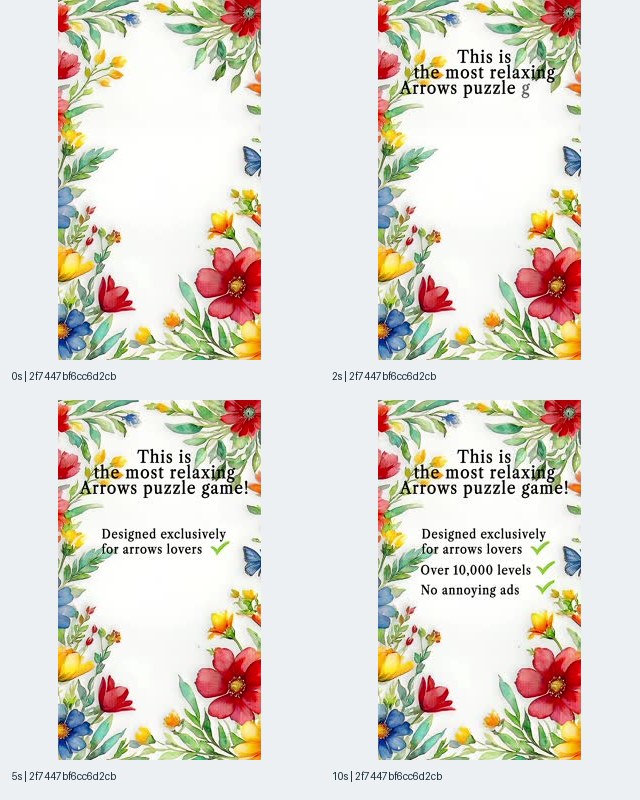
Image 6. Record 2f7447bf, associated with the verified Amaze GO iOS listing. Its supplied frames repeat a relaxation-and-benefits message in floral artwork. The same indexed video also appears in another sampled record with a different playable association.
The floral border surrounds a larger bright reading area than the parchment scene. The headline sits near the top, while the benefit lines appear lower down. Green check marks accompany the visible benefits. These marks visually organize the assertions; they do not provide independent evidence that the assertions are true.
The comparison with Image 4 is useful because the visual atmosphere changes substantially while the message remains similar. One execution uses a dark woodland scene and warm parchment. The other uses a bright background and botanical decoration. A creative taxonomy that labels both only as “text ads” would miss the difference, while a taxonomy that treats them as unrelated concepts would miss the shared message.
Hypothesis: the surrounding artwork may change the expectations attached to the same words. The floral treatment could be read differently from the fantasy-like parchment setting, but the sample contains no audience research to establish either response. Neither treatment justifies assumptions about viewer age, gender, or targeting.
For a production team, this suggests maintaining separate fields for message and artwork. A writer can revise the promise without changing the visual environment, while a designer can explore a different frame around the same verified statement. The resulting files remain distinct executions even when they belong to a shared concept family.
The useful quality check is whether every line remains readable and complete in the intended placement. Review the rendered ad at actual display size. Do not evaluate copy fit only on a large design canvas, where long claims and decorative borders may appear less crowded than they do on a phone.
Want to inspect related indexed examples with these distinctions in mind? Open the Amaze GO creative search in AdMapix, then confirm listing associations before treating a result as part of the same product sample. Live results may differ from this frozen research set.
Sample 7: The Street Puzzle Uses a Person’s Attempt as the Narrative
The street-side example keeps a person and a physical puzzle board in view while colored connections accumulate across the supplied frames. Its headline reads “Only IQ > 130 can solve it?” The visible narrative centers on an attempt and a reaction, rather than a direct screen recording. The IQ language is a challenge hook; it is not evidence of a validated intelligence threshold.
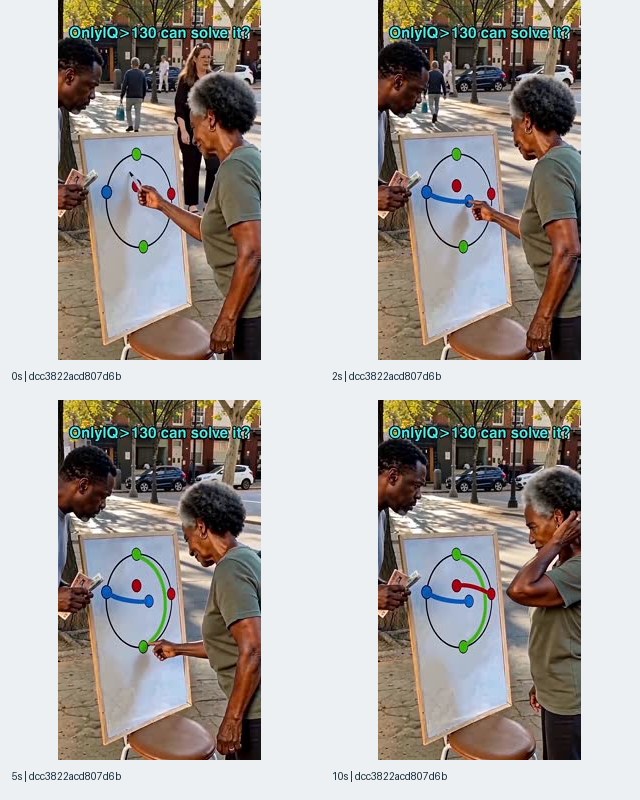
Image 7. Record dcc3822a, associated with the verified Amaze GO iOS listing. The four frames show a street-side dot puzzle and a participant’s changing pose. The images do not establish whether the encounter was spontaneous or staged.
The board contains an oval outline and colored dots arranged in a pattern similar to the television reference. A blue connection is visible in the two-second frame, a green connection appears in the five-second frame, and a red connection is visible at ten seconds. The participant’s hand is near her head in the final image.
These observations should not be expanded into a complete story about success, embarrassment, or surprise. A gesture can support several interpretations. Without continuous playback and audio, the researcher can record the pose and the visible board state but cannot reliably describe the participant’s spoken reaction or emotional intent.
A man beside the board appears to hold paper currency. That visual detail is relevant to the “earn money” question, but it does not establish a payment offer from Amaze GO. The inspected frames show no app balance, cash-out interface, payout amount, or statement connecting an app action to a monetary reward.
Hypothesis: watching another person attempt a legible problem may encourage viewers to form their own answer. A useful original test would examine whether the person adds understanding or distracts from the board. The creative team can hold the puzzle constant while changing whether the opening focuses on the participant or the task.
For a filmed production, request coverage that keeps hands from blocking the critical dots and connections. Capture the board before the attempt and after the demonstrated action. Reaction footage can support the sequence, but it should not replace the evidence needed to understand what happened.
Do not infer demographic targeting from the people on screen. Casting is visible; targeting settings are not. Likewise, a street setting does not establish organic user-generated content, an unpaid testimonial, or an unscripted encounter. The production brief should describe the format as a filmed challenge unless stronger provenance is available.
Sample 8: The Animal Outline Introduces a Visual Reveal
The final example begins with a colorful giraffe-like figure against black and later shows a dense field of colored paths. The supplied frames therefore connect a recognizable animal form with a much closer puzzle view. They support a visual-reveal interpretation, but do not show the precise transition or establish that the image visibly transforms in one continuous motion.
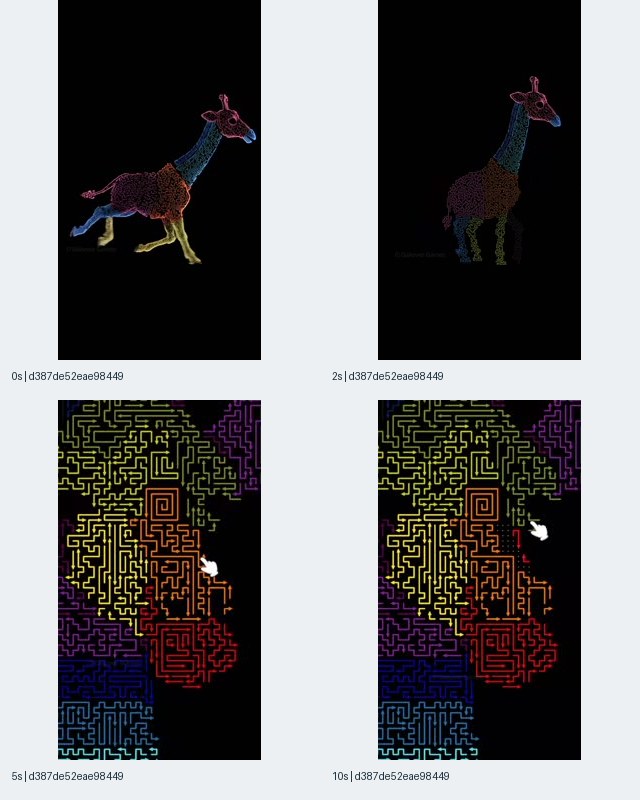
Image 8. Record d387de52, associated with the verified Amaze GO iOS listing. The opening frames show an animal-like figure; the five- and ten-second frames show a closer puzzle field with a pointer. Only those sampled moments were inspected.
Compared with the rectangular board in Image 1, the opening gives viewers a recognizable silhouette before exposing the detailed path structure. The black background remains a visual connection between the sampled scenes. Colored regions within the figure also provide an apparent relationship with the later puzzle view, although the full continuity cannot be verified from stills.
The later frames show a hand pointer near the right edge of the path field and a large black area alongside it. This is materially different from opening on an isolated benefit statement. The visual question is how the recognizable figure relates to the smaller directional structures and the indicated action.
Hypothesis: an object-level opening may provide an initial reason to look, while the closer puzzle view supplies the interaction question. The risk to test is whether the reveal preserves understanding. A viewer may remember the animal while remaining unable to say what the game asks them to do.
An original execution could begin with a different recognizable shape, then demonstrate how a real puzzle state relates to it. The transition should preserve a visible reference point so that the viewer can connect the opening to the task. That is a proposed production method, not a reconstruction of the unseen transition in this advertisement.
This family also requires a different acceptance check from the text-led examples. Instead of asking whether a promise is readable, ask whether the viewer can identify the same object or region before and after the change in scale. Then ask what action is available. Both questions matter if the reveal is supposed to introduce gameplay.
The file is useful as evidence of creative variety within the inspected examples. It does not show that animal-shaped openings dominate the wider campaign, that the app contains this specific figure, or that this approach outperforms a plain board.
Hook Families: What Changes and What Stays Consistent
The eight examples can be organized by the first task they give the viewer, rather than by artwork alone. This is an editorial classification of inspected frames, not a statistical distribution of Amaze GO’s complete advertising. It helps teams compare like with like and avoid treating every surface change as a new strategic idea.
| Family | Illustrated references | What the viewer is shown | Research question to carry forward |
|---|---|---|---|
| Direct arrow demonstration | Images 1 and 3 | Dense directional paths and a pointer | Is the intended action understandable? |
| Mistake and consequence | Image 2 | A board, hearts, and red feedback | Is the cause of the feedback clear? |
| Relaxation and objection copy | Images 4 and 6 | A promise and benefit list in decorative artwork | Does the message establish the expected activity? |
| Filmed spatial challenge | Images 5 and 7 | A person connecting colored dots | Does the human attempt clarify the puzzle? |
| Recognizable-object reveal | Image 8 | An animal-like figure followed by detailed paths | Does the reveal connect attention to an action? |
The classifications can overlap. Image 2 is still a direct puzzle demonstration, but its persistent hearts and red vignette make consequence especially visible. Image 5 is a filmed challenge in the opening frames, but its later illustrated panel introduces a different presentation. Keeping secondary tags prevents a rigid taxonomy from erasing useful details.
A shared feature across several examples is spatial incompletion: paths remain, dots remain available, or a visible problem is still unresolved. Hypothesis: leaving an intelligible task unfinished may invite participation. However, the decorative copy examples show that not every inspected opening relies on a visible unresolved board. The sample therefore does not support a single universal hook formula.
The more practical distinction is between an opening that demonstrates an action and an opening that states a reason to care. A demonstration needs clear causality. A benefit statement needs clear meaning and substantiation. A filmed challenge needs a readable task and an understandable relationship to the product. These requirements should drive the brief before the team selects colors, props, or a headline style.
The same classification can be used during review. If a concept’s intended job is explaining a rule, do not approve it only because the artwork is attractive. If its intended job is presenting a verified benefit, do not approve it only because a pointer moves. Evaluate the execution against its declared communication task.
Video Reuse: Four Repeated Files and Several Playable Relationships
The sample directly supports video reuse within Amaze GO: its 28 video-bearing records resolve to 24 distinct video fingerprints. Four video files each appear in two records. This is a file-level finding from the supplied associations, not an estimate based on similar thumbnails, and it should not be described as cross-title reuse.
| Video reference | Record pair, abbreviated | What the associations establish |
|---|---|---|
| Neon board, Image 1 | c6fe996d / 92db90d5 | Same video fingerprint; neither record lists a playable |
| Monochrome board, Image 3 | 199a95da / 56f18c93 | Same video fingerprint; neither record lists a playable |
| Floral copy, Image 6 | 2f7447bf / 2d976643 | Same video fingerprint associated with different playable fingerprints |
| Street challenge, Image 7 | dcc3822a / 5df32a19 | Same video fingerprint associated with different playable fingerprints |
The first pair shows why two records need not represent two video productions. The recorded first-observation timestamps differ, but that does not establish the file’s original production date or prove that the later record launched a new concept. The indexed file identity remains the same.
The floral and street pairs show a second kind of reuse: a common video associated with different playable files. That is enough to identify different indexed combinations. It is not enough to describe the exact end-card design, interaction rule, load behavior, or transition, because those interactions were not supplied for inspection.
Reuse also runs in the other direction. The television record in Image 5 and the street record in Image 7 share a playable fingerprint despite using different video fingerprints. The parchment example shares its playable fingerprint with other videos elsewhere in the sample. Together, these relationships show that video identity and playable identity are separate dimensions.
A useful production inventory should therefore preserve three layers. Record the advertising instance, the video file, and the associated playable file independently. Add a fourth editorial layer for the concept family. The concept layer is a judgment about communication; the fingerprint layers are exact associations in the index. Neither should silently replace the other.
For example, the parchment and floral videos belong to a similar message family, but they are distinct video files. Conversely, the floral video’s repeated appearances remain one indexed video even when the associated playable changes. A report that counts only concepts loses execution detail; a report that counts only records exaggerates the number of separately produced videos.
This matters when a team plans its own production work. If the research question concerns a new hook, repeating an existing opening with a new interaction is not automatically a new hook test. If the question concerns the transition into interaction, rebuilding the entire video introduces extra variables. Define the component being changed before deciding how many deliverables the experiment requires.
Nothing in these reuse relationships establishes which combination earned more installs, whether reuse saved production money, or why the publisher retained a file. Those are reasonable subjects for a team’s own operational analysis, but they remain unknown for this sampled advertiser.
“Earn Money” and “No Ads”: What the Evidence Actually Answers
The inspected material contains no explicit claim that playing Amaze GO earns money or produces a cash payout. That conclusion covers the supplied advertising text and the visible content of the eight contact sheets. It does not cover uninspected video segments, audio, every playable, the installed app, or all advertisements outside this bounded sample.
The distinction matters because the street challenge includes what appears to be paper currency in a person’s hand. A cash prop or visible banknote is not equivalent to a statement that an app pays users. To support a payout claim, the evidence would need to connect a promised monetary benefit to an action, eligibility condition, or withdrawal mechanism. Those elements are not visible here.
The “IQ = 150” and “Only IQ > 130 can solve it?” lines are also not financial rewards. They are challenge language. Likewise, hearts on a puzzle screen are state indicators, not evidence of redeemable value. A claim audit should separate these visual categories instead of placing every number, prize-like cue, or challenge into a money-making bucket.
The “no ads” question has a different answer. Images 4 and 6 visibly contain “No annoying ads.” That is evidence that the advertisements make that statement. It is not evidence that the app contains no advertising, that optional rewarded ads are absent, or that every user receives the same experience.
The wording itself also matters. “No annoying ads” leaves room for interpretation about which ads count as annoying. Rewriting it as “completely ad-free” would strengthen the claim beyond what the source says. This article preserves the actual wording and does not resolve its truth through a screenshot.
For a reader deciding whether to install the app, these advertising frames are insufficient to verify rewards, ad frequency, or purchase conditions. For a creative team, they identify an objection worth investigating. A team should confirm its own product behavior and approved wording before adapting the underlying message.
The same boundary applies to searches about online play, PC availability, and Reddit discussions. The supplied advertising evidence does not establish a browser edition, desktop compatibility, or a consensus from community reviews. Those questions require their own current sources rather than an answer inferred from a vertical advertisement.
How Amaze GO Differs from the Meowdoku Reference
The supported difference is in the material available for inspection: Amaze GO’s supplied frames show arrow paths, dot-connection challenges, benefit copy, and an animal-like reveal, while the published Meowdoku synopsis describes cat-sudoku videos. This is a comparison of visible Amaze GO material with the stated scope of an earlier article. It is not a fresh, matched visual audit of both games.
The Meowdoku advertising analysis provides the sister-title reference. Its published synopsis identifies a different puzzle presentation, but this source package does not include Meowdoku contact sheets or video fingerprints. We therefore cannot compare pointer timing, board readability, sound, benefit wording, or exact file reuse across the two titles.
For a creative team, the practical difference is the question to carry into further research. The arrow examples suggest examining direction, obstruction, and removal cues. The filmed dot examples suggest examining connections and the continuity of a drawing task. A cat-sudoku reference would require its own observation of how the board, pieces, and rule are communicated. It would be a mistake to assume those communication requirements are interchangeable because the products share a publisher.
The Oakever publisher playbook is relevant background for organizing that broader investigation. Its older numerical conclusions are not imported into this article. Different windows, samples, and measurement definitions would need reconciliation before any current numerical comparison could be made.
What is actually shared across Oakever titles in this sample? The evidence does not establish a cross-title creative relationship. All retained records were selected through the Amaze GO reference. The reuse relationships described above are within that selection, not between Amaze GO and Meowdoku.
A future cross-title audit should verify both listings, capture comparable periods, and compare file fingerprints separately from visual themes. A matching file would support exact indexed reuse. Similar flowers, pointers, or relaxation wording would support a theme comparison, with appropriate qualification. Neither would by itself reveal a common production team, shared campaign settings, or a causal explanation for business results.
Chart Position Provides Context, Not an Advertising Result
Amaze GO’s chart snapshots establish its position in the captured US App Store free Games chart, but they do not measure the effect of these creatives. The supplied supplementary data places the verified listing at #13 on 2026-10-11, compared with #14 on 2026-09-11. Those snapshots were pulled on 2026-10-13.
The chart dates and advertising window are not identical. More fundamentally, a chart position is an ordinal observation, while an impression figure is a modeled quantity attached to a specified period and record. Combining them does not produce an install conversion rate, a cost per install, or an explanation for a ranking change.
The practical use of the chart context is to explain why this product merits creative research. It does not tell a team which opening to build. That decision still depends on the observed communication patterns, the team’s own product, and a test with suitable first-party measurement.
The same restraint applies to apparent longevity. Some sampled records have first-observation dates well before the measurement window. Those dates show that the index observed the record earlier. They do not establish uninterrupted delivery, cumulative budget, or enduring profitability. A frozen sample can support a creative history question without supplying the answer to a performance question.
When presenting this research internally, put chart context in a separate field from creative observations. That prevents a slide from implying that a particular arrow board moved the app up the chart simply because the two facts appear next to each other.
A Practical Workflow: Turn a Reference into a Testable Brief
A useful research workflow preserves the connection between product identity, observed frames, file relationships, and the decision a team wants to make. The output should be a brief that another person can execute and challenge. It should not require them to trust a researcher’s undocumented impression of the advertisement.
- Lock the reference product. Save the store ID, seller, market, and observation date. For this case, the reference is iOS ID 6758326278. Keep other associated listings visible rather than silently treating every record estimate as exclusive to the reference.
- Save the sampling conditions. Record the exact dates, product filter, requested sorting, page limit, and retrieval date. A later query can be useful without being identical, but the difference should be apparent.
- Separate instances from files. Deduplicate all values within the video and playable fingerprint arrays. Preserve the relationships between them instead of producing a single combined asset count.
- Write a frame-only description. Start with nouns, positions, text, and changes: a heart board, a pointer, a red vignette, fewer colored hearts. Avoid beginning with “this converts because.”
- Name the communication question. Decide whether the reference raises a question about action clarity, feedback, benefit comprehension, or the transition between scenes.
- Add a hypothesis and an alternative. For the heart board, a stronger error cue might clarify consequences, or it might make the experience appear frustrating. Both possibilities belong in the test discussion.
- Specify an original execution. Use your own game state, artwork, copy, and footage. Preserve the question being tested rather than copying the source board or its claims.
- Define the acceptance and measurement plan. Separate production approval from audience results. A technically correct file can still produce an inconclusive experiment.
A compact handoff can make these distinctions explicit:
| Brief field | Filled example using the heart-board reference |
|---|---|
| Source observation | Supplied frame shows red edge feedback and fewer colored hearts |
| Product requirement | Our own demonstrated mistake must trigger the shown consequence |
| Hypothesis | Persistent feedback may make the result easier to understand |
| Alternative explanation | Strong feedback may make the game appear less relaxing |
| Proposed change | Change feedback treatment while holding the board and action constant |
| Production acceptance | Viewer can locate the action and resulting state change |
| Measurement needed | First-party understanding and campaign outcomes, collected consistently |
| Unknowns retained | Competitor conversion, audience response, and actual app behavior |
The workflow also needs a stopping rule for unsupported interpretation. If the team cannot explain a proposed claim without relying on an unseen section of a video, leave that claim out of the brief. If the creative depends on a game feature that has not been verified in the team’s own product, resolve that product question before production.
For small teams, the same person may research, write, and edit. The fields still help because they preserve decisions across revisions. For larger teams, they prevent the meaning from changing during handoff: a researcher’s tentative idea should not become a producer’s factual claim or a buyer’s promised performance outcome.
Original Briefs to Build from These Observations
The strongest next step is to build a small set of original executions around different communication questions, with each proposed test clearly separated from the observed competitor material. The following briefs are suggestions for a team with a suitable real puzzle product. They are not ads we produced, experiments we ran, or predictions of winning performance.
Brief A: Make the first arrow action understandable. Use an original board from the team’s own product. Begin with enough surrounding paths to make the choice meaningful, but keep the selected arrow unobscured. Show its direction, the input, and the resulting board state in a stable composition. A proposed line is: “Which arrow has room to move?” Use that line only if it accurately describes the demonstrated rule.
The hypothesis is that a clear action-and-result sequence helps viewers explain the mechanic. The alternative is that simplifying the first board removes the challenge that made the reference interesting. The production review should therefore check both clarity and the presence of a real decision. Do not add arbitrary failure simply to imitate a competitor’s apparent tension.
Brief B: Compare localized and persistent mistake feedback. Capture the same valid sequence and the same mistake in both versions. One execution emphasizes the affected path; another also retains a visible state change after the action. Keep the puzzle, copy, and camera treatment consistent so the comparison addresses feedback rather than a new opening.
The hypothesis is that persistent feedback helps viewers remember the consequence. The alternative is that it distracts from the next available action. Ask viewers to describe both what went wrong and what they would try next. Those are proposed understanding checks, not reported findings from the Amaze GO sample.
Brief C: Connect a calm promise to a visible task. Use original artwork around a real product demonstration. Replace unsupported superlatives with a statement the product team can substantiate. The proposed structure is a readable invitation, a visible puzzle action, and a closing prompt consistent with that action. Do not carry over “Over 10,000 levels” or “No annoying ads” unless those exact claims are independently supportable for the advertised product.
The hypothesis is that benefit framing helps viewers understand the intended experience. The alternative is that text delays the point at which they recognize the game. Compare executions that differ in the placement of the message while keeping the underlying promise and demonstration consistent.
Brief D: Make a filmed challenge match the product. Give a participant an original physical representation of a mechanic that actually exists in the game. Capture a clear initial state, the attempt, and its result. Then connect it to product footage that follows the same rule. Use a concrete challenge question instead of an intelligence score or an unsupported earnings promise.
The hypothesis is that a physical demonstration makes the task approachable. The alternative is that the change of medium creates a different expectation from the installed experience. Approval should require a clear answer to “What connects this filmed activity to the game?” If the answer is only that both contain colored objects, the concept needs further work.
Evaluate Understanding Before Interpreting Campaign Results
The first evaluation should determine whether an execution communicates the intended task and promise; campaign performance requires a separate, properly measured test. This distinction is especially important for references that use attractive scenery, human reactions, or unusual reveals. A memorable opening can still leave the product unclear, and a clear demonstration can still fail commercially.
For an internal understanding check, ask people who did not make the ad to describe what they think they would do in the game. Ask what the ad promises, what changed after the demonstrated action, and what they expect after clicking. Record their answers without correcting them first. The purpose is to identify mismatches between the intended message and the message received.
For a campaign experiment, define the outcome and comparison before launch. Use consistent event definitions, attribution conditions, and downstream observation periods. If the creative changes the promise, examine whether the users it attracts reach the intended product experience. Click response alone would not establish that the promise was understood or fulfilled.
Treat production cost and operational effort as your own measured inputs. A filmed challenge and a board capture may require different resources, but this sample contains no production invoices or labor records. Do not claim that one is cheaper because it looks simpler. Record actual work in your own process if cost is part of the decision.
Results should be allowed to remain inconclusive. If a test changes the opening, board, copy, and interaction together, it may identify a better complete execution under the test conditions, but it will not isolate the cause. Preserve that distinction in the learning log so a future team does not turn a broad result into a precise design rule.
Nothing in this article’s impression table substitutes for those measurements. The table helps readers identify the referenced records. It does not supply the counterfactual needed to say what would have happened with a different creative.
Common Mistakes When Reading Amaze GO Advertising
The most consequential mistakes involve changing the meaning of the evidence during reporting. A record becomes a unique video, a visible claim becomes a product fact, or a modeled impression figure becomes a performance result. Each error can lead a production or buying team toward a decision the source does not support.
Counting all records as separate videos. This sample has 30 advertising records and 24 distinct video fingerprints. Reporting “30 videos” would be wrong, and reporting “34 total assets” by adding videos and playables would conceal the different association types. Keep the file categories and playable-only records separate.
Treating a keyword result as verified identity. The discovery phrase helps locate the product, but the store ID determines inclusion. A record titled “Arrows GO!” still associates with the verified Amaze GO reference in this sample. Conversely, a similar arrow-game name would not be enough to include another listing.
Calling an ad claim a tested product feature. “No annoying ads,” the level count, and the IQ language are visible statements. The research did not test the installed app or validate those claims. Preserve quotation marks and explain the scope rather than silently adopting the wording.
Reading a complete story into selected frames. A pointer position does not show every intervening move. A gesture does not establish an emotion. A changed scene does not reveal the exact transition. Write what is visible and label proposed explanations as hypotheses.
Inferring a network from appearance. A vertical composition, hand pointer, filmed participant, or playable association does not establish TikTok, Meta, or an in-app network. Network attribution requires a verified source mapping that is not supplied here.
Equating repetition with success. A repeated fingerprint establishes reuse. It does not prove that the file remained profitable, that the later record was a retargeting campaign, or that the associated playable improved conversion. Those interpretations require additional evidence.
Importing older publisher totals into the current sample. An earlier Oakever article may describe another period and another scope. Its totals cannot be combined with this window or used to fill missing performance information. A useful comparison starts by aligning definitions, not by placing large numbers beside one another.
When AdMapix Fits This Research Task
AdMapix fits teams that need to find indexed advertising references and organize the evidence before commissioning a creative test. It is an advertising-intelligence product: its role here is to support discovery and examination of creative records. The value demonstrated in this article is the connection between a verified listing, dated records, repeated files, and observable visual examples.
A practical handoff is to take one communication question from the analysis into a live search. Confirm the product association, inspect the available media, and record what is actually visible. Then write an original brief that separates the observation from the hypothesis and identifies the first-party evidence needed to judge the result.
AdMapix does not replace access to an advertiser’s private account, a product experience audit, or an experiment in your own campaign. This frozen sample does not establish exact spend, targeting, conversion, or profitability. Teams seeking those answers need the relevant measurement source, not a stronger interpretation of a screenshot.
Sign up or log in to AdMapix to research live creative records, then verify the listing and available evidence before building the next brief. Check the live pricing page for current commercial terms. Prices and allowances can change, so this evergreen analysis does not reproduce them or promise a paid-plan trial.
FAQ
What do Amaze GO game ads show in this sample?
The eight inspected contact sheets show dense arrow boards, a heart-shaped puzzle with error feedback, relaxation copy on decorative backgrounds, filmed dot-connection challenges, and an animal-like opening followed by colored paths. These are observations at selected timestamps, not descriptions of every scene in the complete videos. They also do not independently verify which activities appear in the installed game.
Do the sampled Amaze GO ads promise that players earn money?
No explicit earnings or payout promise appears in the supplied advertising text or eight contact sheets. One street-side frame appears to include paper currency, but it does not connect app play to a payment or withdrawal. The finding is limited to inspected material; it does not establish the app’s reward features or the content of uninspected audio and video segments.
Is Amaze GO advertised as having no ads?
Two inspected examples contain the wording “No annoying ads.” That is the exact observed claim, and it should not be strengthened into “completely ad-free.” The research did not test the app, check every placement, or examine purchase conditions. A screenshot can establish that an advertisement makes a statement without establishing that the statement accurately describes every user’s experience.
How much video reuse appears in the sample?
The 30 advertising records include 28 records with video and 24 distinct video fingerprints. Four video files each appear in two records. The floral and street-challenge files are each associated with different playable fingerprints across their repeated records. This supports file reuse and different indexed combinations, but it does not reveal campaign intent, production savings, or conversion effects.
Are these TikTok, Meta, or AppLovin ads?
The supplied evidence does not verify a named advertising network for these records. It contains a source identifier without an established network mapping in the research package. Vertical framing, filmed people, and playable associations are insufficient to identify a platform. The article therefore describes the creative content and listing association without assigning network-specific coverage or performance.
Does this prove that Amaze GO and Meowdoku share creatives?
No. The current records were selected through the verified Amaze GO iOS listing, and the package does not provide Meowdoku files for a matching-fingerprint comparison. The published Meowdoku synopsis supplies background about cat-sudoku videos, not evidence of shared assets. Exact reuse across titles would require verified records for both products and a comparison of their underlying media fingerprints.
Can these examples tell a small team what to produce next?
They can help a small team choose a testable communication question, such as whether viewers understand an arrow action or a visible mistake. Start with an original execution using a real feature of your own product, then define what would count as clear communication and useful campaign performance. The examples supply research inputs; they do not guarantee that a particular hook will work.
Key Takeaways
The actionable finding is a set of distinct creative questions supported by dated references, together with exact evidence of reuse inside a bounded Amaze GO sample.
- Verify the listing first. This analysis uses iOS ID 6758326278; similar names and shared visual themes do not replace identity checks.
- Choose the communication task. Direct boards, error cues, benefit copy, filmed challenges, and visual reveals require different production checks.
- Count files separately from records. The sample contains 30 records, 24 distinct video fingerprints, and 10 distinct playable fingerprints.
- Preserve claim boundaries. The visible “No annoying ads” wording is unverified advertising copy, and the inspected material contains no explicit payout promise.
- Use first-party tests for decisions about performance. Modeled window impressions, repeated files, and chart positions do not establish conversion or profitability.
Sources
The sources below identify the frozen evidence, product reference, and research workflow used for this article. Their dates and scope should travel with any quotation or reuse of the findings.
- AdMapix frozen Amaze GO source package, collected 2026-10-21: Public records, request parameters, batches, and checksums. Scope: US, 2026-09-22 to 2026-10-21, verified iOS reference, three requested pages and 30 retained records. The eight numbered images are the supplied timestamped contact sheets associated with identified records in that package.
- Verified listing snapshot supplied with the 2026-10-21 package: App Store ID 6758326278, Amaze GO!™, seller OAKEVER GAMES PTE. LTD. Used for product identity, not as evidence of gameplay testing or the identity of the ad buyer.
- AdMapix store-rank snapshots, pulled 2026-10-13: US App Store free Games chart observations supplied for 2026-10-11 and 2026-09-11. Used only for the stated chart positions, not for download or advertising-effect estimates.
- AdMapix methodology: Public explanation of data scope and interpretation; used alongside the 2026-10-21 source sample. Product boundaries supplied for this draft were reviewed on 2026-08-13.
- AdMapix Amaze GO search workflow: Live discovery route corresponding to the research query, referenced on 2026-10-21. Current results can change and are not a substitute for the frozen package when reproducing this article.
AdMapix’s original contribution here is the dated sample accounting, file-association analysis, and bounded visual interpretation. Impression values remain third-party model estimates; no conversion, spend, profit, complete-video review, or app test is represented.
Turn these observations into your next creative study
Open the creative library and select samples for your market, network and research question.
Related Articles
Disney Solitaire Ads: Characters, Cards, and Video Reuse
Eight dated Disney Solitaire advertising examples reveal character introductions, card objectives, collection and reward messaging, plus video reuse across a bounded US sample, with practical briefs and clear evidence limits.
Rotate Rings Game Ads: Hooks, Video Reuse, and Playables
A verified US iOS sample connects 30 Rotate Rings advertising records to 13 video files and 10 playable files, with eight timestamped visual analyses and practical workflows for original creative tests.
Magic Sort Ads Explained: Sorting Hooks, Tall Bottles, and Video Reuse
Eight dated Magic Sort advertising examples reveal sorting hooks, unusual receiving containers, hand guidance, and video reuse, while separating verified iOS identity from unproven gameplay and performance claims.