
Pangle Ads Examples: What a Dated US Search Sample Shows
Examine eight dated advertising examples from a US-filtered Pangle research sample, distinguish product identity from placement evidence, and turn visible creative patterns into original test briefs.
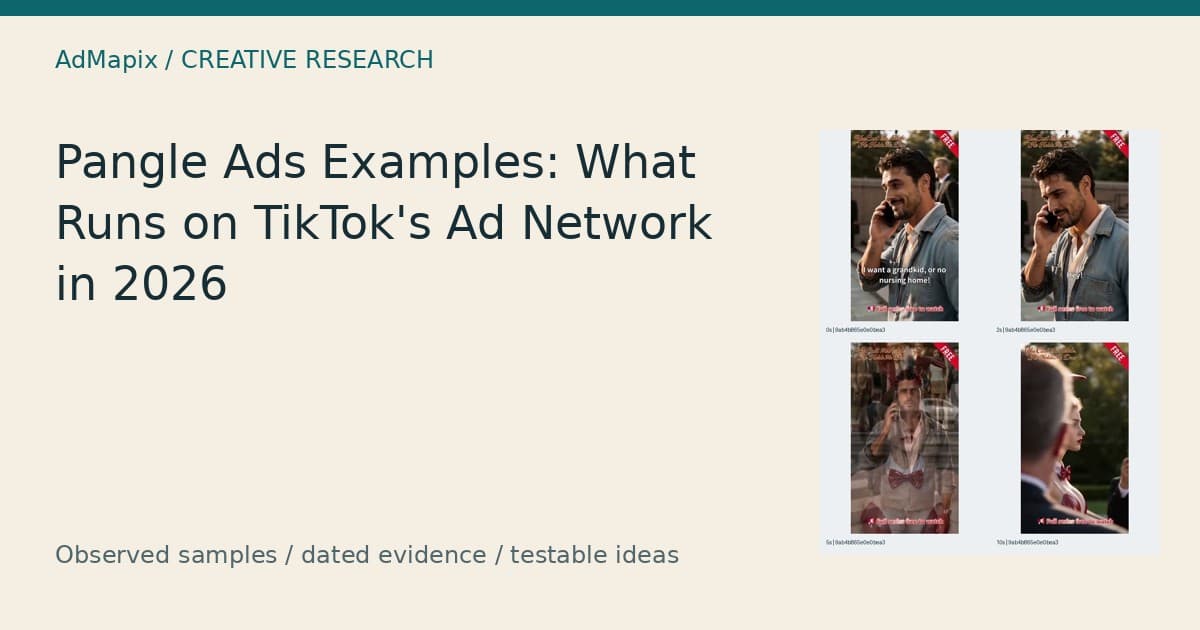
Pangle Ads Examples: What a Dated US Search Sample Shows
Pangle ads are associated with advertising inside third-party apps, so researching them requires separating the advertised product from the app or network carrying the advertisement. The dated AdMapix sample examined here contains short-drama promotions, Pokémon card reveals, fashion presentations, TikTok promotions, and a pool-game offer. It provides useful creative references, but its US country filter and Pangle research label do not independently establish where every impression occurred or which placements are currently available to advertisers.
For user acquisition managers, creative strategists, and app marketing teams, the practical question is what these examples justify producing next. This guide examines eight timestamped contact sheets, explains the distinction between records and video files, and turns visible structures into original test briefs. It also answers the consumer question behind searches for “Pangle ads remove”: why an advertising network can appear inside an app you already use.
Last updated: 2026-10-25.
AdMapix Research — prepared with Codex and checked against the dated source sample. Editorial ownership: Brad at AdMapix. This disclosure does not imply personal human review. AdMapix is our product.
Quick Answer
The sample supports a creative research workflow, not a claim about the complete US Pangle advertising market.
- The frozen search returned 30 advertising records associated with 16 distinct video fingerprints during 2026-09-26 to 2026-10-25.
- The eight illustrated examples show drama, creator reactions, product presentation, feature explanation, an advertised cash incentive, animation, and a filmed conversation.
- A TikTok logo or TikTok-style interface inside an ad identifies visible content; it does not establish a TikTok in-feed placement.
- No conversion results, verified spend, complete publisher placements, or matched TikTok in-feed comparison were supplied.
- Use the examples to specify original creative hypotheses, then evaluate those hypotheses with your own campaign and product data.
What Pangle Is—and How It Relates to TikTok
Pangle is an app advertising and monetization network associated with the TikTok and ByteDance advertising ecosystem, while TikTok is also a consumer app that can itself be advertised. Those roles must remain separate when reading screenshots. An advertisement promoting TikTok can appear in research about an external app network, just as an advertisement promoting a game can appear inside another game.
Official documentation for these distinctions (citation date: 2026-10-25; not a claimed page-update or live-verification date): TikTok’s About Pangle identifies Pangle as “the ad network of TikTok for Business” and describes reaching users through third-party apps. The Pangle entry in ByteDance’s product directory supplies the corporate product context. Pangle’s Android SDK integration guide, specifically its SDK integration and initialization instructions, documents how developers incorporate the advertising software into an app. These references support the general definition, relationship, and integration model; they do not establish current US inventory, account eligibility, or the serving path of any sampled advertisement. Live retrieval of these pages was unavailable during this correction, so their current wording and update dates remain unverified.
At a practical level, distinguish the following participants:
| Participant | Role in the advertising experience | What this sample establishes |
|---|---|---|
| Advertised product | The app or service being promoted | Linked store identifiers are supplied for the records |
| Creative asset | The video, image, or interactive material carrying the message | Video fingerprints and selected timestamped frames are supplied |
| Advertising network | The system associated with distributing ads across inventory | The research request selected a Pangle-labelled filter; independent placement confirmation is limited |
| Host app | The application in which a person encounters the ad | Host-app identities are not supplied for these examples |
| Buyer or payer | The party funding the advertisement | The supplied listing associations do not establish the payer |
This distinction explains why the phrase “TikTok ads” can become confusing. It may describe ads shown inside TikTok, ads that resemble TikTok videos, or ads promoting TikTok as the destination product. Those are different research categories.
The TikTok-linked examples below belong to the last category at the product-association level. Their records link to TikTok’s Android package. The frames contain TikTok branding and interface imagery, but those visual elements are part of the creative. They are not independent records of the surrounding placement.
For media planning, verify the relevant country and placement options in current official materials and your own buying account before treating a historical research filter as confirmation of available inventory. This article offers creative evidence; it does not certify that an advertiser can currently purchase a particular US Pangle placement.
What the US-Filtered Sample Actually Shows
The sample shows a varied set of app promotions returned by a defined research request, rather than a representative census of a network’s creative mix. Its value is concrete: it gives teams examples of how different products make a benefit visible. Its limitation is equally concrete: neither the number of retrieved rows nor their estimated impressions establishes category market share.
The search used a US country filter, an empty keyword query, and a Pangle-labelled research selection. It retrieved three pages with ten rows per page, requested in descending order of estimated impressions. That collection method emphasizes records surfaced by the selected ordering and page limits. It does not establish that every eligible record was retrieved, that page boundaries remained globally stable, or that the result represents the complete advertising activity of any listed app.
The linked products include NetShort, Pokémon TCG Pocket, SHEIN, TikTok, Break Master Ace, and an Oakever Sudoku listing. These names describe the associated store listings. They are not a verified list of ad buyers, and they do not identify the apps where the advertisements were displayed.
The distinction matters most when someone asks, “What runs on Pangle in the US now?” A defensible answer from this package is: these product-linked records appeared in the US-filtered Pangle research sample collected on 2026-10-25. A stronger statement—that every illustrated creative was independently observed serving to US users through Pangle—would require source mapping or placement evidence beyond what is supplied here.
For creative teams, that limitation does not make the screenshots useless. A split-screen card reveal can still demonstrate how a product object and a person’s reaction share a frame. A fashion panel can still demonstrate how merchandise remains visible while the scene changes. The appropriate output is a structural reference and a test hypothesis, with the source qualification attached.
For teams building a broader research process, the mobile game ad intelligence guide provides the topic parent for organizing game creative evidence. Here, the narrower task is to inspect a dated network-filtered sample without turning its retrieval settings into unsupported delivery claims.
Methodology: Dates, Country, Query, and Observation Limits
This analysis uses the frozen AdMapix sample fetched on 2026-10-25 at approximately 16:13 UTC, with the explicit measurement window 2026-09-26 to 2026-10-25. The country selection was US, the keyword query was empty, and the research platform selection was Pangle. The collection was bounded to three pages of ten advertising records, requested with descending estimated-impression sorting.
The quantitative source contains 30 advertising records, all with video associations. Flattening and deduplicating the supplied video fingerprint arrays yields 16 distinct video fingerprints. The sample contains no recorded standalone image fingerprints and no recorded playable fingerprints. That describes the returned records; it does not establish that the network offers only video or that the listed products use no other formats elsewhere.
An advertising record is a returned instance with its own identifier and associated metadata. A video fingerprint identifies a video file within the source’s fingerprint system. Multiple records can reference the same fingerprint. Consequently, this article never substitutes “30 unique creatives” for “30 advertising records.” It also avoids treating different fingerprints as proof of completely different ideas: file-level difference and conceptual difference are separate questions.
Product associations come from the linked app identifiers supplied with the records. We do not assign identity by recognizing a brand in a frame or matching a title. A listing association establishes which product the record links to; it does not independently identify the advertiser’s legal entity, agency, or payer.
The visual evidence consists of eight contact sheets. Seven show sampled frames labelled 0, 2, 5, and 10 seconds. The SHEIN sheet shows frames labelled 0, 2, and 5 seconds. These timestamps are observation points, not continuous playback. We did not watch the complete videos, listen to their audio, operate the advertised apps, verify their offers, or test their landing experiences.
All impression figures in this article are third-party model estimates for the stated measurement window. They are not observed delivery counts, audited reach, spend, installs, revenue, profit, or lifetime totals. Product-level aggregate impression fields are excluded because their time scope is not suitable for combining with the creative-record window.
The source package includes the research selection, request parameters, record associations, and checksums. However, a media label is not automatically an independently verified serving-network identity. The individual records also contain a numeric source field, but this article does not invent a mapping from that number to a network. Host-app and original-placement information is absent for the illustrated records.
The public frozen source package makes the batches, request parameters, and checksums public and reproducible. Those checksums support artifact traceability. They do not establish that an advertising claim is true, that a model estimate is accurate, or that a creative performed well.
Evidence Table: Records, Files, and Illustrated Examples
The returned records contain substantial video reuse, which changes how a creative team should interpret apparent volume. The table below groups the supplied records by linked store identifier and counts distinct video fingerprints within each group. These are sample counts, not complete product inventories, publisher totals, or market shares.
| Reported linked listing | Store identifier | Records in this sample | Distinct video fingerprints | Illustrated examples |
|---|---|---|---|---|
| NetShort | com.netshort.abroad | 3 | 3 | Image 1 |
| Pokémon TCG Pocket | jp.pokemon.pokemontcgp | 9 | 4 | Images 2, 4, and 8 |
| SHEIN | com.zzkko | 2 | 2 | Image 3 |
| TikTok | com.zhiliaoapp.musically | 11 | 3 | Images 5 and 7 |
| Break Master Ace | com.bma.pool | 2 | 1 | Image 6 |
| Sudoku, listed under Oakever Games | easy.sudoku.puzzle.solver.free | 3 | 3 | No attached visual example |
| Sample total | Listed identifiers above | 30 | 16 | Eight distinct illustrated video references |
The Sudoku records establish that this listing appears in the returned sample. Because no corresponding contact sheet is attached, this article does not invent a visual teardown from the advertising titles alone.
The next table connects each illustrated example to its record and window estimate. Record identifiers are abbreviated for readability and can be matched to the public source package.
| Image | Record identifier prefix | Linked listing | Window impression estimate | Recorded video duration |
|---|---|---|---|---|
| 1 | 9ab4b865e0e0 | NetShort | 125,643,455 | 87 seconds |
| 2 | 1d56271186cf | Pokémon TCG Pocket | 76,357,461 | 46 seconds |
| 3 | 7d1368c22be5 | SHEIN | 56,361,489 | 6 seconds |
| 4 | 90b471a7db25 | Pokémon TCG Pocket | 43,136,420 | 40 seconds |
| 5 | ce61c05554e7 | TikTok | 25,158,492 | 33 seconds |
| 6 | a97ecaeb2e49 | Break Master Ace | 24,823,108 | 32 seconds |
| 7 | 47ff8bb16451 | TikTok | 24,153,784 | 48 seconds |
| 8 | 677e61d183ff | Pokémon TCG Pocket | 18,675,266 | 24 seconds |
The duration column is record metadata. It does not mean the full duration was visually examined. Likewise, an impression estimate beside a screenshot supplies sample context; it is not a creative score or a recommendation to copy that advertisement.
Image 1: NetShort Opens With an Unresolved Relationship Conflict
The NetShort-linked example makes a relationship conflict legible before explaining the destination app in detail. In the opening sampled frame, a man is shown using a phone, accompanied by the subtitle “I want a grandkid, or no nursing home!” The wording introduces a demand and a consequence. Later sampled frames show a transition and a woman in a formal outdoor setting, while promotional access messaging remains visible.
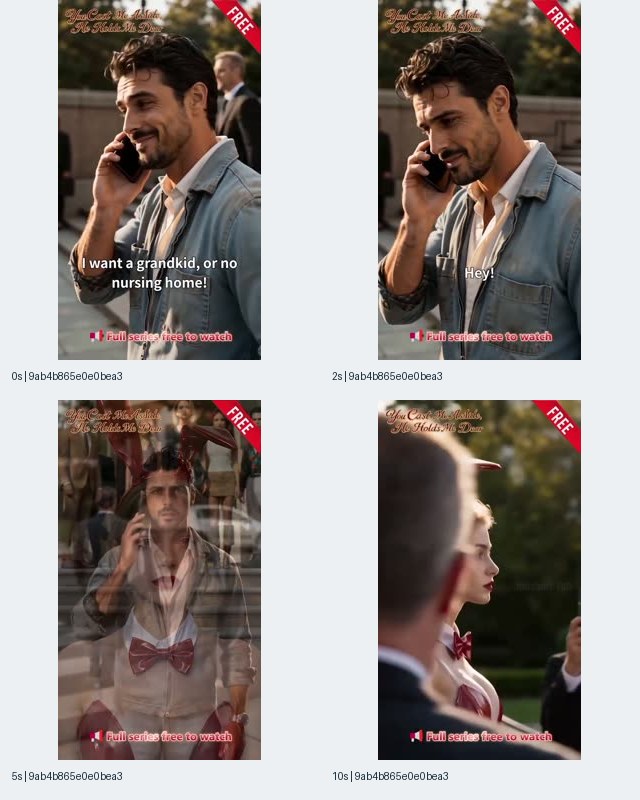
Image 1. NetShort, linked listing com.netshort.abroad; record 9ab4b865e0e0bea34df3d50f7bc62b3e. Observed frames: 0, 2, 5, and 10 seconds. The visible “FREE” and “Full series free to watch” language is advertising copy, not a verified access entitlement.
The creative structure has a useful division of labor. The dialogue supplies the immediate question: what happens between these people? The persistent promotional text supplies a proposed route to more content. A viewer does not need to understand the entire plot to recognize that a relationship is under pressure.
That is a different production task from introducing a streaming app through a feature list. A feature-led advertisement might begin with a catalogue, search screen, or subscription explanation. This reference begins with a scene whose meaning depends on character relationships. The app’s value is implied through access to the story rather than demonstrated through a complete interface walkthrough.
The contact sheet cannot establish what happens between the sampled moments. It does not reveal the complete narrative, the eventual resolution, the final call to action, or the conditions attached to the free-access message. The recorded 87-second duration also does not tell us whether viewers stayed long enough to see the later material.
A useful original brief would preserve the relationship between conflict and continuation while replacing the plot, cast, dialogue, and visual treatment. For example, a team with rights to its own drama could select a scene where a character must make a clear decision, then pair that scene with an accurate explanation of where the episode is available.
The hypothesis would be: an immediately understandable character dilemma may improve qualified interest in the specific programme compared with a general catalogue montage. That remains a hypothesis. It should be tested against programme starts or another relevant downstream action, not judged by the intensity of the actor’s expression.
Before production, the team should verify the access promise separately from the scene selection. If only an opening episode is available without payment, the advertisement should not inherit the sampled claim that the full series is free. Structural inspiration does not transfer the truth of another advertiser’s offer.
Image 2: Pokémon TCG Pocket Pairs a Card Reveal With a Reaction
The first Pokémon TCG Pocket example gives the product object and a creator’s facial reaction separate, readable areas of the frame. The upper area shows a headset-wearing person, while the lower area presents a large digital card. Text between them reads “Immersive & GOD PACK Back to back!!!” The sampled frames therefore communicate both an object to inspect and an emotional interpretation of that object.
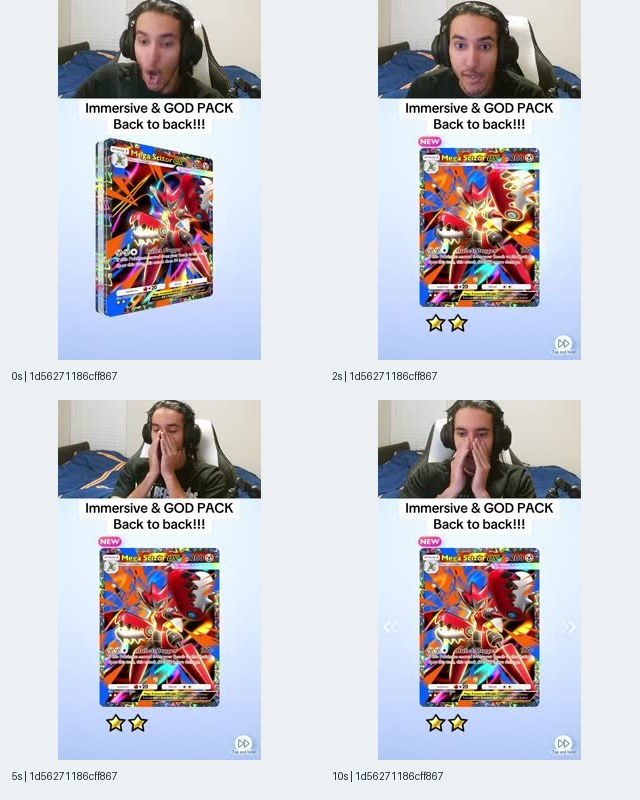
Image 2. Pokémon TCG Pocket, linked listing jp.pokemon.pokemontcgp; record 1d56271186cff8676be7e1ab3ec1a783. Observed frames: 0, 2, 5, and 10 seconds. The split composition is visible evidence; reaction authenticity and campaign results are not established.
The layout is worth studying because the card remains large enough to be the central product reference. The creator’s face provides a second reading path without fully replacing the app imagery. By the later sampled frames, the person’s hands are near the face, while the card remains prominent below.
A team could describe this as a reaction-led presentation, but should avoid upgrading it into a verified testimonial. The contact sheet does not establish whether the person is a customer, a paid creator, a performer, or the original source of the recording. The advertising title contains a creator handle, but that alone does not document the contractual relationship or rights history.
The record title also includes an award claim and a statement about millions of people discovering the game. Those are supplied advertising claims. This article does not validate them, and they are unnecessary to understand the visual structure. Removing such unsupported authority language from a research summary leaves a cleaner observation: a digital collectible is presented alongside an expressive human response.
The same video fingerprint appears under additional records with different advertising titles. That matters for production planning. A team looking only at rows might conclude that several videos were made, when some of the visible variation sits in the associated text rather than the underlying video file.
An original test could compare a product-led version with a reaction-led version using the same legitimate product event. The team would hold the collection feature, destination, and offer constant, then vary whether the face or the card receives greater opening emphasis.
The hypothesis is that a visible reaction may help viewers interpret why a collection moment matters. The competing hypothesis is that it distracts from understanding the product. A comprehension check can help distinguish those possibilities before campaign launch: ask viewers what happened, what app activity was shown, and what they expect after installing. None of those answers is supplied by the third-party impression estimate.
Image 3: SHEIN Keeps Merchandise Beside the Styled Scene
The SHEIN-linked example uses a persistent merchandise panel to connect a styled outfit with identifiable products. The sampled opening shows a person wearing a red top and olive trousers beside a white panel labelled “SHEIN” and “NEW ARRIVALS.” The panel displays the garments separately, allowing the clothing to remain recognizable while the surrounding scene changes.
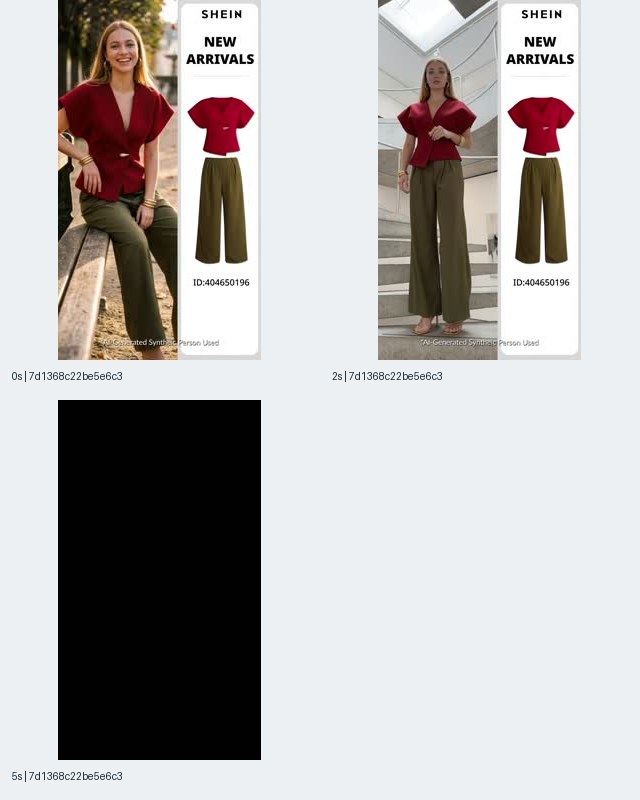
Image 3. SHEIN, linked listing com.zzkko; record 7d1368c22be5e6c32085ba8b6e3fe96b. Observed frames: 0, 2, and 5 seconds. The visible synthetic-person disclosure is part of the advertisement. The black sampled panel does not establish a playback defect or the complete ending.
The visual choice addresses a practical ambiguity in fashion advertising: a viewer can like an overall look without knowing which garment is being sold. Here, the styled scene and the product cutouts share the frame. The merchandise panel provides a stable reference while the model’s setting changes from an outdoor scene to an interior stairway.
The text “AI-Generated Synthetic Person Used” is visible near the bottom of the styled imagery. That supports a narrow observation: the advertisement includes a synthetic-person disclosure. It does not reveal the production software, generation process, image model, editing time, or cost. This is an advertising reference, not an output from a tool test conducted for this article.
The frame labelled 5 seconds is black. There are several possible explanations, but the supplied evidence does not establish which applies. It could reflect the source material, a capture boundary, or another extraction circumstance. Assigning a cause would add an unsupported technical finding. The reliable description is simply that the attached contact sheet contains a black panel at that timestamp.
For an ecommerce team, the transferable idea is the connection between styling and item recognition. An original version could show a real garment in a lifestyle setting while maintaining a clear product reference beside it. The exact composition should follow the team’s own merchandise, brand, and placement requirements.
A useful hypothesis would ask whether keeping the product visible helps viewers identify the item they intend to browse. That is more specific than assuming a split layout increases sales. The production team can first check whether viewers name the correct garment, distinguish the top from the trousers, and understand whether the advertisement promotes a single item or a complete outfit.
The offer also needs its own verification. “New arrivals” describes the sampled promotion; it does not establish that the same products are newly released or available now. A new campaign should connect its visual to the current product page, stock state, and accurate merchandising language.
Image 4: A Second Pokémon Example Changes the Reveal Presentation
The second Pokémon TCG Pocket reference shows a visibly different relationship between the creator and the card, even though it links to the same store identifier. The opening sampled frame contains a smaller blue card presentation. Later frames show a bright illustrated card and a more pronounced facial reaction, with short subtitles appearing over the composition.
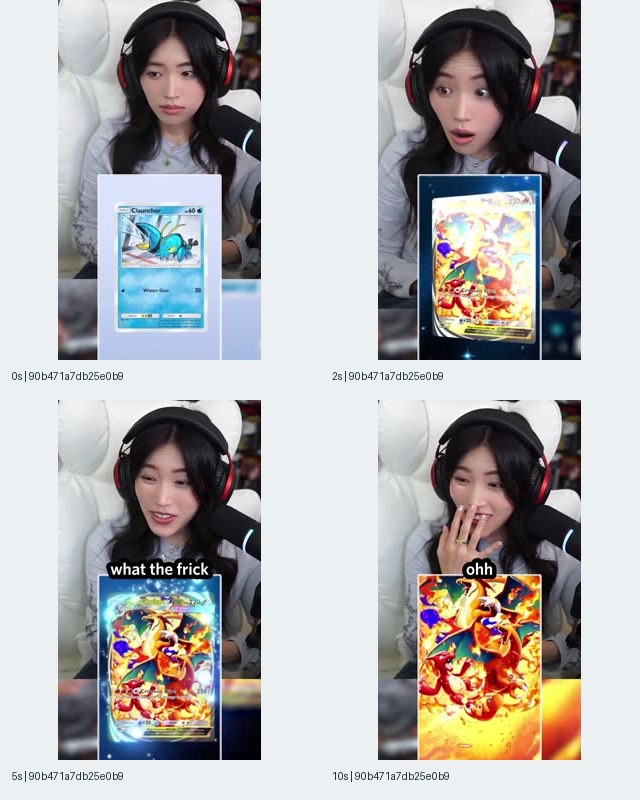
Image 4. Pokémon TCG Pocket, linked listing jp.pokemon.pokemontcgp; record 90b471a7db25e0b9c2b4a42f1e76ed22. Observed frames: 0, 2, 5, and 10 seconds. This is a different recorded video fingerprint from Image 2, not a verified controlled experiment.
The useful comparison with Image 2 is compositional. Both place a person and a collectible in the same vertical creative. In Image 2, the split between reaction and product is especially stable. In Image 4, the card treatment changes more visibly across the supplied frames, and the short subtitles provide another layer of interpretation.
Those differences suggest distinct production choices: how large the product becomes, when explanatory text appears, and how much space the creator occupies. They do not establish which choice performed better. The records have different dates, estimated impressions, and video durations, and no matched campaign conditions are supplied.
It would also be inaccurate to describe the sampled creator’s expression as a measured attention mechanism. The expression is visible. Viewer attention is not. A researcher can reasonably hypothesize that the contrast between an ordinary-looking opening card and a more elaborate later card creates a sense of escalation, but the contact sheet alone does not measure that effect.
An original brief should specify the exact change it wants viewers to notice. If the product offers a collection feature, the brief might distinguish acquiring an item, viewing its artwork, organizing a collection, and using it in another activity. Those are different promises. A striking reveal should not leave the viewer unsure which action the app actually supports.
For testing, choose a single meaningful variable. One version could place the product event prominently from the opening frame. Another could introduce the person first and then reveal the same event. Keep the underlying product claim and destination consistent so that the result has a usable interpretation.
The production acceptance question is straightforward: can a viewer explain the product event without relying on the creator’s excitement? If the answer is no, the creative may communicate enthusiasm more clearly than utility. Whether that tradeoff is useful must be assessed with the team’s own audience and downstream outcomes.
To inspect related indexed references, search Pokémon TCG Pocket creatives in AdMapix. Check the linked product identifier and source context for each result. This query is a starting point for product research, not a reproduction of the frozen Pangle-filtered request.
Image 5: TikTok Is the Advertised Destination, Not Proven Placement Context
The TikTok-linked presenter example demonstrates a discovery path inside the promoted app rather than simply displaying a logo. The opening sampled frame combines drama footage, TikTok interface imagery, and a presenter. Later frames show a “Watch the Series” panel and episode-selection imagery, accompanied by visible invitations to use TikTok.
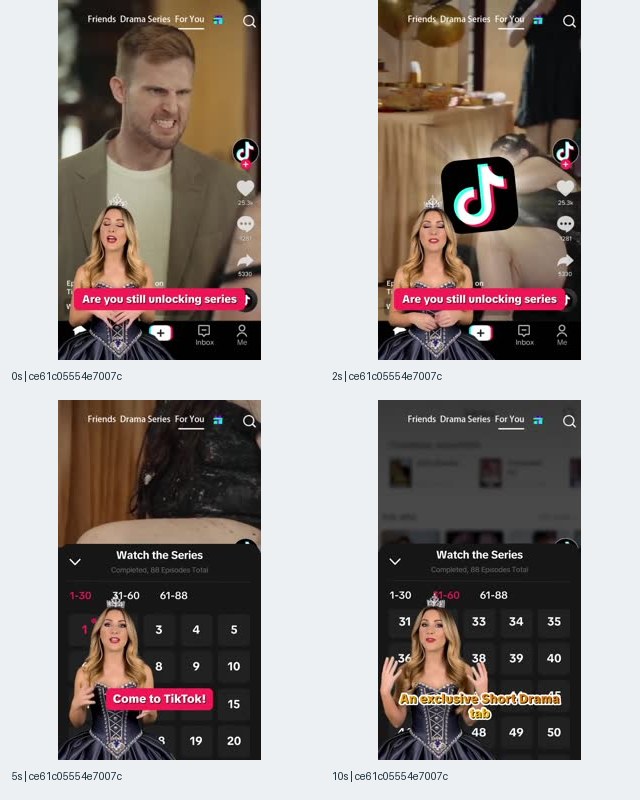
Image 5. TikTok, linked listing com.zhiliaoapp.musically; record ce61c05554e7007cbe9005e3f6fa48d1. Observed frames: 0, 2, 5, and 10 seconds. The TikTok interface is visible inside the advertisement; it does not prove the ad was delivered in TikTok’s feed.
This is one of the clearest attribution lessons in the sample. A screenshot contains a TikTok logo, familiar interface elements, and an invitation to “Come to TikTok!” The linked store identifier also points to TikTok. Together, those observations support identifying TikTok as the promoted destination. They do not establish the host application surrounding the ad.
The creative itself moves from an entertainment proposition toward a navigation proposition. The drama imagery supplies the reason to care. The episode grid supplies a pictured way to access related content. The presenter adds an explanatory layer over both. The sampled sequence therefore combines content appeal with a feature explanation.
A production team should treat the interface demonstration as a separate claim from the entertainment scene. The drama footage can be visually compelling while the pictured navigation is outdated, region-specific, or unavailable to some users. This source package does not resolve those questions. It shows what the ad depicts, not a tested account experience.
The same presenter video fingerprint appears in nine records within the supplied sample. That is a file-reuse observation, not proof of nine different concepts or nine successful campaigns. The records alone do not reveal why the file was repeated, whether those instances belonged to a particular account structure, or whether their audiences overlapped.
An original feature-led brief can borrow the sequence of tasks without borrowing the footage: establish the content benefit, show where the relevant feature is located, and demonstrate the next action using the current product. The team should capture its own interface under the intended account and regional conditions.
The test hypothesis is that a visible navigation path may reduce uncertainty about what to do after opening the app. The appropriate downstream question is whether users reach the promised content or feature. An install by itself would not confirm that the explanation worked. This is particularly relevant when an advertisement promotes a specific capability inside a broad app rather than the app’s general purpose.
Image 6: Break Master Ace Makes an Offer the Dominant Message
The Break Master Ace example places a cash-related promotional claim above both the presenter and the pictured gameplay. Across the supplied frames, the large headline reads “DOWNLOAD NOW AND GET $20 INSTANTLY.” A presenter holds a phone in some frames, while another sampled frame shows a pool game on a handset. The offer is therefore visually more persistent than any single product demonstration.
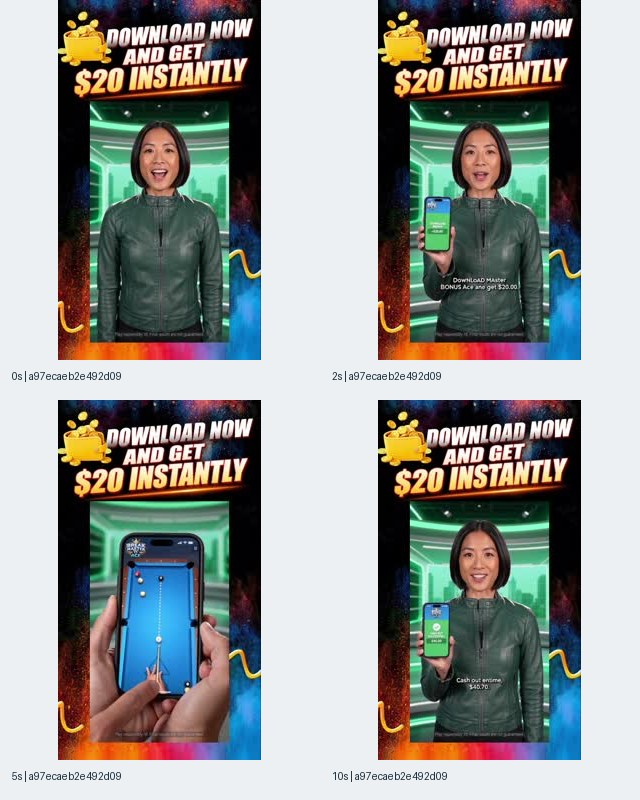
Image 6. Break Master Ace, linked listing com.bma.pool; record a97ecaeb2e492d09f30d20049915d0cb. Observed frames: 0, 2, 5, and 10 seconds. The dollar amount and withdrawal-related wording are advertising claims; eligibility, availability, and payment were not verified.
The visual hierarchy is unusually easy to describe without judging performance. The headline occupies the top of the composition. A framed central area alternates between a person and a phone demonstration. Decorative money imagery reinforces the financial message. The product category becomes clearer when the pool table appears on the handset.
That structure creates a research question about expectation. Does a viewer understand the app as a pool game, a reward opportunity, or both? The supplied frames cannot answer how actual viewers interpreted it. They do show why a creative team should evaluate the offer and the gameplay explanation separately.
The large amount in the headline must not be repeated as an editorial recommendation. We did not install the app, open an account, review complete terms, make a deposit, or attempt a withdrawal. The record’s model-estimated impressions provide no evidence that the promise was fulfilled. They also do not establish that the product is profitable for advertisers or users.
The general production lesson is about message priority. When an incentive occupies the most prominent and persistent area of a video, it can become the main remembered promise. A team considering an incentive-led advertisement should therefore decide whether that promise accurately represents the product experience it wants to acquire users for.
An original brief could compare an accurate product-first explanation with an accurately qualified incentive explanation, if the team has a legitimate offer to advertise. The brief should preserve all material conditions, use current terms, and ensure that the destination explains the same proposition. It should not import the sampled dollar amount or imply that another product can make the same promise.
The hypothesis is that incentive emphasis changes the type of interest the ad attracts. Testing should therefore include a relevant activation or quality measure, not just click response. A higher click rate would leave open whether users understood the activity, qualified for the offer, or continued using the app for the intended reason.
Image 7: TikTok’s Animated Story Uses a Different Creative Language
The animated TikTok-linked example uses dialogue and an illustrated relationship scene instead of a presenter explaining an interface. The opening sampled frames show a person at a doorway and another person inside a room, with speech bubbles introducing a wedding-related situation. By the frame labelled 10 seconds, a large phone-message overlay covers much of the scene.
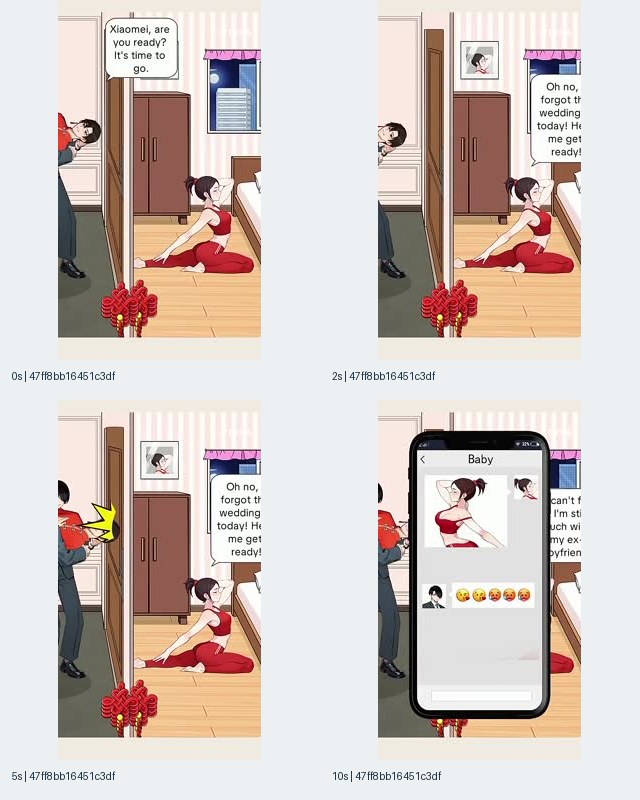
Image 7. TikTok, linked listing com.zhiliaoapp.musically; record 47ff8bb16451c3df3dd880e2cd07344c. Observed frames: 0, 2, 5, and 10 seconds. The illustrated scene does not establish that the destination is a playable relationship game.
This example is useful because its appearance could mislead a researcher who assigns product categories from images alone. A cartoon scene and a phone conversation might resemble a game advertisement. The supplied store association, however, points to TikTok. The correct description is an animated creative linked to TikTok, with no claim that the depicted interaction is playable.
Compared with Image 5, the product association remains the same while the visible communication method changes. The presenter example explains an app feature through interface imagery. This example introduces a narrative situation through dialogue. That is a meaningful creative contrast within a single linked product, even though the supplied frames do not reveal the complete destination explanation.
The speech bubbles also make text a central part of the creative. The reader must interpret the situation through visible dialogue rather than relying entirely on facial expressions or a product screen. Some text is cropped within the sampled panels, so this article does not reconstruct missing dialogue or invent a complete plot.
For production, the transferable idea is a self-contained narrative question. An original content advertisement could introduce a character’s dilemma in a small number of readable visual elements, then connect that dilemma to the actual destination. The connection is essential: an entertaining scene can create an expectation of a particular story or interaction that the landing experience must resolve.
A useful hypothesis is that an illustrated conversation may communicate a content theme without requiring live-action production. That does not establish a cost advantage here. No production costs, asset licenses, animator hours, or generation tools were supplied. The team would need its own production estimates to compare formats economically.
Before approving an adaptation, ask viewers what they think happens after tapping. If they expect to play the depicted scene but the destination offers videos, the creative needs a clearer bridge. That expectation check is more useful than assigning a game category based on the artwork or treating every animated reference as evidence of a playable format.
Image 8: Pokémon TCG Pocket Moves Into a Filmed Conversation
The third Pokémon TCG Pocket reference places the product in a filmed social setting instead of a desktop reaction layout. The sampled frames alternate between people seated in a lounge-like space. In the frame labelled 10 seconds, one person holds a phone toward the camera, making the device the clearest product reference in the attached sequence.
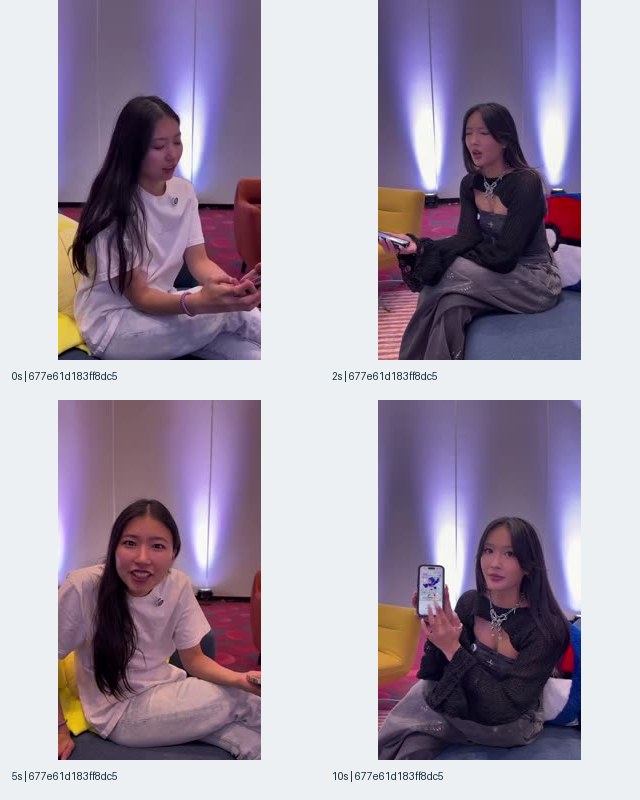
Image 8. Pokémon TCG Pocket, linked listing jp.pokemon.pokemontcgp; record 677e61d183ff8dc5370a861c49ac30d1. Observed frames: 0, 2, 5, and 10 seconds. The conversation’s audio, participant relationship, and complete product demonstration were not examined.
The visual contrast with Images 2 and 4 is substantial. Those examples place enlarged digital cards directly in the video composition. Here, the product is mediated through a physical phone within a wider filmed scene. The people, seating, and background lighting occupy more of the image, while the app becomes visually explicit when the handset is presented.
That difference gives a creative team a useful choice to examine: should the product experience be enlarged for immediate inspection, or situated in a recognizable human interaction? The former can prioritize visual detail. The latter can supply a use context. Those are production intentions, not measured advantages in this sample.
The record title refers to rediscovering digital Pokémon cards and includes a creator handle. The contact sheet does not establish what was said, whether the participants were friends, whether the scene was spontaneous, or whether the phone demonstration reflected an uninterrupted app session. Describing it as an authentic recommendation would exceed the evidence.
The same video fingerprint also appears in another supplied record with different advertising text. That supports recording the filmed scene as one underlying video reference with more than one associated message. It does not establish an experiment or show which text produced better outcomes.
An original brief could place a real product action in a conversation between performers or participating users whose roles are accurately represented. The script should make the action understandable even when the screen occupies only a small part of the frame. If the scene requires viewers to inspect details, the production may need a closer product shot or an enlarged screen insert.
The hypothesis is that a social setting may make a collection feature easier to imagine in everyday use. A competing concern is that the setting delays product recognition. A prelaunch check should therefore ask both what the product does and what situation the ad suggests using it in. Testing only whether viewers liked the people or the room would miss the actual acquisition question.
The Creative Patterns Worth Carrying Into a Brief
The useful pattern across these examples is the relationship between the opening promise and the visible product evidence. The sample does not justify declaring one dominant network formula. It does support a practical framework for deciding what a creative needs to show before asking the viewer to act.
| Observed structure | Example | Information carried by the opening | Evidence a new brief should supply |
|---|---|---|---|
| Character conflict | Image 1 | A reason to continue a story | Accurate programme identity and access terms |
| Reaction beside product | Images 2 and 4 | Emotional interpretation of a collection moment | A recognizable, legitimate product event |
| Styled scene beside merchandise | Image 3 | How an item looks in context | Clear item identity and a matching product destination |
| Presenter plus interface | Image 5 | Why a feature matters and where to find it | Current navigation and account eligibility |
| Incentive above demonstration | Image 6 | A proposed reward for taking action | Complete, current offer conditions |
| Illustrated dialogue | Image 7 | A narrative question | A clear connection to the actual content experience |
| Conversation plus device | Image 8 | A possible social use context | Readable product action and accurate participant framing |
The distinction between a hook and proof is especially helpful. A hook gives a viewer a reason to keep looking. Proof, in a production brief, should mean material that supports the product claim being made. A surprised face can be a hook without proving that a feature is useful. A cash headline can be an offer without proving that payment occurs. A pictured interface can explain navigation without proving that every user has access to it.
A team can use this table to diagnose missing material before commissioning an edit. If the reference contains a strong emotional opening but the team has no clear product demonstration, the brief is incomplete. If the demonstration is clear but the offer is unverified, the missing work is commercial validation rather than another visual effect.
This also prevents the common mistake of asking a creator to “make something like this” without specifying which relationship matters. Does the team want the split composition, the timing of the product reveal, the persistent item panel, or the transition from story to navigation? Those are separable choices. Naming the intended choice makes both production and later evaluation more informative.
What Can Be Compared With TikTok In-Feed Ads
This evidence supports a comparison of visible creative conventions, but it does not support a quantitative comparison between Pangle and TikTok in-feed advertising. No matched TikTok in-feed sample was supplied for the same products, country, measurement window, and collection method. Any claim that one environment uses more creators, longer videos, stronger offers, or better-performing hooks would therefore be unsupported.
Some conventions in the attached examples may look familiar to people who research social video: vertical compositions, prominent faces, subtitles, reaction imagery, and app demonstrations. Familiarity is not placement evidence. These techniques can appear in video files distributed through different channels, and a contact sheet does not reveal the surrounding ad container.
The distinction is particularly important for Images 5 and 7. Both link to TikTok as the promoted product. Neither provides a matched observation of an unrelated advertiser buying an in-feed TikTok placement. Including them in a “TikTok in-feed benchmark” would mix destination identity with distribution context.
A fair future comparison would require separate, dated samples with equivalent collection rules. Researchers should preserve the same country selection and window, document the source identity for each record, and deduplicate video files before describing the mix. They should also distinguish file reuse across channels from variations in the message or editing.
| Comparison question | Supported here? | Additional evidence needed |
|---|---|---|
| Do the attached examples use creator-style presentations? | Yes, as a visual description | No additional evidence for that narrow observation |
| Were those creator-style ads delivered in TikTok’s feed? | Not established | Verified placement or source mapping |
| Is creator-style content more common on Pangle than TikTok? | No | Comparable samples and a defined counting method |
| Does a reveal structure perform better on either channel? | No | Matched campaign outcomes and test conditions |
| Can the same product be promoted with different visual structures? | Yes, within this sample | No additional evidence for the illustrated differences |
For the TikTok-side research task, consult the TikTok ad library guide. For another network-oriented research workflow, the AppLovin advertising intelligence guide is the relevant sister page. These are separate research contexts, not benchmark datasets that can be combined with this sample without checking their definitions.
Why Pangle Ads Can Appear Inside Another App
A person can encounter Pangle-associated advertising inside a third-party app that integrates its advertising software. Pangle’s Android SDK integration guide, in its integration and initialization instructions, documents the developer-side SDK setup (citation date: 2026-10-25; current page wording not reverified). An SDK, or software development kit, is software that an app developer incorporates to support functions such as advertising. The name shown in an ad information panel can therefore refer to an advertising provider rather than the app being promoted or the app currently open. This general integration explanation does not identify the integration used by any host app in the sample.
For consumers, the first useful distinction is between the host app and the advertisement. If a pool-game promotion appears while someone is using a different app, the pool game is the advertised destination. The app already open is the host. The network or technology provider may be another participant. Recognizing those roles makes support requests more precise.
The attached contact sheets do not identify the host apps for these particular advertisements. They also do not show the complete close controls, privacy information, ad-choice panels, or surrounding interface. It would be inappropriate to diagnose a specific consumer’s experience from these images.
A neutral response to unwanted advertising is to inspect the host app’s own settings, help pages, and any ad-information controls available in that experience. The device platform’s privacy and advertising settings may also provide relevant controls. The options and their effects vary, so changing personalization settings should not be described as a guarantee that all advertising will disappear.
If the app offers an ad-free mode or subscription, its current terms should explain what it removes. A user should not assume that a general premium label covers every advertising surface. Similarly, removing TikTok would not necessarily remove an advertising integration from an unrelated host app.
For a problematic or misleading advertisement, the most useful report identifies the host app, approximate time, visible promoted product, and available advertisement details. That gives the app’s support team or the relevant reporting mechanism concrete information to investigate. This guide does not provide ad-blocking instructions or claim that the source sample establishes a malfunction on any user’s device.
A Practical Workflow for Researching Pangle-Labelled Results
A useful research session should end with a traceable brief and a specific unanswered question, rather than a folder of impressive-looking screenshots. The workflow below separates retrieval, identity, observation, and testing so that uncertainty remains visible as the material moves from analyst to strategist to editor.
Start with the decision. Write the question in terms of a production choice: whether to show the product before the presenter, whether to keep a merchandise panel visible, or whether to explain navigation before asking for an install. “Find good Pangle ads” is too broad to determine what evidence matters.
Freeze the search scope. Record the country, exact date bounds, source selection, keyword query, sorting choice, and page limit. If the live interface or available fields differ from the frozen example, document the actual settings used. Do not describe a later search as a reproduction merely because it uses the same app name.
Check product identity. Preserve the linked store identifier alongside the display name. The name is useful for reading; the identifier is useful for association. If a record lacks a reliable product link, leave it unresolved rather than assigning ownership from a logo or title.
Check distribution identity separately. Ask what supports the network label. A documented filter mapping, verified source field, and original placement capture provide different levels of evidence. If only a research label is available, retain that qualification in the report. Do not silently convert it into confirmed serving activity.
Deduplicate before choosing references. Group records by video fingerprint, while retaining the different titles and record identifiers attached to each file. This reveals whether the team is looking at a new video, a different text wrapper, or another record of the same underlying asset. It also prevents repeated files from consuming the entire visual review.
Write observations at the frame level. Note what appears at each supplied timestamp: person, product, text, interface, setting, and visible change. Avoid reconstructing audio, transitions, or later events that are not shown. If a panel is black or a caption is cropped, record that limit rather than resolving it imaginatively.
Separate the claim from its support. Copy the relevant advertising claim into a dedicated field and identify what evidence would be needed to validate it. A free-access statement needs current access terms. A cash offer needs eligibility and payment conditions. An award statement needs an authoritative award source. A screenshot alone generally does not supply those materials.
Extract a structural principle. Describe the mechanism without proprietary characters or unsupported promises. “Keep the collectible visible while showing a reaction” is more useful than “copy this Pokémon ad.” “Pair a worn outfit with clear item imagery” is more useful than copying the sampled fashion composition exactly.
Turn the principle into a falsifiable hypothesis. State the proposed change, expected effect, and result that would challenge the idea. For example: making the product visible earlier may improve correct product identification; if viewers still cannot describe the activity, the change has not solved that communication problem.
Hand off the unknowns. The production brief should retain unresolved offer conditions, missing placement confirmation, and unexamined video segments. The next person should not have to rediscover why an analyst used qualified language. Evidence limitations are part of the deliverable, not an optional footnote.
A Copyable Creative Research Worksheet
A compact worksheet can preserve the evidence chain while keeping the creative task understandable. Its purpose is to make every recommendation traceable to an observation or an explicitly labelled hypothesis. The following structure can be used in a spreadsheet, document, or project-management system without requiring a particular tool.
| Field | What to enter | Example based on this article |
|---|---|---|
| Research question | The production decision being considered | Should the product remain visible beside the presenter? |
| Search scope | Country, dates, query, source selection, and limits | US; 2026-09-26 to 2026-10-25; empty query; bounded Pangle-labelled sample |
| Product identity | Linked store identifier and display name | Pokémon TCG Pocket; jp.pokemon.pokemontcgp |
| Source confidence | What establishes the distribution context | Research filter supplied; host placement not independently shown |
| Record reference | Identifier and source package | Image 2 record and the dated public package |
| Asset relationship | Whether the video repeats across records | Same fingerprint appears with other associated titles |
| Visible observation | Only what the frames show | Creator above a large digital card |
| Advertising claim | Exact relevant promise, kept separate | Record contains an award claim that this article does not verify |
| Interpretation | A clearly labelled explanation | Hypothesis: the face supplies emotional context for the card |
| Original adaptation | The team’s own proposed execution | Show a real product action beside an accurately framed presenter |
| Validation needed | Missing product or offer evidence | Current feature capture, approved claims, rights, and destination match |
| Test outcome | The result that would inform the decision | Correct product understanding and a relevant downstream action |
The worksheet should not force every row to contain an answer. “Unknown” is useful when it prevents an unsupported association from entering a presentation. For example, the host-app field is unknown for these illustrated records. Replacing it with “TikTok” because a logo appears inside the video would make the worksheet less accurate.
The same principle applies to performance. Leave spend, installs, conversion rate, and return fields empty unless the appropriate evidence exists. Do not populate them with impression estimates or derive them from the length of time a record has been visible. A research worksheet becomes valuable because its columns mean what their labels say.
When presenting findings to stakeholders, show the observation and proposed action together. A sentence such as “The card remains visible beside the creator; test whether our own product action should remain on screen during the explanation” is both concrete and appropriately limited. It gives production a decision to explore without pretending the source already proved the result.
An Original Brief Built From the Card-Reveal References
A defensible adaptation preserves the communication problem while replacing the sampled brand, performers, artwork, and claims. The following hypothetical brief is for a team promoting its own collection app. It is an original production example, not a description of a campaign we ran or a result measured in the supplied evidence.
Objective: Help prospective users understand that the app lets them inspect and organize a digital collection. The team must confirm that those actions exist in the current product before filming.
Evidence behind the idea: Images 2 and 4 show a person reacting while a digital card remains prominent. Image 8 instead places the product in a filmed conversation and makes a handset visible. These references suggest different ways to combine human context with a product object; they do not identify a winning approach.
Primary hypothesis: Keeping the product action visible during the human explanation may improve correct understanding of what the app does compared with an opening dominated by the presenter. This is a communication hypothesis, not a forecast of lower acquisition cost.
Version A: Open on the actual collection screen. A presenter appears beside it and explains a specific action using approved language. The product remains readable while the presenter supplies context. The closing invitation matches the demonstrated feature.
Version B: Open on the same presenter introducing the same collection task. Show the identical product action after that introduction. Use the same destination, feature claim, and commercial conditions. The primary difference is the order and prominence of the product demonstration.
Suggested original line: “Here is how I keep the items I want to find again in one place.” This line is appropriate only if the product actually supports the pictured organization action and the participant framing is accurate. It should be rewritten if the app’s real task differs.
Required footage: A readable capture of the current product, a clear view of the action’s starting state, the action itself, and its result. The presenter should not cover the part of the interface that explains the task. Any screen enlargement or compositing should preserve what the product actually does.
Do not inherit from the references: Pokémon artwork, implied rarity, award claims, another creator’s identity, or an expectation that a particular collection outcome is typical. Those details belong to the source advertisements and are not transferable evidence about a new product.
Prelaunch acceptance: Ask viewers to describe the app activity and the promised next step. Record misunderstandings in their own words. If one version is described as a game and the other as a collection organizer, the team has discovered a material difference in expectation that should be understood before interpreting acquisition metrics.
Campaign evaluation: Use the team’s own reporting to connect exposure and acquisition to a meaningful product action. Keep the experiment’s conditions documented. If a version attracts more clicks but fewer users complete the demonstrated task, the result may indicate a message mismatch rather than a successful creative improvement.
How to Test a Pattern Without Claiming the Sample Proved It
A creative reference becomes evidence about performance only when it is connected to an appropriate outcome under documented conditions. The frozen sample supplies neither that connection nor a completed experiment. Its role is to help choose a testable difference, such as product visibility, offer emphasis, or the clarity of a navigation demonstration.
Begin by defining what a successful communication change would mean. For a drama advertisement, it might mean that users recognize the programme and reach the intended episode. For an ecommerce advertisement, it might mean that users identify the correct item and arrive at the matching product page. For an app feature advertisement, it might mean that users understand and use the pictured feature.
Then choose a comparison that preserves the important background conditions. If one version changes the presenter, product claim, offer, destination, and opening sequence simultaneously, the result may still inform a business decision, but it will not isolate which change mattered. A narrower comparison is easier to interpret and easier to reuse in the next production cycle.
Define measurement rules before judging the result. Specify the relevant event, attribution treatment, evaluation window, and conditions that would make the data unsuitable for comparison. Those choices should reflect the team’s own product and reporting system. The source package supplies no universal test duration, spending threshold, or sample-size prescription.
Keep comprehension evidence distinct from campaign evidence. A prelaunch viewing session can reveal that people misunderstand an offer or fail to recognize the product. It cannot establish campaign profitability. Conversely, a campaign metric can show an outcome difference without explaining precisely which visual element caused it.
Finally, record alternative explanations. A product-first version may appear stronger because its destination loaded more reliably, because eligibility differed, or because the test populations were not comparable. Those possibilities do not invalidate every result, but they should affect how confidently the team attributes the change to creative structure.
The final report should say what was tested, what was observed, and what remains uncertain. That is a more useful outcome than attaching “winning” to an advertisement because it appeared repeatedly in a third-party index.
Common Mistakes When Reading Pangle Ad Examples
The most damaging mistakes come from mixing evidence categories rather than misreading a single number. A screenshot, a linked store identifier, a search filter, and an impression estimate answer different questions. The following errors can turn an otherwise useful creative review into an unsupported market or performance claim.
Treating the research filter as a regional availability certificate. A US-filtered Pangle-labelled result does not independently establish current buying eligibility or verified delivery to a US user. Preserve the retrieval context and verify current availability separately.
Calling TikTok-branded footage a TikTok in-feed placement. The logo and interface may be part of the advertisement. Images 5 and 7 link to TikTok as the promoted product; the host placement remains unestablished in the supplied package.
Counting rows as original videos. The sample has 30 records and 16 distinct video fingerprints. Those are different units. Repeated files can carry different associated text without becoming newly produced videos.
Using the impression table as a performance ranking. Its values are third-party model estimates for the explicit window. They do not establish conversion, revenue, or profit, and they should not be combined with product-level aggregates whose time scope differs.
Dividing window impressions by ad age. First-seen dates and a fixed measurement window describe different time concepts. This article provides no daily-intensity metric and makes no claim that a long-visible creative is effective.
Reading continuous action into sampled frames. A contact sheet supports observations at its labelled timestamps. It does not establish every transition, spoken line, final scene, or end-card interaction between and beyond those points.
Turning ad copy into product fact. The free-series language, award statements, new-arrival label, and advertised cash amount require their own verification. Quoting a claim as source material is different from endorsing it.
Inferring format availability from missing files. No playable fingerprints appear in the returned sample. That is a sample limitation, not proof that the network lacks playable inventory or that the listed products never use interactive ads.
Assuming production methods from appearance. A creator-style shot does not establish spontaneity, and a synthetic-person disclosure does not identify a generation tool. No tool test, production budget, or editing-time comparison was supplied.
When AdMapix Helps—and What Still Needs Other Evidence
AdMapix is useful here as an advertising research tool for finding indexed references, preserving product associations, and organizing observations into a creative brief. The value demonstrated by this article is the connection between a dated query, identifiable records, distinct video references, and a practical production question. It is not access to a rival’s private campaign results.
Use this workflow when your team needs to inspect how a product is introduced, compare different visual structures, distinguish repeated files from new material, or document the source behind a proposed test. It is especially useful when a screenshot folder has lost the country, date, product identifier, or record relationship that made each reference interpretable.
Use other evidence for questions this sample cannot answer. Current placement eligibility belongs with current official information and account settings. Offer truth belongs with the advertiser’s terms and product experience. Conversion, retention, and profitability belong with appropriately collected campaign and product data. A research tool should complement those sources rather than impersonate them.
For a new research session, sign up or log in to AdMapix for live data, then record the actual date window, country, query, and source filters you use. Live results may differ from this frozen package. Check the current pricing page for available plans and terms; this evergreen guide does not promise a paid-plan trial or repeat prices that may change.
FAQ
These answers distinguish general app-advertising concepts from what the dated sample actually establishes. They address both advertisers researching creative and consumers trying to understand why an advertising provider’s name appears inside an app.
Are Pangle ads the same as TikTok in-feed ads?
They should be treated as different placement contexts. Pangle is associated with advertising across third-party apps, while TikTok in-feed describes advertising within TikTok’s feed. A creative can resemble social video or contain TikTok branding without proving an in-feed placement. The supplied sample has no matched TikTok in-feed dataset, so it cannot establish comparative format shares or performance.
What kinds of products appear in this sample?
The returned records link to NetShort, Pokémon TCG Pocket, SHEIN, TikTok, Break Master Ace, and an Oakever Sudoku listing. The eight attached contact sheets illustrate the first five of those product groups. These are the products present in a bounded US-filtered research sample for 2026-09-26 to 2026-10-25, not a complete list of products advertising through Pangle.
Why do I see Pangle ads inside an unrelated app?
A third-party app can incorporate an advertising SDK or related integration that supplies ads. The advertising provider, the app you are using, and the product being promoted can therefore be different entities. This sample does not identify the host apps behind its examples. For a particular experience, inspect the host app’s help information and any available ad-information controls.
Can I remove Pangle ads through TikTok settings?
TikTok settings should not be assumed to control advertising inside an unrelated host app. Start with that app’s settings, support information, and any current ad-free option it explicitly offers. Also review the device platform’s advertising and privacy controls. Their effects vary, and changes to personalization do not necessarily eliminate advertisements. This article does not provide ad-blocking instructions.
Does the sample prove Pangle currently serves these ads in the US?
No. It establishes that the records were returned by the documented US-filtered, Pangle-labelled research request. The supplied package does not independently confirm the host placement or current regional buying eligibility for every example. Treat those as separate verification tasks. Neither a country filter nor a familiar visual style should be promoted into stronger delivery evidence.
Do the impression estimates identify the best creative?
No. They are third-party model estimates for the explicit measurement window, not observed conversions or profit. The sample also contains repeated video files and does not provide matched campaign conditions. Use the estimates as qualified record context. To identify a useful creative for your product, test a defined change and evaluate relevant outcomes with your own campaign and product data.
Why are there 30 records but only 16 video fingerprints?
Multiple advertising records reference the same underlying video fingerprint, sometimes with different associated titles. A record count describes returned instances; a fingerprint count describes distinct files within the source’s identification system. Neither automatically counts original concepts. Preserve both units so that repeated distribution or text variation is not mistaken for a larger video-production inventory.
Can we reuse the structures shown in these examples?
You can use the observations to develop original production ideas, such as keeping the product visible beside a presenter or connecting a story opening to a clear destination. The screenshots do not grant rights to footage, artwork, performers, or trademarks. They also do not validate another advertiser’s offer. Build the adaptation around your own assets, accurate product claims, and a testable hypothesis.
Key Takeaways
The sample is most useful when it informs a specific creative decision while keeping identity, source, and performance limits visible.
- Describe the evidence as a dated, US-filtered Pangle research sample; do not turn its settings into verified regional delivery claims.
- Keep the 30 advertising records separate from the 16 distinct video fingerprints, and preserve the product identifiers attached to each reference.
- Use the eight contact sheets to study product visibility, reaction framing, narrative openings, merchandise panels, navigation explanations, and offer emphasis.
- Treat free-access language, awards, new-arrival labels, and cash incentives as advertising claims until separately verified.
- Convert a visible pattern into an original brief, then test the proposed effect with appropriate first-party campaign and product evidence.
Sources
The factual basis for the advertising analysis is the frozen source package collected on 2026-10-25, supported by the eight attached timestamped contact sheets. Official reference destinations are identified separately because their current page contents were not captured in the supplied evidence.
- AdMapix frozen source package, collected 2026-10-25: linked in the methodology section. Scope: US country filter, empty keyword query, Pangle-labelled research selection, three pages of ten records, and measurement window 2026-09-26 to 2026-10-25. The public package contains reproducible batches, request parameters, record associations, and checksums. It does not supply private campaign outcomes or independent placement confirmation for every example.
- Attached advertising contact sheets, observation scope dated 2026-10-25: Images 1–8 reproduce the supplied R2-hosted visual references. Analysis is limited to their labelled timestamps. Recorded video durations come from the associated records, not complete playback performed for this article.
- AdMapix indexed creative search workflow, referenced 2026-10-25: a live product-query starting point for inspecting related indexed creatives. It is not a fixed copy of the source sample and does not reproduce the network filter by itself.
- AdMapix methodology, referenced 2026-10-25: the public methodology destination for interpreting research scope and product boundaries. The supplied current product facts were reviewed on 2026-08-13. This article applies their distinctions between creative combinations, unique media files, source labels, and unsupported refresh guarantees.
- Official product and integration documentation, citation date 2026-10-25: TikTok: About Pangle, opening definition and third-party-app description; ByteDance product directory, Pangle product entry; Pangle Android SDK integration guide, SDK integration and initialization instructions. These citations address network identity, corporate context, and developer integration respectively. The citation date is not an official publication or update date. Live retrieval was unavailable during this correction; dated page captures and current wording remain unverified. These documents do not establish the placement of the sampled ads.
AdMapix’s original contribution here is the dated sample organization, record-to-file accounting, visual analysis, and proposed research workflow. The impression values remain third-party model estimates, and the suggested creative tests remain hypotheses.
Turn these observations into your next creative study
Open the creative library and select samples for your market, network and research question.
Related Articles
Colony Flow! Ads: Pixel Hooks, Video Reuse, and Playables
A dated US sample connects 30 Colony Flow advertising records to 19 video files and six playable files, with eight visual analyses that separate observable hooks and reuse from unverified gameplay and performance claims.
Amaze GO Game Ads: Arrow Puzzles, Hooks, and Video Reuse
A verified US iOS sample links 30 Amaze GO advertising records to 24 video files and 10 playable files, with eight visual analyses covering arrow puzzles, relaxation claims, filmed challenges, and practical creative tests.
Disney Solitaire Ads: Characters, Cards, and Video Reuse
Eight dated Disney Solitaire advertising examples reveal character introductions, card objectives, collection and reward messaging, plus video reuse across a bounded US sample, with practical briefs and clear evidence limits.