
Last War Ad Strategy 2026: One Blockbuster Video and Ten Distinct Bets
Last War's US Top 10 contains ten distinct videos, but one 56-second creative contributes 67% of the visible estimated impressions. This teardown explains the concentrated-winner portfolio, its 36–57-second duration band, and the fresh short-form tests observed in August.

Last War Ad Strategy 2026: One Blockbuster Video and Ten Distinct Bets
Last War: Survival Game runs a broad video portfolio with a narrow result. In the AdMapix US snapshot pulled August 14, 2026, its ten largest entries use ten different video fingerprints, yet one 56-second creative contributes an estimated 278.8 million impressions—67.4% of the Top-10 total.
That combination is more useful than a simple “winner” story. The portfolio shows real production breadth, a repeatable duration band, and continued new testing. Delivery, however, is power-law distributed: one concept broke away while the rest formed a long tail. This teardown explains how to manage that kind of portfolio without mistaking production volume for learning.
Quick Answer
- Last War's US Top 10 totaled an estimated 413.7 million impressions in this snapshot.
- All ten entries were videos with ten unique video fingerprints; no playable or static asset appeared in the Top 10.
- The leading 56-second video contributed 67.4% of Top-10 estimated impressions.
- Top-10 durations ranged from 36 to 57 seconds, with a median of 52.5 seconds.
- A newer August cohort included 15-, 23-, 24-, and 58-second videos, suggesting the team is testing outside its historical center.
- The figures are third-party model estimates and index observations, not official spend or performance data.
Methodology
We searched Last War: Survival Game creatives associated with the US market across the year ending August 14, 2026 and sorted by AdMapix model-estimated impressions. We analyzed the first ten entries by asset fingerprint, duration, first/last observation, estimated impressions, and tracked-show count. A second newest-first query covered July 15–August 14 to inspect current production.
This method can describe the visible creative operation. It cannot prove campaign budget, conversion rate, ROAS, audience settings, or why a platform allocated delivery.
The Portfolio at a Glance
| Rank | Duration | Indexed days | Est. impressions | Share | Last observed |
|---|---|---|---|---|---|
| 1 | 56s | 102 | 278.8M | 67.4% | Apr 20, 2026 |
| 2 | 57s | 98 | 48.9M | 11.8% | Apr 19, 2026 |
| 3 | 49s | 244 | 32.8M | 7.9% | Aug 14, 2026 |
| 4 | 37s | 179 | 14.6M | 3.5% | Apr 15, 2026 |
| 5 | 40s | 85 | 10.8M | 2.6% | Apr 21, 2026 |
| 6–10 | 36–56s | 83–361 | 27.8M combined | 6.7% | Apr 2–24, 2026 |
The top two entries account for 79.2% of the visible total. But unlike Whiteout Survival, where one 85-second video appears under seven wrappers, Last War's ten rows remain ten different videos after deduplication. The concentration is therefore delivery concentration, not an artifact of repeated packaging.
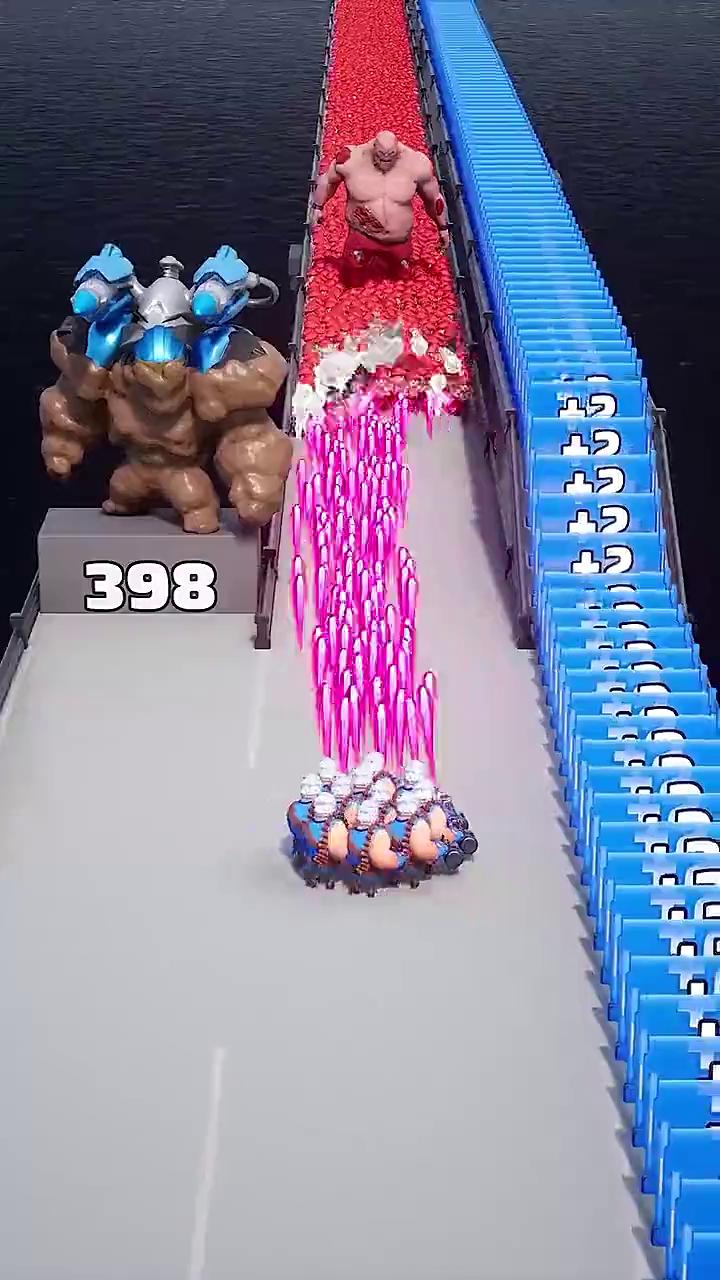 The 56-second leader contributed roughly two thirds of the Top-10 estimate. Scale concentrated even though production did not.
One Winner, Not One Idea
A 67.4% leader can tempt teams to clone the visible surface: copy the opening shot, repeat the same duration, or produce minor edits. That is the wrong lesson. The data shows that one complete execution received far more delivery; it does not isolate which component caused the result.
The useful response is a controlled winner tree:
- Preserve the original as a control.
- Create hook variants while holding the middle and ending constant.
- Create proof or progression variants while holding the hook constant.
- Test shorter cuts that keep the same promise.
- Keep at least one unrelated concept alive to avoid local optimization.
Last War's existing portfolio already contains ten distinct bets, which gives it more discovery surface than a wrapper-heavy fleet. The opportunity is to make the next generation attributable: every variation should answer one question.
The 36–57-Second Doctrine
All ten historical leaders fall between 36 and 57 seconds. The 52.5-second median is long enough to stage a problem, demonstrate a mechanic, show progression, and deliver a payoff without becoming an episode-length ad.
This differs from the 22-second center in MONOPOLY GO! and the interactive-first fleet in Smash Fest!. Last War's creative needs more narrative room: the ad must establish threat and escalation before the game loop feels consequential.
Duration alone is not the strategy. It is the measurable consequence of the pitch. When an advertiser repeatedly lands in the same band across distinct videos, that band becomes a production constraint worth testing deliberately.
The November Production Cluster
Six of the Top-10 entries were first observed between November 12 and November 26, 2025. Their durations were 36, 56, 56, 56, 56, and 57 seconds. The cluster produced both the 278.8M leader and the 48.9M runner-up.
That looks like a batch with a shared spec rather than six isolated uploads. The important part is the spread afterward: entries born within two weeks and built to a tight duration band separated dramatically in estimated delivery. A batch creates a fair learning window only if traffic, audience, and campaign settings are comparable—conditions the public index cannot verify—but the timing still reveals production cadence.
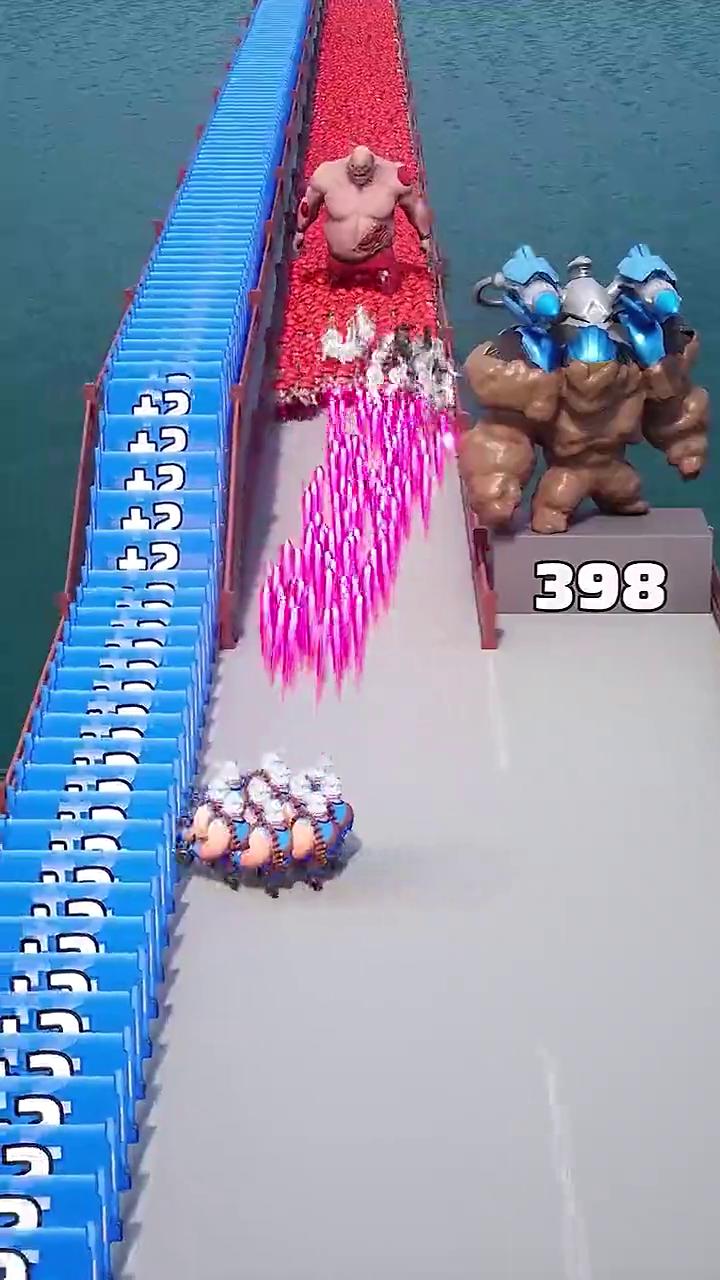 The 57-second runner-up came from the same November production cluster but accumulated far less visible delivery than the leader.
August Tests Move Outside the Historical Center
The newest-first query found fresh video entries on August 12–13 at 15, 23, 24, and 58 seconds. Their initial tracked delivery was too small to compare with the historical winners. The signal is not performance; it is range expansion.
Three short cuts test whether Last War can compress its promise below the established 36-second floor. The 58-second entry stays near the old ceiling. Together they form a sensible duration experiment: several compressed variants plus one control-like long cut.
The publication-day recheck should answer:
- Which of these fingerprints remains observable?
- Did any short cut accumulate meaningful delivery?
- Are the short videos independent concepts or edits of one parent asset?
- Did the 58-second entry behave more like the historical portfolio?
A Better Way to Read Creative Concentration
| Signal | Wrong conclusion | Better conclusion |
|---|---|---|
| One video owns 67.4% | “Make only this video” | Build controlled branches around the winner while preserving unrelated exploration |
| Ten unique fingerprints | “Production is diversified” | Production is diversified; delivery still is not |
| Tight duration range | “52 seconds is optimal” | The pitch consistently needs about this much room; test boundaries deliberately |
| New short cuts | “The strategy changed” | The team is testing compression; wait for persistence and delivery |
| Long indexed life | “The ad stayed profitable” | The asset remained observable; profitability is private |
What UA Teams Can Apply
First, report both asset diversity and delivery concentration. Counting creative fingerprints alone would make Last War look balanced; reporting impressions alone would make it look like a one-ad operation. Both are true at different layers.
Second, set a concentration guardrail. If one concept exceeds half of creative delivery, require an explicit challenger roadmap instead of waiting for fatigue.
Third, turn the dominant duration band into a test variable. Run a short, center, and long version of the same promise rather than comparing unrelated videos of different lengths.
Finally, keep timestamps in every creative record. The November cluster is visible only because first-observed time is preserved. A folder of exported MP4 files would lose the operational story.
Common Misreads
- “Ten rows means ten winners.” They are ten assets, but estimated delivery is heavily concentrated.
- “The 56-second length caused success.” Duration is correlated with the execution; the data does not isolate causality.
- “Last observed in April means intentionally retired in April.” It means the index stopped observing that entry then.
- “One impression on a new entry means it failed.” Early sparse observations cannot grade a new asset.
- “High impressions prove profitability.” Spend, installs, revenue, and ROAS are not present in this dataset.
FAQ
What format dominates Last War advertising?
Video dominates this US Top-10 snapshot. Every entry had a video fingerprint, and no playable or static asset appeared among the ten largest entries by estimated impressions.
How concentrated is the portfolio?
The leading entry contributes 67.4% of the Top-10 estimate; the top two contribute 79.2%. Production is diverse, but visible delivery is concentrated.
What is the typical Last War video length?
The historical Top 10 ranges from 36 to 57 seconds with a median of 52.5 seconds. New August observations include shorter 15-, 23-, and 24-second cuts that should be rechecked after they have time to run.
Can competitors copy the winning video?
They should not copy the asset. The useful learning is the test structure: preserve a control, branch one variable at a time, and keep an unrelated challenger in market.
Key Takeaways
- Last War produced ten distinct Top-10 videos, but one execution captured most visible scale.
- The portfolio's center is a repeatable 36–57-second narrative format.
- The November cluster shows batch production followed by sharply unequal delivery.
- August's short-form entries are experiments, not winners yet.
- Measure diversity and concentration together; either metric alone gives a false picture.
Sources and Data Notes
- AdMapix creative index, Last War: Survival Game, US market, one-year window ending August 14, 2026; Top 10 sorted by model-estimated impressions.
- AdMapix newest-first creative search, July 15–August 14, 2026.
- Related method: Ad Strategy Teardowns.
All impression figures are third-party model estimates for research reference only. Re-pull the newest cohort before publication.
Continue researching Last War
Find matching apps, verify the developer and store, then inspect recent creatives.
Related Articles

Whiteout Survival Ad Strategy 2026: Two Evergreen Playables and a Video Factory
Whiteout Survival's US Top 10 combines two billion-impression playables with one 85-second video reused across seven ad entries. This teardown explains the two-speed system and the fresh video batch that appeared on August 14.
Royal Kingdom Ad Strategy 2026: One Long Video, Three Playable End Cards
Royal Kingdom's US Top 10 pairs long-form video with playable end cards. One 117-second video fingerprint appears with three playable variants and carries 61.9% of the visible Top-10 scale.
82-0.com Ad Strategy 2026: The Smallest Measurable Ad Fleet on the US Top 120, Eight Videos, and a Perfect 5×5 Copy Matrix
Vaulty Studios' 82-0.com sits at US download rank 117 with 704,287 downloads and +5.48% growth — the only riser in this batch — on a measured lifetime impression total of 12,216,712. Its top 15 US creatives carry 1,011,728 impressions across 375 placements in the 30 days to 2026-08-19. Behind 552 recorded creatives sit exactly eight source videos and a fully-filled 5×5 headline-by-body copy matrix. Not one playable exists anywhere in the fleet.