
MediaRadar Alternative for Competitive Ad Tracking
MediaRadar alternative guide for teams that need competitive ad tracking, creative analysis, and faster campaign monitoring workflows.
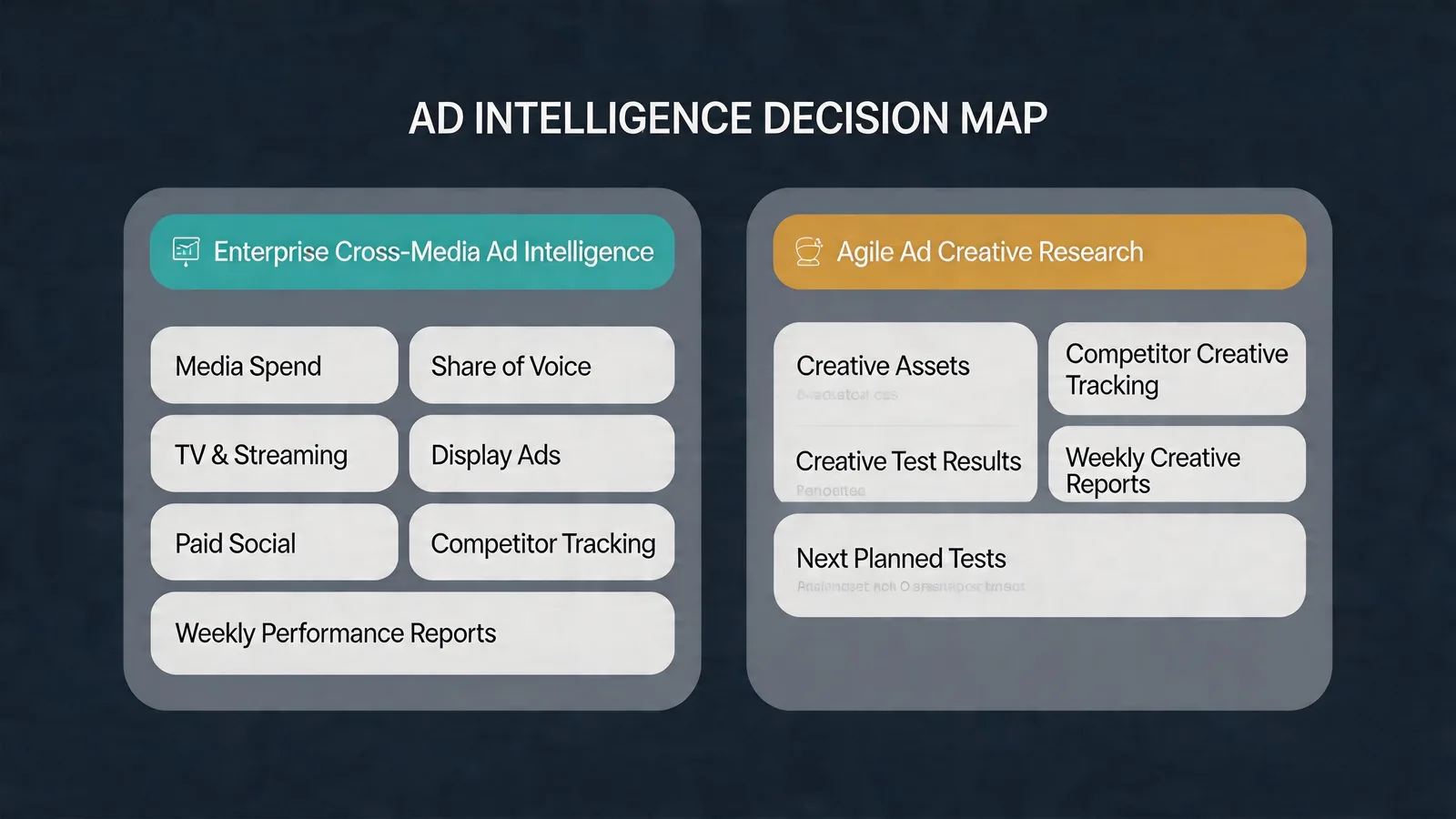
A MediaRadar alternative decision should separate enterprise media intelligence from weekly competitor ad tracking.
MediaRadar Alternative for Competitive Ad Tracking
MediaRadar is a broad marketing and advertising intelligence platform. It is built for teams that need to understand media spend, share of voice, creative activity, category movement, commercial opportunities, and competitive advertising tracking across many channels.
That breadth is valuable. It is also why many teams search for a MediaRadar alternative. They may not need a full enterprise media intelligence stack. They may need a faster workflow for competitor ad monitoring, creative teardown, landing-page context, weekly reports, and next-test planning.
This guide compares MediaRadar, MediaRadar pricing expectations, MediaRadar competitors, and the cases where AdMapix is a better operational fit. It also connects the Vivvix alternative question, because Vivvix is now part of the broader MediaRadar story.
For related comparison pages, see the Vivvix alternative, Adbeat alternative, and best ad intelligence tools guides.
What MediaRadar Does
MediaRadar describes its product across competitive intelligence, creative intelligence, advertising intelligence, commercial intelligence, market intelligence, and data cloud workflows.
Its competitive intelligence page focuses on brand and category marketing moves, share of voice, creative strategy, product launches, reports, and alerts. Its creative intelligence page emphasizes competitive campaign and ad creative visibility across the media landscape.
For teams evaluating MediaRadar, the core value is broad advertising visibility:
| MediaRadar use case | What the team wants to learn |
|---|---|
| Media spend and share of voice | Which brands are investing and where |
| Creative intelligence | Which campaigns, formats, and messages appear across media |
| Market intelligence | Which categories, brands, and channels are shifting |
| Commercial intelligence | Which advertisers or prospects are active |
| Reports and alerts | What changed and who needs to know |
| Data cloud | How to bring marketing intelligence into analytics or AI systems |
MediaRadar's Data Cloud announcement describes a foundation spanning large media spend, creative assets, and 30+ media channels. That is enterprise infrastructure, not just a simple ad spy tool.
MediaRadar Pricing and Access Reality
MediaRadar pricing should be confirmed directly with MediaRadar. As checked on April 17, 2026, the public product pages use calls such as "Speak to a Consultant" rather than a universal self-serve price table for every product and module.
That means pricing can depend on modules, channels, seats, data delivery, reporting needs, and whether the buyer needs competitive, creative, commercial, market, or data cloud workflows.
Use this pricing checklist:
| Pricing question | Why it matters |
|---|---|
| Which intelligence modules are included? | Competitive, creative, market, commercial, and data cloud needs differ |
| Which channels matter? | TV, CTV, display, social, video, print, retail media, and local coverage may change scope |
| How many users need access? | Agencies, publishers, and enterprise brands often need multiple seats |
| Are alerts, exports, or data feeds included? | A dashboard and a data pipeline are different products |
| Is the team buying planning intelligence or creative workflow? | The required output changes the value calculation |
Do not evaluate MediaRadar pricing against a small ad spy subscription unless the use case is actually the same. Compare price to the decision it supports.
Where MediaRadar Is Strong
MediaRadar is strongest when the team needs a wide view of advertising activity.
| Strength | Why it matters |
|---|---|
| Cross-media visibility | Teams can connect digital, video, TV, CTV, display, and other channels |
| Creative intelligence at scale | Large creative libraries help show campaign movement and category trends |
| Competitive advertising tracking | Alerts and reports can monitor shifts across brands and categories |
| Sales and commercial use cases | Publishers and platforms can identify active advertisers and prospects |
| Data cloud workflows | Enterprise teams can bring advertising data into analytics environments |
| Vivvix integration | MediaRadar expanded its capabilities through Vivvix data and cross-media measurement |
MediaRadar announced expanded capabilities through the integration of Vivvix, including competitive intelligence, commercial intelligence, creative intelligence, and market intelligence use cases. That makes it especially relevant for enterprise teams that need broad media context.
Where Teams Need a MediaRadar Alternative
Teams look for a MediaRadar alternative when the broad platform is heavier than the weekly job.
| Signal | What it usually means |
|---|---|
| The team mainly wants competitor ads | A focused ad monitoring workflow may be enough |
| Creative strategy needs landing pages | Media data alone is incomplete without the click path |
| Reports must be written every week | The workflow needs narrative, screenshots, confidence, and actions |
| Growth teams need test ideas | Insights must become creative, copy, offer, or landing-page tests |
| Budget is constrained | Enterprise intelligence may exceed the current stage |
| The team cares about fast execution | A smaller workflow may beat a larger dataset |
This is not a criticism of MediaRadar. It is a fit question. MediaRadar is strong when teams need enterprise advertising intelligence. A MediaRadar alternative is relevant when teams need faster ad-to-action research.
MediaRadar vs AdMapix
Use this workflow map when comparing MediaRadar vs AdMapix.
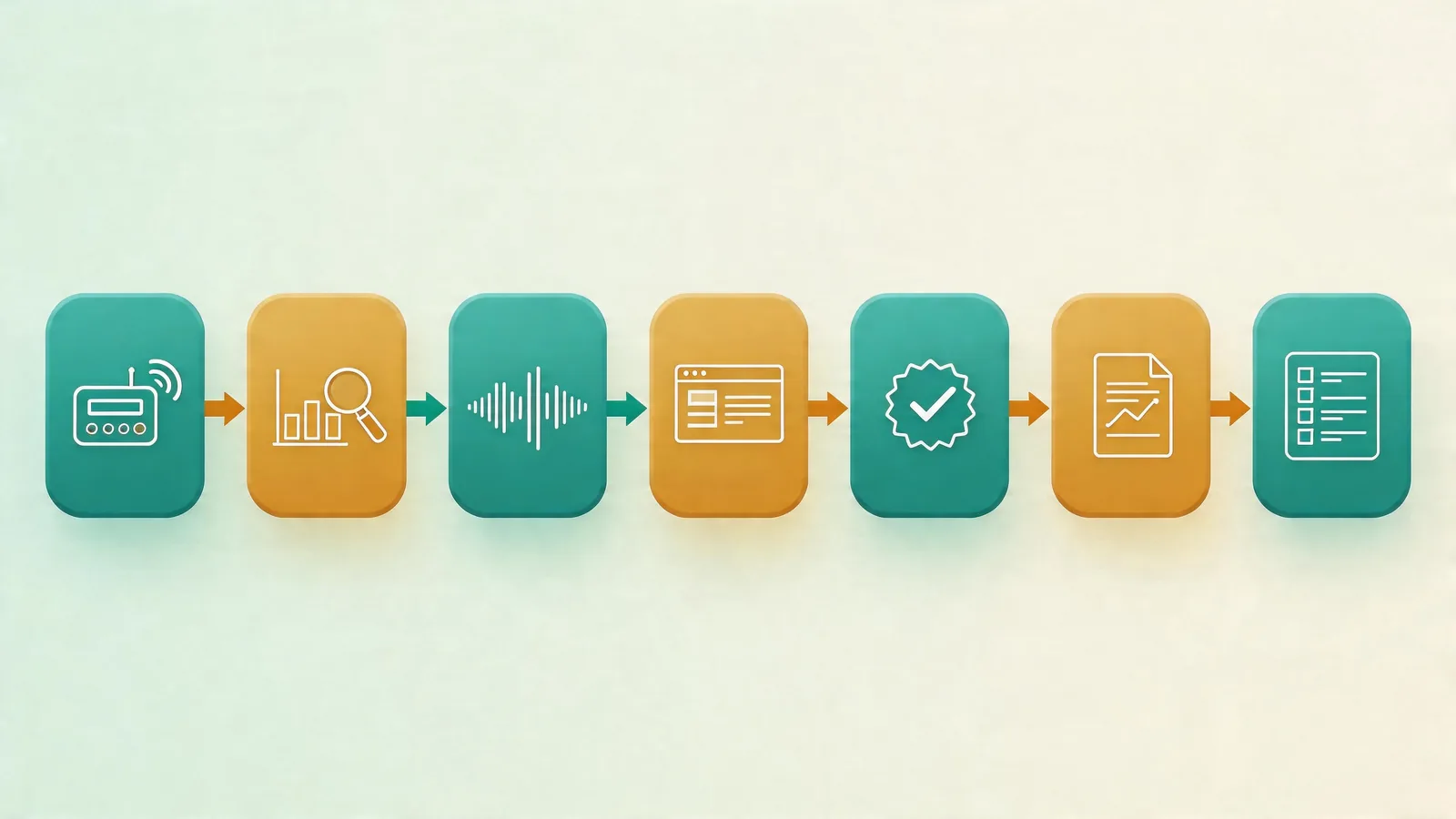
A practical competitive advertising tracking workflow moves from source capture to creative analysis, landing-page review, confidence, report, and next test.
| Need | MediaRadar fit | AdMapix fit |
|---|---|---|
| Media spend and share of voice | Strong fit for broad category and channel intelligence | Not the primary job |
| Creative intelligence | Strong for large-scale campaign visibility | Strong for competitor ad examples tied to action notes |
| Enterprise reporting | Strong for media, commercial, and category stories | Strong for weekly competitor movement reports |
| Data delivery | Stronger when data cloud or enterprise analytics matters | Better when the team needs a lightweight report workflow |
| Landing-page context | May require additional manual work | Core part of the research process |
| Next-test backlog | Needs analyst interpretation | Directly linked to findings and recommendations |
MediaRadar is closer to enterprise marketing intelligence infrastructure. AdMapix is closer to a competitive ad tracking and creative research operating system. Some agencies can use both. Smaller teams should start with the workflow they actually repeat every week.
Alternatives by Use Case
The best MediaRadar competitors depend on the job.
| Use case | Evaluation path |
|---|---|
| Enterprise cross-media intelligence | Compare MediaRadar with broad marketing intelligence and measurement platforms |
| Vivvix-related research | Start with the Vivvix alternative comparison |
| Native and display intelligence | Compare tools such as Adbeat and read the Adbeat alternative guide |
| Channel-by-channel ad spying | Use ad spy tools by channel |
| Weekly competitor ad reports | Compare evidence capture, report quality, and action output |
| Growth team creative testing | Prioritize landing pages, offers, hooks, and next-test planning |
The same company may need different tools for strategy, media planning, sales intelligence, and creative testing.
Competitive Advertising Tracking Checklist
Whether you use MediaRadar or a MediaRadar alternative, define the evidence you need.
| Field | What to record |
|---|---|
| Competitor | Which brand, product, or publisher is being tracked |
| Channel | Search, social, display, native, video, CTV, TV, retail media, app, or OOH |
| Creative | Format, hook, claim, CTA, proof, and message angle |
| Media signal | Spend estimate, share of voice, placement, frequency, or repeated pattern |
| Landing page | Message match, offer, proof, page speed, trust, and conversion path |
| Confidence | Single sample, repeated evidence, or tracked trend |
| Report note | What changed and why it matters |
| Next test | What your team will test because of the finding |
Do not mix all evidence into one confidence level. A single screenshot is not the same as a tracked trend.
Weekly Workflow
For teams that need practical competitor tracking, use this loop:
- Pick five competitors and two benchmark brands.
- Define channels before collecting ads.
- Capture new creatives, landing pages, offers, and repeated messages.
- Separate spend or share-of-voice signals from direct evidence.
- Label confidence.
- Write one report note per competitor.
- Turn the finding into a test or watch item.
If you need recurring reports, use AdMapix reports. If you need to map this workflow to budget, review pricing.
Common Mistakes
| Mistake | Better approach |
|---|---|
| Comparing MediaRadar to a cheap ad spy tool without defining the job | Separate enterprise intelligence from creative workflow |
| Treating spend estimates as exact truth | Use them directionally |
| Ignoring landing pages | Competitor ads only matter if the click path supports the claim |
| Buying for data volume only | Check whether the tool changes weekly decisions |
| Forgetting the Vivvix integration | MediaRadar and Vivvix are now connected in the market narrative |
| Saving examples without actions | End each finding with a next test or watch item |
The best tool is the one that improves decisions, not the one that produces the most screenshots.
FAQ
What is MediaRadar?
MediaRadar is a marketing and advertising intelligence platform used for competitive intelligence, creative intelligence, market intelligence, commercial intelligence, ad tracking, and enterprise data workflows.
How much does MediaRadar cost?
MediaRadar pricing should be confirmed directly with MediaRadar. Public product pages commonly use a consultant/demo flow rather than one universal self-serve pricing table.
Is Vivvix part of MediaRadar?
Yes. MediaRadar acquired Vivvix from Kantar and later announced expanded capabilities through Vivvix data integration. That is why a Vivvix alternative search often overlaps with MediaRadar competitor research.
What are the best MediaRadar competitors?
The best MediaRadar competitors depend on the use case. For enterprise media intelligence, compare broad marketing intelligence platforms. For native/display research, compare Adbeat-style tools. For recurring competitor ad monitoring and weekly reports, compare AdMapix.
When should I use AdMapix instead of MediaRadar?
Use AdMapix when the team needs competitor ad examples, landing-page context, weekly reports, and next-test recommendations rather than broad enterprise media intelligence.
Can agencies use both MediaRadar and AdMapix?
Yes. Agencies may use MediaRadar for broad media, category, and commercial intelligence, then use AdMapix for competitor creative tracking, landing-page review, and client-ready action notes.
Conclusion
MediaRadar is strong for enterprise media intelligence, creative intelligence, market intelligence, commercial intelligence, and competitive advertising tracking across many channels.
A MediaRadar alternative becomes relevant when the team needs a faster, more tactical workflow for competitor ads, landing pages, creative teardown, weekly reports, and next tests. If your decision is about market-wide media movement, evaluate MediaRadar carefully. If your decision is about what competitors changed and what your team should test next, start with AdMapix reports or review pricing.
Turn these observations into your next creative study
Open the creative library and select samples for your market, network and research question.
Related Articles
Adbeat Alternative: Native and Display Ad Intelligence Compared
Adbeat alternative guide for native and display ad research: compare data coverage, workflows, pricing, and creative analysis depth.
Vivvix Alternative: Ad Intelligence for Faster Creative Research
Compare Vivvix with faster ad intelligence workflows for growth teams, agencies, and app marketers that need creative examples and competitor tracking.
Sensor Tower Alternative for Ad Creative and App Intelligence
Looking for a Sensor Tower alternative? Compare app intelligence, ad creative research, pricing access, and best-fit use cases for growth teams.