US Social Casino Advertising Teardown — Mid-2026
A data-driven teardown of how social casino, poker, slots, and bingo apps buy users in the United States as of mid-2026 — the highest-impression creatives, the publishers behind them, the format playbook, and how sweepstakes-casino newcomers are reshaping the category. Based on AdMapix tracking data as of June 26, 2026.
US Social Casino Advertising Teardown — Mid-2026
As of June 26, 2026, the single highest-impression mobile game ad creative running in the United States is not a puzzle game, a strategy game, or a match-3 hook — it is a poker playable. Zynga Poker's top creative has been served an estimated 467 million times, more than double the reach of the biggest casual-game creative in the market. Right behind it sits a sweepstakes-casino video at 419 million impressions. The social casino category, often dismissed as a quiet, mature corner of mobile, is in fact running the most aggressive paid-acquisition machine in US gaming.
This teardown maps how that machine works: which apps and publishers are buying the most reach, the creative formats and hooks they rely on, how a new wave of sweepstakes-casino apps is rewriting the playbook, and what any user-acquisition team can learn from the most disciplined — and best-funded — advertisers in mobile. Every figure is real and current as of late June 2026, drawn from AdMapix tracking. These are third-party estimates; treat them as directional market signal, not audited spend. The full, daily-updated data behind every chart — the actual video creatives, country splits, and named competitors — is available to AdMapix users; log in or create a free account to pull these leaderboards for your own genre and markets.
What's inside:
- Why social casino out-buys every casual game genre in the US
- The leaderboard: highest-impression creatives across slots, poker, and bingo
- The oligopoly: Playtika, Aristocrat, Zynga, and the publishers that own the category
- The format playbook: ultra-short video, playables, creative matrices, and IP hooks
- The sweepstakes disruption: how Stake-style newcomers are buying their way in
- How social casino UA differs from casual gaming, plus compliance context and takeaways
1. Executive summary (TL;DR)
Three findings define US social casino advertising in mid-2026.
First, social casino out-buys casual gaming on raw creative reach. The top poker creative (Zynga Poker, ~467M impressions) and top sweepstakes-casino creative (Stake US, ~419M) each out-reach the single biggest casual-game creative in the US market. This is a category with deep monetization and an older, higher-spending audience — and it spends accordingly on user acquisition.
Second, the category is an oligopoly. A small set of well-capitalized publishers — Playtika, Aristocrat (via Product Madness), Zynga, SciPlay, and Phantom EFX — own the top of the chart. These are not scrappy hyper-casual studios chasing a viral spike; they are mature operators running proven creatives at sustained volume.
Third, a sweepstakes-casino insurgency is reshaping the top. Newcomers like Stake US and Modo Casino — operating the legally distinct "sweepstakes" model — have rocketed to the top of the impression charts in months, not years, bringing a more aggressive, real-money-adjacent acquisition style to a category long dominated by free-coin social casino.
The rest of this report unpacks each finding with the underlying creative data.
2. Why social casino out-buys casual gaming
To understand social casino advertising, start with the economics, because they explain everything about the creative strategy.
A casual puzzle player might spend nothing for months and convert on a one-dollar ad-removal purchase. A social casino player behaves completely differently. The format is engineered around purchasing virtual coins to keep playing, and the genre's audience skews older, wealthier, and dramatically more willing to spend — top social casino titles routinely generate lifetime values an order of magnitude above casual games. When a single converted player is worth tens or hundreds of dollars, the advertiser can afford to pay far more per install and still profit.
That economic structure is the engine behind the reach numbers in this report. When you see a poker creative at 467 million impressions or a slots creative at 419 million, you are not looking at reckless spending — you are looking at a category that can mathematically justify buying more reach than almost anyone else in mobile, because its back-end monetization supports it. Social casino doesn't advertise loudly because it's desperate; it advertises loudly because it can.
This is also why the category is so instructive to study. These advertisers have the budgets and the testing discipline to find what works and run it hard. Their active creative set is, in effect, a master class in high-LTV user acquisition — published in plain sight for anyone watching the ad networks. The rest of this teardown reads that master class line by line.
There's a deeper reason creative data is the right lens here, beyond convenience. In social casino, almost every other competitive signal is invisible. You cannot see a rival's coin-package pricing experiments, their VIP-tier mechanics, their retention campaigns, or their true cost-per-install. What you can see — completely, and updated daily — is every creative they run, when it first appeared, which format it uses, and how long it survives. For a category this secretive about its monetization, the ad creative is the one window left wide open. Reading it well is the closest an outsider can get to sitting in a competitor's user-acquisition war room. That is why a teardown like this is not a nice-to-have for anyone operating in or near the category; it is the primary intelligence source. The publishers who treat creative tracking as core infrastructure — not occasional curiosity — are the ones who spot a threat or an opportunity while it is still forming, rather than reading about it in a trade headline three months later. The cost of that monitoring is trivial next to the cost of a single misallocated user-acquisition campaign — which is exactly why the best-run publishers in this category treat daily creative intelligence as a standing line item in their operating budget, not an occasional indulgence to revisit once a quarter.
3. The leaderboard: highest-impression US social casino creatives
Here are the highest-impression creatives we are currently tracking across the social casino spectrum in the US, ranked by estimated reach of the single top creative per app:
| # | App | Sub-genre | Publisher | Est. impressions (top creative) | Format | Days live* |
|---|---|---|---|---|---|---|
| 1 | Zynga Poker — Texas Holdem | Poker | Zynga | 467M | Playable | 65 |
| 2 | Stake US — Casino & Slots | Sweepstakes | Sweepsteaks Ltd | 419M | Video (15s) | 52 |
| 3 | Lightning Link Casino Slots | Slots | Product Madness (Aristocrat) | 59M | Video + Playable | 160 |
| 4 | Modo Casino | Sweepstakes | ARB Gaming | 37M | Playable | 240 |
| 5 | MONOPOLY Slots | Slots | Phantom EFX | 29M | Video (40s) | 120 |
| 6 | Dancing Drums Slots | Slots | SciPlay | 28M | Video (25s) | 192 |
| 7 | WSOP Poker | Poker | Playtika | 24M | Video (15s) | 18 |
| 8 | Bingo Blitz | Bingo | Playtika | 18M | Static + Video | 36 |
<small>Days live = first-seen date through June 26, 2026. Impressions are AdMapix estimates for the single highest-reach creative tracked per app, US placements.</small>
Two structural facts jump out of this table. The reach is top-heavy and lopsided — the top two creatives (Zynga Poker and Stake US) operate at nearly an order of magnitude above everything below them. And the publishers are concentrated: Playtika appears twice (WSOP, Bingo Blitz), and the rest are established casino-gaming names. This is not a fragmented, anyone-can-win category. It is a small number of heavyweights spending big, with a fast-rising sweepstakes cohort crashing the party.
4. The oligopoly: who actually owns the category
Social casino advertising in the US is controlled by a handful of publishers, and knowing them is half of understanding the category.
Playtika is the clearest power. The Israeli social-gaming giant shows up across the board — WSOP Poker and Bingo Blitz both rank, and Playtika's broader slots portfolio is a constant presence in the category. Playtika built its business on data-driven monetization of social casino, and its advertising reflects that: disciplined, sustained, and everywhere.
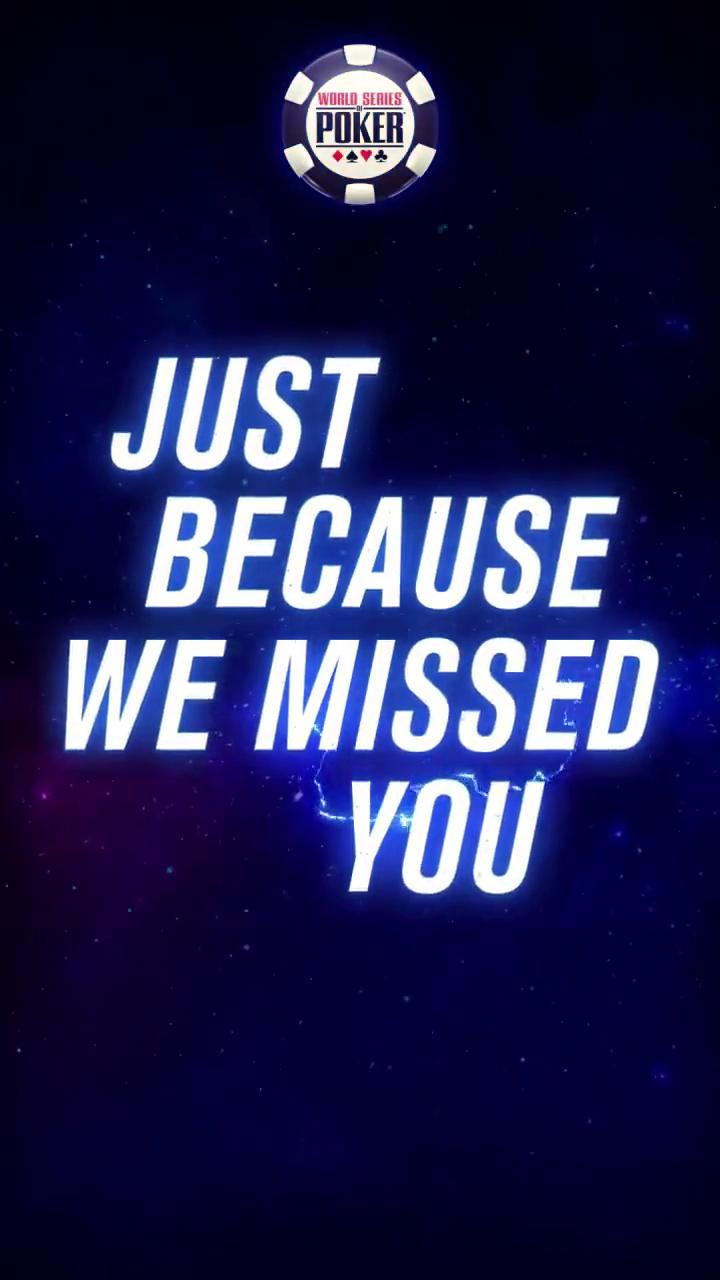 Playtika's WSOP Poker — a fresh 15-second video creative, ~24M impressions, live just 18 days as of late June.
Aristocrat, the Australian gaming-machine titan, plays through its mobile arm Product Madness, whose Lightning Link Casino Slots is one of the most persistently advertised slots apps in the US. This is land-based casino expertise translated into mobile UA — and it shows in the polish and longevity of the creatives.
Zynga (now part of Take-Two) owns the single highest-impression creative in the entire category with Zynga Poker, a brand with deep recognition that lets its creatives lean on trust rather than novelty. SciPlay (Dancing Drums) and Phantom EFX (MONOPOLY Slots, leaning on the MONOPOLY license) round out the established slots cohort.
The takeaway for anyone entering this space: you are not competing against amateurs. You are competing against publicly-traded casino-gaming companies with years of LTV data and the budgets to act on it. Creative quality and monetization depth are table stakes, not differentiators.
This concentration shapes the entire competitive dynamic. When a handful of publicly-traded publishers control the top of the chart, they enjoy compounding advantages that are hard to attack head-on: years of accumulated LTV data that lets them bid more precisely, deep creative libraries they can recombine cheaply, brand and licensing relationships (MONOPOLY, WSOP, Where's Waldo) that buy instant recognition, and the balance-sheet capacity to sustain spend through a slow payback. A new free-coin social casino app trying to out-muscle Playtika or Aristocrat on their own terms is fighting uphill against all four advantages at once. This is precisely why the sweepstakes newcomers covered in Section 8 are so significant: rather than competing inside the incumbents' game, they changed the game — a different legal model, a sharper real-money-adjacent offer, and an aggressive launch budget that let them buy top-of-chart reach before the incumbents could respond. The lesson for any challenger is that you rarely beat an entrenched oligopoly by doing what they do slightly better; you beat them by competing on a dimension their scale advantage doesn't cover — a new monetization model, an underserved sub-audience, a neglected format, or a geography where their brand equity doesn't yet translate. The creative data in this report is, in part, a map of where the incumbents are strong; the white space between their campaigns is where a challenger's opening usually hides.
5. Slots: disciplined, persistent, video-and-playable
The slots sub-genre is the category's mature core, and its advertising is a study in persistence. Lightning Link Casino Slots (Product Madness) is the exemplar — not because of any single blockbuster creative, but because of its creative matrix: the app runs many distinct creatives simultaneously, with individual ads first seen as far back as October 2025 still in rotation in late June 2026.
 Lightning Link runs a broad creative matrix — multiple slots videos and playables in continuous rotation, the oldest live since October 2025.
This matrix approach is the signature of mature slots UA. Rather than betting everything on one hero creative, Product Madness keeps a deep portfolio of variants live at once, continuously letting the ad networks distribute budget toward whatever is converting best at any given moment. It is the opposite of the casual playbook's single-creative reach spike — it is a diversified, always-on, slowly-optimized machine that is far more resilient to any one creative fatiguing.
The format mix is video plus playable. The video sells the fantasy (big wins, bright reels, celebration moments); the playable lets a high-intent user feel the spin before installing. The other slots leaders reinforce the pattern with disciplined short video:
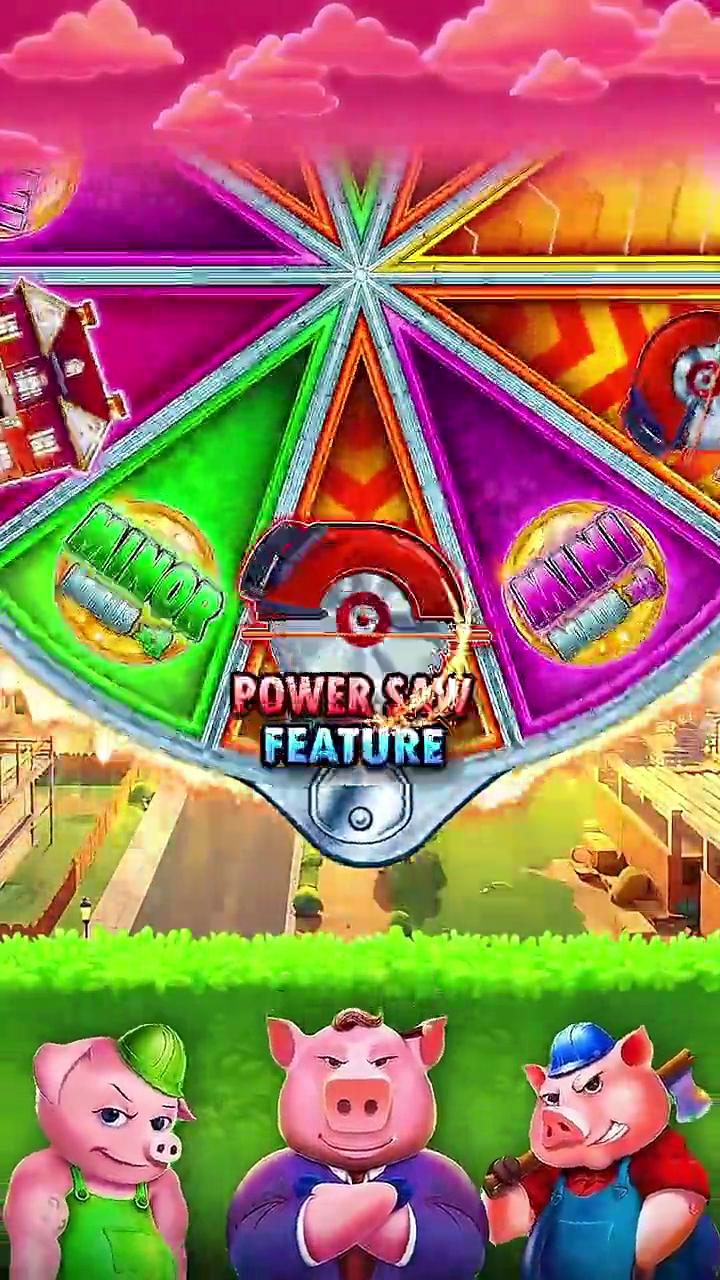 MONOPOLY Slots (Phantom EFX) leans on the MONOPOLY license — a polished 40-second video, ~29M impressions, live since February 2026.
MONOPOLY Slots (live since February) and Dancing Drums (since December 2025) both run short, polished video — no gimmicks, sustained for months. Phantom EFX leans on the MONOPOLY brand license for instant recognition; SciPlay's Dancing Drums rides a recognizable slot-machine IP of its own. Across all three, run-lengths stretch across many months, which — as with strategy games — is the clearest signal that these creatives are quietly, reliably profitable.
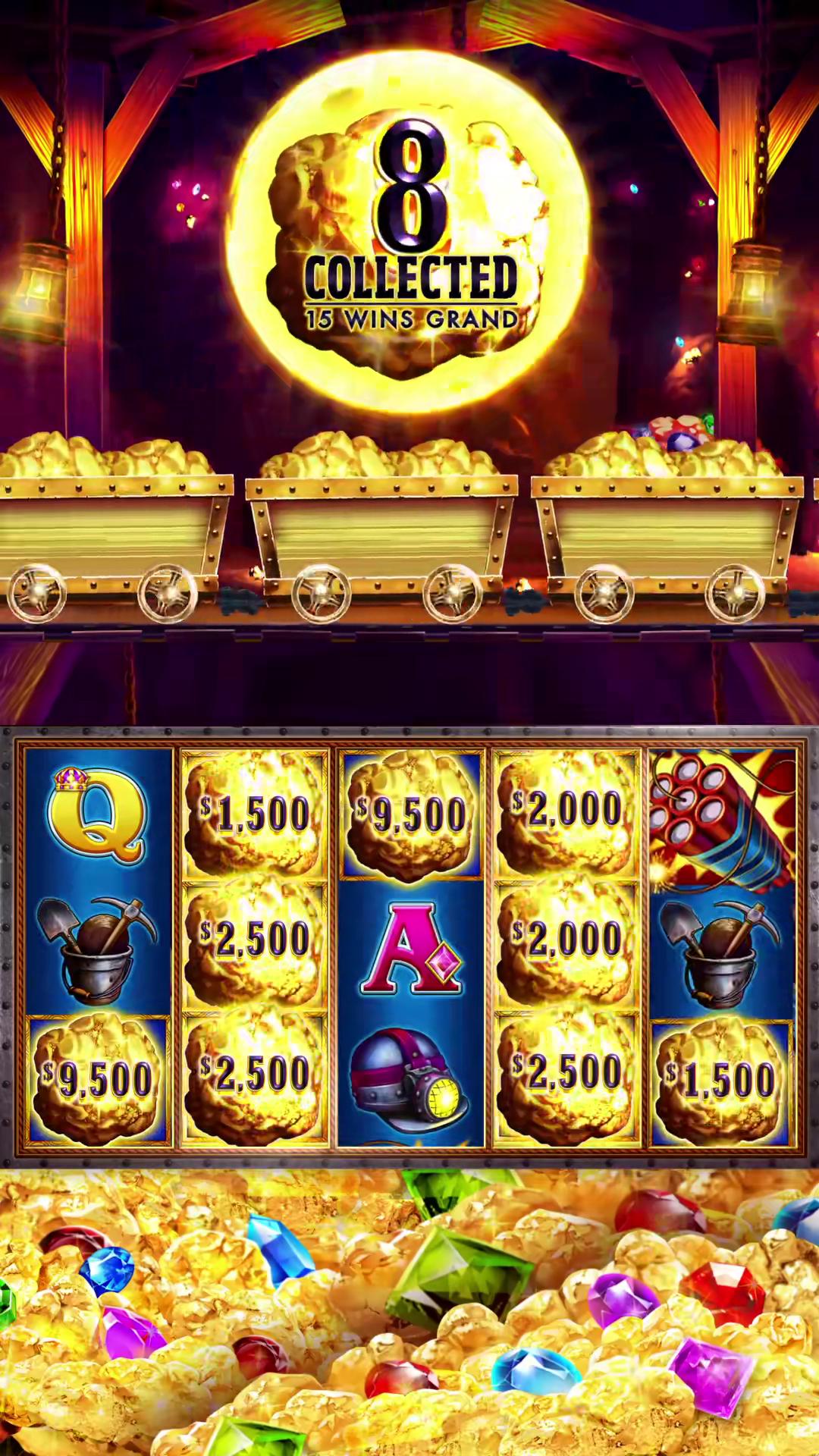 Dancing Drums Slots (SciPlay) — a 25-second video at ~28M impressions, live since December 2025.
6. Poker: playables and the reach king
If slots is about persistent matrices, poker is about a single staggering number. Zynga Poker's top creative — a playable — sits at an estimated 467 million impressions, the highest of any mobile game creative we track in the US, full stop.
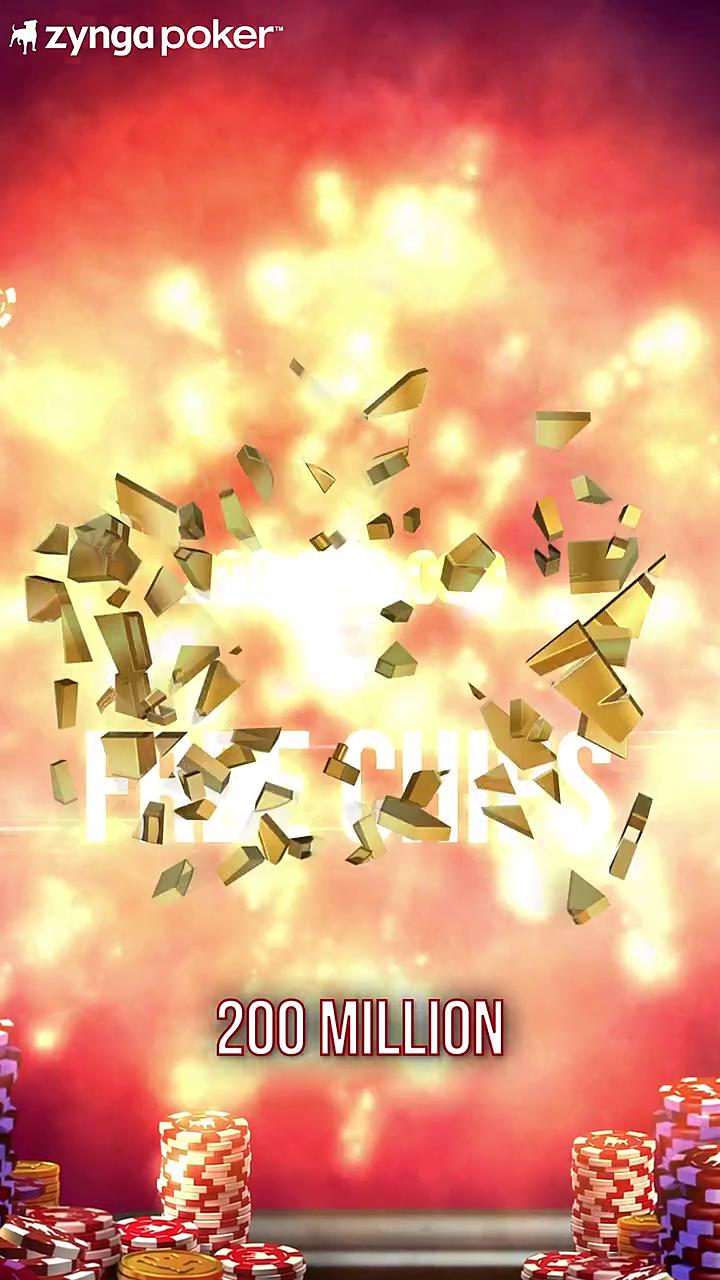 Zynga Poker leans on playables and brand trust — its top creative tops the entire US mobile-game chart at ~467M impressions.
Why a playable, and why poker? Poker is one of the rare casino formats whose core loop genuinely demos in an interactive snippet — a viewer can tap through a hand and immediately "get it." That makes playables unusually effective here, and Zynga leans into them hard. It's a notable contrast with slots, where the chance-based loop doesn't reward interactivity as cleanly; poker's skill-and-decision framing makes the playable format pay off, because the player feels agency rather than randomness.
Zynga also benefits from one of the strongest brands in the category. "Zynga Poker" carries instant recognition, so its creatives can sell familiarity rather than fight for attention from scratch — a structural advantage that compounds reach efficiency, because a trusted brand converts a click at a higher rate. Newer entrant WSOP Poker (Playtika), by contrast, is running fresh short-form video — a creative live just 18 days at the time of writing — showing the category's testing cadence in real time as a major publisher pushes a competing poker brand with a different format bet (short video rather than Zynga's playable). Watching how WSOP's reach develops over the coming weeks will reveal whether short video can challenge the playable's dominance in poker UA.
7. Bingo: the IP-hook playbook
Bingo is the category's most personality-driven sub-genre, and Bingo Blitz (Playtika Santa Monica) demonstrates its defining tactic: licensed IP hooks. Its top creatives in this window are built around a "Where's Waldo" crossover — ad copy reading "Find Waldo. Win big. Only in Bingo Blitz!"
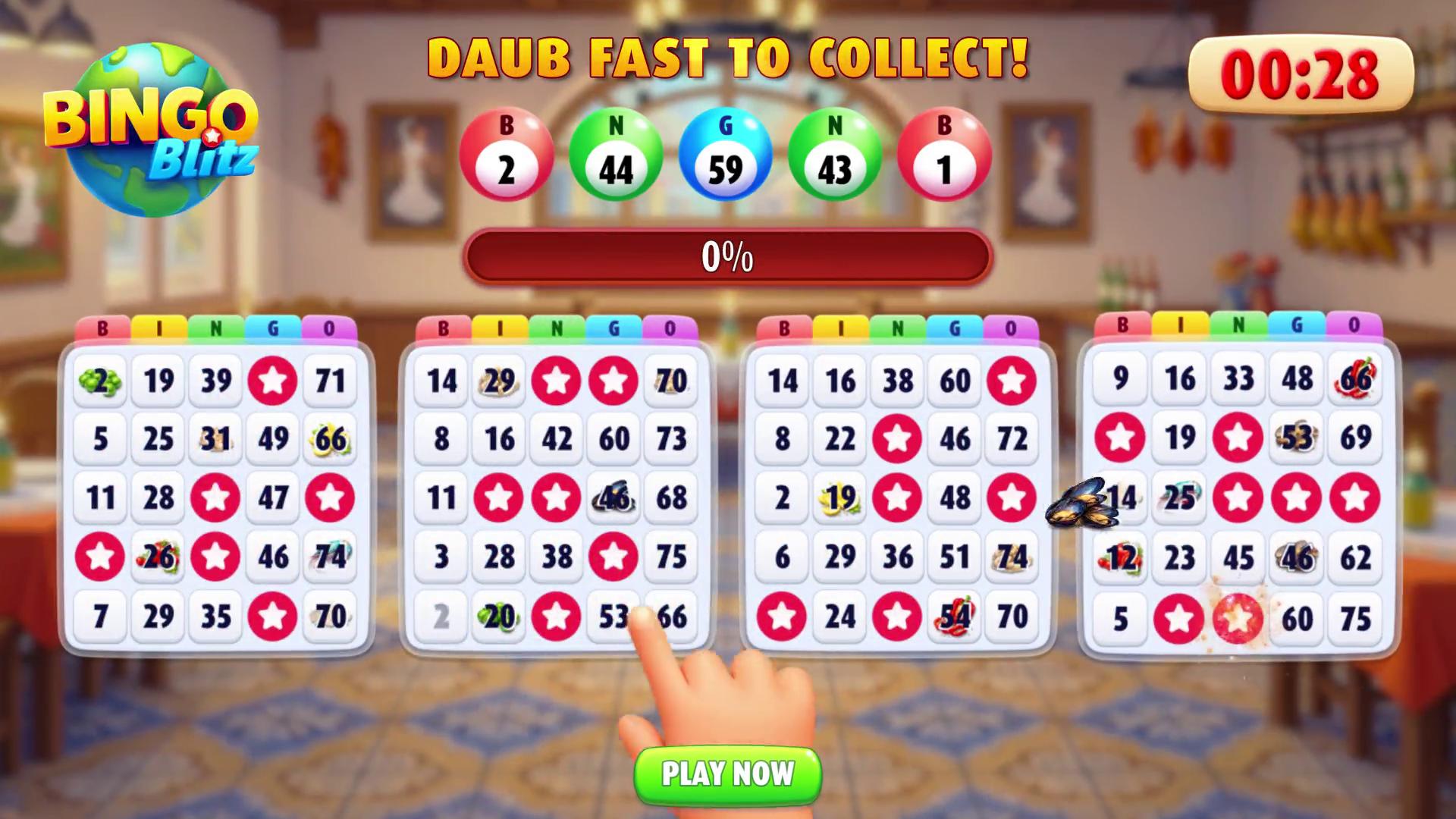 Bingo Blitz leans on licensed IP crossovers — its top creatives this window are built around a "Where's Waldo" hook.
The IP-hook strategy serves a specific purpose. Bingo's core loop is simple and familiar, so the creative challenge is not explaining the game — it's standing out in a crowded feed and giving the campaign a reason to exist right now. A recognizable IP crossover does both: it borrows attention from a beloved brand and creates a time-bound "limited event" framing that drives urgency. Bingo Blitz runs these crossovers as recurring campaigns, rotating fresh IP partnerships to keep the creative feeling new without changing the underlying game — a low-risk way to refresh a tired feed without re-engineering the product.
Note also the format spread: Bingo Blitz runs static images, video, and playables in parallel — a multi-format approach that lets the same IP hook be expressed across every placement type. For a genre with a simple loop, the creative innovation lives entirely in the framing, not the gameplay demonstration. The same "Where's Waldo" partnership becomes a static banner, a 30-second video, and a playable, maximizing the return on a single licensing deal.
8. The sweepstakes disruption
The most important recent shift in US social casino isn't coming from the established publishers — it's coming from sweepstakes casino apps, and the data shows them storming the charts.
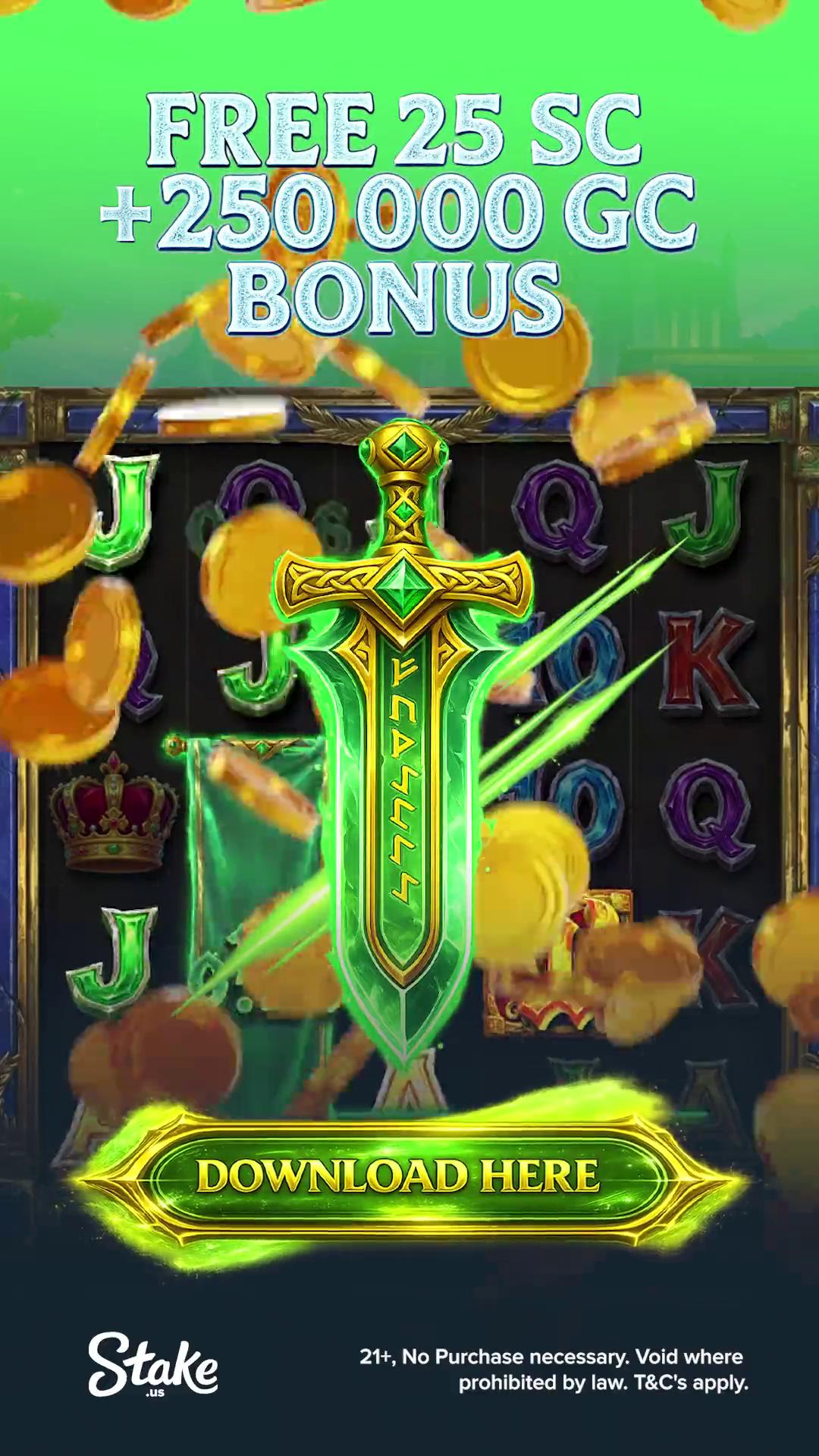 Stake US — a sweepstakes-casino newcomer — reached ~419M impressions on a single 15-second video, first seen only in May 2026.
Stake US — Casino & Slots (Sweepsteaks Limited) is the standout. Its top creative — a tight 15-second video — has reached an estimated 419 million impressions despite first appearing only in May 2026. That is a top-two reach position achieved in roughly seven weeks, a velocity that established free-coin social casino apps simply don't match.
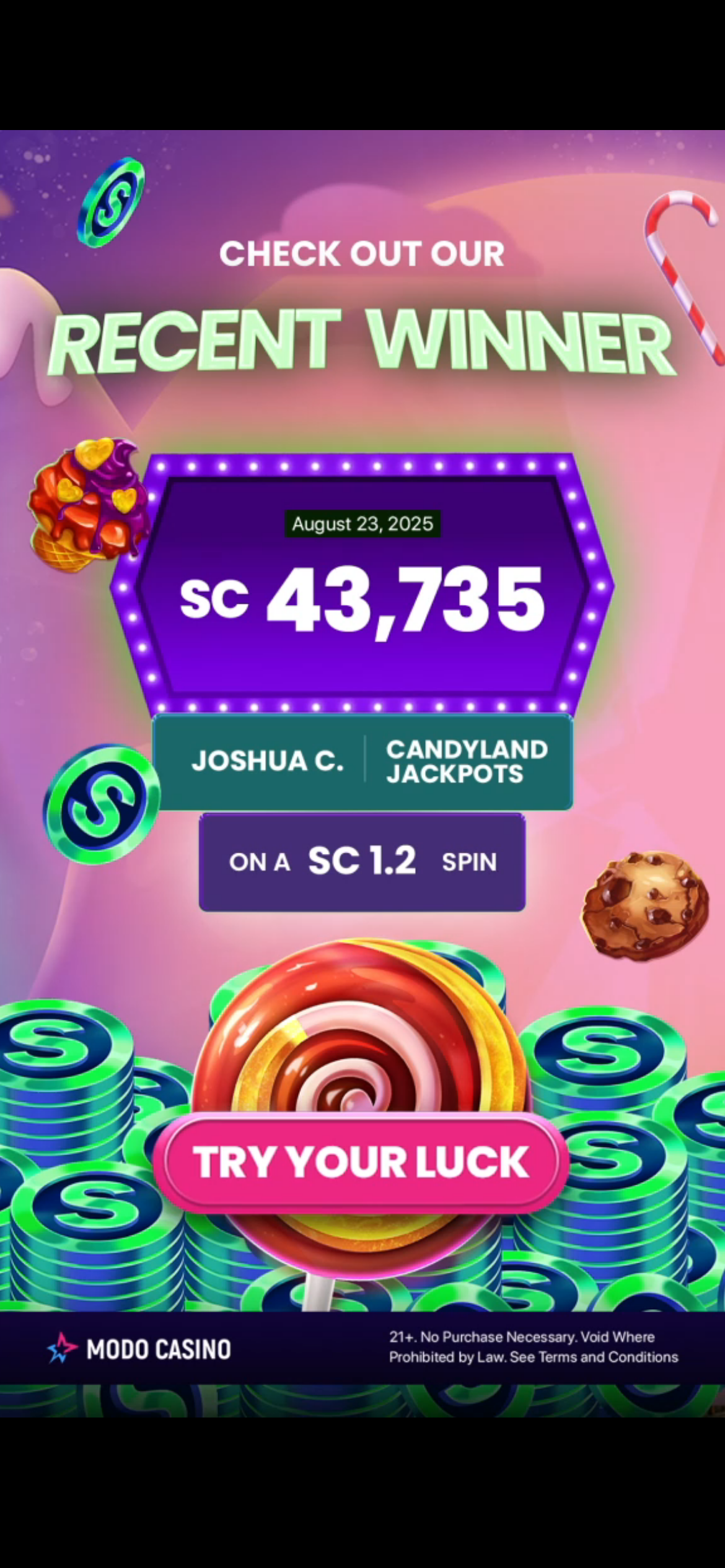 Modo Casino (ARB Gaming) — a sweepstakes playable live since October 2025 and re-detected 200+ times: persistent, sustained sweepstakes acquisition.
Modo Casino (ARB Gaming) tells a complementary story: a playable-led creative live since October 2025, re-detected over 200 times — persistent, sustained sweepstakes acquisition rather than a single burst.
The distinction matters. Sweepstakes casino is a legally separate model from both free-coin social casino and licensed real-money gambling: players obtain virtual currency that can, under a sweepstakes legal framework, be redeemed for prizes. This real-money-adjacent mechanic gives sweepstakes apps a sharper value proposition — and, apparently, the unit economics to buy reach at a pace that rivals or beats the incumbents. Their arrival is reshaping the competitive top of the category, and any UA team in adjacent genres should be watching how aggressively they scale.
A compliance note is essential here: the sweepstakes model's legal status varies by US state and remains an evolving regulatory area. The data in this report describes advertising activity as observed; it is not a statement on the legality of any specific app in any specific jurisdiction.
9. A worked example: reading Stake's seven-week climb
Make the sweepstakes story concrete, because it is the most actionable signal in this report. Stake US's top creative first appeared in our US tracking on May 5, 2026. By June 26 — roughly seven weeks later — that single 15-second video had accumulated an estimated 419 million impressions, the second-highest of any social casino creative in the country.
Reason about what that velocity implies. Established social casino apps reach their top impression counts over many months of sustained spend; Stake hit a top-two position in under two. A climb that steep means one of two things, and both are instructive. Either Stake is deploying an enormous launch budget to buy market share aggressively — a classic well-funded-newcomer land grab — or its sweepstakes mechanic is converting clicks at a rate high enough that the networks are pushing the creative hard on performance alone. Most likely it's both: a strong offer amplified by heavy budget.
For an incumbent, this is an alarm worth acting on. A competitor that can buy top-two reach in seven weeks is a competitor that can take meaningful share before your quarterly review even notices. The defensive move is to monitor first-seen dates continuously — Stake's creative was detectable from day one of its run — so a rival's scale-up registers as a signal in week one, not a surprise in month three. For a challenger studying the category, Stake's 15-second video is a documented example of what a winning sweepstakes hook looks like at scale, and its compressed run-up is a template for how fast this category can move when the offer and the budget align.
This is where first-seen dates become a genuine early-warning system. Stake's creative was detectable from the very first day of its run, long before it approached 419 million impressions. An incumbent monitoring first-seen dates would have flagged a new sweepstakes advertiser entering the US in early May — and had a full seven-week window to respond before that advertiser reached top-two position. The same logic applies to every entry in this report: Lightning Link's October-2025 creatives, WSOP's 18-day-old video, and Bingo Blitz's rotating IP hooks each carry a timestamp that tells you not just what is winning, but exactly when each bet was placed. The teams that win this category read those timestamps continuously, treating a competitor's new first-seen date as a hypothesis to investigate rather than a result to envy. By the time a creative is famous, the chance to act early on it is already gone.
10. Social casino vs casual: two different buying machines
It's worth placing social casino directly against the casual game genres to see how differently the two halves of mobile operate. In casual gaming, the highest-reach creatives are broad-hook videos — a match-3 ad promising "4K wallpapers" or a block-puzzle clip — that spike to roughly 150–190 million impressions and then burn out, optimizing for the widest possible top of funnel on the cheapest possible install.
Social casino plays a different game with the same tool. Its top creatives reach higher (467M, 419M) but for a fundamentally different reason: not because the hook is broader, but because the back-end LTV justifies paying more per install to acquire a narrower, higher-value audience. Casual buys cheap reach to monetize a tiny fraction of a huge install base; social casino buys expensive reach to monetize a large fraction of a smaller, wealthier one. The creative tells the story — casual leans on universal, off-product hooks to maximize clicks; social casino leans on brand (Zynga), license (MONOPOLY, WSOP), and offer (sweepstakes prizes) to convert a specific, motivated viewer.
The practical implication for anyone benchmarking across both: never compare their impression counts as if they mean the same thing. A 467M poker playable and a 191M match-3 hook are answers to completely different financial questions. Judge each against its own category's economics, or you'll draw exactly the wrong conclusion about what "winning" looks like.
This distinction carries a direct budgeting consequence. A team that benchmarks its casual-game creatives against social casino's reach numbers will conclude it is failing, panic, and overspend chasing impression counts it was never economically built to reach. Conversely, a social casino team that benchmarks against casual's cheap-reach playbook will under-invest in the brand, license, and offer-led creatives that actually convert its high-value audience. The right mental model is two separate leagues playing the same sport: same ad networks, same formats, completely different scorekeeping. Whenever you pull a cross-genre leaderboard, segment it by monetization model before you read a single number, and judge each segment against its own economics. The single most expensive mistake in competitive creative analysis is treating one impression as equal to another across categories that monetize nothing alike — it leads teams to copy tactics that cannot work for their business model, and to ignore the ones that can.
11. The format playbook: what social casino creatives have in common
Stepping back from sub-genres, a consistent format playbook emerges across the category.
Ultra-short video dominates. The highest-reach video creatives cluster at 15 seconds — markedly shorter than the 40-to-60-second videos that lead puzzle and strategy. Social casino's value proposition (spin, win, celebrate) communicates in a few seconds; there is no complex loop to explain, so the creatives compress hard and optimize for thumb-stopping immediacy.
Playables matter more than you'd expect. Conventional wisdom says slots can't use playables because the loop is chance-based — and that holds for pure slots. But poker (Zynga's 467M playable) and sweepstakes casino (Modo's playable-led campaigns) lean on playables heavily, because their loops involve enough decision or interaction to demo meaningfully. The lesson: playable suitability is loop-specific, not genre-specific.
Creative matrices over hero creatives. The mature slots advertisers (Lightning Link especially) run many variants at once rather than betting on a single hero ad, letting the networks optimize across a deep portfolio. This is a higher-production-cost, lower-variance strategy that suits well-funded publishers.
Hooks borrow attention. From Bingo Blitz's "Where's Waldo" IP crossover to sweepstakes apps' prize framing, the strongest creatives import a reason to care from outside the core game. With simple, familiar loops, the framing is the creative.
Longevity confirms profitability. As across all of mobile, the creatives that survive longest — Modo's 240-day playable, Lightning Link's October-2025 variants — are the ones proven to pay back. Run-length remains the most honest performance signal in the category.
12. Geography, seasonality, and why this is US-specific
Every figure in this report is US-specific, and for social casino that scoping is even more important than usual. Social casino and especially sweepstakes models are heavily shaped by jurisdiction — the legal framework that makes a sweepstakes app viable in one US state may not exist in another, and certainly differs across countries. A creative leaderboard for US social casino tells you nothing reliable about the UK, Germany, or Japan, where the regulatory environment, competitive set, and player expectations diverge sharply. Reading this category requires reading it market by market; a globally-averaged view would blur exactly the regulatory boundaries that define it.
Seasonality matters too, though more subtly than in event-driven genres like streaming. Social casino spend tends to be steadier than casual gaming's, reflecting the always-on nature of its mature advertisers — but competitive auction pressure still rises when large seasonal advertisers (retail, streaming) flood the same inventory. The sweepstakes newcomers add a new wrinkle: their aggressive, budget-led scale-ups can spike auction prices in the category without warning, as Stake's seven-week climb illustrates. For incumbents, that means install costs can move not just with the calendar but with a single well-funded competitor's launch — another argument for continuous, near-real-time monitoring rather than periodic snapshots.
13. What UA, creative, and growth teams should take away
Translating the category into action:
For UA managers (in or adjacent to social casino). Benchmark against the matrix, not the hero. The mature slots advertisers win by running deep portfolios of proven variants, not by chasing one viral creative. Build a watchlist sorted by days live to surface competitors' proven winners, and watch the sweepstakes newcomers closely — their acquisition velocity is the category's leading edge right now.
For creative teams. Match format to loop, ruthlessly. Use playables where the loop demos interactively (poker, decision-based sweepstakes), short video where it doesn't (slots). Compress hard — 15 seconds is the category's winning length. And when your loop is simple and familiar, invest your creative energy in the hook (IP, prize, event framing), because that's where the differentiation lives.
For growth and strategy leads. Respect the economics. Social casino's enormous ad reach is downstream of high LTV; you cannot replicate the spend without replicating the monetization. If you're evaluating entry, the question isn't "can we make a good creative" — it's "can our back-end support buying reach against publicly-traded incumbents with years of LTV data." You can compare AdMapix plans to see which tier fits the depth of competitive tracking you need.
For everyone. Monitor continuously. The sweepstakes insurgency went from invisible to top-two reach in months. In a category moving this fast, a quarterly snapshot misses the story; the teams that win watch the leaderboard shift week to week. Build the habit into your operating rhythm: a standing weekly review of new first-seen creatives in your category, a watchlist of competitors' longest-running ads sorted by days live, and an alert the moment an unfamiliar advertiser cracks the top of the impression chart. None of that requires guesswork — it is all observable in the creative data, every day, for anyone who chooses to look.
14. Methodology & data notes
All figures in this report are third-party estimates from AdMapix, derived from observed ad placements across US mobile networks. They are not official, publisher-reported numbers. Specifically:
- Impressions are estimated reach for the single highest-impression creative tracked per app, US placements, as of June 26, 2026.
- Run-length ("days live") is measured from a creative's first-seen date through June 26, 2026.
- Sub-genre labels (slots, poker, bingo, sweepstakes) reflect the app's primary format as observed; some apps span multiple formats.
- Rankings shift daily as campaigns rotate, budgets change, and new creatives enter testing.
- The legal classification of "sweepstakes casino" apps varies by jurisdiction and is outside the scope of this advertising analysis.
Treat every number as directional market signal for competitive and creative strategy — not as a precise spend figure or a regulatory judgment.
Frequently Asked Questions
What is the highest-impression US mobile game ad creative in mid-2026? A Zynga Poker playable creative, at an estimated 467 million impressions (AdMapix data, June 26, 2026) — the highest of any mobile game creative we track in the US, ahead of a Stake US sweepstakes-casino video at ~419 million.
Which publishers dominate US social casino advertising? A small oligopoly: Playtika (WSOP Poker, Bingo Blitz), Aristocrat via Product Madness (Lightning Link), Zynga (Zynga Poker), SciPlay (Dancing Drums), and Phantom EFX (MONOPOLY Slots), plus fast-rising sweepstakes newcomers like Stake US and Modo Casino.
Why does social casino spend so much on advertising? Because its monetization supports it. Social casino players have high lifetime values — often an order of magnitude above casual games — so advertisers can profitably pay far more per install and buy far more reach.
Do social casino ads use playable creatives? Selectively. Poker and decision-based sweepstakes apps use playables heavily because their loops demo interactively; pure slots rely more on short video, since a chance-based spin doesn't reward interactivity as cleanly.
What is a sweepstakes casino, and why does it matter here? It's a legally distinct model where virtual currency can be redeemed for prizes under a sweepstakes framework. Apps like Stake US have used it to reach top-two ad impression positions within months — reshaping a category long dominated by free-coin social casino. Its legal status varies by US state.
Want the live, daily-updated version of these leaderboards — every social casino creative, the publishers behind them, run-lengths, and country splits, updated daily? Log in or create a free AdMapix account to track this category for yourself.
See what competitors are really running
Search 6M+ ad creatives, landing pages, and weekly spend across 200+ countries. No credit card, no commitment.
Related Articles
US Mobile Advertising Intelligence Report — Mid-2026
A data-driven mid-2026 breakdown of the US mobile market: who tops the download and revenue charts, why mobile games depend on paid user acquisition, and which ad creatives, formats, and hooks are winning across puzzle, match-3, strategy, slots, and idle RPG — based on AdMapix tracking data as of June 26, 2026.
Mobile Game Ad Spend by Platform: A 2026 UA Budget Guide (Meta, Google, TikTok, DSP)
A practitioner's guide to mobile game ad spend by platform: how UA budgets really split across Meta, Google, TikTok, and DSPs; the mechanism behind each platform's role; how privacy-era measurement, creative systems, and genre fit change the split; a budget-allocation framework; a reallocation cadence; and the honest limits of what competitor spend data can and cannot tell you.

2026 H2 Ad Market Outlook: Platform Shifts, AI Buying, and Budget Strategy
A compressed, decision-ready H2 2026 advertising outlook: platform share shifts, AI buying defaults, privacy pressure, format economics, regional budget moves, and a Q4 operating plan.