
App SEO:如何让 App 页面排名并支持 ASO
App SEO 指南:讲清楚 SEO for apps、ASO、app store keywords、内容集群、商店页实验和 paid UA 之间的关系。
App SEO 最好把 web landing pages、app store assets、keyword research 和 paid acquisition 放在同一张 intent map 里。
App SEO:如何让 App 页面排名并支持 ASO
App SEO 指让 app 相关页面在搜索引擎中被发现,同时支持 App Store 和 Google Play 内部的同一套 intent map。它不只是 ASO,也不只是写博客。
强 app SEO strategy 会连接四个 surface:
| Surface | 应该做什么 |
|---|---|
| Web landing pages | 在 Google 排名,覆盖 app、category、use-case、comparison 和 problem-aware searches |
| App store pages | 在 App Store 和 Google Play 内承接高意图用户 |
| Content cluster | 在用户准备安装前完成教育和比较 |
| Paid acquisition pages | 承接广告 promise,并把 SEO/ASO 学习反馈给 campaign |
这件事重要,是因为 app discovery 本来就是碎片化的。用户可能先在 Google 搜 “best sleep tracker app”,再去 App Store 搜 “sleep tracker”,再点击 paid social ad,对比一个 competitor page,最后从 custom product page 安装。把 SEO、ASO 和 paid UA 当成互不相关的团队,会在这条路径上留下很多断点。
这篇文章会讲清楚 app SEO、seo for apps、app store keywords、app store keyword research,以及 app store optimization tools 在整体增长工作流里的位置。关于 paid channel planning,可以看 paid user acquisition guide。关于更大的 app growth 和创意策略,可以看 mobile game marketing strategy 和 best ad intelligence tools。
App SEO 是什么
App SEO 指让帮助用户发现、评估和信任 app 的 web assets 获得搜索可见性。
这些 assets 可以包括:
| Asset | 示例搜索意图 |
|---|---|
| App homepage | Brand、category 或核心 app promise |
| Use-case page | “expense tracker for freelancers” |
| Comparison page | “app name alternative” 或 “best app for...” |
| Blog guide | “how to plan meals with an app” |
| Country / localization page | “best budgeting app in Canada” |
| Feature page | “receipt scanning app” |
| Report / research page | Category trend、competitor examples、market proof |
目标不是让每个页面都排名 “app”。目标是覆盖用户安装或订阅前真正会问的问题。
Google 的 SEO starter guide 仍然适用:页面要有用、可抓取、描述清楚、内部链接合理,并符合 search intent。App SEO 额外多一个约束:web page 必须连接到 install 或 signup path,不能像 thin doorway page。
App SEO vs ASO
App SEO 和 ASO 有重叠,但不是一回事。
| 维度 | App SEO | ASO |
|---|---|---|
| 主要 surface | Google 等 web search engines | App Store 和 Google Play |
| 主要 assets | Web pages、blog posts、landing pages、comparison pages、reports | App title、subtitle、short description、long description、screenshots、preview/video、ratings |
| Keyword source | Google Search Console、SEO tools、SERP analysis、competitor web pages | App store keywords、store search、app intelligence、ASO tools、console data |
| Conversion path | Web CTA、store badge、signup、deep link、email capture | Store page install |
| Ranking signals | Content relevance、links、technical SEO、UX、authority、page quality | Store relevance、conversion、ratings、retention signals、keyword fields、category context |
| 最佳产出 | Search-qualified visitors 和 assisted installs | Store-qualified installs |
两者应该互相强化。如果 Google 页面排名 “AI note taking app”,App Store 页面就不应该只展示普通 productivity screenshot。如果 App Store 页面能覆盖某个 feature term,web content 也应该解释这个 feature,服务在 store 外研究的用户。
常见错误是把 ASO 当成 “app SEO”。ASO 是 app discovery system 的一部分;App SEO 是围绕 app 的更广义 web 和 search strategy。
App SEO 的 Keyword Research
App SEO keyword research 应先看 intent,而不是只看 volume。
可以用五类关键词:
| Keyword group | 示例 | Page type |
|---|---|---|
| Category | “habit tracker app”、“budgeting app”、“AI photo editor app” | Main app landing page 或 category page |
| Use case | “track expenses for freelancers”、“learn Spanish vocabulary app” | Use-case page 或 guide |
| Comparison | “app name alternative”、“best app like...” | Comparison page |
| Problem-aware | “how to stop forgetting subscriptions” | Blog guide |
| Store-aware | “app store keywords”、“app store optimization tools” | ASO guide 或 app store keyword research article |
这里 app store keyword research 和 web SEO 会分开。一个词在 App Store 里有价值,不代表在 Google 里强;一个词在 Google 里强,也不一定是直接 store query。
可以这样建 map:
| Query | Google intent | Store intent | Recommended owner |
|---|---|---|---|
| “app seo” | 学习策略 | 低 direct store intent | Pillar guide |
| “seo for apps” | 了解 web SEO 如何应用到 app | 低 direct store intent | Pillar guide |
| “app store keywords” | 学习 ASO keyword mechanics | 高 ASO intent | ASO support page |
| “expense tracker app” | 比较选项 | 高 store intent | Landing page plus store metadata |
| “best expense tracker app for couples” | 评估 use case | 中等 store intent | Use-case page |
| “competitor app alternative” | 切换或比较 | 中等 store intent | Comparison page |
目标是防止所有页面抢同一个 query。一个页面应该拥有核心词,其他页面拥有更具体的 intent。
App Landing Page 应该怎么搭
App landing page 要能排名、解释、转化。它不应该只是几个 screenshots 加 app store badge。
推荐结构:
| Section | 目的 |
|---|---|
| H1 清楚描述 app category 或 use case | 告诉搜索引擎和用户页面主题 |
| Short value proposition | 用人话解释 app promise |
| Primary CTA | App Store、Google Play、web signup 或 waitlist |
| Visual proof | Screenshots、workflow、demo 或 product video |
| Use cases | 对应用户会搜索的 queries |
| Feature proof | 解释支撑 promise 的 features |
| Trust signals | Ratings、reviews、privacy、press、customer logos、compliance |
| Comparison / alternatives | 帮用户评估选择 |
| FAQ | 回答搜索异议 |
| Internal links | 连接 guides、reports、comparisons 和 pricing |
对 app SEO 来说,screenshots 很重要,因为用户安装前想看产品。但 screenshots 本身不是内容。需要加解释性 copy:产品给谁用、解决什么问题、什么时候用、有什么不同。
避免这种模式:
| 弱页面 | 更好的页面 |
|---|---|
| “Download our app. Available on iOS and Android.” | “A receipt scanning app for freelancers who need tax-ready expense records.” |
| 只有 generic screenshots | 按 use case 分组的 screenshots |
| 没有 FAQ | 回答 pricing、privacy、platforms、exports 和 limitations |
| 一个 CTA 到处重复 | CTA 加 demo、comparison 和 trust proof |
App Store Keywords 和 Store Assets
App store keywords 不只是词,它们应该影响 store assets。
如果关键词代表 use case,screenshot sequence 应展示这个 use case。如果关键词代表 competitor comparison,页面应展示 app 为什么不同。如果关键词代表 feature,preview 或第一张 screenshot 应让这个 feature 一眼可见。
Apple 的 custom product pages 支持使用不同 screenshots、previews 和 promotional text 创建额外 App Store product page 版本。Google Play 的 store listing experiments 支持测试 store listing variations。这些不只是 paid UA 功能,也能帮助团队在 keyword intent、store conversion 和 acquisition quality 之间建立反馈循环。
推荐流程:
| Step | Output |
|---|---|
| Collect app store keywords | 按 category、feature、problem、competitor intent 建 keyword list |
| Group by intent | Category、feature、use case、comparison、brand、country |
| Match store asset | Screenshot、preview、subtitle、short description、long description |
| Test page variants | Custom product page 或 store listing experiment |
| Read quality metrics | Store conversion、activation、retention、rating sentiment |
| Feed back to SEO | 围绕已验证 intent 创建或修订 web pages |
App store optimization tools 可以帮助 keyword discovery、ranking tracking、competitor app metadata、screenshot research、localization checks 和 review analysis。不要只按 database size 选工具,要按 workflow fit 选。
| Tool workflow | 应帮助什么 |
|---|---|
| Keyword discovery | 找 app store keywords 和 search volume estimates |
| Ranking tracking | 按 country 和 device 监控关键词变化 |
| Competitor metadata | 对比 titles、subtitles、descriptions、screenshots、ratings |
| Review mining | 提取用户语言用于 SEO 和 ASO copy |
| Localization | 按市场适配 keywords 和 screenshots |
| Store testing | 把 variants 连接到 conversion 和 quality signals |
App SEO 内容集群模型
App SEO 作为 cluster 工作会比孤立文章更有效。
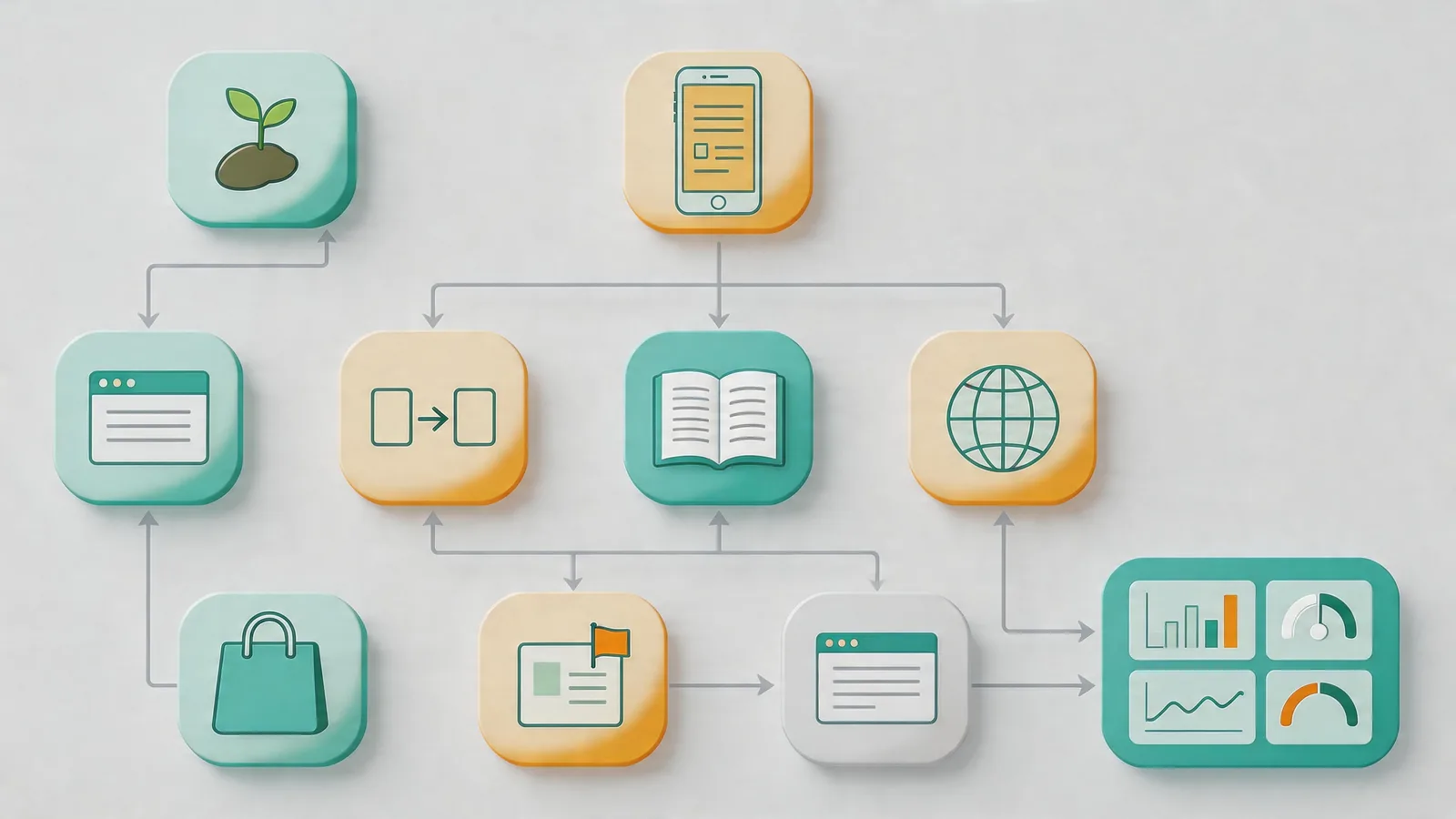
好的 app SEO keyword map 会区分 Google search pages、app store keyword targets、comparison pages 和 paid UA support pages。
可以用这个模型:
| Page type | Keyword role | 示例 |
|---|---|---|
| Pillar page | Broad strategy keyword | “app seo” |
| App landing page | Category 或 product keyword | “AI meeting notes app” |
| Use-case page | Specific user job | “meeting notes app for sales calls” |
| Comparison page | Alternative intent | “Otter alternative” |
| Blog guide | Problem-aware education | “how to summarize meetings automatically” |
| Country page | Localization intent | “meeting notes app in Japan” |
| Report page | Data and proof | Competitor ad trends、category report |
| Paid UA support page | Message match | 某个 campaign promise 的 landing page |
不要让每篇文章都抢同一个词。如果你要发布 “app SEO”、“seo for apps” 和 “app store keyword research”,必须定义哪一页拥有哪个 query。
当前 cluster 可以这样分:
| Query | 推荐 owner |
|---|---|
| app seo | 本 pillar page |
| seo for apps | 本 pillar page 或其中一个 section |
| app store keyword research | 后续专门 ASO keyword workflow page |
| app store keywords | 专门 ASO support page 或 keyword research page |
| paid user acquisition | paid UA guide |
这样可以避免 keyword cannibalization,也能让 internal links 传递更清晰的信号。
Internal Linking 和 Cannibalization 控制
Internal linking 不只是导航,它告诉搜索引擎哪一页是 hub。
规则如下:
| Rule | Example |
|---|---|
| Spoke pages 链回 pillar | ASO keyword posts 链回 app SEO |
| Pillar 链到已发布 spokes | App SEO 链到 paid UA,之后再链 ASO keyword research |
| 使用描述性 anchors | 用 “paid user acquisition”,不要用 “click here” |
| 不要所有页面都用同一个 anchor | 根据 intent 和 context 变化 |
| 不要为同一 query 创建重复页面 | 合并或区分 |
如果两个页面目标 query 很像,可以这样处理:
| Situation | Fix |
|---|---|
| 两页讲同一个主题 | 合并成一篇更强页面 |
| 一个 broad,一个 narrow | broad 做 pillar,narrow 做 spoke |
| 一个讲 web SEO,一个讲 ASO | 在 title、H1 和 anchors 里讲清楚 surface |
| 一个过时 | 更新或 redirect |
这对 app 很重要,因为同样的词可能代表不同 surface。“Keyword research” 可能指 Google SEO、App Store keywords 或 paid search terms。标题和结构必须讲清楚。
Paid UA 如何支持 App SEO 和 ASO
如果把 paid UA 当成 research,它可以支持 app SEO。
paid user acquisition guide 讲了 channel planning 和 creative testing。对 app SEO 最有用的 paid UA signals 是:
| Paid UA signal | SEO/ASO use |
|---|---|
| Winning hook | 用于 title tests、meta copy、hero section、screenshot captions |
| High-converting audience segment | 创建 use-case pages |
| Store conversion by message | 更新 screenshots 和 app store copy |
| Landing-page conversion by promise | 围绕已验证 intent 创建 SEO pages |
| Competitor ad patterns | 识别 content 和 store assets gaps |
| Retention by campaign | 避免为 bad-fit users 的 promise 排名 |
这也是为什么 competitor ad intelligence 重要。如果竞品反复投放某个 promise,而你的网站或商店页完全没有解释这个 promise,要么你有 content gap,要么这个 promise 对产品不相关。如果人工追踪太慢,可以用 AdMapix reports 监控这些变化。
Measurement Framework
App SEO measurement 应连接 traffic、installs 和 user quality。
| Metric | 说明什么 |
|---|---|
| Google impressions and clicks | 搜索用户是否能找到页面 |
| Query mix | 页面实际赢得了哪些 intent |
| Landing-page conversion | Web visitors 是否继续前往 store 或 signup |
| Store conversion | Store page 是否确认了 intent |
| Activation | 用户是否到达 first value |
| Retention | Promise 是否吸引了 good-fit users |
| Branded search lift | Awareness 是否提升 |
| Assisted conversions | Content 是否帮助 paid 或 direct installs |
不要只看 rankings。一个页面如果排名大词但带来低质量用户,对业务可能没帮助。另一个页面 volume 较低,但 activation 很高,可能更有价值。
建议分开看这些报告:
| Report | 为什么 |
|---|---|
| SEO page performance | Google traffic 和 query intent |
| Store page performance | Conversion 和 asset tests |
| Paid UA performance | Cost 和 user quality |
| Retention cohorts | Acquisition promises 是否匹配 product value |
| Competitor movement | 新 messages、ad hooks 和 category shifts |
常见错误
错误 1:把 ASO 当成全部 app SEO strategy。 ASO 很重要,但 Google search pages 可以在用户打开 app store 之前捕获需求。
错误 2:创建 thin app landing pages。 几张 screenshots 和 badges 不足以排名或转化。
错误 3:只追高 volume category keywords。 Use-case 和 comparison queries 往往更容易转化。
错误 4:忽略 store-page alignment。 Web page 承诺一个 use case,app store 页面展示另一个,install 会受损。
错误 5:发布重叠文章。 必须决定 “app seo”、“seo for apps” 和 “app store keyword research” 分别由哪一页负责。
错误 6:只测流量。 App SEO 应用 qualified installs、activation、retention 和 assisted paid performance 来判断。
FAQ
什么是 app SEO?
App SEO 是让 app 相关 web pages 在搜索引擎中可见,同时让这些页面与 App Store 和 Google Play conversion paths 对齐的策略。它包括 landing pages、use-case pages、comparison pages、content clusters、technical SEO、internal links 和 ASO support。
App SEO 和 ASO 有什么区别?
App SEO 关注 app 相关 web pages 的搜索可见性。ASO 关注 App Store 和 Google Play 内的可见性与转化。两者应共享 keyword research 和 messaging,但优化的是不同 surface。
如何做 SEO for apps?
先做 search intent map,再搭建强 app landing page,创建 use-case 和 comparison pages,用 internal links 连接 content cluster,让 store assets 与同一套 promise 对齐,并持续测量 installs、activation 和 retention。
App store keywords 会影响 Google rankings 吗?
App store keyword fields 不能替代 web SEO。但 app store keywords 能反映用户语言,这些语言可以用于 web page titles、headings、FAQs、screenshots 和 app landing-page copy。
应该使用哪些 app store optimization tools?
选择能支持 keyword discovery、ranking tracking、competitor metadata、review mining、localization 和 store experiments 的 app store optimization tools。最佳工具取决于你的瓶颈是 research、tracking、content、creative assets 还是 reporting。
Paid user acquisition 如何支持 app SEO?
Paid UA 能揭示哪些 messages、audiences 和 store-page promises 会转化。这些学习可以反向用于 app SEO pages、ASO copy、screenshots、custom product pages 和 content cluster priorities。
结论
App SEO 不是和 ASO、paid user acquisition 分开的 checklist。它是 app growth 的 search layer。Web page、app store page、paid ad 和 product experience 应描述同一个 promise。
先做 intent map。决定每个 query 由哪一页负责。创建既有用到能排名、又具体到能转化的 web pages。用 app store keyword research 改进 store assets。用 paid UA 和竞品研究判断哪些 promise 真正吸引 qualified users。
如果你想把 competitor ad signals 和 app SEO / ASO planning 连接起来,可以浏览 AdMapix reports,或查看 AdMapix pricing 建立 recurring workflow。
把观察变成下一次创意研究
打开素材库,选择与你的市场、渠道和研究问题相关的样本。
相关文章
Paid User Acquisition:App 增长团队的投放策略
一篇面向 app 团队的 paid user acquisition 指南,覆盖渠道策略、创意测试、预算规则、归因指标和竞品广告研究工作流。
Video Game Marketing:独立游戏和手游团队实战指南
面向独立游戏和手游团队的 2026 video game marketing 指南,覆盖定位、渠道、game ads、创作者、竞品研究和 30/60/90 天发布计划。
Mobile Game Monetization:广告、IAP 与混合变现模型
面向 2026 年手游团队的 mobile game monetization 实战指南,覆盖广告收入、IAP、混合变现、rewarded ads、interstitial ads、玩家体验和竞品研究。