
案例:我们如何在 2 小时内找到 10 条 Winning Facebook Ads
一个 winning Facebook ads case study:展示如何用筛选条件、评分框架和 ad intelligence workflow 快速找到值得测试的广告候选。
好的 winning ads workflow 会先用 filters 降低噪声,再用 creative signals 评分,而不是直接复制广告。
案例:我们如何在 2 小时内找到 10 条 Winning Facebook Ads
这是一篇 winning Facebook ads case study,展示如何用 2 小时找到一批强广告候选,同时不假装公开广告库能证明一条广告真实盈利。
这个边界很重要。Meta 的公开 Ad Library 可以展示正在投放的广告、Page、creative、platforms 和部分公开透明度信息。Meta 的 Ad Library API 文档也列出了 page name、delivery dates、creative text、media type、platforms 和 country filters 等字段。但公开可见不等于你能看到竞品 CAC、ROAS、margin、attribution model 或 creative testing budget。
所以本文里的 “winning Facebook ads” 指的是具备多个外部信号的候选广告:
| Signal | 为什么重要 |
|---|---|
| Longevity | 长时间 active 可能说明广告通过了内部 performance bar |
| Variation | 多个相似版本说明对方在持续测试 |
| Clear hook | 第一帧或第一句话能快速说明用户问题 |
| Offer clarity | 用户知道能得到什么、为什么现在行动 |
| Format fit | Creative 适合 platform 和 placement |
| Landing-page match | 广告 promise 和 post-click experience 能对上 |
| Competitor repetition | 多个竞品都在使用类似 pattern |
这套流程可以和 Facebook Ads Library complete guide、how to spy on competitors' ads,以及 how to find winning products on Facebook Ads Library 一起使用。
目标
目标很简单:在 2 小时内找到 10 条值得进入 creative brief 的 Facebook ad candidates。
我们不是要建立完美竞品数据库,而是快速回答四个问题:
| Question | Decision |
|---|---|
| 哪些 angles 被重复使用 | 建 swipe file 和 variants brief |
| 哪些 hooks 容易理解 | 优先写 script 和 first-frame ideas |
| 哪些 offers 竞品愿意持续投放 | 用自己的 economics 测试类似 offer framing |
| 哪些 formats 值得制作预算 | 选择 video、carousel、image、UGC 或 landing-page tests |
这个 ad intelligence case study 使用严格时间盒:
| Block | Time |
|---|---|
| Setup and category definition | 15 minutes |
| Competitor and keyword filtering | 35 minutes |
| Creative signal scoring | 45 minutes |
| Pattern grouping and brief notes | 25 minutes |
时间盒能避免一个常见问题:competitor research 变成无目的浏览。
Setup:先定义搜索范围
打开任何工具前,先定义 search universe。
| Setup field | Example choice |
|---|---|
| Category | Mobile app、ecommerce、SaaS、game、local service |
| Market | 先选一个 primary country |
| Competitor set | 5-15 个已知 brands 或 pages |
| Query terms | Problem、product、benefit、competitor terms |
| Format focus | Video、image、carousel、playable、lead ad、UGC |
| Lookback | Active now、last 30 days、evergreen patterns |
| Exclusions | Brand-only ads、hiring ads、generic PR、irrelevant regions |
第一次跑时,市场要窄。一次搜索所有国家和所有竞品,列表会很大,但决策质量通常很弱。
如果你还不熟悉入口,可以先看 where is Facebook Ads Library。如果需要保存案例做后续 review,可以看 download videos from Meta Ads Library,但要遵守平台条款和版权边界。
筛选流程
最快找到 winning ads 的方法,是先筛证据,再判断审美。
推荐顺序:
| Step | Filter | Reason |
|---|---|---|
| 1 | Country | 去掉无关 offer 和 language |
| 2 | Active status | 看竞品仍在投什么 |
| 3 | Competitor pages | 把研究锚定到真实玩家 |
| 4 | Keywords | 增加 category 和 problem 覆盖 |
| 5 | Media type | 区分 video、image、carousel、text-heavy ads |
| 6 | Platform | 看 Facebook、Instagram、Messenger 的差异 |
| 7 | Start date | 区分新测试和 evergreen ads |
然后把候选广告保存到表格:
| Field | 为什么记录 |
|---|---|
| Page | 识别 advertiser |
| Ad URL or ID | 方便回看 exact creative |
| First-frame hook | 后续写脚本有用 |
| Primary promise | 广告到底承诺什么 |
| Offer | Discount、trial、quiz、demo、bundle、waitlist |
| Format | UGC、founder、animation、product demo、social proof |
| Longevity clue | 是否看起来持续 active |
| Pattern group | Hook、pain point、offer、audience、objection |
| Score | 排优先级 |
这也是 ad intelligence tool 节省时间的地方。公开搜索有用,但如果 saved ads、filters、creative metadata 和 competitor views 放在一起,效率会高很多。需要更干净的研究队列时,可以用 AdMapix reports。
我们的评分框架
每条候选广告按六个维度打 1-5 分。
| Dimension | 5 分意味着什么 |
|---|---|
| Hook clarity | 用户一眼理解问题或 payoff |
| Offer strength | 广告给出明确行动理由 |
| Format-market fit | Creative style 符合受众购买方式 |
| Differentiation | 不是所有竞品都一样的普通想法 |
| Repeat evidence | 类似广告跨版本、市场或竞品重复出现 |
| Briefability | 可以转化为合规、原创的 creative |
即使广告看起来很精美,以下情况也会被拒绝:
| Rejection reason | Why |
|---|---|
| Claim 夸张 | 合规风险高 |
| 依赖名人或短期 trend | 难以负责任地复刻 |
| Hook 清楚但产品 fit 弱 | 可能损害 downstream quality |
| Brand-only creative | 对 acquisition insight 不够 |
| 没有 pattern match | 有趣,但优先级不高 |
这能避免 competitor research 最大的问题:复制最吵的广告,而不是提取战略 pattern。
找到的 10 个 Winning Ad Patterns
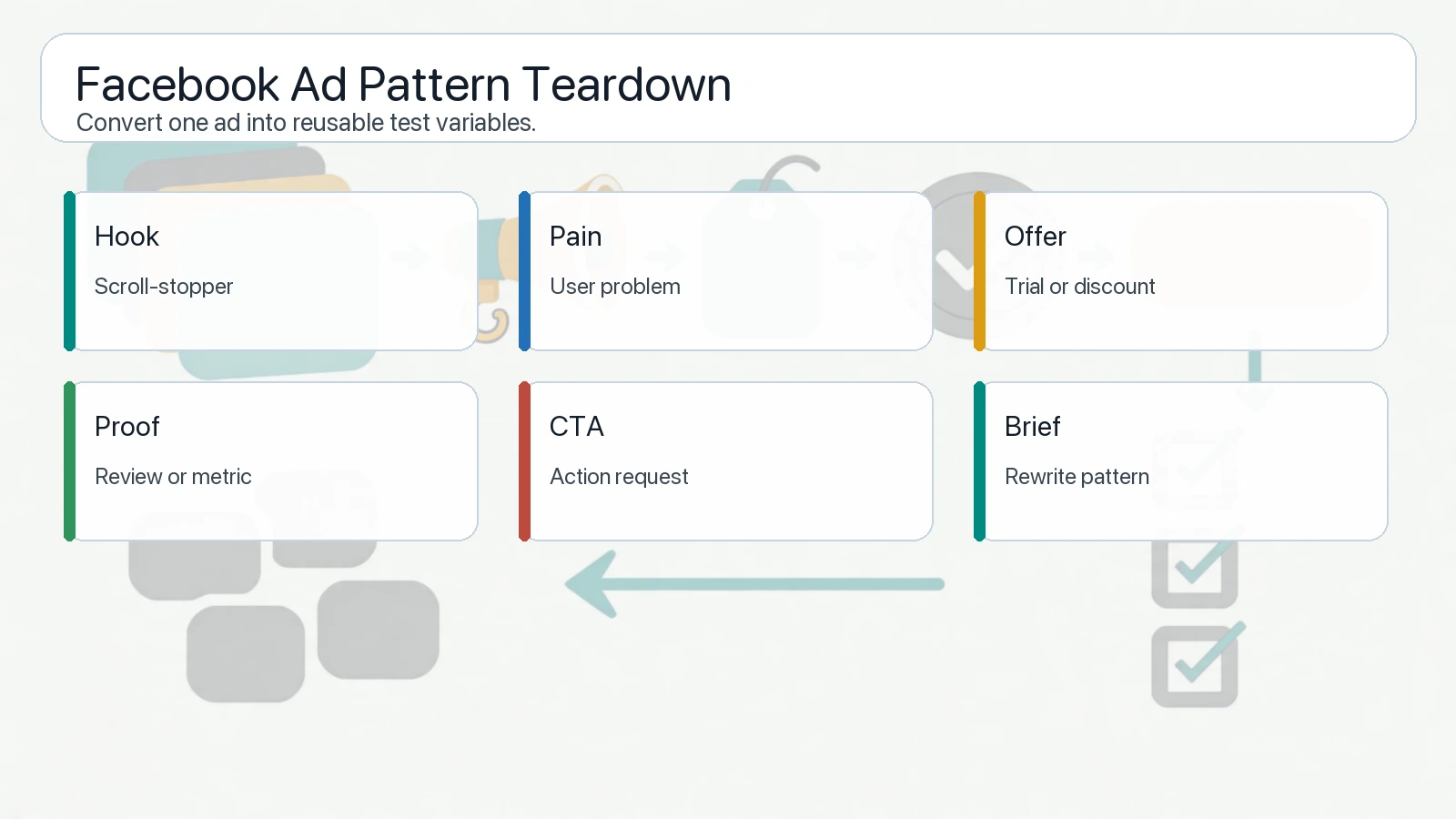
Winning candidates 真正有价值,是因为它们能被翻译成 pattern:hook、offer、proof、format 和 next test。
最终列表不是 “10 条可以照抄的广告”,而是 10 个值得 brief 的 pattern。
| Pattern | 为什么入选 | Test brief |
|---|---|---|
| 1. Problem-first opener | 痛点在 brand 之前出现 | 围绕同一个 pain 做 3 个 first-frame variations |
| 2. Before/after product proof | Outcome 很容易理解 | 测试 realistic transformation sequence |
| 3. Offer with constraint | 行动理由具体 | 测 deadline vs bonus vs limited access |
| 4. UGC objection answer | 自然回答用户疑虑 | 写 5 个 objection-led UGC hooks |
| 5. Side-by-side comparison | 差异一眼能看懂 | 做公平 comparison,避免 trademark risk |
| 6. Short demo loop | 5 秒内展示 value | 用一个 job 剪 product demo |
| 7. Social proof stack | CTA 前先建立 credibility | 测 review、usage count、press、community proof |
| 8. Quiz or diagnosis hook | 把注意力转成 self-selection | 测 quiz landing page 或 lead magnet |
| 9. Creator-style narrative | 形式更像 feed 原生内容 | 用更严格 proof points brief creator variants |
| 10. Repeated visual metaphor | 多个竞品使用同一 mental model | 换一套 visual system 复用 metaphor |
最强候选有三个共同点:
| Common trait | 为什么重要 |
|---|---|
| 内部容易解释 | 策略师讲不清,用户大概率也看不懂 |
| 能连接到 landing-page promise | Post-click path 不会随机 |
| 能延展多个 variants | 单个 ad idea 变成 testing tree |
Case Study 的启发
这套 2 小时流程有效,是因为它把 signal 和 taste 分开。
| Lesson | Practical implication |
|---|---|
| Longevity 是线索,不是证明 | 用来排优先级,不要直接宣称 profitable |
| Repetition 很重要 | 一条广告是 example,重复 pattern 才是 strategy input |
| Hooks 比 visuals 更容易迁移 | 先适配 message,再考虑 style |
| Offers 需要 economics | 竞品 discount 不一定适合你的 margin |
| Landing pages 很关键 | Winning Facebook ads 往往有匹配的 post-click journey |
| Research 应该输出 briefs | 只有 swipe file 没有 next step,价值很低 |
最有用的产出是一组测试 backlog:
| Test type | Example |
|---|---|
| Hook test | Pain-first vs outcome-first vs curiosity-first |
| Proof test | Review vs demo vs usage count |
| Format test | UGC vs product demo vs animated explainer |
| Offer test | Trial vs bundle vs urgency vs bonus |
| Audience test | Beginner vs advanced vs switcher |
所以 “how to find winning ads” 不应该只是截图练习。真正的工作是把观察到的 pattern 变成原创测试。
可复用 Checklist
你可以这样复刻这套 2 小时流程:
| Step | Done |
|---|---|
| Pick one market and one category | 保持搜索范围窄 |
| List 5-15 competitor pages | 包含直接和间接竞品 |
| Define 5-10 search terms | 用 product、problem、outcome、competitor language |
| Filter by active ads first | 先看正在运行的证据 |
| Save at least 30 candidates | 不要太早判断 |
| Score candidates with a rubric | 避免只靠审美 |
| Group into patterns | 把 ads 转成 reusable ideas |
| Pick 3-5 test briefs | 从 research 进入 production |
| Add landing-page notes | 保持 message match |
| Review after launch | 用自己的结果验证 competitor signal |
如果这件事需要长期重复,可以看 pricing,选择适合你研究量的 workflow。
FAQ
What is a winning Facebook ad?
Winning Facebook ad 指具备强 performance signals、值得转化为测试 brief 的广告。公开工具无法证明盈利,所以要把 longevity、variation、clarity、offer 和 repetition 当成研究信号。
How do you find winning ads?
先选窄市场,搜索 competitor pages 和 category keywords,筛 active ads,保存 candidates,评分 creative signals,按 pattern 分组,再把最佳 patterns 转成原创 briefs。
Can Facebook Ads Library prove an ad is profitable?
不能。Facebook Ads Library 可以显示公开广告透明度数据,但不显示 CAC、ROAS、margin、attribution 或内部预算。它是 discovery source,不是 profitability report。
What signals matter most?
最重要的信号是 clarity、offer relevance、repeated variants、longevity、post-click match,以及这个 idea 是否能合规地适配到你自己的产品。
How often should I repeat this workflow?
活跃 paid acquisition 团队可以在变化快的品类每周跑一次,稳定品类每月跑一次。大促或季节性 campaign 前也应该重新跑。
Conclusion
这个 winning Facebook ads case study 用 2 小时找到了 10 个有用广告 pattern。方法是先 filters、再 scoring、最后 creative briefs。目标不是复制竞品,而是压缩研究时间,产出更好的测试。
用 AdMapix reports 可以在你的 niche 中复用这套流程,对比 competitor creative patterns,把 ad intelligence 转化成团队能真正上线的 testing queue。
把观察变成下一次创意研究
打开素材库,选择与你的市场、渠道和研究问题相关的样本。
相关文章

Data.ai Alternative:App 增长团队怎么选择
Data.ai alternative 指南:帮助 app 增长团队比较 app intelligence tools、竞品广告研究工作流和用户获取规划。
MediaRadar Alternative:竞品广告追踪工作流怎么选
MediaRadar alternative 指南:适合需要 competitive ad tracking、创意分析和更快竞品监控工作流的团队。
Adbeat Alternative:Native 与 Display 广告情报怎么选
Adbeat alternative 指南:比较 native/display ad intelligence 的覆盖、工作流、pricing、竞品和创意分析深度。